
Summary
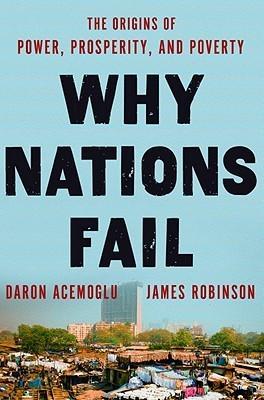
Why Nations Fail by Daron Acemoglu and James A. Robinson explores why some countries grow rich while others stay poor. The authors argue that political and economic institutions determine a nation’s fate. They introduce two types of institutions: inclusive ones that empower citizens and extractive ones that concentrate power. Inclusive institutions encourage investment and innovation, while extractive ones stifle growth and enrich elites.
The book opens by contrasting Nogales, Arizona, with Nogales, Sonora. They sit side by side, yet one thrives and the other lags. This puzzle highlights how institutions matter more than culture or geography. Despite sharing climate and people, the U.S. side benefits from rule of law and property rights. Across the border, weak courts and corruption discourage entrepreneurs.
Acemoglu and Robinson then trace history back to medieval England. They show how the Glorious Revolution of 1688 shifted power from monarchs to Parliament, laying the foundation for inclusive institutions. As property rights strengthened, merchants and farmers invested in new ideas. That shift unleashed the Industrial Revolution and Britain’s rise.
Meanwhile, extractive institutions persisted in many parts of the world. Colonial powers set up systems that funneled wealth to a few. They relied on coercion and avoided broad political participation. Local elites often colluded with colonizers to maintain privileges. After independence, these structures endured.
The authors introduce the concept of critical junctures—big events that shake up institutions. Wars, revolutions, and pandemics force societies to choose new paths. Sometimes they build inclusive institutions; other times they double down on extractive ones. The outcome depends on political struggles among elites and citizens.
Acemoglu and Robinson emphasize that inclusive economic institutions require inclusive political institutions. You can’t have secure property rights without a government that represents people. And you can’t have broad political rights unless citizens enjoy some economic independence. This feedback loop drives sustained growth.
They examine North and South Korea. After World War II, the two halves took starkly different institutional routes. The South embraced democracy and open markets. The North established a totalitarian, extractive regime. Today South Korea enjoys high living standards, while the North remains impoverished.
Latin America provides another lesson. Many countries fought for independence but kept extractive institutions intact. Large landowners and military strongmen held power. Attempts at reform often failed or worsened inequality. As a result, growth remained sporadic and elites prospered at the expense of the masses.
The authors highlight the Mexican Revolution as a rare success. In the early twentieth century, peasants and reformers overthrew a dictator. They redistributed land and built stronger state institutions. Mexico’s growth improved, but persistent corruption limited progress. Even so, it fared better than many neighbors.
In contrast, Colombia rode a more moderate path. Civil wars in the nineteenth century led to power sharing among regional elites. They created stable institutions that avoided extreme extraction. While growth wasn’t explosive, Colombians enjoyed less inequality and more steady progress.
Turning to Africa, the book shows how colonial boundaries and extractive legacies hamper development. Postcolonial leaders often inherited institutions designed to extract resources. Weak state capacity and personalized rule followed. Citizens struggle under unaccountable governments that block entrepreneurship.
China’s story adds nuance. After Mao’s fall, leaders introduced economic reforms without political liberalization. They kept tight political control while opening markets. This hybrid model brought impressive growth, yet extractive political institutions still limit wider innovations.
The authors caution against geographic and cultural determinism. They reject the idea that tropics or religion doom nations. Instead, they focus on institutions shaped by human choices. Any society can build inclusive systems if citizens and leaders push for it.
In their final chapters, Acemoglu and Robinson propose policies. They urge strengthening rule of law, fighting corruption, and widening political participation. They stress that reforms must adapt to local contexts and that elites resist change. Still, citizens can unite to demand better institutions.
Why Nations Fail ends on an optimistic note. The authors believe history shows progress is possible. Once inclusive institutions take root, they tend to persist and spread. The challenge lies in breaking vicious cycles of extraction and forging a path to shared prosperity.
Detailed Summary
Key Takeaways
1. The Role of Institutions
“Nations succeed when they build institutions that foster creative activity and allow citizens to pursue their talents freely.”
Inclusive vs. Extractive Institutions: Acemoglu and Robinson argue that the core driver of national success or failure lies in institutions. Inclusive institutions grant broad participation in economic and political life. They protect private property, enforce contracts, and encourage innovation.
In contrast, extractive institutions concentrate power in the hands of a few. These elites seize wealth and resources for themselves. They stifle competition, block new entrants, and keep the masses in subordination.
Economic Growth and Inequality: Inclusive institutions tend to generate sustained growth. They invite investment by guaranteeing fair returns and legal recourse. Over decades, this builds a middle class and more dynamic markets.
Extractive institutions stunt growth and widen inequality. They might produce short booms based on resource grabs or forced labor. Yet without incentives for innovation, the economy eventually grinds to a halt.
Key points:
- Inclusive institutions support widespread participation.
- Extractive institutions enrich a narrow elite.
- Property rights and rule of law foster investment.
- Extractive systems block competition.
- Long-term growth demands inclusivity.
2. Critical Junctures Shape Trajectories
“Critical junctures knock nations off their original paths, creating space for either inclusive breakthroughs or extractive entrenchment.”
Moments of Possibility: The authors introduce critical junctures as pivotal events—wars, plagues, revolutions—that disrupt existing political and economic structures. During these windows, society’s future path hangs in the balance. Institutions can either open up or tighten control.
A classic example is England’s Glorious Revolution of 1688. It shifted power from the crown to Parliament. Over the next century, property rights and commerce flourished, setting the stage for the Industrial Revolution.
Turning Points in History: When leaders respond by creating inclusive institutions, they unleash entrepreneurship, craft, and trade. That fuels wealth creation and social mobility. Institutions then lock in, making reversal hard.
But if ruling elites double down on extraction—using violence or patronage—societies fall into stagnation. Those nations often suffer chronic conflict and declining living standards. Once extractive systems gain strength, breaking free becomes all but impossible.
Key points:
- Critical junctures disrupt old orders.
- They create openings for reform or repression.
- Outcomes depend on elite choices.
- Inclusive reforms lock-in growth.
- Extractive responses cement inequality.
3. Political Centralization Is Crucial
“A strong central state under rule of law is a prerequisite for inclusive economic institutions.”
State Capacity and Order: Acemoglu and Robinson stress that institutions need an effective central authority to enforce rules. Without a functioning tax system or judiciary, even inclusive policies fail. Firms can’t rely on contracts, and entrepreneurs won’t take risks.
Yet political centralization can go wrong. When rulers amass power without checks, they often abuse it. The book shows that a balance of centralized enforcement plus citizen rights leads to the best outcomes.
Building Effective States: Countries that built a strong, accountable state in the 19th century—like Britain or the United States—enjoyed stable growth and public goods provision. They could fund roads, schools, and research.
By contrast, states that lack central capacity or slide into personal rule deliver few services. They cannot regulate markets or provide security. Citizens face corruption and violence, making investment perilous.
Key points:
- Central state enforces laws and taxes.
- Rule of law underpins fair markets.
- Unchecked power breeds abuse.
- Balance of power and rights matters.
- Effective states fund public goods.
4. The Virtuous Circle of Inclusivity
“Once inclusive institutions take root, they generate feedback loops that reinforce openness and innovation.”
Self-Reinforcing Mechanisms: Inclusive institutions don’t just appear; they build momentum. As more people gain rights and opportunities, they push for further reforms. New businesses lobby for better infrastructure and fairer laws.
This creates a virtuous circle. Each success strengthens civil society and widens participation. Over generations, it cements a culture of accountability and entrepreneurship.
Social and Economic Dynamism: Nations on this path see rising literacy rates, technological diffusion, and growing middle classes. Citizens feel they have a stake in the system. They vote, protest, and innovate.
By contrast, extractive regimes provoke social unrest and brain drain. Talented individuals flee or remain dormant, fearing expropriation. Societies lose their best minds and their capacity for self-renewal.
Key points:
- Inclusive institutions feed on participation.
- Reforms lead to stronger civil society.
- Entrepreneurs demand better policies.
- Culture of accountability grows.
- Society becomes more dynamic.
5. Importance of Political Pluralism
“Political competition curbs the worst impulses of power and incentivizes leaders to deliver public goods.”
Checks, Balances, and Competition: The authors highlight how pluralistic politics protect citizens. When multiple parties and interest groups compete, no single faction dominates. Leaders know they can be voted out if they aggrandize power or loot the treasury.
This pressure drives them to invest in education, infrastructure, and health. Politicians appeal to voters by promising real improvements, not by selling off resources to cronies.
Accountability in Action: In countries with genuine elections and a free press, corruption levels fall. Citizens hold officials to account and expose abuses. Over time, public trust grows and civic engagement rises.
Conversely, in one-party or autocratic systems, power goes unchecked. Elites pillage state coffers and crush dissent. That creates an environment of fear and withdrawal rather than collaboration.
Key points:
- Multiple parties prevent power grabs.
- Free press reveals corruption.
- Elections force delivery of public goods.
- Accountability builds trust.
- Pluralism spurs civic engagement.
6. Geography Is Not Destiny
“Geography sets constraints but does not determine prosperity; institutions do.”
Challenging Geographic Determinism: Acemoglu and Robinson challenge the idea that climate or location alone dictate outcomes. They show examples where similar environments produced very different paths. North and South Korea share terrain yet diverged sharply under different institutions.
They argue that human choices—how societies structure markets and politics—matter far more than river valleys or natural resources.
Policy Over Environment: This insight underscores that poor nations need not resign themselves to poverty. By reforming institutions, they can leapfrog development. Rwanda’s post-genocide reforms in education and business licensing illustrate this potential.
That said, geography still poses challenges. Tropical diseases or landlocked status demand extra investment in healthcare or transport. Inclusive institutions guide how societies tackle those hurdles.
Key points:
- Climate alone doesn’t fix wealth.
- Institutional choices shape destiny.
- Similar geography, different outcomes.
- Reforms can overcome geographic hurdles.
- Inclusive policies address local challenges.
Future Outlook
Why Nations Fail offers a powerful lens for future policy and research. It suggests that development efforts should focus less on aid or infrastructure alone and more on building fair institutions. Scholars might explore how to foster critical junctures toward inclusion in fragile states.
On the policy front, governments and international agencies may shift strategies. They could invest in judicial reform, strengthen parliaments, or support independent media. Encouraging civic participation and power sharing may prove more effective than top-down schemes.
Finally, for societies, the book’s message resonates: prosperity lies not in geography or culture but in collective choices. Future movements for social justice and economic reform can draw on this framework to advance inclusive change anywhere.







