
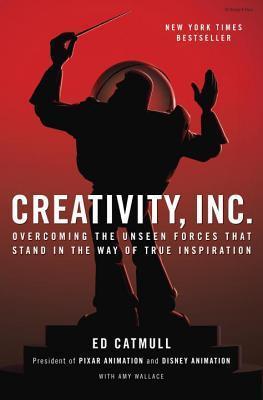
SUMMARY
Creativity, Inc.: Overcoming the Unseen Forces That Stand in the Way of True Inspiration by Ed Catmull and Amy Wallace tells the story of how Pixar Animation cultivated a culture that champions creativity while managing risk and uncertainty. Catmull opens with his early fascination for making images move, tracing his path from New York to the University of Utah’s computer lab. He describes teaming up with future Pixar cofounder Alvy Ray Smith and outlines the early technical breakthroughs that laid the groundwork for computer animation. Those pioneering moments taught him that breakthroughs come from pushing boundaries and tolerating failures.
Catmull then turns to Pixar’s founding in 1986 and its partnership with Steve Jobs. He recalls how Jobs’s faith in technology and storytelling gave Pixar the runway it needed. The team worked out of a warehouse in Richmond, California, transforming code into characters who could breathe life into a screen. Catmull paints the tension between artistic goals and financial pressure, showing how Pixar balanced both by focusing on story over spectacle. That focus would become Pixar’s guiding light through numerous challenges.
A key chapter explores Pixar’s unique decision-making process: the Braintrust. Catmull outlines how this group of directors, writers, and producers meets at critical milestones to offer candid feedback. He stresses that these sessions work because everyone’s voice counts equally. The leaders avoid blaming individuals and instead test ideas in search of problems rather than assigning fault. This approach, he writes, dismantles fear and empowers teams to tackle tough issues early on.
Innovation often faces resistance, and Catmull shares examples of how Pixar overcame creative blocks. When Toy Story’s production hit story snags, the team paused and rewrote major scenes under tight deadlines. They embraced the mantra that change isn’t failure; it’s progress. Catmull underlines that preserving a safe environment matters more than preserving pride. He explains how admitting mistakes fast leads to better solutions faster.
As Pixar grew, its studio moved from Richmond to Emeryville in 2000. Catmull details how the new building itself reflected creative values: open workspaces, visible work on the walls, and shared meeting spots. He believed that chance encounters spark new ideas. He resisted private offices because senior leaders needed to remain accessible. These design choices reinforced a culture of candor and collaboration across technical and artistic teams.
The authors then discuss Pixar’s acquisition by Disney in 2006. Catmull describes facing a new corporate hierarchy with different priorities. He and his leadership team negotiated hard to protect Pixar’s creative processes. They won agreements guaranteeing Braintrust independence and minimal interference from Disney executives. That outcome, he writes, came from clear communication about what made Pixar successful and a firm stance on preserving creative freedom.
With Disney behind them, Pixar delivered hit after hit: Ratatouille, WALL·E, Up, and more. Catmull credits this streak to relentless attention to story and character. He recounts how teams would iterate on scripts dozens of times before moving to animation. He notes that every film’s success reinforced the value of honest feedback, rapid prototyping, and cross-disciplinary input. Each project became another chance to refine a system that balances art and technology.
Yet pressures remained. Catmull shares tales of declining morale and exhaustion during long crunch periods. He admits that Pixar once let praise for productivity overshadow concern for people’s well-being. To correct course, leaders introduced initiatives like regular ‘health surveys’ where employees rated morale, management, and creative freedom. Pixar responded to low scores by adjusting processes, redistributing resources, and ensuring employees had time to recharge. Catmull stresses that sustaining creativity means valuing the humans behind the work, not just the work itself.
Another vital lesson comes from embracing failure as a learning tool. Catmull recalls a short film contest where teams pitched prototypes in a single day. The goal wasn’t winning but experimenting under tight constraints. Some films flopped, but the lessons spread. He says this practice of ‘safe-to-fail’ experiments fosters curiosity and prevents teams from growing risk-averse. Pixar’s directors often encourage rough sketches over polished art to invite more ideas and reveal hidden problems early.
Catmull then generalizes Pixar’s principles for any organization. He emphasizes that leaders must look beyond standard metrics—profits, deadlines, and efficiency—to gauge creative health. He urges executives to cultivate candor, protect honest feedback, and maintain a beginner’s mind when learning new things. He warns against assuming past success guarantees future breakthroughs. Instead, he recommends constant self-examination and making space for fresh voices.
Amid these themes, Catmull weaves in leadership advice drawn from neuroscience, psychology, and management theory. He unpacks cognitive biases that stifle innovation, like status quo bias and confirmation bias. He advises leaders to fight these tendencies by gathering diverse perspectives and probing assumptions. Catmull also highlights the importance of humility; he insists that admitting you don’t have all the answers fosters trust and encourages team members to share insights freely.
The book shifts to Pixar’s partnership with Disney Animation’s revival in the 2010s. Catmull became president of both studios and worked to transfer Pixar’s culture to an older organization resistant to change. He describes meeting with Disney’s animators and inviting them to Pixar’s Braintrust. At first, they feared their work would be judged unfairly. But after a few sessions, Disney creatives saw the value of candid feedback. This blend of cultures led to box-office hits like Frozen, showing that Pixar’s methods can thrive in new settings.
Near the end, Catmull reflects on his own leadership journey. He recalls moments when he almost ignored early warnings that a film was failing. He credits mentors and candid reports from below for pulling him back from misguided bets. He admits he still fights his own biases daily. That honesty underlines the core message: creativity flourishes where people feel safe to share ideas, make mistakes, and challenge authority respectfully.
In closing, Creativity, Inc. offers readers a playbook for nurturing creativity, whether in animation or any field that demands fresh ideas. Catmull sums up by listing five imperatives: protect the new, embrace conflict, be mindful of hidden assumptions, create a safety net for failure, and ensure leaders are open to feedback. He reminds us that inspiration remains fragile and must be guarded with deliberate practices.
Catmull’s story ends not with a final answer but with an ongoing question: how can we sustain creative cultures in the face of growth, success, and inevitable challenges? He leaves readers with tools to start that conversation in their own organizations. Ultimately, the book shows that true inspiration springs from humans who trust each other, speak honestly, and keep curiosity alive—no matter what obstacles arise.
DETAILED SUMMARY
Key Takeaways
1. Embrace a ‘No-Blame’ Culture
“When nobody’s at fault, everybody’s free to figure out what really happened.”
Psychological Safety: Catmull argues that creativity thrives when teams feel safe admitting mistakes. In a blame-driven setting, people hide errors and guard ideas. That stifles learning.
He describes Pixar’s daily review meetings, where leaders don’t single out any individual. Instead, the group asks “What went well?” and “What can we improve?” That simple shift redirects focus from fault to solutions. It also reminds everyone that problems belong to the process, not to people.
By framing setbacks as data rather than failures, teams uncover root causes. They iterate faster without fear. In turn, trust grows, and fresh ideas flow more freely.
Real-World Application: In industries from software to healthcare, ‘no-blame’ cultures boost performance. Airlines use it to investigate near-miss incidents without punitive action. Nurses then share lessons to strengthen patient safety.
At Toyota, the famous “stop-the-line” rule empowers any worker to halt production over quality concerns. Leaders treat those stops as signals to improve the assembly process. They never punish the caller. By doing so, Toyota achieves fewer defects and higher morale.
When organizations adopt this mindset, they break down silos. Teams collaborate on fixes rather than pointing fingers. Over time, they build resilience against emerging challenges and innovate more rapidly.
Key points:
- Shifts focus from individual blame to systemic learning
- Encourages open sharing of problems
- Speeds up corrective action and innovation
- Builds trust and psychological safety
- Forms a foundation for continuous improvement
2. Foster Candor Through Open Feedback
“If you don’t look at the ugly truth, you’ll never overcome it.”
Radical Honesty: Catmull emphasizes honest dialogue as the lifeblood of creative work. He calls this ‘candor.’ Without clear feedback, projects drift and waste time chasing the wrong vision.
He recounts early Pixar struggles, when teams hesitated to critique work by senior creatives. Too often, long-standing relationships or titles blocked frank input. Pixar overcame this by formalizing critique sessions. They renamed ‘notes’ sessions to ‘Braintrust’ meetings, empowering peers to speak out regardless of rank.
In Braintrust meetings, the facilitator ensures feedback stays issue–not-person focused. They avoid watering down tough comments. Over time, teams learn to welcome blunt insights and use them to sharpen stories, characters, and designs.
Impact on Team Dynamics: When candid feedback becomes routine, teams mature faster. At Pixar, successive films improved story coherence and emotional depth after every Braintrust. The practice also cut development cycles by catching flaws early.
Outside animation, startups apply the same principle in code reviews. Developers scan each other’s code lines, calling out bugs or design flaws honestly. Founders at successful firms say this practice halved their bug-fix time and reduced launch delays.
Candor also eliminates wasted political maneuvering. Teams focus on the work itself instead of managing impressions. That clarity makes it easier to spot promising ideas and kill dead ends swiftly.
Key points:
- Institutes open critique sessions
- Separates feedback from hierarchy
- Accelerates project refinement
- Reduces wasted effort on flawed concepts
- Cultivates a learning mindset
3. Protect the Creative Process
“Ideas are fragile; they can die if exposed to the wrong influences.”
Creative Incubation: Catmull warns that early ideas need protection. In films, a half-formed character sketch can collapse under premature judgment. He advises leaders to shield nascent concepts from too many cooks.
He shares how Toy Story’s initial story drafts suffered when marketing executives weighed in too soon. Pixar responded by isolating the writing group until they had a strong draft. That space allowed writers to explore bold twists without second-guessing every word.
Once ideas reach a healthier stage, they can face wider scrutiny. But until then, creative teams require uninterrupted time and trust. Freed from external pressure, they apply imagination rather than caution.
Balancing Input and Isolation: Numerous ad agencies adopted dedicated ‘skunkworks’ labs after reading Catmull. These small, autonomous cells develop pitches before sharing them with clients or executives. That early privacy deepens idea quality.
In tech, Google’s famous 20% time gave engineers protected hours to prototype new features. Gmail and AdSense both trace back to those side projects. The common thread is clear: sheltered creativity often yields breakthrough innovations.
Yet leaders must reintroduce diverse viewpoints once the core concept is stable. Otherwise, teams risk tunnel vision. The cycle of isolation then integration ensures robust ideas and broad buy-in.
Key points:
- Keeps early ideas away from premature critique
- Ensures uninterrupted focus for creators
- Leads to bolder, higher-quality concepts
- Balances privacy with later diverse input
- Drives breakthrough innovations
4. Balance Art and Commerce
“The price of doing the same old thing is far higher than the cost of change.”
Risk and Reward: Catmull observes that innovation demands risk. Yet businesses often default to proven formulas. He argues that creative companies must weigh short-term profit against long-term vision.
At Pixar, leadership approved Monsters, Inc. though its concept strayed from hit precedents. Executives feared sales might not follow. Still, they invested in originality. The gamble paid off when the film became a global success and set a new bar for character-driven stories.
Catmull recommends that companies carve out a portion of resources for experimental projects. That dedicated budget absorbs failures without jeopardizing core operations. Over time, those experiments yield fresh revenue streams and strengthen cultural vitality.
Strategic Resource Allocation: Tech giants allocate R&D budgets to moonshot projects that may fail. Amazon’s experimentation with drone delivery is one example. Although it hasn’t scaled yet, it advances robotics research beneficial across Amazon’s fulfillment network.
Pharmaceutical firms do the same. They funnel a slice of revenue into early-stage drug discovery, knowing most compounds will never reach market. But the few successes fund the entire pipeline and save millions of lives.
By accepting some failures, organizations maintain agility. They resist commoditization and stay ahead of competitors clinging to the status quo.
Key points:
- Allocates resources for experimental work
- Accepts failure as part of innovation
- Balances immediate profit with future growth
- Encourages bolder creative bets
- Prevents cultural stagnation
5. Lead by Asking Questions
“The best leaders know they don’t have all the answers.”
Inquiry over Dictation: Catmull champions leaders who ask probing questions rather than issuing edicts. He recalls how Steve Jobs often inquired, “Why can’t we do this?” instead of decreeing. That approach invites team ownership and novel ideas.
He describes meetings where he resisted jumping to fixes. Instead he probed the team: “What assumptions are we making?” and “How might we approach this differently?” Those questions forced deeper thinking and often uncovered hidden risks or fresh angles.
By staying curious, leaders model humility. They signal confidence that the group’s collective intelligence exceeds any one individual’s insight. That mindset sparks broad engagement and fuels continuous improvement.
Empowering Teams: Organizations that teach leaders to question rather than command report higher employee engagement. At Pixar, department heads saw improved morale when Catmull deferred to their expertise.
In management training programs, executives learn Socratic coaching to guide teams through challenges. Rather than give answers, they guide groups to discover solutions themselves. This builds problem-solving skills and long-term capacity.
Consequently, companies become less dependent on heroic individuals. They build robust processes that persist even as leaders change or leave.
Key points:
- Fosters leader humility
- Invites broad team input
- Uncovers hidden assumptions
- Builds collective problem-solving skills
- Reduces dependence on single experts
6. Sustain a Learning Organization
“Change and uncertainty are part of life. We can let them rattle us or let them drive us.”
Adaptive Culture: Catmull stresses that creativity demands constant learning. Past success can lull teams into complacency. He points out that Pixar revamped its workflows after each film to capture new lessons.
He details postmortems held after every project. Teams list what worked, what failed, and actionable steps to improve. They record these in a central repository. Future crews reference that database to avoid repeating old mistakes.
This cycle of review, document, and apply keeps the company nimble. It also teaches employees that growth comes from reflection just as much as execution.
Institutional Memory: Many businesses underestimate the value of post-project debriefs. They move on to the next assignment without capturing knowledge. As a result, they repeat errors and waste time reinventing solutions.
Top consulting firms use ‘after-action reviews’ to refine methodologies. They share findings across offices worldwide. That collective wisdom multiplies client value and enhances firm reputation.
A true learning organization transforms every setback into a stepping stone. It maintains momentum and evolves to meet shifting markets and technologies.
Key points:
- Conducts systematic project debriefs
- Documents lessons in a shared database
- Applies insights to future work
- Prevents repeat mistakes
- Drives continuous evolution
Future Outlook
As industries face accelerating change, Catmull’s principles gain even more relevance. Companies that embed psychological safety and candor will unlock hidden talent. They’ll spot market shifts early and reshape offerings faster than competitors.
Moreover, the digital age demands perpetual experimentation. Firms that protect their creative process while balancing risk can pioneer new fields—from immersive entertainment to sustainable design. These hybrid practices of incubation and open feedback will underpin the next wave of breakthroughs.
Finally, embracing learning as a core discipline will separate the transient winners from lasting innovators. Organizations that ask questions, document every lesson, and adapt relentlessly will thrive. They’ll cultivate cultures where both people and ideas flourish in tandem, securing inspiration for generations to come.