SUMMARY
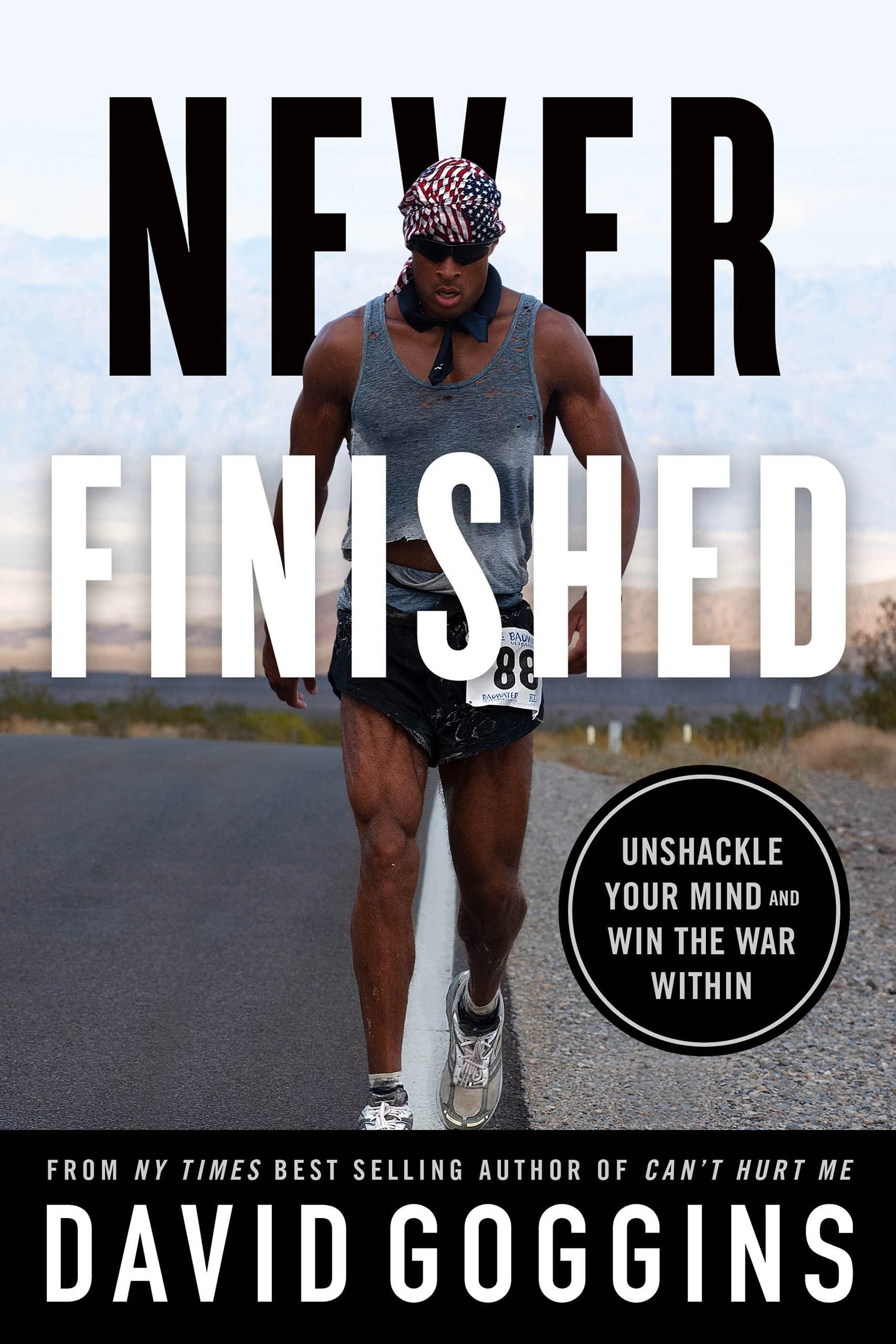
“Never Finished: Unshackle Your Mind and Win the War Within” by David Goggins follows the ultramarathon runner and former Navy SEAL as he pushes beyond mental and physical limits. Goggins opens by recalling his childhood in Buffalo, New York, where his father’s violence and his mother’s struggle to protect him left a lasting mark. Early on, he learns to suppress fear and pain, resolving that he will never be a victim again.
In his teenage years, Goggins battles learning disabilities and low self-esteem. He endures relentless bullying in school and suffers from severe asthma. Yet he discovers running as a small reprieve. The act of pounding pavement gives him fleeting control over his mind, fueling a newfound determination to escape his circumstances.
After high school, Goggins works as an exterminator and then joins Air Force Tactical Air Control Party training. He passes initial selection but injures his back and medical issues bar him from deployment. Crushed by disappointment, he wonders whether he can ever break free from self-doubt. Still, his hunger for challenge remains.
Goggins decides to attempt Navy SEAL training. He arrives severely overweight and out of shape. Facing ridicule from peers, he tackles Hell Week knowing that giving up means a lifetime of regret. Each day of brutal cold-water immersions and endless runs chips away at his old self.
By sheer stubbornness, Goggins graduates BUD/S training. He earns his Trident and shoulders the weight of expectation. Deployments in Iraq and Afghanistan follow, where he sharpens both physical endurance and mental toughness under fire. Each mission tests him in unpredictable ways.
Back stateside, Goggins races ultramarathons to raise money for fallen comrades. In Hawaii’s grueling double-infiniton 12-hour trail run, he battles dehydration, hallucinations, and crippling fatigue. When others quit, he recalls a mantra: stay hard. His refusal to surrender wins him both finishes and inner confidence.
The narrative then shifts to Goggins’ record attempt on pull-ups. He endures blistered hands, torn muscles, and warm-up failures. Yet day after day, he inches closer to his goal. Drawing on his painful past, he transforms every failure into fuel. The final count breaks the world record and cements his belief that mindset triumphs over circumstance.
Goggins confronts the idea of comfort zones head-on. He argues that most people live within safe boundaries, avoiding discomfort at all costs. To shatter these limits, he prescribes “callusing the mind” through deliberate hardship—cold plunges, long runs, nonstop work—that rewires the brain for resilience.
Throughout the book, he emphasizes accountability. He introduces the ‘Accountability Mirror,’ where unflattering truths hang alongside motivational notes. Facing shortcomings face-on, he says, sparks the drive to improve. He invites readers to adopt the practice to confront lies they tell themselves.
In a standout chapter, Goggins opens up about the loss of his mother to illness. He reveals how grief paralyzed him and how he clawed back purpose by setting impossible challenges. His suffering becomes a springboard for compassion, reminding him that triumph over pain carries the power to inspire others.
He then dissects the cycle of self-defeat. People whisper doubts early in life, he notes, but the real betrayal comes when we echo those doubts ourselves. By documenting his own inner dialogue, Goggins shows how to intercept negative thoughts with an unwavering commitment to action.
“Never Finished” also delves into daily routine. Goggins details his pre-dawn workouts, ice baths, and strict diet. Each habit serves a dual purpose: to sharpen his body and to fortify his will. He insists that consistency in small choices compounds into monumental growth.
As the book advances, Goggins expands on leadership. He recounts guiding the world’s toughest races and special operations teams. He teaches that leaders earn trust not through words but by showing vulnerability and a willingness to suffer alongside their peers.
In the final chapters, Goggins circles back to the titular concept. He argues that victory over fear is not an endpoint but a lifelong journey. Every day demands fresh challenges, fresh discomfort. He implores readers: once you shatter one barrier, raise the bar again.
“Never Finished” closes with a rallying cry. Goggins insists that mental toughness is a choice we make each morning. By unshackling the mind, we win the war within and unlock potential we never imagined. His story proves that no obstacle is too great when you refuse to quit.
DETAILED SUMMARY
Key Takeaways
1. Embrace the Account of Self
“You are in danger of living a life so comfortable and soft, that you will die without ever realizing your true potential.”
Owning Your Story: Goggins urges you to confront the narratives you tell yourself. Too often, you shelter your ego by avoiding pain and hardship. He insists that honest self-reflection—what he calls the “accountability mirror”—forces you to see your flaws, fears, and hidden excuses.
This process starts each morning. You stand before a mirror and call yourself out. It sounds harsh but produces clarity. When you admit your weaknesses, you also identify the path toward strength. Goggins shows how this daily ritual lays the mental groundwork for pushing past perceived limits.
Breaking Mental Chains: People who avoid hard truths stay stuck. They build lives around comfort rather than growth. Goggins’s mirror exercise shatters that safety net. It creates a habit of brutal honesty that bleeds into every area of life—work, relationships, health.
Historically, societies that value self-examination tend to produce innovators and resilient leaders. By adopting the accountability mirror, you join a lineage of individuals who transform weakness into fuel. This practice can spark profound personal revolutions, reshaping how you approach challenges and setbacks.
Key points:
- Daily morning ritual to confront weaknesses
- Forces honest self-assessment
- Builds mental clarity and resolve
- Transforms comfort into growth
- Anchors every other practice in the book
2. The 40% Rule
“When your mind is telling you you’re done, you’re really only at 40% of what your body is capable of doing.”
Unleashing Hidden Reserves: Goggins introduces the 40% Rule to show that your limits lie far beyond what you believe. When you feel exhausted, you’ve tapped less than half of your potential. He illustrates this with ultra-endurance events where athletes conquer incredible distances despite extreme pain.
By reframing discomfort as a signal that you’ve barely begun, you rewire your mind. Instead of retreating, you learn to welcome the fight. This shift expands your comfort zone, making you more resilient in daily stressors and unexpected crises.
Cultivating Unbreakable Will: Embracing the 40% Rule rewrites your response to adversity. In sports, it pushes you past plateaus. In business, it fuels perseverance through long projects and setbacks. Communities that adopt this mindset often tackle challenges more creatively and with greater tenacity.
On a societal level, individuals who stretch their mental thresholds inspire others. They demonstrate that physical pain or failure need not dictate outcomes. Over time, this breeds cultures of grit rather than entitlement. You begin to view limits not as ceilings but as thresholds waiting to be surpassed.
Key points:
- Recognize perceived limits at 40%
- Reframe discomfort as opportunity
- Expand your physical and mental capacity
- Apply across work, sports, and life
- Inspire others by living beyond limits
3. Callous Your Mind
“To be uncommon amongst uncommon people, you must prepare to be uncommon.”
Building Mental Toughness: Goggins draws an analogy between creating calluses on your hands and hardening your mind. Just as repeated friction toughens skin, sustained exposure to challenges strengthens mental resilience. He recounts Navy SEAL training and ultra-marathons to show how hardship becomes a tool rather than an enemy.
He prescribes seeking discomfort intentionally. Whether through cold exposure, long runs, or complex tasks under pressure, you train your brain to endure. This practice turns adversity into familiar territory, reducing the shock of unforeseen difficulties.
Resilience in Action: Calloused minds withstand stressors that break most people. In emergency services, soldiers, or entrepreneurs, those who subject themselves to regular hardship perform better under real crisis. They stay calm, make clearer decisions, and recover faster.
Over time, this practice reshapes organizational cultures too. Teams that prioritize deliberate discomfort build collective grit. They innovate under stress and maintain focus where others crumble. You transform challenges from threats into proving grounds.
Key points:
- Deliberate exposure to hardship
- Strengthen resilience like calloused skin
- Use discomfort as a training tool
- Applies to individuals and teams
- Transforms adversity into advantage
4. Victim to Victor Mindset
“Life’s not fair. Get used to it.”
Rejecting Self-Pity: Goggins shares painful childhood memories of abuse, racism, and hardship. He refuses to let them define his future. Instead, he harnesses those experiences as fuel. By acknowledging suffering without pity, he flips the script: victims can choose victory.
This mindset requires constant vigilance. Whenever you slip into blaming external forces, you lose agency. Goggins teaches you to catch those thoughts early. Then you pivot to action—training, goal-setting, or helping others—shifting from a narrative of helplessness to one of empowerment.
Empowerment Through Ownership: Societies plagued by a victim mentality stall collective progress. When individuals blame circumstances, they avoid responsibility and growth. Goggins’s model counteracts this by demonstrating how personal accountability leads to achievement.
Communities that adopt this approach foster self-reliance and mutual support. Members encourage each other to own their stories, face challenges, and chart their own paths. Over time, this builds social capital, reduces dependency mindsets, and elevates overall well-being.
Key points:
- No pity or blame
- Own your past and choices
- Turn suffering into strength
- Cultivate agency and action
- Fosters individual and community growth
5. The Cookie Jar Strategy
“When you feel like quitting, remember the time you overcame the worst.”
Drawing on Past Wins: Goggins calls your personal achievements “cookies.” In moments of doubt, you reach into this mental jar and recall past successes—finishing a race, acing a project, or surviving hardship. This practice provides an instant morale boost and proof that you can persevere.
He recommends writing down at least twenty such memories and reviewing them before every challenge. Over time, your cookie jar grows, offering a reservoir of confidence. You learn that your past victories hold the power to shape future triumphs.
Motivation Meets Evidence: Motivational slogans only go so far. They lack personal relevance. The cookie jar taps directly into your lived experience. It turns abstract encouragement into concrete proof of ability.
In organizational settings, this strategy inspires team reflections on collective wins. Whether hitting sales targets or overcoming a crisis, recalling these moments strengthens group cohesion. You build a culture that values memory as much as ambition.
Key points:
- List and review 20 past successes
- Use memories as motivational fuel
- Turn doubt into confidence quickly
- Personal proof outperforms slogans
- Builds team and individual morale
6. STANDARDIZED Suffering
“Callouses on the mind.”
Equalizing Pain: Goggins argues that suffering is the great equalizer. Everyone faces hardship, but few choose to endure it on purpose. He calls this “standardized suffering.” By subjecting yourself to regular trials, you normalize discomfort and reduce its power.
He prescribes challenges like cold showers, timed runs, or heavy lifts—any task that pushes you out of your comfort zone. Over time, you train yourself to view suffering not as a punishment but as a stepping stone.
Demystifying Hardship: When hardship feels familiar, it loses its intimidation factor. First responders, soldiers, and elite athletes use this principle. They rehearse worst-case scenarios so the actual event provokes less panic.
Broader adoption can reshape workplaces. Teams that include intentional stress tests—like crisis drills or stretch assignments—arrive prepared when real pressure strikes. You foster confidence and reduce reactive fear.
Key points:
- Intentional, regular challenges
- Normalize discomfort
- Equalize mental stressors
- Prepare for real crises
- Shifts perspective on pain
Future Outlook
Goggins’s methods center on mastering your inner world before seeking external change. As more people adopt these practices—daily accountability, the 40% Rule, and deliberate suffering—they’ll redefine success. We can anticipate a shift from comfort-driven culture to one valuing growth through struggle.
In sports, businesses, and education, leaders may integrate these lessons into training programs. Mental toughness courses, resilience workshops, and personal accountability systems could become the norm rather than the exception. Technology might even track discomfort exposure—cold-plunge timers or guided reflection apps—to standardize these principles.
Ultimately, the war within shapes every future endeavor. By unshackling your mind, you free society to tackle bigger problems with grit and creativity. Goggins plants seeds of resilience that may blossom into a new era of human potential.