
SUMMARY
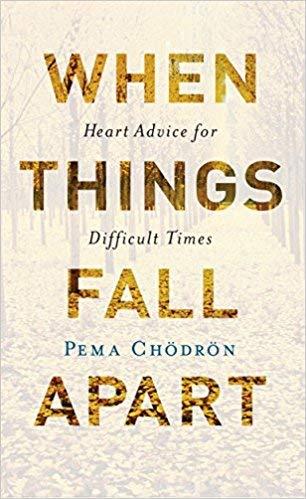
When Things Fall Apart, by Pema Chödrön, explores how we face fear and pain in everyday life. Drawing on Buddhist teachings, Chödrön guides readers through the art of embracing uncertainty. She shows how opening to our vulnerability can soften our rigid habits and free us from suffering.
Chödrön begins by describing the habit of running from discomfort. She invites us to pause when difficult sensations arise and to meet them with curiosity. By leaning into tight shoulders or churning thoughts instead of fleeing, we learn to find a stable ground beneath the chaos.
In one vivid example, she recalls a student afraid of losing control during meditation. Instead of tightening against fear, the student learns to soften and let the fear pass through her like wind through a chink in a wall. This simple shift from resistance to openness becomes a turning point.
She then introduces the concept of groundlessness—the idea that no situation, identity, or feeling stays the same. By embracing groundlessness, we let go of fixed expectations. We begin to see that life’s impermanence offers a hidden doorway to freedom rather than mere insecurity.
Chödrön uses humor and compassion as medicine for our restless minds. She jokes that we clutch security like we’re hanging off a cliff by our fingernails. Yet she reminds us that life’s instability can become an ally in waking us up to the present moment.
In another chapter, she addresses anger and self‐judgment. We often turn harshly on ourselves when painful feelings surface. Chödrön shows how meeting anger with gentleness heals old wounds. She likens self‐compassion to a warm blanket that soothes rather than smothers.
Meditation practice weaves through every lesson. Chödrön encourages brief pauses throughout the day to check in with the breath. In doing so, we become less reactive. Each mindful breath builds resilience and opens our hearts in small, sustainable steps.
She shares an anecdote about a retreat where students faced restlessness and boredom. Instead of labeling these states as “bad,” they learned to befriend them. By observing discomfort mindfully, their irritation transformed into insight about the nature of clinging and aversion.
A key teaching centers on bodhichitta—our natural wakefulness and compassion. Chödrön explains how awakening to our own vulnerability naturally unlocks empathy for others. She invites us to view every fearful moment as an opportunity to plant seeds of kindness.
She also addresses the challenge of dealing with other people’s pain. When a friend or family member suffers, we often try to fix or flee. Chödrön suggests sitting present alongside them, offering a silent presence that honors their experience without trying to control it.
In quieter moments, she asks us to look inward and question our stories about how things should be. We cling to narratives of right and wrong, good and bad. When these stories shatter, we discover fresh ground where compassion turns rigid views into fluid wisdom.
Chödrön doesn’t sugarcoat the work. She reminds us that opening to fear can feel like stepping off a cliff. Yet she assures us that each time we soften into life’s thorns, we grow stronger and more tender simultaneously.
Toward the end, she offers practical advice for daily life: pause before answering stress‐filled emails, notice the urge to judge at drive‐through lanes, turn toward sensations in long lines. These small acts of mindfulness weave moments of wakefulness into the fabric of our routines.
Finally, Chödrön encourages us to embrace a beginner’s mind—seeing each moment as if for the first time. When things fall apart, we get a chance to rebuild our lives more truly, with kindness at the core. She ends by reminding us that our basic goodness underlies every stumble and every triumph.
Throughout When Things Fall Apart, Pema Chödrön offers a clear map for meeting pain with an open heart. She invites us to trust that by leaning into uncertainty, we discover the warmth of our own courage and the power of compassion alive in every trembling breath.
DETAILED SUMMARY
Key Takeaways
1. Embracing Uncertainty
“Nothing ever goes away until it has taught us what we need to know.”
Learning from Discomfort: Pema Chödrön urges you to welcome life's uncertainties rather than resist them. She shows how discomfort can become a teacher. When you face pain or loss, you have a chance to learn more about yourself and your attachments.
By leaning into uncertainty, you break the habit of seeking fixed answers. Chödrön explains that craving certainty builds walls around your heart. Those walls stop you from seeing new possibilities or fresh ways of relating to life. Instead, she invites you to stay open to each moment, however unsettling it may feel.
This openness allows for growth. You witness habitual patterns—fear, grasping, aversion—and you learn to pause before reacting. In that pause lies space for compassion and curiosity. You discover that discomfort need not trap you; it can free you.
Transforming Modern Stress: In a culture obsessed with control and predictability, Chödrön’s call to embrace uncertainty offers relief. You stop feeling flawed for not knowing what comes next. Instead, you see uncertainty as fertile ground for creativity and resilience.
Therapists and mindfulness teachers widely adopt this teaching. Clients learn to face anxiety without escaping into compulsive planning or numbing distractions. Historically, spiritual traditions have taught acceptance of the unknown. Chödrön’s approach makes that wisdom accessible without religious jargon.
On a societal level, welcoming uncertainty can reduce polarization. When people admit they don’t have all the answers, they listen more compassionately. That shift fosters dialogue and shared problem solving rather than rigid debate or blame.
Key points:
- Discomfort holds lessons, not threats
- Stopping habitual reactions creates inner space
- Openness nurtures compassion and curiosity
- Control is an illusion; flexibility breeds resilience
- Uncertainty can drive creativity and connection
2. Working with Fear
“Compassion for ourselves is the most powerful healer of all.”
Turning Toward What Scares You: Chödrön points out that fear often drives our worst habits: self-criticism, avoidance, and addiction. She invites you to turn toward fear with gentle curiosity. By shining a light on it, you rob it of hidden power.
She teaches simple practices like softening your heart when fear arises. Instead of tightening around panic, you breathe and acknowledge how you feel. That acknowledgment reduces the grip of fear and shows you its shape.
In that space, you can respond rather than react. Compassion for yourself replaces judgment. You learn that fear is not a permanent enemy but a messenger guiding you to unmet needs or unresolved past pain.
Cultivating Inner Safety: This teaching transforms personal and therapeutic work. People learn to sit with panic attacks instead of fleeing. They discover that self-compassion rewires neural pathways tied to shame and alarm.
Historically, many thought fear must be suppressed or denied. Chödrön’s approach echoes older Buddhist insights but speaks in modern language. It helps veterans, first responders, and trauma survivors build inner safety.
Society benefits when individuals fear less. You become more willing to take healthy risks—speaking up, forming relationships, backing social change. Fear without compassion perpetuates isolation; fear met with kindness builds solidarity.
Key points:
- Self-compassion softens fear’s grip
- Acknowledging fear dissolves shame
- Breathing and curiosity create response space
- Healing arises when fear becomes visible
- Compassion rewires stress responses
3. The Power of the Pause
“When we pause, we make room for wisdom to catch up with our impulses.”
Creating Space Between Stimulus and Reaction: Chödrön explains that most suffering comes from impulsive reactions. You see danger, and you instantly lash out or withdraw. That reflex keeps you stuck in negative loops.
By pausing—taking even a single breath—you interrupt that loop. In the gap between stimulus and response, you open a door to wiser, more skillful action. It’s like stepping aside from an oncoming train to find a fresh path.
This simple pause grows stronger with practice. Over time, you become less driven by old habits. You respond to life’s challenges with clarity and patience rather than frustration and fear.
Building Emotional Intelligence: Pause practices spread through schools and workplaces as a core mindfulness skill. Students learn to calm exam stress. Employees manage conflict without explosive arguments. These changes improve learning and collaboration.
Historically, ancient meditation masters taught similar techniques. Chödrön translates that wisdom into bite-sized practices for busy modern lives. Her clear guidance makes pause accessible to all.
On a societal scale, pausing can reduce polarization. When leaders and citizens pause before speaking, public discourse turns kinder. You replace blame with understanding. A single breath can ripple outward into more compassionate communities.
Key points:
- Interrupt habitual reactions with a breath
- Pause creates space for wiser choice
- Practice strengthens emotional self-control
- School and work environments gain calm
- Kind speech follows mindful pauses
4. Letting Go of Control
“Attachment leads to suffering; letting go brings freedom.”
Releasing Clinging to Outcomes: Chödrön teaches that we suffer when we cling to desired results. You plan a project, only to see it derail. You hold tightly to an idea of how life should be. Then disappointment or anger follows.
Letting go doesn’t mean apathy or giving up. Instead, it means holding your goals and dreams lightly. You take action when needed, yet you remain open to life’s changing currents. That openness dissolves the tension of control.
By practicing non-clinging in daily tasks—washing dishes or commuting—you build trust in your ability to adapt. You stop chasing permanent happiness and discover contentment arises from presence itself.
Easing Collective Anxiety: In a world fixated on outcomes—wealth, status, perfection—Chödrön’s teaching offers relief. You learn to value effort more than result. Businesses embrace agile methodologies as a parallel: plan, test, adapt.
Therapists incorporate non-attachment exercises into treatments for anxiety and OCD. Patients learn to observe thoughts without gripping them. Over time, anxiety disorders often ease.
Socially, less clinging reduces competition and comparison. Communities shift toward cooperation. When people stop striving for fixed ideals, they welcome diversity and change. That shift can foster more inclusive policies and cultures.
Key points:
- Clinging to outcomes breeds suffering
- Action with openness eases tension
- Daily tasks become mindfulness practice
- Agile approaches mirror non-attachment
- Cooperation rises when comparison falls
5. Cultivating Compassion
“True compassion arises when we recognize our shared vulnerability.”
Connecting Through Shared Humanity: Chödrön reminds you that everyone suffers. Rich or poor, young or old, you face loss, fear, and uncertainty. Recognizing this shared vulnerability awakens compassion.
Compassion here is not pity but a deep sense of solidarity. When you see someone in pain, you don’t recoil or judge. You approach with an open heart, offering presence rather than advice.
This practice reverses isolation. You realize you are not alone in your struggles. You find support in others and learn to offer that same support in return.
Fostering Community Resilience: Communities built on compassion weather crises better. After natural disasters, neighbors who practice mindful compassion form support networks. They share resources without waiting for top-down aid.
Health care workers use self-compassion to avoid burnout. By acknowledging their own struggles, they sustain empathy for patients. Research shows self-compassion reduces secondary trauma.
On a global scale, acknowledging shared vulnerability can ease conflicts. When nations view each other as fellow humans, not enemies, they find negotiation easier. Climate action, refugee aid, and peace efforts all benefit from this shift.
Key points:
- Shared vulnerability breeds solidarity
- Compassion is presence, not pity
- Self-compassion prevents burnout
- Neighbors form support networks
- Global cooperation follows empathy
6. Using Meditation as Medicine
“Meditation is like a gym for the mind.”
Training Attention and Heart: Chödrön compares meditation practice to lifting weights for emotional strength. You sit quietly, focusing on breath or sensations. Over time, your attention grows steady.
Then you introduce kindness or compassion practices. You imagine sending goodwill to yourself, then to loved ones, then to difficult people. This exercise trains your heart to open rather than close under stress.
Regular practice rewires neural pathways. You become less reactive and more present. Small daily sessions add up, improving focus, patience, and emotional balance.
Integrating Mindfulness in Medicine: Health professionals prescribe meditation for chronic pain, depression, and high blood pressure. Patients often reduce medication as they learn inner tools. Insurance companies recognize cost savings and add coverage for mindfulness programs.
Schools integrate short meditations to help students manage ADHD and anxiety. Teachers report calmer classrooms and better academic performance.
On a cultural level, meditation apps reach millions. They spread Chödrön’s core ideas in bite-sized formats. As a result, societies become more aware of mental health as something we can actively cultivate, not passively endure.
Key points:
- Meditation trains attention like exercise
- Loving-kindness practices open the heart
- Neural pathways shift toward calm
- Health care adopts mindfulness therapies
- Apps scale practice to global audiences
Future Outlook
Pema Chödrön’s teachings in When Things Fall Apart ripple outward into many domains. You see them in therapy rooms, schools, and corporate retreats. As uncertainty grows in world affairs and climate crises mount, her call to embrace discomfort gains urgency. People learn to sit with fear instead of fleeing, to pause before reacting, and to let go of rigid expectations. That shift fosters resilience in individuals and communities.
Looking ahead, we can expect mindfulness and non-attachment to shape public policy and education more deeply. Governments may support programs teaching emotional awareness in youth. Social media platforms could incorporate reminders to pause and reflect before posting. In health care, integrative models will continue to blend meditation, compassion training, and conventional medicine.
Ultimately, When Things Fall Apart invites you to transform personal suffering into collective wisdom. As more people practice these methods, our world may grow less frantic and more compassionate. We’ll treat uncertainty not as a threat but as a doorway to creativity, connection, and true freedom.







