
Summary
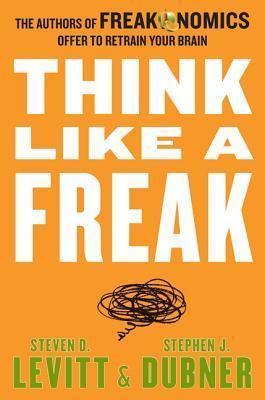
“Think Like a Freak,” by Steven D. Levitt and Stephen J. Dubner, challenges readers to rethink the way they approach problems. They invite you to drop conventional wisdom and use simple logic instead. Through fun stories and quirky experiments, the authors show how unexpected solutions can arise when you change your mindset.
The book opens by arguing that experts often overthink. Levitt and Dubner tell how they once tried to find the best ways to reduce school truancy. They discovered that tiny rewards—like small cash bonuses—worked better than stern punishments. This surprised almost everyone because it ran counter to the usual advice of cracking down harder.
Next, they explore the power of incentives more broadly. They describe a day spent with oil rig workers who were paid by the ton of oil they moved. The workers knew that if they lifted a little extra each time, it would add up to huge gains. You see how simple changes in pay structures can reshape behavior in dramatic ways.
Then the authors turn to the art of asking the right questions. They recount the story of a hedge-fund manager who doubled his returns by figuring out what other traders feared. By phrasing his questions to reveal hidden fears, he unearthed market moves no one else caught. You learn that the questions you ask often shape the answers you get.
A shorter digression follows about incentives gone wrong. When soccer players feign injury to win free kicks, leagues tried giving yellow cards for diving. Instead, fouls shot up. This tiny tale shows how tweaking one rule can backfire in another corner of the game.
Levitt and Dubner then suggest you look at data like a detective. They describe using crime statistics to predict where crimes would happen next. By mapping hot spots, police departments slashed burglaries. The point: patterns hide in plain sight if you know where to look.
The authors push you to embrace what they call the “inner child.” They remind you how kids ask “Why?” again and again until they get at the heart of a matter. Adults shy away from asking endless questions. But Levitt and Dubner argue that persistence often leads to breakthroughs.
They also examine how nearly every social taboo can be studied scientifically. One chapter looks at whether a late dinner makes you gain weight. Researchers split volunteers into two groups—one ate at noon, the other at eight p.m.—but both consumed the same calories. Neither group fared better or worse. It killed a myth by simply isolating variables.
Next comes a chapter on thinking small rather than grand. They describe a school that cut truancy by offering pizza slices instead of giving tardy slips. This tiny pizza trick dropped missed days by half. It proves you don’t need sweeping reforms to make a big impact.
Then they tackle big topics like war and peace. They share how an economist used pigeon droppings to gauge the health of World War II battleships. The buildup of guano on different parts of the hull revealed which areas faced the most stress. By reinforcing those spots, the navy boosted ship survival without redesigning the whole vessel.
A short aside covers the fear of failure. The authors admit they once hesitated to pitch some ideas, worried they’d sound silly. But they realized that embracing odd concepts sometimes uncovers hidden gold. They encourage you to tolerate a little embarrassment for the sake of fresh insight.
Levitt and Dubner then dive into cooperation and trust. They recount a telephone charity drive where volunteers who wore blue shirts raised far more money than those who wore red. It seems minor, but color primed donors to trust one group over the other. The lesson: tiny psychological cues can sway us without our noticing.
The book circles back to experimentation. The authors confess they created a fake oil company to run sales experiments on their own families. They tested pricing strategies and studied how people responded to freebies. It reinforced their view that hands-on trials beat remote theories every time.
A final long chapter urges readers to adopt a “freaky” attitude daily. They give practical steps: ask unconventional questions, embrace data over opinion, and test your hunches quickly. These methods don’t guarantee success, but they guarantee surprising lessons.
In the closing remarks, Levitt and Dubner remind you that thinking like a freak isn’t about ignoring emotions. It’s about balancing gut feelings with curiosity and proof. You can still feel uneasy about new ideas, but you’ll learn to push past discomfort to find better answers.
In the end, “Think Like a Freak” isn’t a manifesto for rebels alone. It’s a toolkit for anyone willing to question norms. Whether you’re a teacher, parent, or CEO, you’ll walk away convinced that the world yields to those who dare to ask fresh questions, test boldly, and laugh at their own mistakes.
Detailed Summary
Key Takeaways
1. Define the Problem Precisely
“The first step to solving a problem is to say aloud what the problem really is.”
Pinpointing the Core Issue: Before you rush to solutions, you must identify exactly what you’re facing. Levitt and Dubner show how vague or hidden definitions lead you astray. You might think you’re tackling a crime wave, but without naming which crimes and where, you spin your wheels.
They walk you through cases—like a charity obsessed with fundraising numbers rather than the cause. Only when the real goal emerged did they change tactics. This precision creates clarity and lays a foundation for creative leaps.
Sharper Solutions, Fewer Failures: When policymakers define problems well, budgets go to the right place. In education, narrowing “improve reading” to “boost comprehension in third grade” led to targeted reading camps. Those camps saw real gains.
Courts using clear definitions on recidivism could measure programs fairly. Hospitals defining “patient wait time” by specific stages improved triage. Across fields, precise framing cuts wasted effort.
Key points:
- Clarify goals before acting
- Avoid broad or hidden definitions
- Align actions with specific targets
- Evaluate progress accurately
- Prevent resource waste
2. Embrace a Childlike Mindset
“Kids ask questions most adults never even think to ask.”
Curiosity Over Assumption: Levitt and Dubner urge you to drop pride and ask “why” like a child. Children wonder why toilets flush one way, not the other. That naive curiosity unlocks fresh angles.
The authors recount a wizard at a conference who asked why people sit on plastic chairs at 9 AM. He learned about seating geometry and human flow. That odd start revealed ergonomic fixes in offices.
Innovation Through Simple Questions: When researchers turned simple queries into studies, they uncovered big payoffs. Asking “why don’t birds tire when they migrate?” spurred advances in jet engine cooling. In business, asking “who really pays for happy hour?” reshaped bar promotions.
Agencies that train teams to ask childlike questions spark breakthroughs. R&D labs adopt “dumb question sessions,” yielding novel designs. Startups use curiosity rituals to dodge stale thinking.
Key points:
- Value naive questions
- Suspend assumptions
- Stimulate new ideas
- Encourage open inquiry
- Break stale patterns
3. Understand Incentives Deeply
“Incentives are the cornerstone of modern life.”
Drivers of Human Behavior: People respond to incentives more than to logic. Levitt and Dubner unmask hidden costs and rewards. Doctors, for example, run more tests when hospitals pay per scan. Change the pay structure, and test rates fall.
They stress that good intentions can backfire when incentives misalign. A blood donation program that paid donors in cash saw donations drop—crowding out the altruistic motive.
Designing Better Systems: Governments revamp welfare when they grasp incentive traps. Linking benefits to job training dramatically boosts employment. Firms restructure sales teams to reward sustainable growth, not one-time deals.
Nonprofits tie aid to performance and see better results. Even environmental policies use pollution credits to harness market motives. Spotting incentives keeps you from unintended harms.
Key points:
- Identify hidden motivators
- Beware of perverse incentives
- Align rewards with goals
- Monitor incentive effects
- Adjust systems proactively
4. Admit What You Don’t Know
“Being wrong opens the door to learning.”
Power of Intellectual Humility: Most of us avoid showing doubt. But Levitt and Dubner claim admitting ignorance gives you leverage. When you say “I don’t know,” you signal openness. That leads others to share clues.
They tell of a consultant who began meetings by listing his uncertainties. Colleagues in turn volunteered data and ideas. Together they cracked the problem far faster than he alone.
Fostering Collaboration and Discovery: Teams that encourage “I’m not sure” build trust and innovation. Tech firms use “question flags” in code reviews to lift blind spots. In academia, researchers post unresolved questions to enlist peers.
In daily life, admitting doubt taps hidden expertise. You avoid costly mistakes by asking before you act. This habit accelerates learning at every scale.
Key points:
- Promote open dialogue
- Reduce fear of error
- Invite diverse input
- Accelerate problem-solving
- Cultivate continuous learning
5. Think Small, Act Big
“Solve a tiny version of the problem first.”
Pilot Projects as Proving Grounds: Large problems intimidate. Levitt and Dubner suggest you break them into micro-experiments. Before overhauling a city’s transit, test a new bus route in one neighborhood.
They describe a school that piloted a reading program in two classrooms. They gathered data, tweaked methods, then scaled it district-wide. That stepwise approach avoided system-wide failure.
Mitigating Risk, Boosting Success: In health care, small randomized trials refine treatments ahead of mass roll-out. Tech startups launch beta versions to early users, learn fast, then iterate.
Governments use pilot zones for new regulations to spot pitfalls. As a result, policies adapt before national launch. This phased testing saves time, money, and goodwill.
Key points:
- Break tasks into tiny tests
- Collect rapid feedback
- Refine methods early
- Scale only after success
- Reduce large-scale risk
6. Use Data Creatively
“Data can tell you stories no expert could imagine.”
Seeing Beyond Conventional Analysis: Levitt and Dubner champion unconventional data. They ask what minor details reveal when aggregated. For instance, they used library late fees to predict reading habits and crime rates by neighborhood.
They mined corporate loan records to foresee business failures before traditional ratings. That lateral approach redefined credit risk models.
Revolutionizing Decision-Making: Firms that marry odd data sources—like weather patterns with foot traffic—optimize store layouts and staffing. Cities use cellphone pings to improve public transit timing.
Even sports teams deploy play-by-play heat maps to refine strategy. By blending novel metrics, organizations leap ahead of rivals who rely on old measures.
Key points:
- Explore nontraditional metrics
- Aggregate small signals
- Reveal hidden patterns
- Inform smarter decisions
- Challenge expert assumptions
Future Outlook
Levitt and Dubner’s methods push us to a new era of problem-solving. As big data grows, asking childlike questions and defining sharp goals become ever more vital. AI and analytics will pair well with their small experiments.
Policymakers will pilot micro-solutions globally, driven by precise incentives. Businesses will harness quirky data to outthink competitors. Across society, admitting “I don’t know” will emerge as a mark of strength, not weakness.
Ultimately, thinking like a freak turns chaos into insight. The book’s lessons will shape fields from education to healthcare. As challenges grow complex, these counterintuitive tools will guide innovation and human progress.







