
Summary
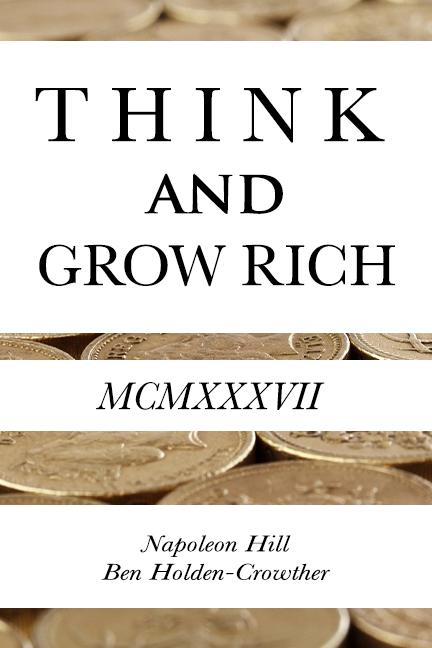
Think and Grow Rich by Napoleon Hill explores the principles that successful people use to create wealth and achieve personal goals. Hill spent twenty years interviewing more than four hundred self-made millionaires, including Andrew Carnegie, Henry Ford, and Thomas Edison. He observed that these individuals shared key traits and habits. His book condenses those findings into thirteen steps that anyone can follow. Each step builds on the others to form a complete system for success.
Hill begins with the power of desire. He doesn’t mean a wish or hope but a burning obsession. You must know exactly what you want, why you want it, and how you plan to get it. Hill outlines a six-point formula: fix in your mind the exact amount of money you desire, determine what you will give in return, set a definite date, create a plan and give it to others, write a clear statement, and read it aloud twice daily. According to Hill, repeating this statement awakens your subconscious mind and turns desire into reality.
Next he tackles faith. Hill describes faith as a state of mind you can induce by affirmations and repeated instructions to the subconscious. He advises combining belief with emotional intensity to imprint your goals on the mind. By visualizing success in vivid detail, you reinforce your conviction and overcome doubt. Hill insists that faith and belief not only shape your thoughts but also attract people and opportunities to help you.
Autosuggestion—the process of feeding your subconscious with positive thoughts—is Hill’s third principle. He recommends writing down goals and repeating them daily to override negative influences. By controlling the input to your mind, you shape your habits and attitudes. He explains that your subconscious follows the dominating thoughts you hold in your consciousness. So, fill your mind with powerful images of success and eliminate fear.
Specialized knowledge comes next. Hill argues that general education rarely leads directly to riches. Instead, you must acquire specific skills or information related to your chosen field. He distinguishes between knowledge you possess and the ability to use information strategically. Networking also counts as a form of specialized knowledge because you tap into others’ expertise through a mastermind group. By pooling talents, you multiply your chances of success.
Imagination serves as the workshop of the mind. Hill identifies two types of imagination: synthetic and creative. Synthetic imagination rearranges old ideas into new combinations, while creative imagination connects with infinite intelligence. He shows how entrepreneurs use both forms to generate business plans. He urges readers to brainstorm, sketch out proposals, and refine them until they form solid ventures. Imagination proves vital for solving problems and finding fresh markets.
Hill then moves to organized planning. He stresses the need for a clear plan and a reliable team to carry it out. He suggests forming a mastermind alliance of two or more people committed to the same goal. This group meets regularly to offer counsel, encourage persistence, and share resources. Hill provides guidelines for handling defeat and revising plans when obstacles arise. Flexibility and cooperation make the difference between success and failure.
Decision is the eighth step. Hill found that successful people make decisions promptly and change them slowly, if ever. Indecision breeds fear and doubt, which he calls the enemies of progress. He recommends avoiding the opinions of others when they contradict your definite purpose. At the same time, you must remain open to constructive feedback from your mastermind group. Resolute action amplifies your energy and moves you toward your goal.
Persistence follows decision as a critical habit. Hill defines persistence as sustained effort in spite of obstacles. He notes that lack of persistence is the chief cause of failure and outlines a formula to develop it: a strong desire, a clear plan, a mastermind alliance, positive habits, and a supportive environment. By sticking to your plan and refusing to quit, you build momentum. Every setback provides a lesson and a chance to strengthen your resolve.
The power of the mastermind unites minds to achieve more than any one individual could alone. Hill describes it as the “economic and spiritual power” generated by friendly alliance. Through shared knowledge, support, and accountability, group members accelerate their progress. He warns against associating with negative people who drain your energy. Surrounding yourself with ambitious, like-minded individuals sustains enthusiasm and creativity.
Hill then explores the mysterious influence of sexual energy. He calls it transmutation, the process of redirecting physical drive into creative and productive outlets. By channeling emotional intensity into your work, you boost enthusiasm and increase output. He cites artists, writers, and inventors who attribute their greatest breakthroughs to passionate focus. Sexual energy, when harnessed, becomes a potent force for achievement.
The subconscious mind serves as the bridge between conscious desires and universal intelligence. Hill explains that it picks up impulses from your thoughts and sends them out as magnetic forces. You feed it positive or negative messages, and it faithfully executes them. By mastering autosuggestion, faith, and emotion, you condition the subconscious to serve your aims. Regular practice transforms random ideas into actionable insights.
Hill identifies the brain as a broadcasting and receiving station for thought vibrations. He likens it to a radio, constantly emitting and picking up signals. Through meditation, visualization, and deep emotion, you tune into the thoughts of others and the infinite mind. This principle underlies intuition, creative inspiration, and the sixth sense. Training your brain in this way opens doors to opportunities you might otherwise miss.
Finally, the sixth sense emerges as the “door to the temple of wisdom.” Hill describes it as a hunch or insight that cannot be explained by logic alone. He insists it develops only after mastering the other twelve principles. When you’ve cultivated desire, faith, imagination, and the rest, the sixth sense springs into life. It might guide you toward profitable ventures, warn you of danger, or reveal hidden connections.
In conclusion, Think and Grow Rich shows that wealth begins in the mind and follows precise steps. Hill weaves together psychology, personal anecdotes, and interviews to support his formula. He never promises overnight riches but emphasizes disciplined effort, clear goals, and emotional conviction. Countless readers credit his teachings for transforming their lives. By adopting his philosophy, you align your thoughts, plans, and actions to achieve lasting success.
Detailed Summary
Key Takeaways
1. Desire: The Starting Point of All Achievement
“Whatever the mind can conceive and believe, it can achieve.”
Cultivating a Burning Desire: Napoleon Hill argues that strong desire acts as the fuel for any accomplishment. He insists you must pinpoint a clear financial goal and infuse it with emotion. A vague wish won’t work. You need a burning need so intense that it drives you past obstacles and doubt.
Hill outlines a six-step method to translate desire into reality. First, you fix on an exact monetary figure. Next, you determine what you’ll give in return. Then, you set a date, create a plan, and write it down. Finally, you read your statement aloud twice daily, feeling the words as truth. This practice conditions your subconscious to pursue success relentlessly.
Transforming Thoughts into Results: Hill’s emphasis on desire influenced generations of entrepreneurs and self-help authors. By framing wealth-building as a mental exercise, he shifted the focus from external conditions to internal conviction. Companies now train staff in goal-setting and vision boarding, practices that trace back to Hill’s blueprint.
On a social level, this principle sparked a cultural shift toward personal responsibility. Instead of blaming outside forces, people began to accept that their mindset directs their outcomes. Critics note that intense desire alone won’t guarantee success. Yet many agree it lays the foundation for disciplined effort and creative problem-solving.
Key points:
- Pinpoint an exact monetary goal
- Determine what you’ll give in exchange
- Set a deadline and actionable plan
- Write and read your goal aloud daily
- Engage emotion to fuel persistence
2. Faith: Visualization and Belief in Attainment
“Faith is the head chemist of the mind.”
Programming the Subconscious: Hill defines faith as a state of mind you can cultivate through repeated affirmation. By speaking positive statements about your goal, you feed your subconscious beliefs that shape your actions. Over time, doubt gives way to confidence, and belief becomes an active driver.
He recommends creating a “faith formula”: a written affirmation of your goal paired with emotional conviction. You repeat it morning and night until it feels real. This mental rehearsal trains your mind to spot opportunities and solutions you’d otherwise overlook. Your subconscious then aligns your behavior with your conscious desires.
Shaping Behavior with Belief: Modern psychology confirms that visualization and positive self-talk alter neural pathways. Athletes and executives use mental rehearsals to boost performance. Hill’s ideas foreshadowed techniques like cognitive restructuring and guided imagery, now staples in sports and therapy.
On the flip side, overconfidence can blind people to risks. Hill warns against wishful thinking without action. He stresses faith must pair with persistent effort. When balanced, faith propels you through setbacks and helps maintain focus on long-term objectives.
Key points:
- Use affirmations to embed belief
- Repeat statements twice daily
- Engage strong emotion
- Trust in goal attainment
- Combine faith with action
3. Autosuggestion: Influencing the Subconscious Mind
“Your dominating thoughts will eventually reproduce themselves in outward, physical action.”
Self-Generated Programming: Autosuggestion means feeding your mind with ideas you wish to realize. Hill teaches that the subconscious acts on dominant thoughts, so you must guard your mental input. By consciously choosing your thoughts, you steer emotions and behaviors toward your goal.
He provides practical steps: compose a clear statement, read it aloud with feeling, and visualize the outcome. Over time, this repetition rewires your subconscious support system. It also reduces fear and negativity that sabotage ambition. Autosuggestion thus becomes a tool for mental discipline.
Cultivating Productive Mindsets: Business coaches now incorporate autosuggestion in workshops on mindset mastery. Sales teams craft scripts and positive mantras to overcome rejection. Hill’s technique laid the groundwork for affirmations and self-talk exercises popular today.
However, autosuggestion alone can’t create skill or knowledge. It must complement learning and persistent work. When combined with practical effort, autosuggestion sharpens focus and resilience, enabling you to tackle challenges more creatively.
Key points:
- Craft a clear written statement
- Read it with emotion twice daily
- Visualize yourself succeeding
- Eliminate negative input
- Rewire subconscious patterns
4. Specialized Knowledge: Personal Experiences and Education
“Knowledge will not attract money unless it is organized and intelligently directed.”
Gaining and Applying Expertise: Hill stresses that general knowledge alone won’t build wealth. You need specific skills relevant to your chosen field. That expertise can come from formal education, self-study, or direct experience. The key is to continually upgrade your knowledge base.
He recommends creating a mastermind group to share insights and ask questions. This network of skilled peers accelerates learning and sparks innovation. You then apply your specialized knowledge in practical plans to generate income or solve problems effectively.
Leveraging Expertise for Opportunity: In modern business, specialists command premium fees. Consultants, coaches, and niche service providers often out-earn generalists. Hill’s focus on specialization predicted the rise of knowledge economies, where intellectual capital drives value.
At a societal level, this principle encourages lifelong learning. Workers adapt to changing markets by acquiring new certifications. While automation threatens routine jobs, those with specialized knowledge remain in demand. Hill’s insight pushed individuals toward continuous skill development.
Key points:
- Focus on field-specific expertise
- Combine learning with practical use
- Form a mastermind group
- Share and acquire insights
- Constantly upgrade skills
5. Imagination: The Workshop of the Mind
“Ideas are the beginning points of all fortunes.”
Crafting Creative Plans: Hill calls upon imagination as the tool to design and perfect business plans. He divides it into two forms: synthetic imagination combines existing ideas in new ways, while creative imagination taps intuition or inspiration. Both enrich strategy and problem-solving."
He details exercises to spark imagination: mind-mapping, brainstorming with others, and daydreaming sessions. By giving your mind freedom to experiment, you find novel solutions. This mental flexibility prevents stagnation and keeps your pursuits fresh and competitive.
Innovation through Mental Experimentation: Companies now set aside “innovation time” for employees to ideate without constraints. Silicon Valley’s hackathons echo Hill’s exhortation to let imagination roam. Breakthrough products often emerge when teams synthesize diverse concepts.
Imagination also drives personal ventures. Side projects, creative hobbies, and passion pursuits frequently spawn profitable opportunities. Hill’s call to nurture imagination underlies today’s culture of entrepreneurship and startup incubators.
Key points:
- Use mind-maps and sketches
- Host brainstorming sessions
- Allocate free exploration time
- Combine old ideas freshly
- Trust intuitive sparks
6. Mastermind: The Power of Alliance
“No individual may have great power without availing himself of the Mastermind.”
Collective Intelligence: Hill introduces the mastermind principle as a coordination of knowledge and effort between two or more people. He insists that no person can succeed alone. Collaboration with like-minded individuals multiplies resources and creativity.
He lays out guidelines: assemble a small group of people who share a common purpose, meet regularly, and maintain harmony. Through mutual support, accountability, and sharing of ideas, each member boosts collective drive and problem-solving capacity. This alliance acts like a brain trust.
Networks That Accelerate Growth: The mastermind concept inspired modern peer-mentoring circles and mastermind coaching groups. Entrepreneurs credit such networks for faster problem resolution and new partnerships. Investors and founders use mastermind sessions to vet ideas before committing capital.
On a broader scale, mastermind alliances foster innovation ecosystems. Clusters like Silicon Valley and research hubs demonstrate how dense networks of collaboration outpace isolated efforts. Hill’s insight into cooperative advantage paved the way for co-working spaces and industry consortia.
Key points:
- Form a small, purpose-driven group
- Hold regular meetings
- Foster harmony and trust
- Share expertise freely
- Hold each other accountable
Future Outlook
Napoleon Hill’s principles still shape modern self-help and business training. Desire, faith, and autosuggestion underscore current leadership development programs. Imagination and specialized knowledge drive innovation in technology and services. Mastermind alliances remain vital as remote collaboration tools make it easier to connect globally.
As automation transforms work, individuals must refine their mindsets and skills. Hill’s emphasis on continuous learning and proactive goal-setting prepares readers for uncertain markets. By combining mental discipline with creative collaboration, future entrepreneurs can adapt faster and seize emerging opportunities.
Looking ahead, we’ll likely see digital platforms embedding Hill’s methods. Apps that guide users through affirmations, mastermind meetups, and goal-tracking will democratize access. Think and Grow Rich offers a mental framework that endures—and its next chapter might unfold through smart technology and global networks.







