
Summary
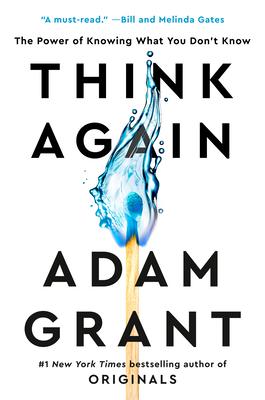
“Think Again: The Power of Knowing What You Don’t Know” by Adam Grant challenges us to question our beliefs and embrace the joy of being wrong. Grant argues that intelligence isn’t just about what you know but also about your willingness to rethink and unlearn. He weaves together research, real-world stories, and practical advice to show how we can replace close-minded certainty with humble curiosity.
Grant begins by describing three mindsets we all default to: the preacher, prosecutor, and politician. The preacher defends sacred beliefs, the prosecutor attacks opposing ideas, and the politician courts approval. Each mindset blocks our ability to rethink. In contrast, the scientist mindset treats beliefs as hypotheses open for testing. This switch sets the stage for personal and professional transformation.
He illustrates the scientist mindset with the story of Avi Loeb, the Harvard astronomer who pursued the mysterious object ʻOumuamua. Despite ridicule, Loeb kept an open mind and encouraged debate. His example reveals how curiosity can drive breakthroughs. Grant invites us to view our own convictions not as unshakable truths but as experiments inviting further inquiry.
Next, Grant turns to how we change others’ minds. He warns against the prosecutor mode that pits us against opponents. Instead, he suggests asking questions that prompt self-reflection. He recounts a teacher who used the Socratic method to lead students to realize textbook math errors. By guiding rather than attacking, she helped them rethink deeply.
Grant contrasts confrontation with motivational interviewing—a technique that helps people voice their own reasons for change. He shares a story of airline flight attendants who transformed safety compliance by asking colleagues why certain rules mattered. When people articulate their own motivations, change sticks. Grant urges us to listen more than we speak.
The book then explores interpersonal rethinking through negotiation and conflict resolution. Grant highlights Chris Voss, a former FBI hostage negotiator, who emphasizes tactical empathy. Voss listens for emotional cues and mirrors language to build rapport. Grant shows how this approach opens doors at home and at work, enabling us to influence without coercion.
He shifts to group dynamics and explains why organizations often punish rethinking. Companies cling to outdated practices even when data screams for a pivot. Grant points to the surprising success of the popcorn maker Orville Redenbacher, whose team ignored skeptics and doubled down on quality. Their willingness to rethink marketing strategies led to a market explosion.
Netflix provides another illustration. When Reed Hastings introduced unlimited streaming, many insiders resisted, fearing DVD revenues would plummet. Yet leaders kept debating data, ran small experiments, and shifted resources gradually. This culture of debate—of inviting healthy dissent—helped Netflix become an entertainment powerhouse.
Grant stresses that leaders must reward doubt and view good questions as gifts. He encourages “thinking partners” who challenge ideas without personal attack. He also warns of groupthink in homogenous teams. When everyone agrees too quickly, blind spots multiply. Diverse perspectives, he insists, spark the toughest, most creative rethinking.
In one vivid study, Grant describes a police force that adopted an online anonymous forum for officers to question policies. When managers simply listened and responded with data rather than punishment, innovations skyrocketed. Traffic stops, training drills, even community outreach saw creative tweaks that improved trust and efficiency.
Moving beyond organizations, Grant examines societal rethinking on controversial issues. He calls on us to treat opinions like beliefs in flux rather than fixed identities. He shares the story of a prison reform advocate who changed his stance on solitary confinement after meeting inmates and reviewing case studies. Personal encounters, Grant suggests, humanize abstract debates.
He also analyzes political polarization. Instead of shouting louder, he proposes cross-ideological friendships built on shared interests. He points to faith-based groups in the Deep South that brought liberals and conservatives together to renovate schools and parks. Working side by side, they began to question one another’s stereotypes and find common ground.
Grant wraps up by addressing the fear of being wrong. He reminds us that nobody likes intellectual humiliation, yet growth demands risk. He likens rethinking to a muscle—the more you stretch it, the stronger it gets. He leaves readers with practical habits: carry a “confession journal,” surround yourself with people who disagree, and celebrate when your beliefs evolve.
Finally, “Think Again” reframes doubt as a path to mastery rather than a sign of weakness. It invites you to approach life as a curious scientist, probing assumptions and updating your worldview. By practicing this art of rethinking, you’ll not only learn more but stay nimble in an ever-changing world.
Ultimately, Adam Grant doesn’t just ask you to question others—he urges you to question yourself constantly. In doing so, you’ll discover that the real power lies not in knowing all the answers but in knowing how to find better ones.
Detailed Summary
Key Takeaways
1. Adopt the Rethinking Mindset
“The mark of successful people isn’t that they never fail but that they don’t cling to their mistakes.”
From Fixed to Fluid: Adam Grant argues that we often treat our beliefs like bricks in a wall instead of water in a stream. We get comfortable believing we’re right and resist challenges. He says we must learn to hold our ideas lightly and see them as hypotheses to test, not treasures to protect.
This shift from a fixed mindset to a fluid one frees us to question assumptions. When we invite doubt, we learn faster. Grant shows that by viewing knowledge as provisional, we open ourselves to fresh insights and avoid the blind spots that come with overconfidence.
Driving Personal Growth: When individuals embrace the rethinking mindset, they break free from echo chambers. In practice, this leads to better decisions at work and in life. For instance, managers who solicit opposing views tend to spot errors early and pivot strategies before crises emerge.
On a societal level, fostering rethinking reduces polarization. Communities that encourage respectful questioning see more innovation. They solve problems by testing ideas rather than defending them. This approach underpins scientific progress and democratic dialogue.
Key points:
- Treat ideas as guesses to be tested
- Invite doubt by asking “What if I’m wrong?”
- Seek disconfirming evidence deliberately
- Stay curious about alternatives
- Avoid clinging to past victories
2. Embrace Confident Humility
“Confidence and humility go hand in hand when you admit what you don’t know.”
Balancing Ego and Inquiry: Grant shows that true confidence comes from acknowledging your limits. Overconfident people often dismiss new information. Humble learners, by contrast, stay open. They admit gaps in knowledge and welcome fresh data.
He calls this “confident humility.” It means trusting your ability but knowing it’s not infallible. You speak up when you add value, and you step back when you don’t. This balance helps teams share ideas freely without fear of embarrassment.
Creating Collaborative Cultures: In organizations that value confident humility, employees collaborate more. When leaders admit mistakes, they model vulnerability. That inspires teams to offer constructive feedback and reveal potential pitfalls early.
Education also benefits. Students who see teachers admit “I don’t know” feel safer asking tough questions. This builds a classroom culture of inquiry where everyone learns more deeply instead of parroting answers.
Key points:
- Acknowledge gaps in understanding
- Encourage team members to challenge ideas
- Model vulnerability as a leader
- Reward questions as much as answers
- Mix assertiveness with openness
3. Learn to Argue Like a Scientist
“Debates should be experiments, not battles.”
Testing Ideas in Dialogue: Grant suggests we treat arguments as lab work. Instead of scoring points, we run experiments by sharing evidence. We state our hypothesis, listen to counterarguments, and refine our views.
He outlines techniques like “steel-manning,” where you restate an opponent’s idea in its strongest form before critiquing it. This practice raises the level of discussion and helps both sides test which claims hold up under scrutiny.
Raising Discourse Quality: When people argue like scientists, public discourse improves. On policy debates, for example, participants focus on data and models rather than ad hominem attacks. That produces more effective solutions grounded in evidence.
Within teams, this habit speeds problem solving. Instead of turf wars, members propose pilots and metrics. They test approaches in real time and choose what works. This experimental mindset drives continuous improvement.
Key points:
- Frame debates as tests of ideas
- Use steel-manning to honor opponents’ views
- Invite data over anecdotes
- Define measures of success upfront
- Iterate on findings collaboratively
4. Question Motivated Reasoning
“We don’t see the world as it is. We see it as we are motivated to see it.”
Unpacking Bias: Grant explores how motives shape beliefs. We tend to favor information that confirms our desires. He calls this motivated reasoning. It means we unconsciously spin facts to support our side and dismiss those that don’t.
He urges us to spot these biases by asking, “Who benefits if I’m wrong?” and “What am I avoiding?” These questions reveal hidden agendas. They help us separate personal stakes from objective inquiry.
Promoting Fair Judgments: In legal systems, awareness of motivated reasoning can reduce wrongful convictions. Judges and jurors who know their biases ask tougher questions and demand stronger evidence. That raises the bar for proof.
In personal life, this insight improves relationships. Partners who pause before blaming each other consider alternative motives. They handle conflicts with more empathy and less defensiveness.
Key points:
- Identify personal stakes in debates
- Pause to question initial reactions
- Seek views that challenge your interests
- Reflect on avoided evidence
- Distinguish facts from feelings
5. Reimagine Organizational Learning
“Great teams rethink what they know before they implement what they don’t.”
Building Learning Engines: Grant shows that companies often treat learning as a one-time training event. Instead, he advocates continuous learning loops. Teams should pause after projects and hold “pre-mortems” to anticipate failure points. Afterward, they run “post-mortems” to capture lessons.
He highlights firms that embed rethinking into their routines. They hold regular “challenge days” where employees present ideas that didn’t work and crowdsource improvements. This normalizes failure as a path to breakthroughs.
Driving Innovation and Resilience: Organizations that practice continuous rethinking adapt faster to change. When disruptions hit, they pivot without panic because questioning is built into the culture. That makes them more resilient in crises like market shifts or supply chain shocks.
This approach also spurs innovation. By systematically probing assumptions, teams discover hidden opportunities. They prototype new products and learn quickly from flops, turning every setback into a stepping-stone for success.
Key points:
- Hold pre-mortems to forecast risks
- Run post-mortems to capture lessons
- Celebrate smart failures publicly
- Allocate time for challenging norms
- Create feedback loops in projects
6. Cultivate Doubt in Education
“Teaching students to think again beats lectures any day.”
From Rote to Reasoning: Grant criticizes education systems that emphasize memorization. He says educators should focus on teaching students to question their knowledge. That means designing lessons where students debate case studies and defend competing hypotheses.
He shares examples where teachers assign roles like “devil’s advocate” and ask pupils to switch sides mid-discussion. These exercises force learners to reexamine their convictions and build deeper understanding.
Shaping Future Citizens: When schools train students to rethink, they produce citizens capable of tackling complex problems. These learners don’t cling to dogmas. They weigh evidence in public debates on health, environment, and policy.
In higher education, this skill leads to better research. Scholars who question both methods and conclusions uncover blind spots. They pioneer interdisciplinary approaches that drive scientific advances.
Key points:
- Design debates around real-world issues
- Rotate roles to challenge viewpoints
- Emphasize evidence over authority
- Reward process over rote answers
- Teach metacognitive reflection
Future Outlook
As organizations face rapid technological change, the ability to rethink will be a core competence. Leaders who embed questioning into strategy will outmaneuver competitors stuck in outdated mindsets. We’ll see more pre-mortems and post-mortems in boardrooms, turning every initiative into a learning experiment.
On a societal level, nurturing a culture of curious skepticism can heal divisions. When people prioritize understanding over winning, public discourse shifts from blame to solutions. Institutions—from schools to governments—will need to foster environments where doubt is safe and inquiry thrives.
Ultimately, Think Again sets a roadmap for the future. By teaching us to hold our beliefs lightly, it prepares us to navigate uncertainty. The next generation will benefit from educational systems and workplaces that value adaptability as much as expertise.







