Summary
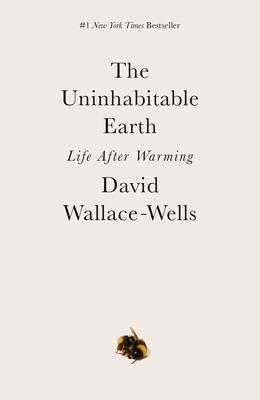
“The Uninhabitable Earth: Life After Warming” by David Wallace-Wells offers a stark look at how climate change will reshape our planet and our lives. Wallace-Wells begins by dismantling the myth that global warming is a distant threat. He shows that we’re already feeling its impacts in the form of record-breaking heat waves, rising seas, and more intense storms.
He explores how even a small rise in temperature can trigger dramatic shifts. For instance, a few degrees warmer could push much of the tropics beyond the limit of human survivability. When humidity joins heat, our bodies struggle to cool down, especially in places where air conditioning is scarce.
The book then turns to storms and flooding. Wallace-Wells draws on recent megastorms to illustrate how coastal cities—from Miami to Mumbai—face ever more destructive hurricanes. These storms don’t just wreck buildings. They shatter economies and uproot millions.
Turning inland, he examines drought and water scarcity. Regions dependent on snowmelt or steady rains already see rivers dry up. As demand for water outpaces supply, conflicts flare among farmers, cities, and countries that share the same dwindling resources.
Food security becomes perilous under these strains. Heat stress reduces crop yields, and erratic rainfall makes harvests unreliable. Farmers adapt by planting new varieties, but yields still drop. Higher food prices may push vulnerable populations into hunger.
Next, Wallace-Wells addresses sea-level rise. Even if emissions stopped today, centuries of melting ice sheets would continue. Shorelines would recede, and low-lying nations could vanish. He cites projections suggesting that by 2100, hundreds of millions could be displaced.
Mass migration brings social and political tension. Coastal communities, faced with flooding, might relocate inland or cross borders. Governments struggle to plan for these shifts. As migration pressures mount, hostility toward newcomers may grow.
The author also considers economic fallout. Extreme weather damages infrastructure and cuts productivity. Insurance markets strain under repeated disasters. In some scenarios, global GDP could plunge by double digits, tipping some nations into recession.
Health risks multiply as warming accelerates. Vector-borne diseases like malaria and dengue creep into new regions. Heat waves kill thousands each summer. Air pollution worsens when higher temperatures amplify smog.
Wallace-Wells warns of tipping points in the climate system. The Amazon rainforest, permafrost, and ocean currents could flip into new states with their own feedback loops. Once those thresholds break, reversing course could become impossible.
Despite the grim outlook, he stresses that choices made this decade matter. Transitioning to renewable energy, improving energy efficiency, and rethinking agriculture can slow warming. Technology like carbon capture could help too, though it’s no silver bullet.
He critiques political paralysis and vested interests that block progress. Fossil-fuel industries wield power and spread doubt. Meanwhile, many governments promise action but fall short on implementation.
Wallace-Wells urges us to reframe climate change as a crisis we face now, not later. He draws analogies to wars and pandemics, calling for urgent mobilization. He argues that we need far more ambitious targets and rapid deployment of clean solutions.
In the final chapters, he offers glimpses of hope. Cities like Copenhagen and Vancouver shift to renewables. Grassroots movements push for policies like carbon taxes. Individuals make lifestyle changes in diet and travel. These steps alone won’t save us, but they show what’s possible.
Ultimately, The Uninhabitable Earth stands as both warning and call to action. Wallace-Wells leaves readers with a clear message: the future isn’t written yet. We can still steer away from the worst outcomes—if we summon the will to act now.
Detailed Summary
Key Takeaways
1. The Escalating Temperature Trajectory
“We are on track to warm the planet by at least 3°C this century, an amount historically linked to mass extinctions.”
Understanding Temperature Thresholds: Wallace-Wells begins by charting our current emissions pathway and its likely rise in global temperatures. He details why a 1.5°C increase is no longer assured, and how 2°C, 3°C, or more could become the new normal. By comparing paleoclimate data, he shows that each half-degree jump amplifies risks—from record heatwaves to ocean acidification.
He stresses that humans have little precedent for living through sustained, multi-degree warming. Even a 2°C rise carries cascading hazards. Three degrees unlocks feedback loops in ice sheets, forests, and permafrost. At 4°C, Wallace-Wells warns, we cross thresholds that reshape agriculture, coastal cities, and global health. The stakes grow exponentially rather than linearly.
From Gradual Warming to Sudden Crises: Historically, temperate zones enjoyed stable climates. Now, extreme heat kills thousands each year and burdens hospitals, especially in cities unprepared for sustained high temperatures. Heatwaves disrupt labor and drive up energy demand, creating vicious cycles of grid failures and health emergencies.
On the policy side, national plans often assume 2°C remains the limit. But as projections drift higher, investments in adaptation lag behind. Coastal zones face rising seas. Heat stress undermines food production in the tropics. Economies built on steady growth must now budget for increasing climate shocks—storms, droughts, wildfires—each with hefty recovery costs.
Key points:
- Projected warming of 3°C or more this century
- Amplified risks beyond 1.5°C thresholds
- Nonlinear climate feedback loops
- Historical lack of human experience under such heat
- Urgent need to revise adaptation planning
2. Chain Reactions in Nature
“A single alarming feedback—like permafrost melt—could cascade into runaway warming that no policy framework can arrest.”
Feedback Loops Defined: Feedback loops occur when warming triggers changes that further increase temperature. Wallace-Wells highlights permafrost thaw, releasing methane and CO₂. He also examines Amazon deforestation, where stressed forests release more carbon. As ice sheets diminish, they reflect less sunlight, accelerating heat absorption.
These loops, once considered distant risks, now sit squarely within our century. Each loop compounds another. The melting Arctic weakens jet streams, causing prolonged heat or cold extremes. Warming oceans lose their ability to draw down carbon. Collectively, the loops push climate systems toward new, less hospitable equilibria.
Global Implications of Local Changes: Permafrost regions span millions of square miles in Canada and Siberia. As they thaw, indigenous communities and wildlife habitats collapse. The release of ancient carbon is not gradual. It emerges as sudden spikes—massive methane belches—that researchers observe by the tundra lake.
In the Amazon basin, drought and heat weaken tree cover. Blazes spread more easily. As the forest edges thin, moisture cycling falters, leading to savanna-like conditions. This loss harms biodiversity and indigenous livelihoods. On a planetary scale, each feedback skews weather patterns, disrupting global agriculture and water supplies far beyond the immediate zone.
Key points:
- Permafrost thaw releases greenhouse gases
- Forest dieback accelerates carbon emissions
- Albedo loss from melting ice
- Jet stream disruptions from Arctic warming
- Ocean carbon uptake declines
3. Water and Food Under Siege
“By mid-century, billions could face acute water shortages, making hunger and conflict nearly inevitable.”
Stress on Resources: The book details how rising temperatures and shifting rainfall threaten water security. Wallace-Wells points to regions like the Middle East, South Asia, and parts of Africa. There, river basins fed by melting glaciers now ebb. Aquifers drop as farmers pump groundwater faster than it can recharge.
Food production hinges on reliable water. Crop yields already dip under heat stress. Wheat, rice, and maize struggle above certain temperature thresholds. When harvests falter in one major exporter, global food prices spike. Nations compete for exports, and consumers in poorer countries go hungry.
Societal Fractures from Scarcity: Declining water supplies trigger local disputes that can escalate. Farmers deprived of irrigation abandon fields. Urban areas confront rationing. Industries that rely on water—from steelmaking to semiconductors—shut down or relocate.
Food shortages become a catalyst for migration. People leave drought-stricken villages to seek work in cities or across borders. Tensions flare with host communities. Governments may respond with restrictive policies or militarized border controls. In the worst case, states fracture under the stress of basic resource scarcity.
Key points:
- Decline of glacier-fed river flows
- Aquifer depletion in key agricultural zones
- Crop failures from heat waves
- Food price spikes and inflation
- Migration driven by water scarcity
4. Economic Disruption and Inequality
“Climate change is the greatest wealth transfer from the poor to the rich that the world has ever seen.”
Uneven Impacts Across Societies: Wallace-Wells argues that warming hits the poorest hardest. Wealthier nations can buffer shocks with infrastructure, insurance, and stimulus. Poorer regions lack resources to rebuild after storms or droughts. They also depend more on agriculture and informal economies.
This disparity deepens global inequality. Insurance companies withdraw coverage in high-risk zones. Investors flee vulnerable assets. Capital concentrates in safer areas. Meanwhile, frontline communities bear the brunt of lost livelihoods, school closures from extreme weather, and health crises from heat and disease.
Financial Systems Under Strain: Banks and pension funds hold trillions in assets tied to real estate, agriculture, and infrastructure. As climate risks materialize, asset values tumble. Debt burdens rise for sea-level cities. National budgets shift from education and health toward disaster relief. Tax revenues fall with slower growth.
This cascade threatens financial stability. Credit ratings for vulnerable countries drop. Lending tightens where risk is highest. Governments may default on debts. Global markets react. Stock indices wobble as insurers hike premiums or abandon entire regions. The ripple effect might tip economies into recurrent crises.
Key points:
- Wealthier nations deploy adaptation budgets
- Insurance markets retreat from vulnerable areas
- Asset devaluations in at-risk sectors
- Rising public debt for disaster relief
- Deepening global inequality
5. Health Risks on the Rise
“Heat alone could kill hundreds of thousands annually by 2100, even without new diseases.”
Direct and Indirect Health Hazards: Wallace-Wells separates heat stress from vector-borne diseases. Directly, extreme temperatures strain cardiovascular and respiratory systems. Urban “heat islands” exacerbate the effect. Indirectly, warming expands ranges of malaria, dengue, and Lyme disease. Flooding and storms contaminate water supplies, causing outbreaks of cholera and other gastrointestinal illnesses.
Mental health also suffers. Communities suffering repeated disasters face chronic trauma. Suicide rates climb. Public health systems buckle under multiple threats, especially where budgets are already tight.
Global Health Systems Under Threat: Hospitals in heat-prone regions lack air conditioning or backup power. Ambulances may stall on flooded streets. Medical supply chains break when roads wash out. Vaccination campaigns falter when clinics flood.
The combined burden of heat fatalities, infectious disease, and trauma strains workforce capacity. Caregivers themselves face high stress and burnout. Public health funding gets diverted to emergency response. Preventive care and routine screenings get postponed. Long-term wellness programs suffer, amplifying chronic disease burdens.
Key points:
- Heat stress mortality rises sharply
- Vector-borne disease expands geographically
- Mental health crises after disasters
- Infrastructure failures cripple health services
- Chronic care deprioritized
6. Tipping Points and Humanity’s Window
“We have perhaps a decade to bend emissions before we lock in uncontrollable changes.”
Race Against Time: Late in the book, Wallace-Wells emphasizes the urgency of rapid cuts in greenhouse gases. He lays out scenarios: one where world leaders mobilize resources akin to wartime efforts, and another where incremental measures leave us locked into higher warming.
He cites technological breakthroughs in renewables, carbon capture, and efficiency. Yet he warns that deployment rates must accelerate. Every year of delay raises the bar on how steeply emissions must fall later. The window for a manageable future closes as infrastructure inertia and political delays mount.
Policy and Technological Frontiers: If countries meet or exceed current pledges under the Paris Agreement, temperatures might still rise by 2.7°C. That level demands aggressive adaptation in every sector. Coastal megacities need new seawalls. Power grids must handle variable renewables. Farmers must shift to drought-resistant crops.
A faster transition to clean energy reduces stranded-asset risk and unlocks job growth in manufacturing and services. Carbon markets can channel private capital. Yet justice demands that poorer nations gain access to technology and financing. International cooperation and finance transfers become critical levers to keep global warming within survivable bounds.
Key points:
- Decade-long window to curb emissions
- Wartime-scale mobilization analogy
- Renewables and carbon removal importance
- Risks of infrastructure inertia
- Need for equitable tech transfer
Future Outlook
Looking ahead, Wallace-Wells’s stark assessment serves as both alarm and call to action. He argues that societies must mobilize swiftly across energy, land use, and finance. The coming decades will test human adaptability on an unprecedented scale.
Policy debates will focus on balancing mitigation and adaptation. Emerging economies will demand technology and capital to leapfrog fossil infrastructure. High-income nations face moral and strategic imperatives to fund that transition. The effectiveness of global cooperation will shape whether we face managed change or runaway disruption.
Ultimately, the book urges a reimagining of progress. Growth paradigms must factor in planetary boundaries. Resilience and equity become benchmarks for success. If we rise to the challenge, we may avert the worst outcomes and build a world prepared for life after warming.







