
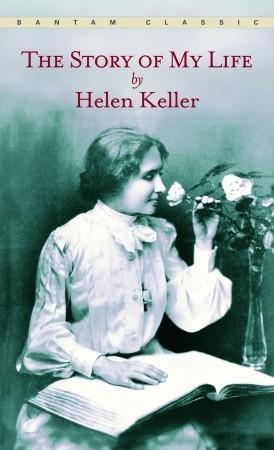
Summary
“The Story of My Life,” penned by Helen Keller, traces the remarkable journey of a young woman who overcame both blindness and deafness. From her earliest days in Tuscumbia, Alabama, Keller vividly recalls the warmth of her family and the struggle she faced when illness claimed her sight and hearing. She writes with candor about her parents’ loving efforts and the confusion that shadowed her silent, dark world.
Keller was born in 1880 to Captain Arthur Keller and Kate Adams Keller. As an infant, she babbled and learned simple words. By fifteen months, a sudden illness—likely scarlet fever—struck her down. She lost her ability to see and to hear in a matter of days.
The transformation left her isolated. She could not speak in any clear way. Her family tried sign language at home, but young Helen met every new gesture with resistance and frustration.
Isolation bred wild tantrums. She would shriek and throw objects. The house became tense. Her parents feared she might never learn to communicate.
In 1887, Anne Mansfield Sullivan arrived to teach Helen. Sullivan, herself visually impaired, brought a sturdy resolve and a heart full of hope. She began by painstakingly forming letters into Helen’s hand, hoping to unlock a path to understanding.
One April afternoon, at a water pump in the Keller backyard, Sullivan spelled W-A-T-E-R into Helen’s palm as cold droplets ran across her other hand. A spark of recognition ignited.
From that moment, Helen embraced each new word. She learned to spell “moon,” “mama,” and “papa” with equal delight. The manual alphabet grew familiar under her fingers. Her world opened.
Anne Sullivan guided Helen to the Perkins Institution for the Blind in Boston in 1888. There Helen began to read raised letters and skilled teachers adapted textbooks for her. Each lesson reinforced the notion that learning depended more on persistence than on sight or sound.
Between Perkins and her hometown, Keller absorbed literature and history. Her diary entries reveal a youthful hunger for knowledge. She studied Greek myths and Shakespearean plays. At nineteen, she entered Radcliffe College at Harvard.
At Radcliffe, Helen tackled rigorous coursework in philosophy, history, and languages. She relied on Sullivan to interpret lectures and textbooks. In 1904, she became the first deafblind person to earn a Bachelor of Arts degree there.
Her success launched a career as an author and lecturer. She published her autobiography soon afterward and toured the United States speaking about education for the disabled. Audiences listened as she tapped out sign language into an interpreter’s hand.
Keller traveled to Europe, meeting Queen Victoria and other leaders. She championed women’s suffrage and labor reforms. Her speeches combined gentle humor with firm conviction about human rights.
Throughout her life, Helen credited Anne Sullivan’s guidance. Their bond endured for decades. Sullivan remained her constant companion until the end of her life.
Helen Keller’s story shows us that perseverance outlasts obstacles. She transformed darkness into a beacon, proving that barriers exist to be broken.
Today, “The Story of My Life” endures as an inspiration. Keller’s legacy lives on in every effort to make education and opportunity truly accessible.
Detailed Summary
Key Takeaways
1. Triumph Over Silence and Darkness
“The sense of touch, then, became my sole teacher.”
Learning Through Touch: Helen Keller lost sight and hearing before she turned two. Suddenly, the world around her fell silent and dark. In this void, she reached out with her hands. She touched everything in her room. The textures of furniture, the shapes of walls, and even the movements of her own family became her lessons.
Gradually, touch grew more than a guide; it became a language. Keller’s mind raced as she learned to connect simple motions with ideas and objects. Each tap on her palm carried meaning. Finger-spelling under her tutor Annie Sullivan’s hand unlocked her mind. Tactile sensations turned chaotic darkness into ordered knowledge.
Redefining Disability: Keller’s mastery of touch shattered prevailing views on disability. In the late 19th century, society often wrote off those without sight or hearing as incapable of thought. Keller refused that judgment. By proving she could learn and communicate, she inspired new approaches in special education. Schools for the deaf-blind sprang up in Europe and America. Educators adopted Keller’s methods to teach other students with severe impairments.
Her success also reshaped cultural attitudes. People began to see disabled individuals as learners, not dependents. Keller toured widely after graduation, speaking about her life. Audiences heard a woman once thought unreachable convey eloquent ideas. They confronted their assumptions and recognized that barriers to learning often stem from low expectations rather than lack of ability.
Key points:
- Touch replaced sight and sound as her teacher
- Annie Sullivan used finger-spelling to open Keller’s mind
- Tactile learning turned confusion into understanding
- Educators adopted tactile methods worldwide
- Public perceptions shifted toward capability over incapacity
2. The Power of Dedicated Mentorship
“I owe my life.Sullivan gave me eyes to see, ears to hear, and a voice to speak.”
Annie Sullivan’s Role: Annie Sullivan arrived when Helen was seven and nearly feral in her sensory isolation. Sullivan’s own history of adversity taught her patience and resourcefulness. She refused to spoon-feed ideas. Instead, she ingrained discipline and curiosity in Helen’s routine. Sullivan maintained a firm yet compassionate grip on Keller’s hands, spelling words into her palm with tireless repetition.
This method demanded perseverance from both teacher and student. Sullivan sometimes slept little to perfect her lessons. She sculpted Keller’s focus by showing her household objects one by one. Slowly, Keller connected the motions on her palm with objects in her world. That breakthrough at the water pump—when Keller understood the word “water”—marked the starting line of her intellectual race.
Mentorship Models: Their partnership set a model for special-needs mentorship. Instructors realized that empathy and determination can overcome daunting challenges. Teacher-training programs began including Keller’s story as a case study. They emphasized customized instruction over one-size-fits-all textbooks. Sullivan’s tact and Keller’s tenacity became archetypal traits for educators working with diverse learners.
The relationship also illustrated the social value of mentoring beyond education. Sullivan became Keller’s companion, advocate, and guardian. They traveled together for decades, speaking at conferences and fundraising for disability rights. Their bond demonstrated how a mentor can empower a learner to become an agent of change in society.
Key points:
- Mentor and pupil built trust through consistent touch
- Breakthrough at the water pump symbolized conceptual awakening
- Customized, tactile instruction replaced rote methods
- Teacher programs used their story for training
- Mentorship extended into advocacy and activism
3. Education as Liberation
“Knowledge is love and light and vision.”
From Isolation to Scholarship: Once Keller grasped the word “water,” her thirst for knowledge soared. Sullivan guided her through the alphabet, then to Braille. Keller devoured books on history, science, and literature. She attended the Wright-Humason School for the Deaf, Radcliffe College, and graduated cum laude in 1904. In each classroom, Keller relied on specialized tutors to render lectures via finger-spelling or Braille notes.
Her academic success defied expectations. Students assumed she could attend only elementary lessons. Yet Keller tackled Shakespeare, Greek philosophy, and modern science. Her diploma signaled that education transcended physical limitations. Learning became a tool to claim autonomy. Through scholarship, Keller connected with the larger world she once lost to silence and darkness.
Shaping Special Education: Keller’s scholastic journey influenced schooling for disabled students. Educators expanded curricula for visually and hearing-impaired learners. Universities formed interpreter services and tactile libraries. Keller’s example encouraged inclusive admissions. By demonstrating that rigorous academics are possible without sight or sound, she pushed schools to reexamine accessibility.
Her public lectures on education stirred reform. She lobbied for state training schools and teacher education programs. Lawmakers recognized that investment in special education reduces social isolation and dependence. Keller’s life thus helped seed policies ensuring access to higher learning for students of all abilities.
Key points:
- Water breakthrough ignited her academic pursuit
- Learnt Braille, then tackled advanced subjects
- Graduated from Radcliffe College cum laude
- Inspired tactile libraries and interpreter programs
- Influenced policies promoting inclusive education
4. Advocacy for Social Justice
“Alone we can do so little; together we can do so much.”
Championing Equality: Beyond personal achievement, Keller championed broader causes. She joined the American Foundation for the Blind and pressed for suffrage, workers’ rights, and pacifism. She believed that disability rights were inseparable from universal justice. Keller wrote essays critiquing wage inequality, arguing that factories should be safe and wages fair for all laborers.
She lectured alongside labor leaders and suffragists. Keller’s speeches blended pathos and logic. She warned that neglecting the disabled mirrored society’s disregard for the poor and marginalized. Her voice carried weight because she embodied the struggles she addressed. She showed how one’s own barriers can foster empathy for collective injustice.
Intersectional Reform: Keller linked disability to other social issues, pioneering intersectional thinking. Her activism foreshadowed modern movements that connect race, gender, and ability. She pressed the American Association of University Women to investigate conditions for female workers. Later, she backed labor strikes and opposed child labor.
Her coalition-building inspired later social justice campaigns. Organizers saw the value of uniting diverse constituencies. By bringing disability into the public conversation on rights, Keller broadened the scope of reform. Policymakers gradually recognized that accessible workplaces and fair labor standards benefit everyone.
Key points:
- Joined blind advocacy and labor movements
- Wrote on wage disparity and workplace safety
- Spoke at suffrage and pacifist events
- Modeled early intersectional activism
- Influenced labor and disability legislation
5. Literary Expression and Legacy
“True happiness…is not attained through self-gratification, but through fidelity to a worthy purpose.”
Memoir as Message: “The Story of My Life” interweaves recollections, reflections, and descriptions of her education. Keller’s prose reads with vividness. She describes feeling the warmth of sunshine on her face. She evokes her family’s voices through Sullivan’s fingers. Each passage bridges the gap between sensation and emotion.
By writing her own narrative, Keller reclaimed her story. She went beyond diary entries to craft a universal testimony of triumph. Her memoir became a bestseller. Readers felt transported into her inner world. She demonstrated that literary art need not rely on sight or sound. Language itself can evoke all senses.
Inspiring Generations: Keller’s memoir sparked a wave of autobiographical works by disabled authors. It remains a foundational text in disability studies. Scholars analyze her style and rhetoric. They praise how she uses sensory imagery to shape readers’ empathy. Educators assign her memoir to teach inclusion, resilience, and narrative craft.
Her legacy extends beyond literature. The book spurred fundraising for Braille presses and tactile teaching tools. It also influenced film adaptations, stage plays, and documentaries. Keller’s words continue to guide discussions on agency, identity, and the transformative power of storytelling.
Key points:
- Vivid sensory prose despite sensory loss
- Merged personal narrative with universal themes
- Bestselling memoir of resilience
- Foundation for disability studies literature
- Inspired educational materials and adaptations
Future Outlook
Helen Keller’s story still resonates today. Her life reminds us that communication barriers often arise not from impairment but from lack of opportunity. Advances in assistive technology—screen readers, haptic devices, and AI-driven captioning—carry forward Sullivan’s tactile breakthroughs. These tools diminish isolation for individuals with sensory disabilities.
At the same time, Keller’s advocacy underscores the need for intersectional policies. As society grapples with equity in education, labor, and health care, her example encourages holistic reform. Disability rights must integrate with broader social justice movements to ensure no voice remains unheard.
Finally, “The Story of My Life” invites each of us to reconsider how we define ability and contribution. Keller challenges future generations to build inclusive communities. When we foster environments that value diverse forms of learning and expression, we honor her legacy and move closer to a world where every mind can flourish.







