
Summary
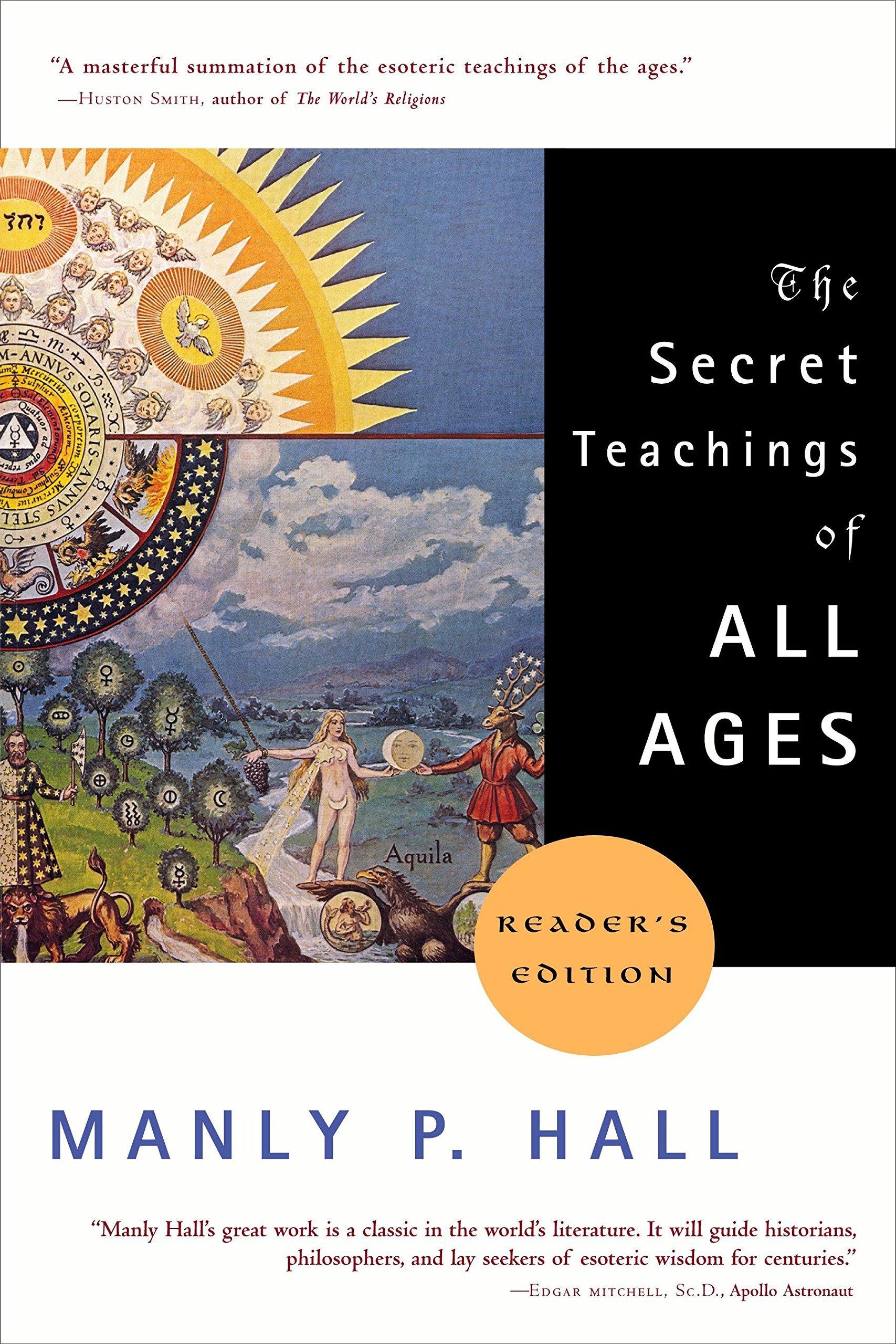
“The Secret Teachings of All Ages,” by Manly P. Hall, unfolds as an expansive journey into the hidden wisdom traditions that span human history. In this encyclopedic work, Hall ventures through every major ancient civilization, from Egyptian priestcraft and Greek mystery schools to Indian yogic disciplines and the arcane lore of medieval alchemists. He digs beneath the surface of myths, rituals, symbols, and philosophies to reveal a unified undercurrent of esoteric knowledge — a perennial wisdom that he believes threads through every culture and era.
Hall begins by tracing the roots of symbolism in archaic Egypt, where priests recorded celestial patterns and encoded sacred truths in hieroglyphs and monumental architecture. He shows how the Great Pyramid’s proportions, the alignment of temples, and the rituals of initiation served not merely practical ends but also mirrored cosmic laws. Through these examples he argues that the ancients viewed the material world as the shadow of deeper spiritual realities.
Next, the author shifts to the Greek mysteries of Eleusis, Samothrace, and Orpheus, highlighting the role of myth in guiding seekers past worldly illusion. He describes how initiates were led through symbolic rites of death and rebirth, emerging with a renewed vision of the self and an awakened sense of divine unity. By comparing these practices with those in Egypt, Hall emphasizes the shared language of symbols and the common goal of inner transformation.
Moving eastward, Hall examines Hindu and Buddhist doctrines. He outlines the chakras, mantras, and meditation practices designed to refine consciousness and transcend ego. He shows how the Sanskrit term “yoga” itself points to a union — between the individual soul and the universal spirit. Alongside this, he touches on Taoist alchemy in China, where practitioners conducted internal experiments to harmonize body, mind, and cosmic energy.
He then turns to the mystery traditions of the Near East. In exploring Kabbalah, Hall deciphers the Tree of Life and the gematria of Hebrew words. He presents Kabbalah as a profound system for mapping the divine attributes and charting the path of the soul’s ascent. He also surveys Gnostic sects in early Christianity, showing how they pursued secret revelations that mainstream churches suppressed.
In the Renaissance section, Hall portrays a rebirth of Hermetic philosophy. He introduces figures like Ficino, Bruno, and Paracelsus, who sought to reconcile magic, astrology, and spiritual science. He recounts stories of astrological correspondences, talismanic images, and the quest to merge alchemy’s material transmutations with inner psychic refinements.
The author dedicates substantial space to alchemy itself, treating it as much a spiritual art as a proto-chemistry. He explains the stages of nigredo (blackening), albedo (whitening), and rubedo (reddening) not just as color changes in metal but as metaphors for purifying the soul. He writes of the elusive Philosopher’s Stone as the final symbol of perfected consciousness and union with the divine source.
Hall surveys the Rosicrucian movement, describing the fabled Manifestos that appeared in 17th-century Europe. He presents the Rosicrucian ideals of brotherhood, hidden wisdom, and moral regeneration. He contrasts their anonymous circulation with the dogmatic institutions of the time, suggesting that Rosicrucians sought a quiet revival of spiritual science rather than outward power.
Switching gears, he explores Freemasonry’s symbolic architecture, ceremonies, and ethical framework. He traces the guild’s stonemason origins into a philosophical society that employed tools like the square and compass as reminders of moral proportions and self-discipline. He emphasizes the initiatory ladder through degrees, each revealing a deeper layer of symbolic meaning.
The author then probes American esoteric movements, from New England transcendentalism to Theosophy’s introduction in the late 19th century. He surveys Blavatsky’s writings and the Universal Brotherhood she proposed, tying them back to the perennial wisdom he has traced in other cultures. He warns, however, against superficial interpretations and stresses the need for disciplined study.
In a broader philosophical section, Hall examines astrology, numerology, and divination as early sciences of correspondences. He shows how the ancients spoke of the macrocosm and microcosm — the world in man, and man in the world — and how divinatory arts sought to align human will with cosmic cycles. He underscores that for traditional thinkers, such arts were moral tools, not mere fortune-telling.
Hall also delves into mythological archetypes — gods, heroes, and monsters — as reflections of inner psychic drama. He draws parallels between myths from disparate lands, revealing recurring themes of descent, trial, transformation, and rebirth. He suggests that these stories offer a universal script for personal growth and spiritual awakening.
Toward the end, Hall articulates the practical applications of esoteric wisdom. He encourages disciplined study of symbols, rigorous moral cleansing, and regular meditation. He advises readers to view outward phenomena as signs pointing to inward realities. He frames the spiritual quest as an active process of self-knowledge rather than passive belief.
In his concluding passages, Hall reaffirms his conviction that a single, universal wisdom pulses beneath the world’s religions and philosophies. He invites readers to perceive life’s surface events as the play of hidden forces and to seek direct communion with the eternal source. Whether one engages in temple rites, alchemical work, or silent contemplation, Hall asserts that the same eternal truths await discovery.
Ultimately, “The Secret Teachings of All Ages” paints a panoramic vision of humanity’s sacred heritage. Hall’s work stands as both an introduction and an inspiration, urging each seeker to explore ancient paths of symbolism, to pierce veils of illusion, and to rediscover the timeless wisdom that underlies every tradition. The volume remains a masterful guide for those drawn to the hidden dimensions of human experience.
Detailed Summary
Key Takeaways
1. Primal Symbolism
“Every symbol is a doorway to the hidden knowledge of our psyche.”
Understanding Universal Symbols: Manly P. Hall argues that symbols recur across cultures because they tap into the collective unconscious. He examines emblems from ancient Egypt, classical Greece, and indigenous traditions. Each symbol—whether the labyrinth, the serpent, or the sun—embodies layers of meaning that guide human thought and spiritual practice.
Hall traces these images to rites of initiation and cosmic myths. He shows how a single symbol can express creation, death, rebirth, and the unity of opposites. By decoding the ancient signs, readers glimpse timeless truths about the nature of reality and the soul’s journey.
Cultural and Psychological Resonance: The enduring power of symbols helps explain why religious art, architecture, and ritual remain meaningful today. Psychologists like Jung would later formalize the idea of archetypes—universal images rooted in our shared psyche. Hall’s work predates and anticipates this development.
In modern therapy and creative work, practitioners still draw on symbolic language to access hidden emotions. Likewise, architects and designers use archetypal forms—circles for unity, triangles for strength—to shape spaces that resonate on a deep level. Hall’s analysis bridges ancient art and contemporary life, underlining our ongoing search for inner harmony.
Key points:
- Symbols tap the collective unconscious
- Recurring motifs in global myths
- Archetypal meanings shape psyche
- Links ancient rites to modern therapy
- Design and art use symbolic forms
2. Mystery Schools Revealed
“Secret brotherhoods have guarded the keys to wisdom through coded teachings.”
Origins and Teachings: Hall explores the hidden traditions of the Egyptian priests, Greek mystery cults, and medieval Rosicrucians. He outlines how each society structured initiation to transform the neophyte’s consciousness. Ritual, allegory, and sacred geometry formed a curriculum beyond mere doctrine.
Students learned to read nature’s signs—from planetary motions to plant growth—as mirrors of inner processes. These mystery schools aimed to unite the individual mind with cosmic intellect. Hall suggests that today’s seeker can recover fragments of this ancient system through symbolic study and meditation.
Legacy in Modern Esotericism: The resurgence of interest in Freemasonry, Theosophy, and neo-pagan orders owes much to Hall’s exposition. By unveiling the lineage of secret societies, he fueled a 20th-century revival of esoteric study. Many spiritual groups now cite his work as foundational.
Therapists and life coaches have borrowed mystery-school methods—guided imagery, ritual enactment, and personal myth-making—to catalyze change. Universities and museums likewise host lectures on sacred architecture and iconography, reflecting Hall’s influence in bringing hidden lore into public awareness.
Key points:
- Catalogues ancient initiatory rites
- Links symbols to spiritual growth
- Traces lineages of secret orders
- Influenced modern esoteric movements
- Inspired ritual-based therapies
3. Alchemy as Inner Path
“The transmutation of base metal mirrors the soul’s elevation.”
Spiritual Chemistry: In Hall’s view, alchemy meant more than laboratory work. It served as a metaphor for inner change—from ignorance to enlightenment. He deciphers alchemical texts to reveal psychological stages: nigredo (darkness), albedo (whitening), and rubedo (redemption).
He also places alchemical imagery in art—from Bosch’s paintings to Hermetic manuscripts. By showing how artists encoded inner transformations in color, shape, and mythic figures, he connects laboratory allegory with universal spiritual practice.
Influence on Depth Psychology: Jung credited alchemy with helping him frame his theory of individuation, the process by which one becomes whole. Hall’s detailed alchemical exegesis provided a roadmap for both Jungian analysts and spiritual seekers. Many modern authors on personal growth still refer to alchemical stages.
Therapeutic practitioners use “inner alchemy” techniques—dream analysis, active imagination, and creative ritual—to help clients move through psychological blocks. Hall’s work remains a touchstone for those who see transformation as a symbolic, multi-stage process rather than a single event.
Key points:
- Alchemy as metaphor for soul work
- Stages of inner transformation
- Links art to spiritual chemistry
- Paved way for Jung’s individuation
- Inspired modern inner-alchemy methods
4. Astrology’s Cosmic Order
“The heavens mirror the mind; stars write our hidden story.”
Mapping Microcosm and Macrocosm: Hall presents astrology as an ancient science of correspondences. He details zodiac signs, planetary deities, and houses of the horoscope. For him, the natal chart records both personal tendencies and collective archetypes.
He stresses that astrology served as a language to describe universal processes—light and dark, birth and decay. By examining mythological figures tied to each planet, Hall reveals how ancient cultures projected human qualities onto the sky’s movements.
Astrology in Contemporary Culture: Even in secular times, astrology blossomed in psychology, literature, and art. Writers like T.S. Eliot and architects incorporating planetary symbolism attest to its pull. Hall’s book prompted many to take astrology seriously as a symbolic system rather than mere fortune-telling.
Today’s horoscope columns and online chart tools echo Hall’s effort to democratize cosmic knowledge. Counselors and artists still use planetary archetypes to explore personality, creativity, and life cycles. His work helps explain why the zodiac endures as a mirror of human hopes and fears.
Key points:
- Stars as symbols of psyche
- Detailed zodiac and planetary lore
- Embodies macrocosm-microcosm link
- Revived serious study of astrology
- Influences art and self-discovery
5. Kabbalah’s Secret Wisdom
“Through the Tree of Life, we ascend from matter to spirit.”
Jewish Mystical Framework: Hall offers a comprehensive overview of the Kabbalistic Tree of Life. He breaks down ten sephiroth (divine emanations) and their paths. Each sephirah embodies a stage of creation, from the infinite source to earthly form.
He traces the tradition to medieval Spain and earlier oral lore. Hall then shows how Christian and Hermetic thinkers adapted Kabbalah into their own mystical systems. By comparing cross-cultural variants of the Tree, he reveals a shared map of inner ascent.
Interfaith and Esoteric Impact: Hall’s treatment of Kabbalah inspired scholars and practitioners in both Jewish and non-Jewish circles. His clear diagrams and interpretations made the subject accessible without spoiling its mystery. This led to renewed interest in Hebrew texts among Western seekers.
In modern spirituality, Kabbalistic meditation and Tree-walking rituals now appear in yoga, New Age workshops, and depth-psychology groups. Hall’s exposition helped bridge cultural divides, highlighting Kabbalah’s universal appeal as a guide to self-realization.
Key points:
- Explains the Tree of Life
- Breaks down ten sephiroth
- Links Jewish and Hermetic Kabbalah
- Made mysticism accessible
- Fostered interfaith dialogue
6. Mythical Archetypes
“Heroes and gods live again in our own psyche.”
Living Myths in Modern Mind: Hall surveys myths from Egypt’s Osiris to India’s Shiva. He interprets them as expressions of innate psychological drives. Each story, he argues, reveals patterns of behavior, moral lessons, and rites of passage.
He emphasizes that myths evolve but preserve core themes—creation, sacrifice, redemption. By retelling these legends, societies renew their moral codes and collective identity. Hall contends that recognizing these archetypes helps us navigate personal crises and social change.
Shaping Literature and Culture: Psychologists and writers have long borrowed mythical frameworks to explore the human condition. Joseph Campbell’s hero’s journey owes much to Hall’s catalog of ancient narratives. In film and literature, mythic plots still inform storytelling structures.
In education, teachers use myth and legend to spark critical thinking about ethics and identity. Hall’s work underpins many curricula that connect ancient tales with modern dilemmas. His vision of living myths keeps the past alive in art, therapy, and cultural discourse.
Key points:
- Catalogs global hero myths
- Links stories to psyche
- Highlights timeless themes
- Influenced Campbell’s journey
- Inspires art and therapy
Future Outlook
Hall’s encyclopedic survey still shapes how we approach symbols and rituals. Scholars continue to build on his cross-cultural comparisons, enriching fields from anthropology to depth psychology.
In an age hungry for meaning, readers find in his work a guide to hidden structures beneath surface chaos. His vision of unified wisdom prompts new dialogues among science, spirituality, and the arts.
As technology weaves virtual realities, Hall’s emphasis on inner alchemy and mythic pattern reminds us to honor the soul. The Secret Teachings beckons future seekers to decode symbols in digital landscapes and reclaim ancient insights for a rapidly changing world.







