
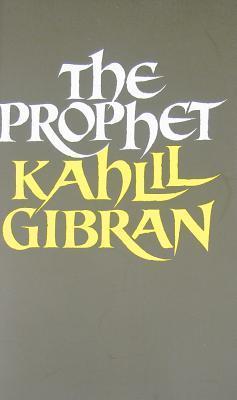
Summary
Khalil Gibran’s The Prophet unfolds through twenty-six poetic essays, each delving into a facet of human experience. The narrative frames these reflections around the figure of Almustafa, a prophet who has lived in the city of Orphalese for twelve years. As the ship that will carry him back to his homeland prepares to set sail, the townspeople gather on the shoreline to seek his wisdom.
At dawn, a child asks Almustafa to speak of Love. He begins by describing love’s gifts and its pains in equal measure. He says love crowns and wounds, and urges us to embrace both joy and sorrow as parts of the same journey. He reminds us that love redeems us by deepening our capacity to feel.
Next, Almustafa addresses Marriage. He advises couples to stand together but not too close, like pillars of a temple. He urges them to nurture individuality even as they share a common life. In doing so, they maintain a sacred space where love can breathe and grow.
On Children, he observes that they are life’s longing for itself. He counsels parents to guide their children with love, but to let them journey their own paths. In this way, children become like arrows launched into the vastness of existence, carrying each parent’s hopes into the unknown.
When asked about Giving, the prophet likens generosity to a flowing river. He suggests that gifts should spring from abundance of the heart, not compulsion of the mind. He says the giver should rejoice as the beloved drinker, since both partake in the same river of grace.
Talking of Work, Almustafa declares that work is love made visible. He sees labor not as a burden but as a celebration of life. By weaving our talents into the fabric of daily tasks, we join hands with creation itself and honor our divine nature.
On Joy and Sorrow, he draws them close like two hidden brothers. He tells us that sorrow carves an opening in our being so joy can enter. When one departs, we learn to cherish the presence of the other.
In Freedom, he warns against using freedom as a sharp sword to wound others. True freedom blossoms when we respect another’s path. He counsels us to stand fearless in our truth and compassionate in our dealings.
When the people inquire of Pain, Almustafa says it is the breaking of the shell that encloses our understanding. Through pain we awaken to our deeper selves and glimpse the wellspring of compassion within.
On Self-Knowledge, he urges honest self-scrutiny. He says that to know oneself is to stand naked before the mirror of consciousness. Only then can we journey toward wisdom unshackled by illusions.
Addressing Teaching, he cautions that a teacher’s words should be boons, not fetters. He encourages teachers to be companions on the seeker’s path, offering guidance rather than dictating dogma.
Regarding Friendship, he sees it as the comfort of one soul touching another. He celebrates friends who walk beside us in both sunshine and shadow, helping us see ourselves more clearly.
Speaking of Talking, he reminds us that silence can carry truths words cannot. He advises using words thoughtfully, allowing stillness to speak when necessary.
On Time, Almustafa describes past and future as woven threads in the same tapestry. He says living fully in the present honors all moments and heals regrets and anxieties alike.
When asked about Good and Evil, he rejects judging one without the other. He likens them to two gardeners who prune and water our souls, teaching us balance and humility.
On Prayer, he suggests that words are but feathers on the wind. He invites silent communion, letting the heart’s longing ascend beyond speech.
Concerning Pleasure, the prophet urges us to savor life’s gifts but not become slaves to desire. He likens pleasure to the moon’s orbit: we enjoy its light but must not cling to its surface.
On Beauty, he says it lies not only in outward form but within every soul that heeds its own song. When we open our hearts, all creation reflects its splendor.
Addressing Religion, Almustafa calls it the path each soul must walk alone, even as it unites many in love. He reminds that no single road holds the whole truth.
On Death, he speaks of it as an unfolding, not an end. He likens life to a sea, and death to the shore—where the wave rests before returning to the vast ocean.
Finally, Almustafa leaves with a blessing. He exhorts the people of Orphalese to carry his words in their hearts, to live with joy tempered by compassion and to feel the unity that binds all life. Then, as the dawn gilds the horizon, he boards the vessel and departs, leaving behind a legacy of timeless wisdom.
Detailed Summary
Key Takeaways
1. Love’s Transformative Power
“Love gives naught but itself and takes naught but from itself.”
Essence of Love: Gibran opens with a reflection on love’s all-encompassing nature. He insists that love demands nothing beyond the beloved and in return offers everything it holds. In this way, love becomes both giver and receiver in a perfect cycle.
He warns that love can wound as deeply as it heals. The poet urges lovers to share their joys and sorrows fully. Through giving oneself entirely, love reshapes identities and leads to profound self-discovery.
Personal and Societal Shift: On an individual level, this view inspires people to enter relationships with openness. They learn not to guard their hearts but to risk pain for genuine connection. Psychologically, that risk promotes growth, as people face fears of rejection and emerge more resilient.
At a broader level, communities grounded in such love foster compassion. When members give and receive freely, social bonds strengthen. Movements for social justice and reconciliation often draw on this principle, using empathy as a tool for healing divisions.
Key points:
- Love must be freely given and received
- True love reshapes individual identity
- Risking pain fosters resilience
- Freely shared love strengthens communities
- Empathy drives social reconciliation
2. The Balance of Giving
“You give but little when you give of your possessions. It is when you give of yourself that you truly give.”
Inner Generosity: Gibran argues that material gifts carry limited weight. He elevates self-gift—time, attention, compassion—as the truest act of giving. This shift prioritizes personal presence over wealth.
He illustrates how giving a part of one’s heart touches lives more deeply than any physical object. That inner generosity demands vulnerability, for to share oneself is to risk loss of comfort and safety.
Cultural and Ethical Implications: In modern philanthropy, this insight challenges donors to engage beyond checks. Volunteerism, mentorship, and community dialogue embody Gibran’s ideal. Participants report greater fulfillment when they invest their own skills and empathy.
Ethically, this principle counters consumerism. Societies that value relational giving tend to curb waste and selfishness. They place human connection above accumulation, fostering environments where people feel seen and cared for.
Key points:
- Material gifts have limited value
- Self-giving demands vulnerability
- Volunteerism embodies true generosity
- Relational giving enriches communities
- Counters consumerist impulses
3. Work as Love in Action
“Work is love made visible.”
Purpose in Labor: Gibran reframes work as an extension of the heart. When people infuse tasks with passion and care, their labor transcends mere duty. It becomes a creative expression of love.
He encourages readers to seek work that resonates with their deepest values. In doing so, they transform daily routines into acts of service and art.
Economic and Psychological Effects: On a personal level, this view reduces burnout. People who see work as purposeful report higher satisfaction. They approach challenges as chances to create rather than chores to endure.
At a macro scale, businesses that champion purpose-driven missions often perform better. Employees stay longer and innovate more when they feel emotionally invested. Societies benefit through increased productivity and collective well-being.
Key points:
- Work becomes a form of love
- Passion transforms routine tasks
- Purposeful labor boosts morale
- Purpose-driven companies succeed
- Societal productivity improves
4. Joy and Sorrow’s Dance
“The deeper that sorrow carves into your being, the more joy you can contain.”
Interdependence of Emotions: Gibran portrays joy and sorrow as inseparable partners. He suggests that the capacity for happiness grows in direct proportion to one’s experience of loss. In other words, deep suffering expands the heart’s capacity to feel joy.
This duality encourages acceptance of grief rather than denial. By embracing sorrow, people prepare themselves for future moments of true elation.
Resilience and Empathy: Psychologists recognize this interplay in post-traumatic growth. Survivors of hardship often develop greater empathy and find new purpose. They learn to value simple joys more intensely.
Culturally, societies that honor mourning rituals also celebrate life with richer traditions. These practices teach successive generations to respect both grief and celebration as vital to human experience.
Key points:
- Joy and sorrow are linked
- Grief deepens emotional capacity
- Acceptance fosters resilience
- Post-trauma growth enhances empathy
- Cultures blend mourning and celebration
5. Children as Life’s Messengers
“Your children are not your children. They come through you but do not belong to you.”
Freedom and Guidance: In this chapter, Gibran redefines parenthood. He reminds caregivers that children possess their own souls and destinies. Parents act as guides rather than owners, offering support without imposing their will.
This view values autonomy. It encourages adults to cultivate an environment where children learn, explore, and develop identities free from undue pressure.
Parenting and Education Reform: Modern parenting theories echo this balance of support and freedom. Educators promote student-centered learning, allowing pupils to follow passions within a structured framework. Outcomes include higher engagement and creativity.
Socially, granting children autonomy leads to more self-reliant and confident adults. Communities with participatory youth programs report lower delinquency rates and stronger civic involvement.
Key points:
- Children have their own souls
- Parents guide, not possess
- Fosters autonomy and exploration
- Student-centered education succeeds
- Stronger civic engagement emerges
6. Freedom Beyond Fear
“You shall be free indeed when your days are not without a care nor your nights without a want and a grief.”
Real Freedom Defined: Gibran challenges the notion of freedom as absence of responsibility. He claims true liberty comes when individuals accept care, want, and grief as parts of life. Only then can they act without illusion.
This deeper freedom relies on inner courage. People must face vulnerabilities honestly instead of seeking escape.
Political and Personal Liberation: Politically, this principle critiques systems promising utopia. Societies that acknowledge hardship and equip citizens to navigate it tend to be more stable. They promote policies that build resilience rather than promise false security.
On a personal level, individuals free from the fear of loss pursue creativity and risk-taking. They innovate in art, science, and relationships, knowing that failure and pain remain possible but no longer paralyzing.
Key points:
- Freedom includes responsibility
- Accepts care and grief as natural
- Cultivates inner courage
- Informs resilient political systems
- Encourages creative risk-taking
Future Outlook
Gibran’s poetic insights continue to resonate in an era of rapid change. His call to infuse work with love guides entrepreneurs toward socially conscious ventures. Startups increasingly blend profit with purpose, echoing his vision that labor must nourish the human spirit.
In education, the emphasis on children’s autonomy informs progressive schools worldwide. Educators design curricula that honor each student’s unique path, fostering lifelong learners. This approach promises to shape future generations who value self-direction and empathy over conformity.
Finally, as communities reckon with polarization and grief, Gibran’s wisdom offers a compass. By embracing sorrow as a prelude to joy and by giving of ourselves, societies can heal fractures. His words invite us to build bonds rooted in genuine understanding and shared humanity.







