Summary
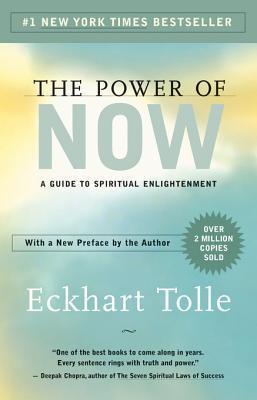
“The Power of Now,” written by Eckhart Tolle, urges you to awaken to the present moment and escape the grip of incessant thinking. Tolle begins by describing his own dark night of the soul, a profound depression that dissolved into a spontaneous spiritual awakening. In that instant, he realized that no state of mind could last forever, and that true peace lies beyond thought. This personal story sets the stage for his central message: only the Now is real, and clinging to past or future mind-states keeps you trapped in suffering.
Tolle identifies the ego as the voice in your head that chases titles, possessions, and social approval. He explains that ego thrives on time—either lamenting past mistakes or fantasizing about future successes. When you become the ego’s captive, you lose touch with your deeper self, the being that exists beneath thought. By observing your egoic mind without judgment, you begin to dismantle its power and find a doorway into presence.
A core concept in the book is the pain-body, an accumulation of old emotional wounds that lives inside you. Tolle illustrates how the pain-body feeds on negative thoughts and drama, luring you into conflicts and moods. Whenever you identify with anger, anxiety, or sadness, the pain-body amplifies that emotion. By shining conscious awareness on these feelings, you can weaken the pain-body’s hold and prevent it from hijacking your life.
Tolle then turns to practical ways of anchoring yourself in the Now. He suggests watching the breath, noticing the space between your thoughts, and focusing on the aliveness in the body. These simple acts of mindfulness create a gap between mind and awareness. In that gap, you touch the unchanging presence that underlies all phenomena. Over time, presence becomes your default state rather than a fleeting refuge.
Resistance to the present moment, Tolle argues, causes much of human suffering. You resist what is by judging situations, people, or yourself. Whenever you say mentally or aloud, “This should not be,” you create inner conflict. Acceptance of what is does not imply passivity. Instead, it frees up energy to respond effectively to life’s challenges. Directly embracing reality dissolves pain and opens doors to creative solutions.
Relationships often expose your ego and pain-body in stark relief. Tolle explains that you fall in love with an image of the other person until reality shatters the fantasy. Then the pain-body and ego rush in to blame and accuse. By bringing presence to conflicts, you stop reacting unconsciously and can communicate from a place of understanding. In that space, love flows naturally without possessiveness or need.
The book then examines how time binds you to anxiety and regret. Past memories and future expectations both live in thought. Tolle invites you to notice how often your attention drifts away from now. By gently returning your focus to this moment, you reclaim inner peace. He emphasizes that the present moment is a portal to transcendence, offering access to life’s unbounded dimensions.
Tolle also discusses stillness as more than the absence of noise or movement. True stillness is the silence beneath thought. In that silence, awareness recognizes itself. He encourages you to practice short moments of inner silence throughout the day. That way, you anchor your consciousness in presence and begin to see daily life as a continuous spiritual practice.
Egoic identification extends even to spiritual practice itself. Tolle warns against turning enlightenment into a personal achievement or status symbol. Whenever you think “I am enlightened,” you reinforce a duality between “me” and “enlightenment.” Genuine awakening lies in dissolving that boundary. In true presence, no concept of an enlightened self remains because awareness knows itself directly.
The final chapters describe the deep healing that presence fosters. Tolle shares anecdotes of people releasing chronic pain, emotional blocks, and unhealthy habits simply by bringing full attention to their bodies and emotions. With presence, old patterns lose their momentum. Healing becomes a natural byproduct of living in alignment with Now.
Tolle dedicates a section to surrender, the act of fully accepting the moment without mental reservation. Surrender differs from defeat because it arises from a deeper intelligence than thought. In surrender, you align with life’s intelligence and discover inner guidance. Paradoxically, once you surrender, you gain the power to act decisively and wisely.
Toward the end, Tolle offers guidance on integrating presence into everyday activities. Whether washing dishes, walking, or listening to a friend, you can practice mindfulness by bringing full attention to the task. Such moments of presence accumulate and gradually shift your consciousness. Over time, you cease identifying with the mind’s chatter and live more joyfully and authentically.
Tolle concludes by inviting readers to recognize their essence as the still, formless awareness in which all phenomena appear. This realization dissolves the illusion of separation between self and world. In that unity, you rest in eternal peace, unshaken by the ups and downs of life.
In “The Power of Now,” Eckhart Tolle offers both a stirring call to spiritual awakening and a clear roadmap for daily practice. By refusing to dwell in past regrets or future anxieties and by observing thought without attachment, you discover the freedom of unconditioned awareness. The book’s transformative message is simple yet profound: true life unfolds only in the Now—invite it in, and you liberate yourself from suffering.
Detailed Summary
Key Takeaways
1. Anchoring in the Present
“Realize deeply that the present moment is all you ever have.”
Presence Over Past and Future: Tolle argues that most of our suffering stems from dwelling on past regrets or anxiously anticipating the future. We habitually identify with our thoughts, which replay old memories or forecast hypothetical scenarios. This mental pattern disconnects us from the only reality we ever experience: the now.
By cultivating awareness of the present, we break free from the mind’s story loops. When you focus on sensations—like the feel of your breath—your attention shifts away from negative thought patterns. This simple act establishes a direct link to presence, dissolving the mental noise that underlies stress and unhappiness.
Transforming Personal Well‐Being: When individuals learn to anchor themselves in the present, they report reduced anxiety and improved emotional regulation. This shift helps with conditions like chronic worry and rumination, common in modern life. Therapies that incorporate mindfulness echo Tolle’s approach, showing measurable benefits in mental health.
On a societal level, a collective move toward presence could ease cultural tensions. People less consumed by personal agendas and future anxieties tend to communicate more openly and compassionately. In workplaces, mindful focus on current tasks increases productivity and lowers burnout, as employees stop stressing over outcomes beyond their immediate control.
Key points:
- Recognize the mind’s habit of living outside the present.
- Use sensory awareness—like breath—to return attention to now.
- Break thought loops that fuel anxiety and regret.
- Enhance emotional stability through mindful presence.
- Boost workplace focus and reduce burnout.
2. The Observer Within
“You are not your mind. You are the awareness behind your thoughts.”
Separating Self from Thought: Tolle introduces the idea of the ‘observer’—the silent awareness that watches thoughts and emotions without judgment. Most people equate themselves with their inner dialogue and identify wholly with their mental activity. This leads to a sense of fragmentation whenever thoughts run negative or chaotic.
By recognizing that there is a part of you distinct from your thinking mind, you can observe thought patterns without getting entangled. This creates a gap between thought and awareness. With practice, you learn to notice thoughts as events passing through consciousness, rather than truths defining your identity.
Cultivating Inner Freedom: This shift in self‐perception relieves the pressure of being at the mercy of one’s mind. People report less reactivity in stressful situations because they view thoughts and emotions more objectively. This inner freedom underpins many mindfulness‐based resilience training programs used in schools and the military.
At a community level, individuals who identify with awareness rather than thought often engage more thoughtfully in relationships. They listen with less judgment and respond with greater empathy. This can improve conflict resolution and foster deeper connections in families and teams, as people resist the urge to project fears onto others.
Key points:
- Identify the silent awareness behind thoughts.
- Observe thoughts without self‐judgment.
- Reduce emotional reactivity in stress.
- Support resilience training with mindful detachment.
- Enhance empathy in personal and professional relationships.
3. Ego and Its Traps
“The ego wants to want more than it wants to have.”
Understanding the Ego’s Drive: Tolle describes the ego as the mind’s self‐image, built on labels and roles. It craves validation and clings to identity narratives. This insatiable drive for ‘more’—more recognition, more possessions—leads to chronic dissatisfaction and conflict.
Egoic patterns also fuel comparison and competition. When you define yourself by external factors, any perceived slight feels like an attack on your identity. Recognizing these patterns is the first step to dissolving them, as you learn to take less personally what others say or do.
Reducing Conflict and Desire: As people become aware of egoic drives, they curb overconsumption and status‐seeking behaviors. This awareness can lead to more sustainable lifestyles and reduced stress from chasing success. Minimalist trends and voluntary simplicity movements echo Tolle’s message by encouraging fulfillment beyond material gain.
Socially, less ego‐driven interaction means fewer misunderstandings and power struggles. Leaders who spot ego traps in themselves and their teams foster more collaborative cultures. They manage conflicts proactively, focusing on collective goals rather than individual status.
Key points:
- Define ego as the mind’s self‐image.
- Spot the craving for more as ego’s hallmark.
- Break free from comparison and competition.
- Encourage sustainable, less consumption‐driven choices.
- Promote collaborative leadership styles.
4. Pain-Body and Emotional Charge
“The pain‐body lives off negative thinking and drama.”
Transcending Emotional Reactivity: Tolle coins the term ‘pain‐body’ to describe the accumulated emotional pain stored in individuals and the collective unconscious. It feeds on conflict, drama, and negative thoughts. When triggered, it hijacks our behavior, prompting reactive outbursts or self‐destructive habits.
By observing these emotional surges without identifying with them, you weaken the pain‐body’s grip. You learn to notice subtle bodily sensations that signal its activation. This awareness allows you to pause before reacting, offering a chance to choose conscious responses rather than habitual emotional outbursts.
Healing Individual and Collective Wounds: At a personal level, people report fewer impulsive reactions and greater clarity in tough situations. They experience less guilt and shame because they see old pain as a healing opportunity, not an identity marker. Practices like emotional mindfulness in therapy draw directly from this insight.
On a collective scale, groups aware of the pain‐body concept handle social trauma more constructively. Communities recovering from conflict or disaster can use mindful reflection to prevent cycles of hatred and revenge. Shared practices like group meditation or vocal expression help release collective pain.
Key points:
- Identify the pain‐body as stored emotional pain.
- Observe emotional triggers without reacting.
- Feel body sensations that signal pain‐body activation.
- Practice conscious response over knee‐jerk reactions.
- Use group mindfulness to heal social wounds.
5. Accepting What Is
“Whatever the present moment contains, accept it as if you had chosen it.”
Power of Surrender: Tolle stresses that true freedom comes from inner surrender, not resignation. When you resist reality—whether a minor setback or major loss—you add mental suffering. Surrender means fully acknowledging what is happening now, without labeling it good or bad.
This active acceptance doesn’t mean passivity. It means responding from clarity instead of resistance. Once you stop fighting the present, you free up energy to act effectively. You meet challenges with creativity rather than frustration, because you work with circumstances instead of against them.
Improving Adaptability: Individuals who practice acceptance adapt better to change and uncertainty. In careers, they pivot more smoothly when projects shift or markets tumble. Their problem‐solving relies on clear appraisal of facts rather than emotional turbulence.
Organizations that embrace this principle foster cultures that welcome feedback and learn rapidly. They remain resilient amid disruptions like technological change or economic downturns. Teams that see setbacks as part of the process innovate faster and preserve morale under pressure.
Key points:
- Recognize resistance as self‐imposed suffering.
- Surrender mentally to what the moment brings.
- Channel energy into mindful action.
- Enhance personal adaptability in change.
- Build resilient, learning‐oriented organizations.
6. Silence as Source of Creativity
“In the silence of the mind you will find the next step in your evolution.”
Cultivating Inner Stillness: Tolle emphasizes that behind the constant mental chatter lies a field of silence and presence. This inner stillness is fertile ground for insights, creativity, and intuitive knowing. Yet we rarely tap into it because we fill our lives with noise and distraction.
Practices like brief pauses of attention—to breath, to ambient sounds—create pockets of silence in daily life. These moments let ideas emerge organically. When you give your mind room, solutions to complex problems arise with a clarity that forced thinking cannot match.
Sparking Innovation and Intuition: Individuals who integrate silence into their routines often report creative breakthroughs. Artists, scientists, and entrepreneurs cite moments of insight during quiet reflection. Companies that encourage mindful pauses—through quiet rooms or digital sabbaticals—see boosts in innovation.
On a societal level, a culture that values inner stillness resists the constant consumer churn for entertainment and novelty. People become less prone to digital addiction and more open to deep learning. Educational systems incorporating contemplative practices show improved focus and problem‐solving skills among students.
Key points:
- Discover silence beneath mental noise.
- Use brief mindful pauses daily.
- Allow creative insights to surface naturally.
- Encourage quiet spaces for innovation in workplaces.
- Integrate contemplative practices in education.
Future Outlook
Eckhart Tolle’s emphasis on presence and inner awareness resonates strongly with modern movements in mindfulness and mental health. As societies grapple with stress, digital overload, and social fragmentation, these teachings provide practical tools for individual resilience. We can expect broader adoption of mindfulness practices in schools, workplaces, and healthcare settings, driven by scientific validation of their benefits.
Looking ahead, merging Tolle’s insights with technology offers intriguing possibilities. Apps and wearable devices may guide users into present‐moment awareness, prompting pauses and breath checks. Virtual reality environments could simulate immersive retreats that teach inner stillness more accessibly than ever before.
Ultimately, the Power of Now challenges future thinking to balance external progress with inner evolution. Policymakers and educators may integrate contemplative methods alongside traditional curricula. If enough individuals anchor themselves in presence, we could see social shifts toward empathy, cooperation, and a deeper appreciation of life’s unfolding moment.







