Summary
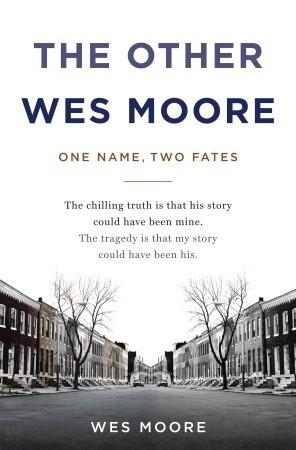
"The Other Wes Moore" by Wes Moore tells the intertwined true stories of two young men who share the same name and come from the same city but whose lives end in starkly different places. Both boys grow up in Baltimore amid poverty and violence, yet their paths diverge dramatically. One Wes Moore becomes a Rhodes Scholar, decorated combat veteran, and business leader, while the other Wes Moore ends up serving a life sentence in prison for his role in a robbery that led to a death. This book explores how small choices, mentors, family support, and chance encounters can shape a life.
The story begins by introducing the author Wes Moore, born into a home with his devoted mother, Joy, and a supportive older sister. His father left when he was three, and his mother juggled multiple jobs to keep the family afloat. Meanwhile, the other Wes lived around the corner with his mother, Mary, who struggled with addiction and worked long hours. He had older sisters but no stable father figure. Poverty pressed in on both families, and violence lurked in their neighborhoods.
As boys, both Wes Moores attended Chase Elementary School. The author flourished under attentive teachers and a close-knit church community that offered after-school programs and field trips. He excelled in reading and math and swallowed every book he could find. The other Wes found school harder; he felt invisible in crowded classrooms. He hung out on the streets, seeking a sense of belonging he didn’t find at home or in school.
In middle school, the author’s mother remarried, and his new stepfather, Bill, became a strict but loving presence. He moved the family to the Bronx for a fresh start and enrolled Wes in Valley Forge Military Academy. The regimented life cracked open new doors—discipline, respect, and academic rigor. At the same time, the other Wes’s world grew darker. His mother cycled through relationships, and he witnessed gunshots on his street. He slipped into petty crime and joined a local crew that promised protection but delivered danger.
High school marked a turning point for both young men. The author thrived at military school, earning leadership roles, academic awards, and an acceptance to Johns Hopkins University. He felt a sense of purpose and possibility. The other Wes nearly flunked out. He sold drugs, stole TVs, and spent nights sleeping on friends’ couches. His court dates began stacking up, and he narrowly escaped a juvenile facility at age thirteen. Yet he hung around older dealers who groomed him for bigger scores.
College brought even sharper contrasts. The author entered Hopkins on scholarship, swam on an ROTC team, and attended dinners hosted by professors who saw his drive. He visited Ghana on a fellowship, studied international affairs, and dreamed of serving his country. At the same time, the other Wes faced arrest for credit card fraud. He served time in a juvenile detention center, where fights were daily, and fear was constant. He lost friends to shootings and watched grown men trade one prison sentence for another.
After graduation, the author entered the Army, trained as an officer, and deployed to Afghanistan. He led platoons, lost comrades, and returned home with medals, stories, and a renewed appreciation for teamwork. He then won a Rhodes Scholarship to Oxford University, earning a master’s degree in international relations. Despite scars from war, he pushed forward. The other Wes was back in Baltimore again, released on probation but short on options. Without a college diploma or steady job, he drifted back into old habits.
One fateful night in 2000, the other Wes and his accomplices planned to rob a drug dealer and take his money. The job went wrong, and they shot the dealer, who later died. Police caught them quickly. The jury convicted Wes of felony murder. At twenty-three, he was sentenced to life without parole. His mother wept in court as the judge delivered the sentence. He faced decades behind bars and the end of any hope for freedom.
The author, meanwhile, returned stateside from Oxford and joined an investment firm on Wall Street. He built a successful career in finance and television, published articles, and remained involved in veteran’s affairs. He thought often of the other Wes and wanted to understand how similar backgrounds could lead to such different outcomes. He traveled to Baltimore, visited the prison, and forged a pen-pal friendship that bridged the razor-thin line between privilege and neglect.
Throughout the book, Moore examines the forces that shape youth. He highlights positive influences—a caring teacher who gave him homework over Christmas break, a coach who refused to let him quit, mentors who offered internships. He contrasts these with the absence of guidance in the other Wes’s life: no adult to stop him from hanging out on street corners or to show him an alternative to the drug trade.
The narrative also grapples with responsibility. The author acknowledges his own mistakes—drinking too much in college, squandering first chances—but credits his support network for pulling him back. He shows how accountability measures at military school, strict curfews, and immediate consequences built resilience. The other Wes, in contrast, faced little real punishment for minor crimes until it was too late.
Yet Moore resists easy judgments. He explores poverty’s grip: single-parent homes, under-funded schools, the constant pull of quick money in the drug economy. He visits community centers, talks to school counselors, and illustrates how systemic neglect funnels many young men toward crime. He argues that while personal choice matters, the environment imposes powerful limits.
In prison, the other Wes discovered an unexpected clarity. He fought back against despair, earned his GED, tutored fellow inmates, and worked in the library. He kept faith alive. He wrote letters to the author, asking tough questions and reflecting on regret, hope, and the idea of legacy behind bars. He spoke of forgiveness and the pain of watching life pass by from a cell.
The book concludes that fate hinges on a tapestry of small moments—a relative who showed up at the hospital, a teacher who challenged a student to read one more book, a mentor who imposed discipline with kindness. Wes Moore does not pretend every at-risk child can become a Rhodes Scholar. But he shows that investing time, attention, and care can alter trajectories. He urges readers to step forward, mentor a child, support community programs, and remember that two lives may start alike yet diverge forever.
In the end, "The Other Wes Moore" becomes more than two portraits. It transforms into a call to action. It reminds us that a single encounter, a firm handshake, or a moment of belief can rescue a life from the gravity of circumstance. It challenges us: what will we do when the next young man named Wes Moore shows up at our door?
Detailed Summary
Key Takeaways
1. Divergent Paths from Shared Beginnings
“We have the ability to change our circumstances, to grow beyond where we’re from.”
Origins and Opportunity: Wes Moore begins by tracing two boys named Wes Moore raised in similar Baltimore neighborhoods. One grows into a Rhodes Scholar and decorated veteran. The other lands in prison for life. Both face poverty, absent fathers, and community violence. Yet their choices and support systems diverge dramatically.
The author uses parallel storytelling to highlight how small shifts—like a mentor’s guidance or a single decision—can send lives in opposite directions. He shows that background does not seal one’s fate, but it does shape the hurdles and forked roads we face.
The Weight of Environment: This contrast speaks to broader debates on nature versus nurture. Schools underfund neighborhoods. Violent streets erode hope. When one boy finds a reliable mentor and stable school, he gains a foothold. The other drifts among peers who glorify crime.
Societies often blame individuals for failing to break negative cycles. Yet Moore’s account urges us to consider how systemic neglect and violence shape options. Communities with few resources struggle to lift even the most determined youth.
Key points:
- Similar early lives can yield very different outcomes
- Small interventions—mentors, schools—matter greatly
- Poverty and violence limit perceived choices
- Personal agency interacts with community support
- Policy must address environment as well as individuals
2. The Power of Mentorship
“Mentors don’t just point the way. They walk alongside you.”
Guidance and Accountability: Throughout the narrative, key adults appear at critical moments. A military officer sees potential in one Wes and challenges him to excel. A teacher spots ambition and pushes him to apply for leadership programs. Meanwhile, the other Wes finds no one to hold him accountable amid gang influences.
These relationships do more than advise. They provide structure, expectations, and belief when self-confidence falters. In one chapter, Moore describes a military mentor who tells him bluntly that he must honor his intellect with disciplined action. That message reshapes his self-image and sets him on a new path.
Replicating Success Habits: Mentorship programs worldwide cite similar results: at–risk youth who gain a stable adult ally show improved grades, attendance, and behavior. Beyond immediate gains, they internalize higher standards and feel a stake in their own success.
However, reliable mentorship seldom arises spontaneously. Schools and nonprofits must invest in training, screening, and sustained support. Moore’s story illustrates that one caring adult can change a life, but scaling that effect demands resources and commitment.
Key points:
- Mentors provide belief and direction
- They foster accountability and structure
- Positive role models contrast with negative peers
- Programs need funding to sustain mentor–mentee bonds
- Effective mentoring can break intergenerational cycles
3. Education as a Gateway
“Every book I opened seemed to open a new world.”
Learning Beyond the Classroom: Both Weses attend schools marked by high dropout rates. Yet one discovers a passion for reading that ignites ambition. A scholarship to a private school exposes him to rigorous academics and broader cultural experiences. Books and assignments challenge his worldview.
The other Wes drifts through classrooms without seeing their relevance. Without mentors to connect learning to real opportunity, he loses interest. Schools without proper funding struggle to engage students, creating a gap between curriculum and lived experience.
Bridging Achievement Gaps: Research shows that early literacy and after-school programs can counteract the ‘summer slide’ in low-income communities. Access to books and engaging instruction builds confidence and curiosity.
Yet equal access remains a challenge. Zoning laws, school budgets, and teacher turnover all affect outcomes. Moore’s account underscores the need to treat education as a lifeline rather than a bureaucratic obligation.
Key points:
- Passion for reading sparks ambition
- Private schooling broadened horizons
- Underfunded schools struggle with engagement
- Early literacy programs show lasting benefits
- Education must connect to real-world goals
4. Consequences of Choice
“Choice is a privilege fewer people notice when they’ve never had to earn it.”
Agency Under Pressure: Moore emphasizes that both boys receive choices daily: to study or to skip class, to seek help or to hide mistakes. One embraces challenges. The other chooses peer approval and quick money.
These decisions rarely appear in isolation. When a teacher offers extra help, one Wes attends after school; the other avoids suspicion. When family tensions rise, one channels frustration into sports, the other into petty crime. Over time, small choices compound into life-altering trajectories.
Policy and Personal Responsibility: Public discussions often pit personal responsibility against structural barriers. Moore’s narrative suggests both matter. People need basic options—safe neighborhoods, strong schools, supportive adults—to make positive choices. Yet individuals still carry accountability for how they respond.
Effective policy must therefore combine opportunity creation—like job training, safe recreation—with programs that foster decision-making skills. Life skills curricula, counseling, and conflict resolution can help young people weigh choices under stress.
Key points:
- Daily decisions shape long-term outcomes
- Supportive contexts encourage positive choices
- Peer pressure can push toward crime
- Policy must enable both options and skills
- Accountability remains crucial
5. Family Influence and Stability
“You can’t outrun your blood, but you can run toward better.”
Roots and Resilience: Family emerges as a double-edged theme. One Wes has a present mother and grandmother who insist on rules and love. They steer him away from the streets. The other experiences neglect and emotional distance. Without a stable home, he craves belonging among risky peers.
Moore doesn’t romanticize either family. Both mothers struggle under poverty. Yet one household delivers consistency: meals at set times, clear expectations, and open communication. The other offers chaos. Children need reliable caregivers to anchor their development.
Strengthening Family Support: Social programs like family coaching, parenting classes, and stable housing assistance show promise in reinforcing household stability. When parents receive mental-health support or job training, they can better nurture their children.
Family courts and child-welfare systems must balance intervention with empowerment. Moore’s account reminds us that harsh removal often harms more than it helps. Instead, community-based supports can help families heal and become protective havens.
Key points:
- Consistency builds trust and resilience
- Neglect drives youth toward risky groups
- Economic hardship tests parental capacity
- Support services can strengthen families
- Stable homes anchor healthy development
6. Narrative of Redemption and Reflection
“I wrote this book hoping to find my other self.”
Self-Discovery Through Storytelling: In writing these parallel lives, Moore reflects on fate, luck, and purpose. He acknowledges his own mistakes—trouble with the law as a teen—and sees mercy in his own second chances. He frames this book as a search for understanding: why helping hands reached him and not the other Wes.
That introspection resonates. Many readers recognize times they needed a break. By sharing his doubts, regrets, and gratitude, Moore invites us to examine our own stories and consider how we might extend compassion to others in need.
Inspiring Collective Responsibility: Moore’s reflective tone prompts communities to ask: Who gets second chances? Who falls through cracks? His narrative pushes us toward empathy rather than judgment.
Nonprofit leaders, educators, and policymakers cite this work when arguing for restorative justice, rather than punitive approaches alone. If we see each life as multifaceted, we can build systems that both hold people accountable and offer pathways to redemption.
Key points:
- Author’s self-examination invites reader reflection
- Mistakes can become turning points
- Restorative justice over retribution
- Empathy drives policy innovation
- Stories build shared understanding
Future Outlook
As society grapples with issues of inequality, Moore’s parallel lives serve as a call to action. We’ll likely see more focus on early intervention—mentorship, literacy programs, family supports—as essential tools in reducing crime and boosting opportunity. Policymakers will undercut zero-sum debates by pairing resource allocation with accountability measures.
Researchers may build on this narrative framework to study how individual decisions interact with social structures. Longitudinal studies could explore which interventions yield the greatest ripple effects. Educators will adapt curricula to foster decision-making skills and resilience, embedding everyday lessons about choice in core subjects.
Ultimately, The Other Wes Moore reminds us that no life unfolds in isolation. Our collective investments—in schools, families, mentors—determine who thrives and who stumbles. The future will demand integrated strategies that combine compassion with high expectations, ensuring more young people discover the power to change their own stories.







