Summary
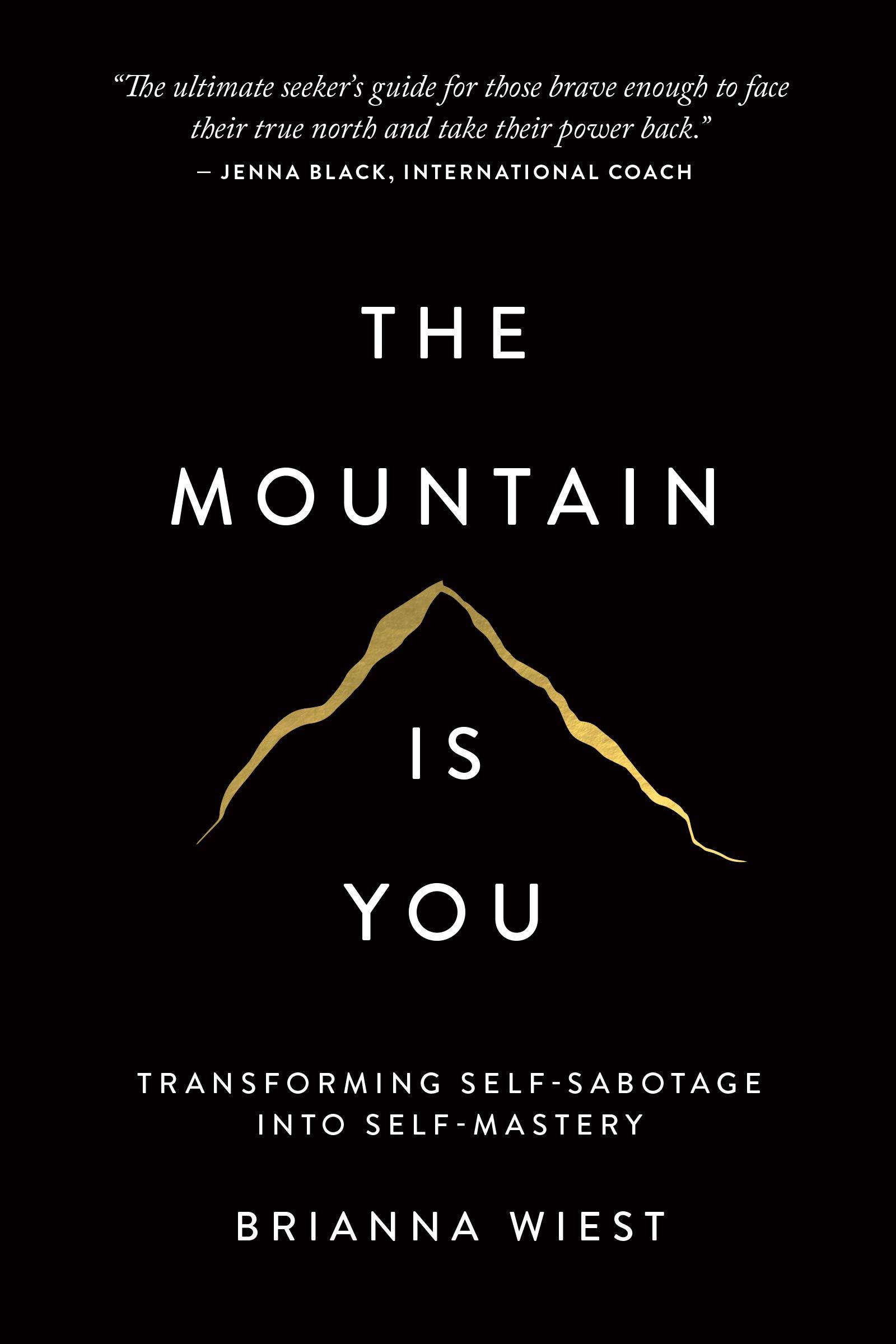
“The Mountain Is You” by Brianna Wiest explores how we often stand in our own way and shows readers how to transform self-sabotage into self-mastery. Wiest argues that the biggest obstacle we face isn’t external but internal. Throughout the book, she weaves psychological insights, practical exercises, and real-world anecdotes that guide readers to confront the hidden patterns driving their resistance.
Wiest begins by defining self-sabotage as a misalignment between our goals and our inner emotional landscape. She suggests that when our deep feelings feel unsafe or unrecognized, we unconsciously create obstacles. This chapter grounds the reader in the idea that sabotage isn’t moral failure—it’s a cry for attention from parts of ourselves we’ve neglected.
In the next section, Wiest examines the root causes of resistance. She highlights three main drivers: unmet childhood needs, cultural conditioning, and unprocessed trauma. For each, she offers brief stories—like the child who learned that quiet obedience was safer than voice—to illustrate how early experiences shape our adult habits. These vivid snapshots help readers see parallels in their own lives.
Wiest then turns to the language we use when we talk to ourselves. She notes how tiny phrases—“I’m not ready,” or “I’ll do it later”—reflect a deeper fear. She encourages journaling exercises where readers track their internal dialogue for one week. By surfacing patterns, we can begin to question whether our thoughts serve us or hold us back.
One of the book’s most powerful ideas is the concept of emotional intelligence. Wiest insists that feeling our emotions fully, instead of pushing them away, rewires our brain’s alarm system. She explains how avoiding sadness or anger only intensifies them later. To practice, she recommends short check-ins throughout the day, asking, “What am I feeling right now?” This simple habit can shift the weight of overwhelming emotions.
Wiest devotes a chapter to the fear of success. She notes that despite our conscious desire to win, we sometimes dread the responsibilities that come with achievement. Using the metaphor of climbing a mountain, she illustrates how reaching the summit can feel lonelier than the climb—unless we’ve prepared our inner world to hold that victory. To counteract this fear, she advises visualizing not only the goal but the life that follows.
In another section, Wiest explores perfectionism as a form of self-sabotage. She points out that perfectionists often set impossible standards to protect against judgment. Yet this drive for flawlessness creates paralysis. She offers a practical tool called the “Good Enough List,” where readers jot down tasks that truly require excellence and those that simply need to be done. This separation frees energy for what matters most.
Wiest doesn’t neglect the body. She explains how burnout, poor sleep, and chronic stress can magnify self-sabotaging behaviors. Through case studies, she shows how a simple shift—like a ten-minute morning stretch or a brief digital-free walk—can lower cortisol and boost clarity. She stresses that self-care isn’t a luxury but a foundational act of self-respect.
The book then addresses resistance in relationships. Wiest describes how we might unknowingly push people away when intimacy triggers old wounds. She recounts a story of a woman who dated partners who were “just out of reach,” using distance as armor. Through guided reflection prompts, readers learn to identify relationship patterns and take responsibility for setting healthier boundaries.
Wiest also dives into ambition and purpose. She warns that chasing an ill-fitting dream intensifies self-sabotage because it clashes with our authentic self. To find alignment, she offers an exercise called the “Inner Purpose Map.” It invites readers to list activities that feel both energizing and meaningful. Through this map, our true north emerges.
In the final chapters, Wiest weaves all these insights together into a process she calls “Alchemical Self-Transformation.” She likens it to turning lead into gold within ourselves. The steps include recognition (seeing our patterns), acceptance (sitting with our emotions), and action (making small consistent shifts). She stresses patience, noting that true change happens at the pace of trust rebuilding.
Wiest peppers the book with small practical rituals—morning pages, periodic digital sabbaths, and weekly check-ins—that anchor the theory in daily life. These bite-sized tools make the material feel accessible instead of overwhelming. She urges readers to choose just one ritual at first and build from there.
Throughout, Wiest’s tone feels like a conversation with a wise friend. She doesn’t lecture but asks questions that nudge us to think differently. At times, she revises her own examples mid-story, admitting, “This exercise worked for me—until I tweaked it to fit my chaos.” These honest asides remind us that transformation isn’t a straight line.
By the end, the mountain we feared turns out to be ourselves. Wiest reminds us that when we clear old patterns, we gain access to resilience and creativity we never knew we had. The tougher the trail we’ve climbed, the stronger we become.
“The Mountain Is You” closes not with a grand finale, but with an open invitation: the journey continues. Wiest encourages readers to keep refining their rituals, noticing new resistance as it arises, and treating themselves with curiosity. After all, the goal isn’t to summit once, but to learn how to climb—and live—with ever-greater grace and courage.
Detailed Summary
Key Takeaways
1. Self-Sabotage as Inner Mountains
“The only thing that’s been stopping you from climbing is the mountain you built within yourself.”
Recognizing Internal Barriers: Most of us blame external factors when our lives stall. We point to lack of time, resources, or support. Yet Brianna Wiest argues we often erect unconsciously designed obstacles. These barriers stem from fears, limiting beliefs, or unresolved trauma.
When you see your habits of procrastination or self-criticism as parts of a constructed inner mountain, you shift perspective. Instead of feeling powerless, you acknowledge agency. You built those walls—and you can dismantle them.
That realization changes the path forward. You stop fighting a vague enemy and start mapping out specific blocks. Once you name them, you can address them one by one.
Transforming Personal Growth: Framing self-sabotage as a mountain you created gives you power. Historically, turning inward to examine how beliefs form has driven breakthroughs in therapy and coaching. By spotlighting internal constructs, Wiest invites readers to join that tradition.
In daily life, this insight sparks action. When someone habitually avoids feedback, they can trace it to a fear of rejection. They then craft a plan to receive small critiques and build tolerance. Over time, the barrier erodes.
On a larger scale, teams or organizations also hold shared limiting beliefs. By naming collective patterns—like ‘we’ve always done it this way’—they can innovate. The same principle scales from the individual to the group.
Key points:
- Self-sabotage originates within
- Naming internal barriers creates agency
- Mapping obstacles allows targeted action
- Breakthroughs come from examining beliefs
- Principles apply to individuals and groups
2. Embracing Emotional Intelligence
“Emotions aren’t enemies to be conquered; they’re guides to understanding what needs healing.”
Redefining Emotions: Wiest reframes emotions from chaotic forces to purposeful messengers. We often view anger or sadness as signs of weakness. That mindset pushes us to shut feelings down instead of listening to them.
By treating emotions as feedback, you learn what areas of your life require attention. Anger might signal that your boundaries suffer. Anxiety could highlight a mismatch between your values and actions.
This approach demands patience and self-compassion. You pause when a strong feeling arises, ask what it wants to tell you, and respond with curiosity rather than avoidance.
Healing Through Awareness: In psychology, acceptance-based therapies emphasize noticing emotions without judgment. Wiest’s model aligns with that, encouraging readers to journal, meditate, or talk through feelings.
Practically, this fosters healthier decision-making. Instead of lashing out or shutting down, you address the real issue—like overwork or unmet needs. Over time, you reduce reactive behaviors and build resilience.
Societally, if more people adopt emotional intelligence, communication improves. Conflicts shift from blame games to problem-solving dialogues. That transformation ripples through families, workplaces, and communities.
Key points:
- Sees emotions as informative
- Promotes curiosity over judgment
- Links feelings to unmet needs
- Supports acceptance-based healing
- Enhances communication broadly
3. The Power of Small Wins
“Climbing a mountain starts with a single step, not a giant leap.”
Micro-Action Strategy: When we face big goals, we often feel overwhelmed. Wiest counters this by advocating micro-actions. Instead of vowing to rewrite your life overnight, begin with a simple habit—writing one sentence a day, taking a five-minute walk, or setting a bedtime ten minutes earlier.
Those tiny tasks feel manageable. They build confidence and momentum. Over weeks, the accumulation of small wins transforms into substantial change.
This method taps into behavior-change science. Reward pathways in our brain reinforce repeated, achievable behaviors. Each small success encourages you to take the next step.
Momentum in Transformation: Historical movements grew from small actions—like single protests igniting floods of activists. On an individual level, Wiest’s advice yields similar results. Someone who writes one sentence daily eventually finishes essays, reports, or memoirs.
In workplaces, teams achieve breakthroughs through iterative improvements—continuous-improvement models in manufacturing or Agile sprints in software development. Both rely on frequent, small progress checks.
This mindset also reduces burnout. When you celebrate each step, you avoid the crash that comes from chasing unattainable perfection.
Key points:
- Break goals into tiny tasks
- Leverages brain’s reward system
- Builds sustainable momentum
- Aligns with Agile and continuous-improvement
- Prevents burnout
4. Rewriting Your Narrative
“You are not the story that you tell yourself over and over.”
Challenging Internal Narratives: We live by stories about who we are and what we can do. Wiest shows how many of these narratives revolve around limitations—‘I’m not smart enough,’ or ‘I always fail.’
She guides readers to examine where those stories came from—parents, teachers, past failures—and then to rewrite them. You replace ‘I’m not good at socializing’ with ‘I can improve how I connect with others.’
That reframing frees you from a fixed-mindset trap and opens possibilities. You start living as if the new story were already true.
Shaping Identity and Potential: Cognitive-behavioral therapy has long used narrative reframing to heal depression and anxiety. Wiest’s accessible version helps readers become aware of limiting self-talk and rewrite it.
In careers, changing ‘I’m a poor public speaker’ to ‘I can learn effective presentation skills’ leads to enrolling in classes, practicing, and improving performance.
Culturally, if people shift narratives about group identities—like reclaiming stereotypes—they can foster social change. By rewriting collective stories, communities reshape expectations and outcomes.
Key points:
- Identifies limiting self-talk
- Traces origin of internal stories
- Invites active narrative rewriting
- Draws on CBT techniques
- Supports personal and social transformation
5. Radical Self-Compassion
“Healing starts when you treat yourself with the kindness you offer a friend.”
Cultivating Kindness Within: Many of us practice self-criticism more than self-care. Wiest emphasizes extending compassion inward. She asks readers to notice harsh self-judgments and then to pause and offer gentleness instead.
That might mean speaking kindly in your mind, taking restorative breaks, or forgiving yourself for mistakes. Over time, you rewire neural pathways toward empathy rather than blame.
This shift proves vital when tackling deep-rooted issues. Compassion becomes the safety net that lets you explore hard emotions and memories gently.
Building Resilience Through Compassion: Research shows self-compassion reduces anxiety and improves coping with failure. Wiest distills these findings into practical steps—journaling prompts, soothing self-statements, or mindful breathing.
In therapy, clients who learn self-compassion heal faster from trauma. They develop emotional regulation skills and lower levels of shame.
On a societal level, if more people practice self-compassion, we see less burnout in helping professions, lower stress in communities, and a general rise in prosocial behavior.
Key points:
- Identifies self-criticism patterns
- Uses kindness as a healing tool
- Rewires empathy-focused neural pathways
- Supports trauma recovery
- Enhances community well-being
6. Accountability as Liberation
“Taking responsibility for your growth doesn’t trap you. It frees you.”
Owning Your Path: People often avoid admitting mistakes or owning failures. Wiest argues that true freedom comes when you accept responsibility. Blame keeps you chained to the past, while accountability opens doors.
Owning your choices means facing consequences and learning from them. It means saying, ‘I created this problem, and I will fix it.’ That stance transforms shame into power.
By reframing accountability as empowerment, you reclaim control over your life’s direction instead of waiting for others to change.
Empowerment Through Responsibility: In leadership studies, accountable leaders earn trust and drive higher performance. They admit errors and take corrective action publicly.
For individuals, accountability partners—friends, coaches, or mentors—provide support and challenge. This dynamic pushes people to follow through on goals.
Collectively, if communities model accountability, they reduce conflict and build cooperative cultures. Accountability becomes a shared value that fosters growth rather than punishment.
Key points:
- Shifts blame to ownership
- Transforms shame into power
- Aligns with effective leadership
- Uses support networks for accountability
- Fosters cooperative cultures
Future Outlook
As readers dismantle their inner mountains, they spark a ripple effect. Each person who reclaims agency reshapes relationships, workplaces, and communities. The principles Wiest lays out—emotional intelligence, small wins, self-compassion, and accountability—form a toolkit for modern resilience.
In years ahead, mental health and personal development fields will blend these ideas with technology. Imagine apps that guide you through narrative rewrites or micro-action trackers that celebrate every tiny victory. Coaching and therapy could integrate self-authored mountain-climbing metaphors to deepen insight.
Ultimately, Wiest’s work challenges our collective narrative about self-help. She invites us to view transformation not as a one-time event but as lifelong ascent. By embracing that journey, we set new standards for growth, compassion, and shared progress.