Summary
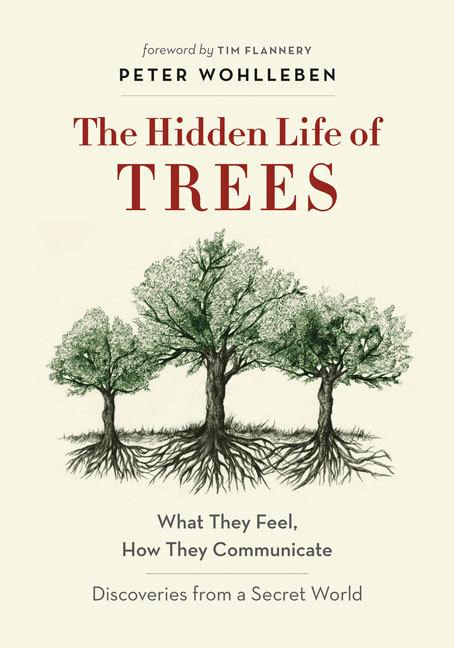
Peter Wohlleben’s The Hidden Life of Trees invites you into the secret world beneath the forest canopy, where trees form complex communities and communicate in ways that often escape our notice. Wohlleben, a German forester, blends scientific research and personal observation to reveal how trees support one another, share resources, and even warn each other of danger. From the very first pages, he challenges the notion of trees as solitary organisms, showing instead that they live in interdependent networks much like human societies.
In the opening chapters, Wohlleben describes how trees exchange nutrients through vast underground fungal networks. These fungal filaments, called mycorrhizae, link individual trees to their neighbors, allowing them to trade carbon, nitrogen, and water. He compares the system to the internet, a superhighway for information and sustenance. Through these connections, older “mother trees” funnel extra resources to younger saplings, ensuring the next generation’s survival.
Wohlleben then turns to the ways trees communicate stress and threats. When bark beetles bore into a trunk or drought sets in, trees release chemical signals into the air and send warning pulses through the fungal network. Nearby trees respond by bolstering their defenses—producing bitter chemicals or closing microscopic pores to conserve moisture. This silent alarm system helps an entire stand of trees brace for attack, much like neighbors rallying to shore up a shared wall.
He also explores the social lives of forest stands, pointing out that trees of the same species often cluster together. In these groves, which he calls “families,” individual trees show greater resilience and growth than those growing in isolation. Wohlleben recounts measuring core samples and watching ring patterns reveal periods of stress or bounty. Family stands, he notes, endure harsh winters and dry seasons more successfully than scattered individuals.
The author devotes a chapter to siblingship among trees, describing how root grafts physically link trunks underground. These grafts allow direct exchange of water and nutrients, especially from stronger to weaker trees. Wohlleben writes of witnessing sickly beeches receive lifelines of sustenance from healthier neighbors. In this light, the forest emerges not as a realm of cutthroat competition but as a place of mutual aid.
In a shift of focus, Wohlleben delves into the memory and intelligence of trees. He recounts experiments where saplings exposed to simulated threats later responded more quickly when danger reappeared. Trees “remember” drought years and calibrate how wide to open their pores on future dry days. Such adaptive behavior hints at a form of primitive intelligence, he argues, challenging our assumptions about cognition.
Moving above ground, he examines how branches and leaves optimize light capture. Trees sense gaps in the canopy and grow limbs toward sunlit patches. In dense forests, tall trees put out long shoots to catch stray beams, while understory species spread broader leaves to soak up dappled light. This dynamic interplay maintains forest diversity, creating niches for dozens of species.
Through vivid anecdotes, Wohlleben describes a winter study in which he measured how heat patterns shift around tree trunks. He found that well-connected trees maintained warmer bark temperatures and lost less water than solitary specimens. Their shared fungal networks acted like underground insulation, smoothing out thermal extremes and keeping sap flow steady.
He explores how forests regulate local climates, cooling the air in summer through evaporative loss and releasing stored warmth in winter. Forests function like giant air conditioners and heaters combined. Wohlleben argues that preserving large tracts of woodland is crucial for climate stability, both regionally and globally.
The author doesn’t shy away from forestry’s darker history. He recounts the rise of clear-cutting and monoculture plantations, practices that disrupt forest communities and weaken their natural defenses. Monocultures, he warns, fall prey to disease and pests more readily than mixed stands. By contrast, natural forests repair damage, recover from storms, and maintain fertility when left to their own devices.
Wohlleben profiles traditional, low-impact forestry methods still used by some communities. In these systems, selective thinning and natural regeneration yield timber while preserving habitat complexity. He shares stories of foresters who treat the forest as a living entity, pruning selectively and letting windthrown logs remain as nurse logs for seedlings.
An entire chapter addresses the hidden dangers posed by climate change. Rising temperatures and altered rainfall patterns strain tree communities already balancing mutual aid and resource sharing. Wohlleben predicts that networks will fray if mother trees cannot sustain younger ones through prolonged droughts. The collapse of these support systems could accelerate forest die-offs.
He closes with a hopeful vision: if we learn to see forests as living communities rather than mere timber reserves, we can adopt practices that sustain both human needs and forest health. He urges readers to plant mixed-species woodlands, protect old-growth stands, and support ecological research that reveals forest secrets. Humanity’s survival, he suggests, may depend on preserving these ancient alliances.
Throughout The Hidden Life of Trees, Wohlleben’s prose balances scientific detail and warm storytelling. He peppers chapters with personal moments—breaking open a fungus-covered root to study its threads or feeling his heart race as a flash of lightning ignites distant pines. These glimpses give readers a front-row seat to the forest’s secret dramas.
By the final pages, you come to appreciate trees not as static background scenery but as dynamic, social beings. Their lives unfold in hidden networks of support, communication, and shared memory. Wohlleben offers a new lens through which to view every walk in the woods—one in which you can almost hear the quiet chatter of trees calling out to one another, day and night.
Detailed Summary
Key Takeaways
1. Trees Communicate Through Chemical Signals
“Trees talk to each other. They use an underground network of fungi to exchange messages.”
Fungal Networks as Communication Channels: Wohlleben introduces the concept of the “Wood Wide Web,” where trees link their roots with fungal filaments. These mycorrhizal networks carry carbon, water, and nutrients from one tree to another. The author explains that this underground system resembles a social network in human terms, with some trees acting as hubs and others as leaves.
He describes how a wounded tree can send distress messages via chemical compounds. Neighbors detect these signals and boost their own defenses. This dynamic shows that forests function less like collections of isolated individuals and more like cooperative communities.
Implications for Forest Management: Understanding tree communication challenges conventional forestry practices. Clear-cutting, for instance, severs vital fungal links, disrupting the flow of nutrients and information. Wohlleben argues that sustainable management must protect these underground networks to promote forest health and resilience.
This insight also influences conservation policy. Recognizing trees’ interdependence leads to strategies that preserve mixed-species stands and avoid soil compaction. By maintaining fungal highways, we ensure forests can withstand pests, droughts, and climate shifts.
Key points:
- Mycorrhizal fungi form networks linking tree roots
- Trees transmit distress chemicals through fungal filaments
- Communication boosts neighboring trees’ defenses
- Logging can damage these crucial connections
- Sustainable forestry protects fungal networks
2. Mother Trees Nurture Their Young
“Old trees feed seedlings. They send carbon through the network to saplings in shaded spots.”
Role of the Oldest Trees: Wohlleben identifies large, veteran trees as “mother trees.” They store resources during good years and redistribute them when conditions turn harsh. Young saplings, often buried in shade, struggle to photosynthesize enough to survive. Mother trees share sugars, amino acids, and water via fungal threads.
This finding upends Darwin’s notion of strict competition in nature. Instead, the forest acts as a cooperative family. By investing in the next generation, mother trees ensure species survival and garden-like regeneration of the forest floor.
Rewriting Ecological Narratives: This nurturing behavior forces us to rethink how we view ecosystems. It challenges the “dog-eat-dog” model and highlights mutual aid. Ecologists can no longer treat trees as purely competitive agents; they must study networks of support as well.
Practically, nurseries and reforestation projects can mimic these natural transfers. By inoculating soil with key fungi or planting seedlings near mature trees, practitioners boost survival rates and create more resilient woodland patches.
Key points:
- Large trees act as nutrient hubs
- Carbohydrates flow from mothers to saplings
- Supports seedling survival in low light
- Challenges competition-only models
- Guides reforestation practices
3. Trees Remember and Learn
“Trees carry memories of droughts and pests. Their bark chemistry changes to anticipate threats.”
Adaptive Memory in Trees: Through repeated exposure to stress, trees adjust their internal processes. Wohlleben shows that after a dry spell, a tree ramps up its water retention mechanisms and thickens its bark. Chemical changes remain stored in its tissues, ready for the next challenge.
These adaptations base on epigenetic shifts rather than quick genetic mutations. Trees don’t think, yet they maintain a biological memory. This slow form of learning underpins forest resilience and long-term survival.
Forest Resilience Under Climate Change: Memory effects help trees withstand repeated bouts of heat and drought. Forest managers can exploit this by exposing saplings to mild stress before planting. This “hardening off” prepares them for harsher field conditions and reduces mortality rates.
Researchers also use tree ring and bark data to reconstruct past climate events. By reading these biological archives, scientists improve climate models and predict future forest responses more accurately.
Key points:
- Repeated stress triggers chemical shifts
- Epigenetic changes store “memories”
- Enhances drought and pest resistance
- Informs sapling hardening protocols
- Improves climate-history reconstructions
4. Competition Turns into Cooperation
“Roots that once fought now share space and resources when fungi link them.”
Dynamic Balances in Root Systems: Wohlleben describes how trees initially compete for soil territory. However, when fungal networks establish connections, individuals discover mutual benefits. They send excess water or nutrients to neighbors that need them more.
This flexible behavior emerges from local rules rather than central coordination. Trees react to soil signals. If a friend lacks water, they release extra to the network. If a neighbor faces pest attack, they boost its chemical defenses.
Rethinking Ecosystem Models: Ecologists now study cooperation alongside competition. Models must include resource sharing to predict outcomes. Ignoring cooperation underestimates forest stability and habitat quality.
Conservationists also aim to preserve diverse fungal partners. A rich mycorrhizal community fosters balanced resource distribution, reduces tree mortality, and sustains wildlife that depends on complex forest structures.
Key points:
- Roots compete until fungi connect them
- Trees send resources where needed
- Local interactions drive cooperation
- Alters ecosystem modeling
- Supports diverse fungal communities
5. Insect and Disease Defense
“Trees warn each other through air and earth of incoming pests. They boost tannin levels to repel attackers.”
Chemical Early Warning Systems: When insects start nibbling, the wounded tree emits volatile organic compounds into the air and soil. Nearby trees detect these cues and ramp up protective chemicals like tannins. These compounds make leaves bitter or toxic to attackers.
This process serves as an early warning. Trees under attack essentially rally their neighbors. The speed of this response can determine whether an infestation stays local or becomes a widespread outbreak.
Integrated Pest Management: Farmers and foresters can harness these natural defenses. By planting trigger species or spraying mimic compounds, they prime trees for faster response. This reduces pesticide use and protects beneficial insects.
On a policy level, protecting old-growth stands preserves natural pest-warning networks. Removing them disrupts airborne and underground signals, making younger, isolated stands more vulnerable to epidemics.
Key points:
- Wounded trees release warning chemicals
- Neighbors detect signals via air and root networks
- Tannins and acids deter pests
- Guides low-toxicity pest control
- Emphasizes old-growth preservation
6. Human Impact on Forest Societies
“Our actions break the trees’ network. Roads, clear-cuts, and pollution silence their conversations.”
Forests as Social Entities: Wohlleben frames forests as societies of individuals bound by cooperation, communication, and memory. When humans fragment woodland with roads or remove understory, they sever fungal links and isolate trees.
Pollution alters soil chemistry and fungal health. This breakdown leads to weakened defenses, reduced nutrient flow, and higher mortality. Trees, once synchronized with neighbors, become vulnerable loners.
Shifting Forestry and Urban Planning: Forestry must integrate social-network thinking. Buffer zones, mixed-species planting, and minimal soil disturbance preserve connectivity. Roads and development can include wildlife corridors and mycorrhizal refuges.
Urban planners benefit too. Street trees often die young due to root isolation. New designs encourage porous pavements and communal planting sites, letting trees share resources and resist heat islands.
Key points:
- Roads and development fragment networks
- Pollution harms mycorrhizal health
- Isolated trees lose mutual defenses
- Informs buffer-zone policies
- Improves urban tree survival
Future Outlook
The Hidden Life of Trees reshapes our view of forests from mere timber stores to intricate societies. Once we see trees as neighbors, not objects, we reconsider how we manage every patch of woodland. Sustainable forestry will likely adopt network-friendly methods, from selective logging that keeps mother trees intact to fungal inoculation of clear-cut sites. Planting designs could mimic natural clusters, preserving the underground web.
Ecologists will pursue deeper studies of communication channels among plants. They may discover species-specific “dialects” or chart how networks shift under climate stress. Such work could lead to predictive models that tell us which forests will bounce back after drought and which will collapse.
On a broader scale, this forest-as-society metaphor inspires social movements and education. If children learn that trees cooperate much like humans, conservation gains emotional resonance. Policies may follow suit, treating forests as communities with rights and responsibilities. The hidden life of trees will not stay hidden for long—it may guide our future relationship with the living world.







