
Summary
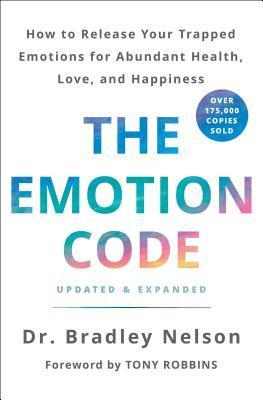
"The Emotion Code" by Bradley Nelson explores how trapped emotions affect our health, emotions, and well-being and offers a simple, self-administered method for releasing them.
Nelson begins by describing how emotions leave energetic imprints in the body. He calls these trapped emotions. According to him, they originate from past events—sometimes from childhood, other times from gestation or birth. When they accumulate, these energetic blocks can disrupt the body’s natural flow, leading to physical pain, chronic disease, or emotional distress.
At the heart of Nelson’s theory lies the concept of the body’s energy field. He likens it to a magnetic aura that surrounds and permeates every cell. When we experience strong feelings—fear, anger, grief—the energy can get lodged in that field. While modern medicine often overlooks these subtle energies, Nelson argues they hold the key to many unexplained ailments.
To identify trapped emotions, Nelson turns to muscle testing, also known as kinesiology. In simplest terms, you hold one arm out while pressing lightly on it. Then you ask a yes-or-no question, such as, “Is there a trapped emotion contributing to my lower back pain?” The arm will stay strong for yes and weaken for no. Nelson claims this nonverbal dialogue taps into your subconscious wisdom.
Once you detect a trapped emotion, you consult Nelson’s Emotion Code chart. It lists more than sixty common emotions by name and color. You run through them one by one, testing each until you pinpoint the specific emotion. For instance, you might discover that a trapped fear from age ten still resonates in your solar plexus.
Releasing the emotion involves a small magnet. Nelson instructs you to glide it along your Governing Vessel—the midline of your spine from tailbone to skull—while holding the intention to discharge the trapped emotion. In most cases, you feel a slight pulse, or you retest and find that the muscle no longer weakens when you ask about that emotion.
Nelson provides a step-by-step protocol. First, you set your intention to clear any trapped emotion that no longer serves you. Next, you use muscle testing to confirm the presence of any such emotion. Then you identify it by running through the chart. Finally, you release it with the magnet and verify its removal. He suggests repeating the process daily until you feel marked improvement.
Throughout the book, case studies illustrate profound transformations. A woman with chronic migraines, after just one session, reported clarity of mind and an end to her headaches. Another man, plagued by anxiety and insomnia, found restful sleep after clearing deep-seated grief from childhood.
Nelson also shares stories of improved relationships. A couple on the brink of divorce discovered, through the Emotion Code, that they carried opposing trapped emotions—resentment and guilt—from past arguments. Once released, they communicated more openly and rekindled their bond.
In one touching example, a mother struggling with postpartum depression identified a trapped emotion linked to her own birth. By clearing it, she experienced renewed joy in caring for her baby and deeper self-compassion.
The book doesn’t ignore skeptics. Nelson acknowledges that critics doubt muscle testing or energy fields. He urges readers to experiment for themselves and offers tips to strengthen their testing accuracy—such as avoiding muscle fatigue and ensuring a quiet, focused mind.
He also explains how to integrate the Emotion Code with other therapies. You can use it alongside chiropractic care, acupuncture, or talk therapy. By clearing emotional blocks first, you may help physical adjustments hold longer and allow psychological counseling to dig deeper.
Nelson describes his own journey. As a young chiropractor, he battled debilitating back pain that resisted every treatment. When he discovered and applied the Emotion Code on himself, the relief was immediate and lasting. That breakthrough set him on a path to teach the method worldwide.
In later chapters, he answers common questions. Can you clear emotions for someone else? (Yes, with proper consent and focus.) How often should you release emotions? (Daily until you feel balanced, then as needed.) Nelson also offers strategies for identifying family-line issues, those inherited emotional patterns passed through generations.
By the end, readers have a clear, hands-on tool for self-healing. Nelson’s gentle approach requires no medical training. It only asks you to trust your body’s innate wisdom. The result, he promises, is a lighter heart, improved health, and a chance to live free from the burdens of the past.
Detailed Summary
Key Takeaways
1. Trapped Emotions as Hidden Energy
“Emotions are energy in motion. When they become trapped, they can affect every aspect of your health.”
Understanding Trapped Emotions: Bradley Nelson introduces the idea that emotions, once experienced, leave an energetic imprint in the body. Normally, that energy moves through us and dissipates naturally. But when we face intense or suppressed feelings—like fear, anger, or grief—their energy can get lodged in our tissues.
Nelson explains that these trapped energies distort the body’s magnetic field. He likens them to small, negative magnets pulling at your health. Over time, they accumulate, creating tension, pain, or even chronic illness. Recognizing their presence is the first step toward releasing them and restoring harmony.
Health and Well-Being: In clinical practice, identifying and releasing trapped emotions has improved patients’ physical and mental health. Many report reduced pain, better sleep, and improved mood after the Emotion Code process. By clearing these hidden blocks, the body regains its natural ability to heal itself.
On a broader scale, understanding trapped emotions shifts many people’s approach to wellness. It encourages them to look beyond symptoms and address underlying emotional causes. This holistic perspective can reduce healthcare costs and foster preventive self-care habits, benefiting society at large.
Key points:
- Emotions store energy patterns in the body
- Intense or suppressed feelings can become trapped
- Trapped emotions distort the body’s magnetic field
- Releasing them restores natural healing
- Holistic health integrates mind and body
2. Muscle Testing as a Diagnostic Tool
“Your body already knows the answer. Muscle testing simply lets you ask the right questions.”
Connecting Mind and Body: Nelson adapts muscle testing from kinesiology to communicate with the subconscious mind. By asking yes/no questions and reading muscle responses, practitioners can uncover trapped emotions and other energetic imbalances. The body’s subtle reactions guide the process.
The book details how to perform these tests safely and accurately. You learn specific protocols for holding test vials and framing questions. Over time, you develop sensitivity to the body’s feedback, allowing you to pinpoint emotions that need release.
Empowering Self-Diagnosis: Muscle testing democratizes healing by putting diagnostic power in each individual’s hands. People no longer rely solely on external experts. They can explore their own energetic patterns and take active steps toward balance.
This approach also fosters deeper trust in one’s body. When patients see measurable responses through muscle testing, their confidence in holistic methods grows. As more people adopt self-diagnosis tools, mainstream healthcare may come to embrace these techniques, leading to integrative models of care.
Key points:
- Muscle testing reads subconscious “yes/no” signals
- It reveals hidden emotional blocks
- Specific protocols ensure accurate results
- Users learn to trust their body’s wisdom
- It supports self-directed healing
3. The Chart of Trapped Emotions
“Each emotion carries a distinct magnetic frequency. Mapping them helps us know which ones to release.”
Mapping Emotional Frequencies: Nelson presents a comprehensive chart listing sixty trapped emotions. He organizes them by type—fear, anger, sadness, guilt, grief—and assigns each a release point along the body’s meridians. The chart serves as a roadmap during the clearing process.
Practitioners refer to this guide while muscle testing. They hold a vial of energy and slide along the chart until the body signals a match. This systematic approach makes the process efficient and repeatable.
Standardizing Energy Healing: By offering a structured chart, Nelson elevates energy work from anecdotal practice to a more standardized method. Practitioners worldwide can follow the same system, improving consistency and reliability in results.
As more healers adopt the chart, it fosters data collection and outcome tracking. Over time, evidence may build to validate the Emotion Code in clinical studies. That could influence medical training, encouraging inclusion of energetic approaches in curricula.
Key points:
- Sixty distinct emotions are catalogued
- Emotions sorted by category and meridian
- Chart serves as a step-by-step roadmap
- Enhances consistency in practice
- Lays groundwork for wider acceptance
4. Releasing Through Intention and Magnetism
“When you direct love and intention toward a trapped emotion, it releases almost instantly.”
The Mechanism of Release: Nelson teaches that releasing trapped emotions involves a combination of intention and the magnetic pull of a magnet. You hold a small magnet along a meridian line while mentally directing love or forgiveness toward the emotion. The magnet acts like a lever, helping shift the energetic block.
He emphasizes the role of intention—we must genuinely wish to let go. The process often brings tears or relief as the energy moves out. Releasing may feel like a sudden pop or a subtle easing, depending on the person.
Accelerating Healing: This simple release technique offers immediate results for many. Practitioners use it during sessions to clear multiple emotions in a short time. Clients often leave feeling lighter, more centered, and able to face challenges calmly.
On a societal level, easy-to-learn methods broaden access to emotional healing. Individuals can help family members release stuck energy. Over time, communities that practice collective release may see lower stress levels and improved social cohesion.
Key points:
- Uses intention and magnet
- Works along body meridians
- Requires genuine desire to release
- Can clear multiple emotions quickly
- Provides immediate relief
5. Impact of Ancestral and Past-Life Emotions
“Emotional baggage can pass down through generations. You may carry feelings that aren’t yours.”
Inherited Emotional Patterns: Nelson explores the idea that trapped emotions don’t always originate in this lifetime. They can transmit through family lines or past-life experiences. He describes how to test for ancestral emotions by naming parents, grandparents, or extended lineage during muscle testing.
He also addresses past-life trauma. Although controversial, he provides protocols to identify and remove those energies. By clearing inherited emotions, people often break patterns of fear or self-sabotage that plagued their families for generations.
Breaking Cycles of Dysfunction: Addressing ancestral emotions can have profound ripple effects. When one person releases generational blocks, they free descendants from similar burdens. Families can heal en masse, improving relationships and reducing inherited stress.
If future research validates these patterns, fields like psychology and epigenetics may integrate emotional-energetic methods. That could revolutionize preventive care, shifting focus from genetic predisposition to energetic inheritance.
Key points:
- Tests for family-line emotions
- Includes past-life trauma
- Protocols for naming ancestors
- Breaks generational patterns
- Enhances family healing
6. Self-Care and Daily Maintenance
“Clearing just five trapped emotions a day can transform your mood and vitality.”
Building a Daily Practice: Nelson encourages readers to adopt a simple maintenance routine. By muscle testing for a few trapped emotions each morning and releasing them, you keep energy flowing smoothly. He provides sample scripts and daily trackers to make the habit stick.
He also suggests journaling results. Noting shifts in mood or physical sensations helps you see progress over time. Consistency becomes the key to profound, lasting change.
Long-Term Well-Being: Regular emotional clearing prevents buildup of new blocks. People who follow Nelson’s self-care plan report fewer mood swings, less anxiety, and stronger resilience to stress. This preventive strategy aligns with modern wellness models emphasizing daily habits.
As the approach spreads, self-clearing could become a mainstream wellness trend. Apps or wearable devices might integrate muscle-testing prompts, guiding users through quick sessions. Daily emotional hygiene could be as common as brushing your teeth.
Key points:
- Daily muscle testing habit
- Release five emotions per day
- Use scripts and trackers
- Journal changes to track progress
- Prevents emotional buildup
Future Outlook
Nelson’s framework bridges ancient energy-healing traditions and modern self-help. As interest grows, researchers may design clinical trials to measure the effects of trapped-emotion release on specific conditions. Solid evidence could lead to wider acceptance within integrative medicine.
On a cultural level, we may see community workshops and support groups forming around collective clearing sessions. People could gather to release shared traumas—natural disasters or social injustices—uniting emotional healing with activism.
Ultimately, the Emotion Code’s emphasis on personal responsibility and daily maintenance aligns with preventive healthcare shifts. You might soon find emotional clearing protocols recommended alongside diet and exercise, making emotional hygiene a standard pillar of well-being.







