
Summary
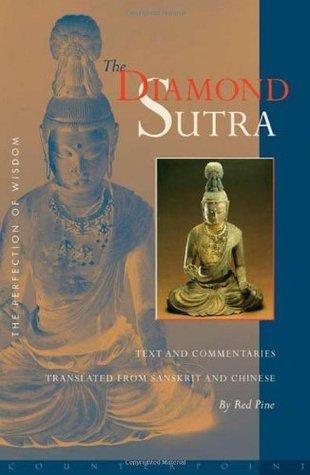
The Diamond Sutra, attributed to the historical Buddha and preserved in Sanskrit and Chinese translations, unfolds as a dialogue between the Buddha and his devoted disciple Subhuti. They sit among a gathering of monks and Bodhisattvas, just after the Buddha has performed an act of generosity by giving away a precious robe. Subhuti approaches him and asks how a Bodhisattva—someone devoted to liberating all beings—should cultivate wisdom and generosity without clinging to fixed ideas or self-interest.
Buddha begins by emphasizing that true generosity arises when the giver does not hold onto the notion of a separate self or a distinct gift. He says, “Give without attachment,” meaning one should not think “I am giving,” “someone receives,” or “a gift exists.” This radical teaching undercuts ordinary distinctions and points to a more fluid understanding of reality, where all things arise interdependently and lack inherent substance.
Subhuti listens as the Buddha explains emptiness, or śūnyatā, which means things do not possess an unchanging essence. Phenomena appear and vanish in a web of causes and conditions. Nothing stands alone. Even the concept of emptiness itself is empty, since if it had real existence it would contradict its own teaching.
Next, the Buddha offers a series of illustrations. He asks whether a form can be grasped, held, or spoken of as truly existent. He answers no, showing that even form—what we see or touch—evades any fixed definition. He repeats this for sensation, perception, will, and consciousness. Each category dissolves when closely examined.
Then comes a surprising claim: Bodhisattvas should perfect all virtues—generosity, ethics, patience, effort, concentration, and wisdom—yet not attach to any virtue. They act compassionately yet harbor no inner stockpile of merit. This freeing stance helps them remain humble and open.
The sutra shifts to a dialogue about teaching itself. Buddha warns that one who extols the Diamond Sutra, writes it down, recites it, or copies it must not regard it as a lasting possession. Otherwise, they risk tying themselves to words rather than to the living meaning beneath them.
A key passage likens the teaching to a magical illusion or a dream. It suggests that form and emptiness interpenetrate like waves on water. One who penetrates this vision sees the world as a play of light and shadow, neither clinging to appearance nor denying existence.
Subhuti then asks how many realms the Bodhisattva transcends. Buddha lists thirty-two marks of a great being and extols those who understand the perfection of wisdom. He says such beings traverse all worlds—past, present, and future—by means of non-clinging concentration, unobstructed and free from fear.
In response, the Buddha reveals the sutra’s ultimate promise: whoever hears, writes, or upholds even a verse of this teaching will benefit immeasurably and be freed from all fear. Those who propagate it will enjoy long lives and profound insight. Yet paradoxically, they must not think they have achieved anything concrete.
At this point the Buddha recites the single, powerful formula of the Diamond Sutra: “Gate gate pāragate pārasaṃgate bodhi svāhā.” It means “Gone, gone, gone beyond, gone utterly beyond, enlightenment hail!” This mantra embodies the journey beyond conceptual limits into the direct realization of emptiness.
Subhuti marvels at the depth of this teaching and rejoices in the Buddha’s compassion. He vows to hold it in his mind without fixation, so that every act of generosity or teaching flows from wisdom that knows no self or other.
The assembly responds with awe and delight. Monks and Bodhisattvas alike express gratitude, affirming that the Diamond Sutra has cut through their illusions and pointed them toward the unconditioned.
Finally, the Buddha instructs them to study and embody the sutra’s spirit, not just its letter. He reminds them that all Dharma teachings are ultimately finger-points at reality. If followers cling to words, they miss the point entirely.
As the discourse ends, the listeners rise, offering respect to their teacher. They disperse to share the sutra’s insight, carrying the deeply challenging message that true awakening comes when one lets go of every grasping thought. In doing so, they open themselves and others to the living pulse of boundless wisdom.
Thus the Diamond Sutra concludes, leaving behind the echo of its paradox. Its sharp blade severs conceptual knots, guiding all who engage it to an open dimension beyond subject and object—a place where generosity, ethics, and wisdom flow freely without barrier or self.
Detailed Summary
Key Takeaways
1. Impermanence of All Phenomena
“All conditioned phenomena are like a dream, an illusion, a bubble, a shadow, like dew or a flash of lightning.”
Transitory Nature: The Diamond Sutra opens by stressing that everything we perceive arises from conditions and thus cannot last. It likens our thoughts, objects, and even identities to fragile illusions. In Buddhist thought, conditioned phenomena lack inherent permanence.
By framing reality as fleeting, the sutra pushes us to question our attachment to people, possessions, and self-concepts. When we cling to what slips away, we breed suffering. Recognizing impermanence helps us adopt a more flexible stance toward change.
Harmony Through Acceptance: Historically, the teaching on impermanence has influenced practitioners to cultivate equanimity. In East Asia, artists painted cherry blossoms or waves to remind viewers of life’s fleeting quality. Monastic communities used these reflections to foster humility and resilience.
In modern contexts, embracing impermanence can reduce anxiety over loss. Therapists draw on these ideas when guiding clients through grief or change. By seeing transitions as natural, people can respond with openness rather than denial or fear.
Key points:
- Highlights that all phenomena arise and pass away
- Encourages release of clinging to transient experiences
- Forms the basis for reducing suffering
- Inspires art and ritual acknowledging change
- Supports psychological resilience
2. Emptiness (Shunyata)
“Subhuti, what do you think? Can the Tathagata be said to have taught anything truly existent?” “No, World-Honored One, everything is empty of true existence.”
No Inherent Essence: Emptiness means that phenomena lack independent essence. Nothing exists in isolation; every event, thought, or form arises through interdependent causes. The sutra uses paradox to show that teachings themselves have no final, fixed reality.
This insight counters the tendency to solidify ideas into rigid doctrines. When we see emptiness, we understand that concepts point us toward liberation but are not ends in themselves.
Breaking Conceptual Barriers: The doctrine of emptiness revolutionized Mahayana philosophy. Scholars like Nagarjuna elaborated on these ideas to dismantle dogma. In East Asian Zen, sudden realization of emptiness became central to practice.
In science and psychology, emptiness resonates with systems theory and cognitive framing. It encourages us to see knowledge as provisional. Leaders and educators can apply this by remaining open to new data and adapting views rather than enforcing absolutes.
Key points:
- Denies inherent, unchanging essence in things
- Shows interdependence of all phenomena
- Prevents idolizing doctrines or beliefs
- Inspired Buddhist philosophical schools
- Parallels modern scientific views on systems
3. Non-Self (Anatta)
“The self is not found in the past, nor in the future, nor in the present.”
Illusion of a Permanent ‘I’: The Diamond Sutra denies any fixed, independent self. It teaches that body, feelings, perceptions, and consciousness are processes, not a solid ‘I.’ We construct a sense of identity by weaving these elements together.
When we cling to a permanent self, we become trapped in fear of loss and separation. Recognizing non-self loosens the grip of ego, opening the door to compassion and insight.
Dissolving Ego-Boundaries: Non-self has vast ethical consequences. In monastic settings, it undercuts pride and competition. In daily life, it encourages empathy because others, like us, lack a fixed identity.
Bay Area psychology and mindfulness movements adopt non-self to counter overidentification with thoughts and emotions. This helps people recover from trauma or addiction by reducing shame and self-judgment.
Key points:
- Rejects a permanent, independent self
- Frames identity as a fluid process
- Reduces ego-based fear and desire
- Promotes empathy toward others
- Supports modern therapeutic approaches
4. Compassion Rooted in Insight
“All Buddhas of the past, present, and future awaken to unsurpassed, perfect enlightenment through prajna.”
Wisdom and Compassion Unite: The sutra repeatedly ties prajna (wisdom) to the capacity for boundless compassion. It says that only by seeing emptiness can the Bodhisattva truly serve all beings.
Compassion without wisdom can become sentimental or misguided. Wisdom without compassion may turn cold and detached. The Diamond Sutra weaves the two into a seamless path toward enlightenment.
Ethical Transformation: In Buddhist cultures, this union inspired social welfare efforts—hospitals, schools, and relief during famine. Monasteries provided practical help based on compassionate insight.
In modern ethics, similar models appear in effective altruism. Practitioners use data-driven wisdom to guide compassionate giving. By blending insight with empathy, they maximize positive impact.
Key points:
- Links deep insight to genuine care
- Warns against empty sentimentality
- Inspired charitable institutions
- Reflects in modern effective altruism
- Guides ethical action
5. Non-Attachment to Teachings
“Subhuti, do not depend upon words and letters. Rely on meaning and not the mere sound.”
Beyond Literalism: The sutra cautions against clinging even to its own words. It underlines that teachings are skillful means, not truths fixed in stone. Students must grasp the essence but not mistake the finger for the moon.
This approach frees practitioners from dogmatism. It invites constant questioning and living the insight, rather than memorizing doctrines by rote.
Adaptive Practice: Historically, this attitude welcomed cultural adaptation of Buddhism across Asia. It allowed Chinese, Tibetan, and Japanese traditions to evolve texts and rituals suited to local contexts.
Today educators and leaders apply this by updating guidelines based on feedback. It fosters learning organizations that value principles over rigid rules.
Key points:
- Warns against literalism
- Teaches skillful means over dogma
- Encourages active inquiry
- Enabled Buddhism’s cultural diversity
- Parallels agile methods in business
6. Perfection of Prajna (Ultimate Wisdom)
“All phenomena are dharmas of suchness, thus the Tathagata teaches without hindrance.”
Seeing True Nature: Prajna here refers to direct, non-conceptual insight into ‘suchness,’ the true nature of reality. It transcends ordinary logic and dualities like right/wrong or self/other.
This wisdom is the culmination of practice. It unveils life’s fullness, free from attachment or aversion. In the sutra, the Buddha reveals prajna as both the path and the fruit.
Unhindered Teaching: In Buddhist history, masters who attained prajna inspired open exchanges across schools. They taught without attachment to lineage or sect, focusing on direct experience.
In modern leadership, prajna resembles visionary insight that cuts through complexity. Innovators who combine deep understanding with flexible methods drive breakthroughs in science and technology.
Key points:
- Transcends conceptual thinking
- Reveals true nature or suchness
- Acts as both path and goal
- Fosters open, boundary-crossing teaching
- Resembles visionary leadership
Future Outlook
The Diamond Sutra’s lessons on impermanence and emptiness gain fresh relevance in a world facing rapid change. Climate shifts, technological disruption, and global crises prompt us to release fixed ideas. By seeing reality as interdependent, communities can devise collaborative solutions rather than cling to self-interest.
Educational and corporate settings may adopt the sutra’s non-attachment to teachings. Agile learning environments value meaning over manuals. As artificial intelligence accelerates innovation, the warning against literalism helps organizations leverage tools wisely without mistaking them for ends.
Finally, the sutra’s union of compassion and insight offers a moral compass for global leadership. When policymakers pair data-driven strategies with heartfelt concern for all beings, they can navigate the complexities of our interwoven planet. The Diamond Sutra remains a living guide for minds and hearts facing the future.







