SUMMARY
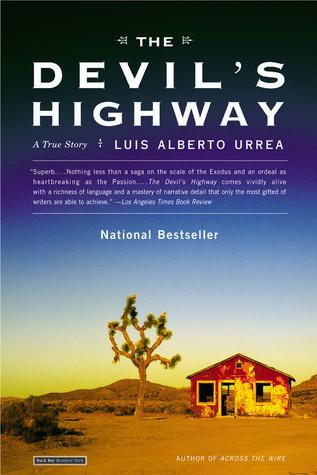
“The Devil’s Highway,” by Luis Alberto Urrea, recounts the harrowing journey of twenty-six Mexican men who attempted to cross the Arizona desert in May 2001. They hired a guide named Enrique, paid handsomely for safe passage, and followed a notorious stretch of borderland known as the Devil’s Highway.
The group gathered in Sonoyta, Mexico, just south of Lukeville, Arizona. Enrique led them over the fence under cover of darkness. At first, the desert seemed tame. Dunes rolled beneath pale moonlight. The men cracked jokes to mask their fear.
Before long, the terrain turned cruel. Heat rose like a wall. Water supplies dwindled faster than anyone expected. Daylight revealed the vast emptiness around them. No shade. No landmarks. The men struggled to maintain their pace.
Faustino, one of the migrants, fell first. He collapsed under the sun. Another, Moises, tried to drag him to the road but sank to his knees, gasping. They shared the last of their water. The guide pressed on, calling back only once.
By the third day, hunger and confusion had set in. Some men refused to continue. They lay on the sand, too weak even to speak. Enrique threatened to leave them behind. Panic rippled through the group.
They reached an old two-lane highway. It offered hope of rescue, but only shade under roadside mesquite trees. A passing car slowed at the sight of so many gaunt men. One by one, Border Patrol agents climbed out, waving their guns.
Rescue arrived, but only after irreversible damage. Of the twenty-six who set out, only twelve survived. One man, Adelaido, lay in a hospital tent, dehydrated and delirious. Four had already died of heatstroke.
Corpses lay in the desert for days. Scorching winds blew sand across bodies, erasing footprints around them. Urrea describes the anguish of identifying remains, the men’s clothes stiff with salt and sweat.
The survivors faced arrest and deportation. They huddled in cattle pens at the Nogales detention center. They traded stories of losing friends, of nearly drinking their own urine to stay alive.
Urrea traces this journey back through history. He explores the U.S. Border Patrol’s tactics, Mexico’s poverty, and the smuggling networks. He interviews officials, aid workers, and survivors to piece together every moment of the tragedy.
He also steps aside to examine his own fears. He recalls crossing that same highway as a child, chasing lizards under purple sunsets. He compares his innocent wandering to the migrants’ desperate flight.
The book doesn’t assign simple blame. It shows how politics, economics, and human greed converge to endanger lives. The route’s name—Devil’s Highway—proves chillingly apt: a place where hope and horror meet.
In the final pages, Urrea visits mass graves in Sonora. He recounts families who search for bones, hold Catholic masses at the desert’s edge. They plant crosses that sway in the wind, markers of anguish and remembrance.
By the end, “The Devil’s Highway” emerges as both history and warning. Urrea challenges readers to see beyond statistics. He urges us to face the human cost of borders. And he reminds us that every migrant carries a story as fragile as footprints in the sand.
DETAILED SUMMARY
Key Takeaways
1. The Desert’s Deadly Allure
“The desert doesn’t kill you by itself. Men walk into it.”
Lethal Landscape: The Devil’s Highway opens a window on the unforgiving stretch of desert where human hope collides with nature’s indifference. Urrea shows how migrants cross this barren terrain believing it offers freedom and work. Yet the terrain itself offers no mercy. Its shifting sands, scorching days, and freezing nights erode strength and will. People set out driven more by need than by strategy. They rely on smugglers who know the routes only by trial and error.
Through the story of the Yuma 14—men who perished in one disastrous crossing—Urrea makes the desert a character in its own right. He traces each footstep, each stumble. He describes dehydration not as a clinical term but as a slow erasure of identity. He makes you feel the weight of a single boot sinking into sand, the calm before a fatal collapse. In these pages, you move from map to memory, from path to pain.
By personalizing the route, Urrea transforms the Devil’s Highway from a cartographic line into a gauntlet. He reveals how every ridge, wash, and ridgecrest holds a human story. Each shift in temperature becomes a turning point in a life at risk. With this detail, the desert’s threat takes shape. It no longer reads as abstraction but as a silent killer you can almost hear.”
Natural Barrier and Human Cost: The desert acts as both shield and executioner for U.S. border policy. By making terrain impassable, it deters some crossings, but it also turns human desperation into death sentences. Families trading a few dollars for a promise of guided passage unwittingly embrace this risk. Entire communities in rural Mexico feel the wounds. Parents lose sons. Wives lose husbands. Children lose fathers.
Historically, policy-makers relied on ‘prevention through deterrence.’ They funnel migrants into the most dangerous routes, hoping the landscape deters entry. Urrea shows how that tactic backfires. Death tolls rise. Clandestine graves appear in washes and canyons. Volunteers comb the desert, gathering remains. Each discovery sparks a community response on both sides of the border. It ignites calls for reform yet also deepens fear of further crossings.
Ultimately, the desert’s hazards amplify the human cost of migration policy. It pushes survivors to burden their bodies and spirits. Those who return carry scars—physical and emotional. And those left behind carry emptiness. Urrea’s account forces readers to reckon with the unavoidable equation: tougher terrain means more human wreckage.”
Key points:
- The desert as active threat
- Policy driving migrants into danger
- Human stories behind each crossing
- Death tolls rising with deterrence tactics
- Lasting wounds in border communities
2. Economic Desperation Drives Migration
“They come not seeking adventure but work—any work.”
Poverty’s Pull: Urrea places poverty at the heart of this story. He traces the threads linking failing farms, closed factories, and dwindling wages to the decision to face the desert. In towns like Huajalejo, the only hope lies beyond the border. Remittances keep families from starvation. They pay for medicine and school fees. They stand between survival and ruin.
By profiling men like Rigoberto, who left behind barren fields, Urrea shows how endemic deprivation shapes choices. These migrants count on casual labor in Arizona or California. They know it might not last. But that uncertainty still beats the certainty of hunger. They endure fear and brutality for a chance at stability. And they send money home at the cost of living ghosts.
Urrea’s narrative weaves individual biographies into a larger economic tapestry. He connects global trade, local drought, and U.S. consumer demand. He makes clear that the Devil’s Highway springs from systemic failures on both sides of the border. Poverty isn’t personal weakness. It’s a condition reinforced by policy and market forces alike.”
Global Inequality and Local Crisis: Migration across the desert reflects global economic imbalances. Free trade agreements open markets but often undercut local producers. Small-scale farmers struggle as imports flood cheap. Then, wages abroad look like salvation. But migration doesn’t solve structural poverty. It drains villages of labor. It disrupts families. It leaves children without fathers.
In the U.S., cheap labor fuels industries from agriculture to construction. Consumers benefit from low prices. Yet they rarely connect those bargains to broken bodies in the desert. Urrea highlights this disconnection. He suggests that consumer choices and immigration outcomes share one ecosystem. When jobs vanish in one place, migrants fill them in another, often at great risk.
The cycle persists until policy addresses root causes. Aid programs, fair trade, and sustainable agriculture could change patterns. But without that, the trek across the Devil’s Highway remains a response to gaps in the global economy. Urrea urges readers to see every crossing as a symptom of inequality.”
Key points:
- Migration as economic necessity
- Role of remittances in rural survival
- Global trade’s impact on local farmers
- U.S. industries relying on migrant labor
- Link between consumer demand and migration
3. Border Policy and Preventive Deterrence
“They shunt the flow into the most lethal corridors.”
Policies of Pain: Urrea examines how U.S. border strategies rely on geography to deter entry. Officials close urban crossings, then unleash Border Patrol along rugged desert. The logic: heighten risk so smugglers steer migrants into inhospitable terrain. On paper, it’s effective. Apprehensions drop in one sector. Yet death rates climb.
This ‘prevention through deterrence’ shifts the burden from human smugglers to the desert itself. Migrants shoulder longer treks. They face dehydration, venomous insects, and disorientation. Urrea details each hazard as if cataloging a series of betrayals. The policy might curb numbers in certain regions, but it kills more people farther out.
By linking policy memos to firsthand accounts, Urrea reveals the gap between intention and outcome. Policymakers talk numbers, not bodies. They track footprints, not fatalities. This calculus excludes human suffering. It treats lives lost as acceptable collateral.”
Ethical and Political Fallout: Deterrence policies have ethical costs. Families sue the government. Human rights groups protest. Church groups leave water drops in the desert. The landscape fills with plastic jugs and prayer flags. Each marker honors a lost life. Each lawsuit questions the balance between security and compassion.
Politically, deterrence ebbs and flows with public sentiment. Tough talk on immigration wins votes. But when bodies surface, local communities demand accountability. Columnists criticize ‘deadly geography.’ Legislators propose oversight. Meanwhile, the policy endures because it appears low cost. It avoids building walls or expanding detention.
Urrea argues that sustainable reform demands more than rhetoric. It calls for safe legal pathways, accountable enforcement, and shared responsibility. Otherwise, the desert remains a silent executioner in the name of national security.”
Key points:
- Use of terrain as deterrent
- Shift of harm onto migrants
- Rising death toll despite fewer crossings
- Community responses and lawsuits
- Calls for policy overhaul
4. Stories of Resilience and Loss
“In each face, you see courage etched in sweat and sand.”
Human Portraits: Amid stark geography, Urrea weaves intimate profiles. He tracks Miguel, a father desperate for cancer treatment money. He follows Leopoldo, a young man who dreams of sending his siblings to school. Each journey carries hope and fear in equal measure. Urrea’s prose pulses with their uncertainty.
He shows resilience in tiny gestures: a shared gulp of water, a whispered prayer, a moment of laughter before collapse. He also captures loss in brutal clarity: a body found half-buried, a family receiving a lifeless blessing in a cardboard coffin. These narratives break the fence between reader and subject. They make suffering impossible to ignore.
By alternating triumphs and tragedies, Urrea underscores migration’s dual nature. It’s an act of defiance and vulnerability. It’s hope’s last stand and, too often, a final breath.”
Memory and Advocacy: These personal stories fuel advocacy. Human rights groups present them in congressional hearings. They appear in memorials along the border. They inspire journalists to investigate broader patterns. Each account becomes a call to action.
At the same time, the same resilience can breed silence. Families in Mexico fear talking to reporters or testifying. They worry about reprisals or shame. Urrea acknowledges this tension. He builds trust slowly, earning permission to share their voices.
Ultimately, these stories challenge viewers to see migrants not as statistics but as individuals. They press society to honor their sacrifices and address what drove them into the desert in the first place.”
Key points:
- Individual migrant profiles
- Moments of shared humanity
- Documented tragedies
- Role in advocacy and awareness
- Tension between storytelling and privacy
5. Collective Responsibility and Remembrance
“We can’t forget those who died just yards from rescue.”
Bearing Witness: Urrea insists readers carry memory as much as knowledge. He argues that forgetting the Yuma 14 consigns them to another desert—one of anonymity. Remembering becomes moral work. It means mapping each grave. It means marking water stations. It means speaking their names.
He surveys volunteer efforts to leave supplies in the desert. He traces the rise of ‘underground cemeteries’ where activists inter migrants’ remains. These sites become places of pilgrimage and protest. They press politicians to acknowledge the human toll.
In calling for remembrance, Urrea challenges common narratives of crime and invasion. He reframes border crossings as human dramas shaped by policy and environment. He urges readers to measure success not just by numbers detained but by lives saved.”
Shaping Public Memory: How societies remember tragedies shapes future actions. Urrea shows how desert memorials spark local debates. Some view them as political statements. Others see them as sacred spaces. Both perspectives converge on one fact: these deaths cannot vanish into the sand.
Schools use these stories in curricula. Churches hold vigils. Documentaries feature survivors’ testimonies. Each act of remembrance counters indifference. It pushes the issue into public consciousness. It creates a record that policy-makers cannot easily ignore.
Through remembrance, Urrea sees the possibility of change. He envisions a future where border management balances security with humanity. He believes that when people bear witness together, they can shift the tide from deterrence through death to safe passage and dignity.”
Key points:
- Ethic of remembering the dead
- Volunteer rescue and memorials
- Public debates and pilgrimages
- Educational and religious engagement
- Remembrance as catalyst for reform
Future Outlook
The Devil’s Highway compels future debates on migration to center human dignity. Urrea shows that policy cannot ignore the desert’s toll. As climate change intensifies, more regions may become unlivable. That means more crossings and more risk. Readers must ask: how will governments adapt safeguards? How will communities share responsibility?
Beyond immediate policy shifts, Urrea’s work suggests long-term solutions. He points toward regional development that addresses root causes of migration. He envisions cross-border partnerships that build sustainable livelihoods. He calls for humanitarian corridors that prioritize life over deterrence.
Ultimately, The Devil’s Highway offers both warning and invitation. It warns against treating land as barrier and people as problem. It invites collaborative approaches that respect borders and human rights. If readers heed Urrea’s insights, then the next chapter in border discourse might turn from desert death to shared compassion.