
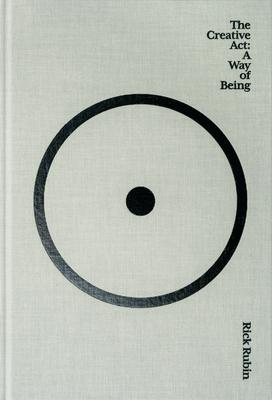
Summary
Rick Rubin invites readers into a fresh exploration of creativity, offering insights that stretch beyond music and art into all aspects of life. He frames creativity not as a rare gift but as an invitation to pay closer attention to the world around you. Throughout the book, Rubin blends personal anecdotes with practical guidance, guiding you toward a fuller understanding of how creativity lives in every moment.
He begins by reminding us that creativity is an attitude rather than a talent. You learn to cultivate curiosity, patience, and openness. Rubin suggests that every detail in daily life holds potential for inspiration—from the pattern of leaves outside your window to the tone of a friend’s voice. By treating each moment as a creative opportunity, you shift from passivity into active engagement.
Mindfulness plays a central role in his approach. He encourages simple practices like deep listening and focused breathing. These small shifts help you clear mental clutter and notice subtle ideas. You’ll find that pauses, silences, and breaks become fertile ground for new thoughts. In this way, stillness becomes an ally rather than empty space.
Environment shapes creative flow, Rubin argues. He describes his own studios: minimal, clutter-free rooms where distractions melt away. You learn to curate spaces that feel both comfortable and charged with possibility. Objects, colors, and lighting all affect your mood and focus. By designing your surroundings with care, you create a stage for ideas to emerge naturally.
Collaboration emerges as another key theme. Rubin shares stories of working with diverse artists, each bringing their own spark. He emphasizes listening more than speaking, and asking questions that draw out hidden gems. When you honor others’ contributions, a group becomes greater than the sum of its parts. Trust, respect, and shared passion fuel breakthroughs.
Henri Cartier-Bresson’s concept of the decisive moment appears as a powerful metaphor. Rubin advises staying attuned to the instant when idea and action meet. You won’t find it by forcing it. Instead, you hone your instincts until you sense when to act. That split second—fleeting yet potent—often delivers the most vibrant creative outcomes.
Routine matters too. You might resist rigid schedules but find that rituals free you from inertia. Whether it’s a morning walk, a cup of tea, or five minutes of sketching, small habits signal your mind that it’s time to create. Consistency builds momentum, and over time, ideas flow more naturally. Rituals offer both structure and freedom.
Rubin stresses embracing mistakes and dead ends. You learn that failure isn’t a flaw but a guidepost. When a project stalls or a draft feels stale, you gain fresh insight by exploring the wrong turns. He shares tales of songs and albums born from broken demos or lost files. Often, the most memorable work emerges after you push past perceived failure.
In one anecdote, Rubin recalls a late-night studio session where a technical glitch led to an unexpected rhythm. Instead of resetting, the artist leaned into the odd pattern and found a new groove. This story underscores his belief that serendipity thrives when you remain open rather than frustrated. Embracing the unexpected becomes a creative superpower.
Silence and negative space hold a special place. Rubin likens blank pages or empty measures in music to essential breathing room. Without these pauses, the work can feel crowded or overwhelming. You learn to step back, remove excess, and let what remains carry more weight. In design, writing, or composition, subtraction often yields more impact than addition.
He also explores the inner critic and its double-edged nature. While self-doubt can stall progress, discernment helps refine ideas. You learn to balance critical eye with supportive self-talk. Rubin suggests dialoguing with your inner critic—acknowledging its concerns while reminding it of creative purpose. This ongoing conversation keeps you honest without crushing momentum.
Timing becomes its own art. Rubin recounts sessions that felt raw and alive early in the morning, contrasted with others that only came alive after midnight. You discover your unique creative rhythms and respect them. Rather than forcing work at inconvenient hours, he urges you to pay attention to when ideas feel most fluid. Crafting to your own clock fosters authenticity.
Storytelling weaves through every example. Whether in music, film, or conversation, you learn to frame ideas with narrative arcs. Themes of challenge, discovery, and transformation engage both creator and audience. By understanding story’s universal pull, you inject deeper meaning into your work. Rubin shows how a simple anecdote can illuminate complex ideas.
Toward the end, Rubin turns to legacy and impact. He invites you to consider why you create and who you hope to touch. Rather than chasing fame, he urges focus on honesty and connection. When you align with a genuine purpose, your work resonates more deeply. Leaving a mark becomes less about recognition and more about honest exchange.
He closes by reminding you that creativity is never finished—it evolves with each thought, choice, and moment of attention. You carry the tools to cultivate it: mindfulness, curiosity, workspace, ritual, and community. The journey of being creative, he suggests, is also a journey of being fully alive. In that sense, every act of creation becomes an act of being itself.
Detailed Summary
Key Takeaways
1. Creativity as Everyday Practice
“Creativity is not an event; it’s a practice. It reveals itself through daily attention to life.”
Cultivating a Creative Habit: Rick Rubin argues that creativity flows from consistent practice rather than from sudden inspiration. He invites you to treat creativity as a daily exercise. You learn to pay attention to small moments, to build a habit of noticing textures, sounds, and connections around you.
He stresses that, like any discipline, creativity improves with repetition. You don’t wait for a muse to strike. You show up, observe, and begin. Over time, this practice opens up new pathways in your mind. You develop sensitivity to ideas that once slipped by unnoticed.
Transforming Daily Life: When you treat creativity as a habit, you reshape your relationship with routine. Ordinary tasks become exercises in discovery. A morning coffee or a walk in the park gains fresh potential as a source of insight.
Historically, many innovators kept journals or sketchbooks to train their perception. Rubin reminds us that this approach remains vital today. By practicing creativity each day, you build resilience. You also foster a richer internal world, one that fuels innovation across fields.
Key points:
- Shifts creativity from rare to routine
- Cultivates awareness of daily life
- Builds mental pathways for idea generation
- Enhances perceptual sensitivity
- Fosters resilience through repetition
2. Mindfulness and Deep Listening
“To create, you must truly listen—to people, to sounds, and to your own silence.”
Active Observation: Rubin emphasizes the power of mindful listening. You learn to quiet distractions. You focus on sounds in your environment and the voices within your mind. This practice sharpens your ability to detect nuance.
He describes sessions in the studio where he listens more than he speaks. He lets musicians find space to express themselves. In that silence, ideas surface. Mindful attention becomes a gateway to originality.
Enhanced Collaboration: Deep listening transforms collaboration. When you truly hear another person’s idea, you respond with empathy and precision. Teams become more cohesive. Projects benefit from richer conversations.
In the art and business worlds alike, leaders who listen well spark innovation. They create environments where contributors feel valued. This atmosphere fuels off-the-chart breakthroughs and lasting bonds.
Key points:
- Cultivates empathetic engagement
- Reduces mental clutter
- Reveals subtle ideas
- Improves team dynamics
- Creates space for innovation
3. Embracing Constraints
“Limits are not barriers; they are frameworks that shape creativity.”
Freedom within Boundaries: Rubin argues that true creativity often emerges within constraints. Whether you work with limited time, budget, or materials, these boundaries force you to think differently. They guide your focus and spark inventive solutions.
He points to classic albums recorded on shoestring budgets. Those limitations led artists to experiment with unconventional sounds. In this way, constraints become catalysts rather than roadblocks.
Driving Innovation: Across history, inventors and artists used constraints as springboards. The sprint-to-Mars programs required lean engineering. They yielded lightweight materials and new software tools that now serve civilians.
In business today, startups thrive by embracing narrow niches. They innovate faster than large companies weighed down by endless resources. Using constraints strategically accelerates learning and fosters breakthrough ideas.
Key points:
- Transforms limits into creative prompts
- Sharpens focus on essentials
- Encourages experimentation
- Speeds up problem-solving
- Yields unexpected outcomes
4. The Role of Environment
“Your surroundings whisper ideas. They shape your creative flow.”
Designing Your Creative Space: Rubin underscores the impact of physical and mental settings. A cluttered room breeds distraction. A calm studio invites concentration. He recommends curating light, color, and sound to support your work.
He also highlights mental environments. A mind cluttered by worry blocks inspiration. Practices like meditation clear mental noise. Both tangible and psychological spaces matter in nurturing creativity.
Shaping Cultural Innovation: Urban planners and architects recognize environment’s pull. Vibrant arts districts draw talent. Open office designs aim to boost collaboration. Rubin’s ideas echo in these movements.
On a personal level, individuals experiment with co-working spaces or nature retreats. They seek spots that ignite their best thinking. The interplay of environment and creativity remains a key focus in research and design.
Key points:
- Highlights physical design impacts
- Links mental clarity to creative flow
- Recommends environment curation
- Connects space with collaboration
- Inspires place-based innovation
5. Learning from Failure
“Every misstep is information. Embrace it and move forward.”
Reframing Mistakes: Rubin reframes failure as data, not defeat. He notes that early demos often stray far from the final version. These rough drafts offer clues about what works and what doesn’t.
He encourages you to examine failures without self-judgment. By studying missteps, you uncover hidden patterns. You learn which elements resonate and which distract.
Building Creative Courage: In science and art, failure precedes discovery. Penicillin emerged after countless failed cultures. Jazz standards evolved through missed notes and botched takes.
Embracing failure fosters courage. You take bigger risks and explore bolder paths. Over time, you develop a richer creative toolkit shaped by both hits and misses.
Key points:
- Recasts failure as insight
- Encourages nonjudgmental analysis
- Supports risk-taking
- Builds resilience
- Enriches innovation process
6. Creativity as Expression of Being
“The creative act reveals who you are. It is a way of being.”
Authentic Self-Expression: Rubin posits that creativity channels your deepest self. When you create, you tap into memory, emotion, and vision. The result carries your unique fingerprint.
He suggests that the most powerful work emerges when you stop imitating others. You draw from your own inner life. That authenticity resonates with audiences and gives your work its lasting power.
Shaping Cultural Identity: Throughout history, artistic movements reflected collective identities. Renaissance masters expressed humanist ideals. Modernists captured a restless century’s psyche.
Today, individual creators contribute to cultural dialogue by sharing personal stories. Rubin’s view underscores how each creative act shapes both personal and communal narratives.
Key points:
- Links creativity to identity
- Promotes original voice
- Discourages imitation
- Strengthens emotional impact
- Fuels cultural conversation
Future Outlook
As we move deeper into the digital age, Rubin’s insights will guide how we balance technology and human sensibility. We’ll see more emphasis on mindful listening in virtual collaborations. Teams will design digital workspaces that mirror the physical environments Rubin describes, blending minimalism with rich sensory cues.
Constraints will take on new forms. AI tools offer endless possibilities but also demand limits. Creators will need to set boundaries on data, algorithms, and time to maintain their unique voice. Learning from failure in an automated environment will mean analyzing both human and machine errors.
Ultimately, “The Creative Act” positions creativity not as a rare flash but as a sustainable way of being. As societies grapple with complex challenges, this practice-based approach will shape research, education, and policy. We’ll teach creativity as a core life skill, ensuring future generations live and work with deeper presence and more resilient imaginations.







