
SUMMARY
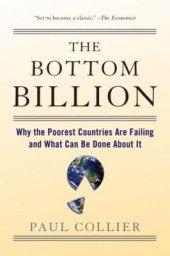
Paul Collier’s The Bottom Billion examines why a subset of the world’s poorest countries has fallen behind despite global growth and aid efforts. He coins the term “bottom billion” to describe roughly sixty countries where nearly a billion people live in stagnation or decline. Collier argues that these nations face unique traps that ordinary development strategies cannot overcome.
First, Collier defines his group of countries by income and growth rates over four decades. While many developing nations surged forward, the bottom billion lagged. Their shared traits include civil war, natural resources, poor governance, and geography. These features interact, creating vicious circles that keep nations trapped.
One of the most devastating traps is conflict. Civil war devastates infrastructure, displaces millions, and destroys trust in institutions. Collier presents data showing that once a country suffers a civil war, it becomes much more likely to experience repeated conflict. Recovery proves expensive and uncertain, and aid often fails to rebuild social cohesion.
Resource wealth can also become a curse rather than a blessing. Countries rich in oil, gas, or minerals may see sudden inflows of cash that undermine governance. Leaders use resource rents to reward cronies and repress opponents. This “natural resource trap” fuels corruption, reduces incentives to diversify the economy, and can even finance armed rebellions.
Geography plays its part in another trap. Landlocked countries surrounded by poor neighbors find trade costly and risky. Poor transport links raise the price of imports and exports, hampering industry and agriculture. Collier highlights how even small transit delays or bribes at borders can cripple competitiveness.
Poor governance or bad policies represent the fourth trap. Some leaders pursue extractive strategies that enrich elites but neglect public services and infrastructure. Corruption saps public trust, and weak courts fail to enforce contracts. Citizens see little rule of law, so private investors stay away.
These traps rarely act in isolation. A landlocked state with natural resources may see rebels funded by smuggling, sparking conflict that further erodes governance. Collier shows how overlapping traps reinforce one another, making the bottom billion hard to reach with standard development tools.
Collier rejects the notion that aid alone can lift these countries. While emergency relief and health programs save lives, they do little to break the deeper traps. He observes that aid often props up bad governments, inadvertently sustaining the very systems that keep nations poor.
Instead, Collier calls for a tailored policy agenda. For conflict-ridden states, he recommends peacekeeping missions with enforcement capacity. He stresses that interventions must be large enough and sustained long enough to secure stability before local institutions can rebuild.
To tame the resource curse, Collier proposes a combination of transparency initiatives and sovereign wealth funds. He argues that publishing contracts and revenues deters embezzlement, while saving a portion of resource income smooths out price swings and funds long-term development.
Addressing geographic traps, Collier urges richer neighboring states to lower barriers to transit. He suggests regional infrastructure investments—roads, railways, and ports—financed by multilateral banks. By reducing the cost of trade, countries can connect to global markets and stimulate growth.
Improving governance requires adoption of clear rules and external monitoring. Collier calls for international pacts that tie aid and trade preferences to genuine policy reforms. He admits this approach risks conditionality backlash, but sees it as essential to reward good behavior and punish bad.
Beyond these policy prescriptions, Collier emphasizes the role of philanthropy and social entrepreneurs. Small-scale projects that encourage accountability—such as citizen report cards or village savings groups—can empower communities and build grassroots momentum for reform.
Collier closes by reflecting on the moral imperative to act. The bottom billion cannot wait for a perfect international consensus. He urges individual nations, NGOs, and businesses to coordinate efforts to escape these traps. Without a concerted push, another generation may slip further behind.
In The Bottom Billion, Collier offers both a diagnosis of deep stagnation and a pragmatic roadmap. His blend of data, case studies, and policy analysis challenges readers to rethink how to help the world’s poorest. The stakes, he argues, extend beyond compassion; global stability and prosperity depend on lifting the bottom billion out of their traps.
DETAILED SUMMARY
Key Takeaways
1. Identifying the Bottom Billion
“A small group of countries is falling further behind even as the rest of the world grows richer.”
Defining the Crisis: Paul Collier highlights that the world’s poorest billion people live in about fifty countries that have seen no income growth over decades. These nations sit outside the benefits of globalization and aid flows that lifted hundreds of millions out of poverty elsewhere.
He explains that conventional measures of development mask stark differences. While many low-income countries improved steadily after 1990, a distinct cluster remained stagnant or regressed. Collier labels this group “the bottom billion,” drawing attention to their unique plight and the urgency for tailored policy responses.
Spotlighting Global Inequality: By isolating the bottom billion, Collier shifts the focus from broad poverty reduction to targeted interventions. This reframing underscores that one-size-fits-all policies fail to reach those trapped in extreme poverty and institutional collapse.
Governments and donors often allocate aid by population size or income level. Collier shows this method overlooks countries that need concentrated support. Acknowledging a targeted group helps reshape global agendas, ensuring relief efforts and economic reforms address their specific obstacles.
Key points:
- Sixty countries classified as “fragile” or “failing”
- Bottom billion account for one-seventh of the global population
- Their average per-capita income stagnated since 1980
- They face multiple, reinforcing poverty traps
- Require bespoke policy and aid approaches
2. The Conflict Trap
“Civil wars are both a cause and a consequence of poverty.”
Violent Instability and Poverty: Collier demonstrates that nations experiencing one civil war in the past generation face a 40 percent chance of another conflict within five years. Violence destroys infrastructure, disrupts markets, and displaces millions, reversing any modest gains.
He then examines how poverty fuels rebellion. Low incomes, weak governance, and rugged terrain create fertile ground for insurgencies. Rebel groups exploit local grievances, making conflict self-sustaining until resolved by outside intervention or negotiated settlement.
Breaking the Cycle: The link between recurring conflict and stagnation demands focused peacekeeping and post-conflict rebuilding. Traditional aid often halts as soon as violence flares, yet Collier argues for continued investment in security and civil institutions.
Historical examples from Sierra Leone and Mozambique show that well-supported peacekeepers and inclusive political settlements can end wars. They work alongside economic aid, restoring roads, schools, and markets. This holistic approach reduces the chance of relapse into violence.
Key points:
- One war doubles the risk of another
- Conflict slashes GDP growth by up to 2.3% annually
- Displaced populations lose livelihoods and savings
- Infrastructure destruction raises rebuilding costs
- Effective peacekeeping cuts relapse rates significantly
3. The Natural Resource Trap
“Rich resources often mean poor economic performance.”
Resource Curse Explained: Collier explores how countries rich in oil, minerals, or diamonds often underperform economically. Resource revenues can erode governance, fuel corruption, and concentrate wealth among elites, starving other sectors of investment.
He outlines the “Dutch disease,” where resource exports appreciate local currency and make manufacturing uncompetitive. Overreliance on exports also makes economies vulnerable to price swings, undermining budgetary stability and long-term planning.
Policy Responses: To avoid the resource curse, Collier recommends transparent revenue management. Sovereign wealth funds can smooth spending across boom and bust cycles, protecting social programs when prices fall.
He also endorses strict licensing and public audits to curb graft. Norway’s oil fund and Botswana’s diamond management serve as positive models. They show that disciplined savings and fair distribution can convert natural wealth into sustainable development.
Key points:
- Resource rents can exceed 30% of GDP
- Currency appreciation harms exports
- High volatility undermines budgets
- Corruption soaks up a third of revenues
- Stabilization funds reduce boom-bust swings
4. Landlocked with Bad Neighbors
“Access to the sea matters as much as the quality of institutions.”
Geography’s Hidden Role: Collier argues that being landlocked and surrounded by poor neighbors compounds isolation. Transport costs double or triple compared to coastal states. High tariffs, poor rail and road networks, and corrupt border posts slow trade.
He shows that landlocked countries with weak neighbors grow 1.5% slower annually than other developing nations. This geographic disadvantage traps them in low-value agriculture and petty trade, making industrial expansion nearly impossible.
Regional Cooperation Imperative: Improving regional infrastructure emerges as a critical remedy. Collier calls for cross-border highways, rail links, and streamlined customs procedures to lower trade costs.
He also highlights the role of regional economic communities. Successful blocs like East Africa’s EAC reduced tariffs and harmonized regulations. This cooperation boosted trade among members by over 50%, proving that joint action can overcome geographic limits.
Key points:
- Transport costs two to three times higher
- Border bureaucracy adds 20% to trade costs
- Poor neighbors amplify isolation
- Regional blocs cut tariffs and delays
- Infrastructure corridors lower export expenses
5. The Trap of Bad Governance
“Weak states cannot deliver basic services or enforce the rule of law.”
Institutional Weakness: Collier describes how fragile governments lack the capacity to collect taxes, maintain order, or provide education and health care. Without reliable policing, property rights vanish and businesses shy away.
He notes that state weakness often follows conflict or long civil wars. Elites fight over spoils rather than build public goods. The resulting corruption and clientelism leave citizens distrustful and disengaged, further eroding state legitimacy.
Building State Capacity: Collier proposes targeted institutional reforms. International donors should fund technical assistance to overhaul tax systems, train judges, and modernize customs.
He cites Rwanda and Georgia as success stories. Both states, after conflict, reformed aggressively. They simplified tax codes, upgraded ports, and enforced contracts. Growth rates soared above 6%, showing that good governance pays dividends.
Key points:
- Tax revenue below 10% of GDP
- High corruption deters investors
- Services often fail the poor
- Post-conflict reforms can reverse decline
- Technical aid boosts administrative skills
6. Aid for the Bottom Billion
“Aid must be designed to tackle specific traps rather than poured indiscriminately.”
Targeted Assistance: Collier warns against untargeted foreign aid. He argues that generic grants can prop up corrupt elites or create dependency. Instead, he urges donors to match aid to particular traps—conflict, resources, landlocked geography, or governance.
He outlines four categories of aid: peacekeeping, resource revenue management, trade facilitation, and state-building. Each type addresses a different barrier. By aligning funds with the right intervention, donors can achieve lasting change.
Reforming the Aid Industry: Donor coordination remains a pressing challenge. Collier advocates pooling funds in trust accounts overseen by multilateral institutions. This reduces fragmentation and ensures accountability.
He also calls for measurable outcomes. Aid projects need clear benchmarks—roads built, tariffs reduced, schools opened. Regular evaluations help discard ineffective programs and scale successful ones. This discipline mirrors private sector best practices and maximizes impact.
Key points:
- Four aid types for four traps
- Peacekeeping budgets should rise
- Revenue deals must be transparent
- Customs support cuts trade costs
- Monitoring drives efficiency
Future Outlook
Paul Collier’s framework reshapes how we confront extreme poverty. By dissecting specific traps, policymakers can deploy precise solutions instead of generic prescriptions. This shift promises more effective aid, smarter investments, and stronger partnerships with local leaders.
Looking ahead, technology and data analytics will refine Collier’s approach. Satellite imagery, mobile surveys, and real-time dashboards can track conflict zones, monitor infrastructure usage, and flag governance lapses. These tools will help donors adjust strategies quickly, ensuring resources flow where they matter most.
Finally, the bottom billion should join the conversation. Collier stresses that local ownership is vital. As these countries engage in shaping their own development, global cooperation will evolve from donor-recipient roles to genuine partnerships. Such a future holds the best chance to lift the world’s poorest into shared prosperity.