SUMMARY
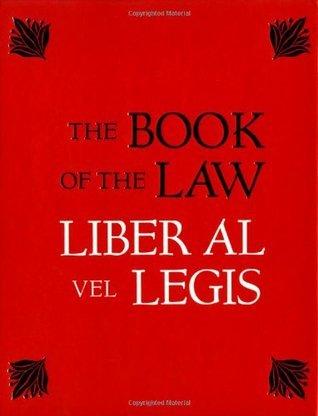
“The Book of the Law,” penned by Aleister Crowley in 1904, unfolds as a mystical revelation received over three days in Cairo. Crowley claimed that an entity named Aiwass dictated its verses, setting forth a new spiritual law for humanity. At its heart, the text proclaims: “Do what thou wilt shall be the whole of the Law,” urging individuals to discover and follow their true will.
On the first day, the voice of Nuit, the ancient Egyptian sky goddess, speaks. She describes herself as infinite space and endless stars. She invites every soul to come into her arms, promising ecstasy and union. Nuit’s words emphasize freedom: she insists that no rule shall restrain her devotees, save the limit of their own true will. Her tone shifts abruptly from cosmic majesty to intimate entreaty, forging a bond between the seeker and boundless creation.
Immediately after, the god Hadit—the complement to Nuit—addresses the reader. He calls himself the point within the circle of Nuit’s infinite form. Hadit embodies motion, mystery, and the spark of individual consciousness. He urges each person to know themselves fully, for through true self-knowledge one finds divine union. He promises that by this path, one becomes a star, shining with unique purpose. The alternating voices of Nuit and Hadit set the stage for a dynamic interplay of freedom and responsibility.
Later that day, the god Ra-Hoor-Khuit proclaims his qualities. He appears as a hawk-headed deity of war and vengeance. He demands that his followers be powerful and ruthless in defending their own will. He denounces lukewarmness, warning that weakness breeds misery. Ra-Hoor-Khuit’s voice is fierce and commanding, urging seekers to embrace strength and certainty rather than doubt and delay. He promises triumph to the bold.
On the second day, Nuit resumes her address and delves deeper into cosmic unity. She reveals that every star is a door to worlds beyond. She describes the interplay of light and darkness, offering the promise that love and understanding arise from this cosmic dance. She reminds the reader that thirst for knowledge equals thirst for self, for every answer lies within one’s own soul. Her language grows more lyrical yet remains grounded: she gently reminds us that the joy of discovery is boundless.
Hadit returns on day two to counterbalance Nuit’s vastness with intimate immediacy. He proclaims that one must pour out their life in service to their true will, for only such devotion yields lasting fulfillment. He warns against conforming to others’ expectations or following hollow traditions. Hadit’s tone is brisk and direct, a spark urging action. He insists that truth arises through personal experience and inner certainty.
Ra-Hoor-Khuit speaks again, emphasizing the necessity of change and evolution. He demands the destruction of outdated beliefs that stifle true will. He urges practitioners to act with fierce compassion—helping others only when it serves both the helper’s and the helped’s true purposes. His voice bristles with both fire and precision, calling for clear sight and decisive action. He warns that weakness invites chaos and that only the strong may shape the future.
On the third and final day, Nuit delivers final counsel. She reveals that the stars bind themselves in ecstasy to Hadit, symbolizing the union of infinite and point, cosmic and personal. She promises that those who embrace the law will join her vast dance and shine across the heavens. She encourages love without shame, for the body is holy as the spirit. Her language swells with cosmic grandeur yet circles back to tender reassurance.
Hadit’s final message underscores self-trust and courage. He proclaims that every moment lived fully fulfills the divine destiny. He urges seekers to laugh, to indulge their creativity, and to share their joy with like-minded spirits. He eliminates fear by reminding that death is but a doorway to further adventure. His words sparkle with wit and challenge the reader to live boldly.
Ra-Hoor-Khuit’s closing words unite the three voices in a call to spiritual warriors. He proclaims the arrival of a new Aeon, an age born of freedom and self-realization. He commands the faithful to build strong communities around the law of “Do what thou wilt,” tempered by love for one’s fellow travelers. His tone merges the fierce and the compassionate, reminding that true power lies in harmony rather than domination.
The book concludes with practical injunctions, cryptic epithets, and symbolic formulas. Crowley included comments on mystical calendars and cycles, hinting at hidden layers of meaning for future adepts to decipher. He warned that the text resists simple interpretation and must be lived rather than merely studied. The repeated refrain, “There is no law beyond Do what thou wilt,” closes the revelation with both clarity and enigma.
Throughout the work, Crowley uses poetic imagery, sudden shifts in voice, and abrupt metaphors, mirroring the unpredictable nature of spiritual insight. He insists that no one should worship Crowley himself; the law belongs to each seeker. The text blends archaic Egyptian themes with modern Western occultism, forging a bridge between ancient mystery and contemporary self-discovery.
Critics have often found the book baffling, citing its apparent contradictions and striking aphorisms. Devotees, however, treat it as a living scripture, meditating on its verses and developing rituals aligned with its law. Crowley’s followers formed Thelema, a spiritual movement that interprets “true will” as a sacred path unique to each individual.
Despite its brevity, “The Book of the Law” exerts wide influence across modern occult circles. Its insistence on personal freedom and self-responsibility resonates with those disillusioned by dogma. Crowley’s vivid visions and bold declarations challenge readers to rethink morality as an expression of inner purpose rather than external decree.
In sum, Aleister Crowley’s “The Book of the Law” stands as a radical manifesto of individual sovereignty. It entwines cosmic myth with practical advice, calling each reader to discover and enact their unique destiny. Through the voices of Nuit, Hadit, and Ra-Hoor-Khuit, it proclaims an age where true will guides both spirit and action. The text remains provocative, inviting seekers to test its truths in the crucible of life rather than accept them on faith alone.
DETAILED SUMMARY
Key Takeaways
1. Do What Thou Wilt
“Do what thou wilt shall be the whole of the Law.”
Central Commandment: The phrase “Do what thou wilt” stands at the heart of The Book of the Law. Crowley frames it as an absolute injunction, meaning each person must discover and follow their own True Will without interference. He rejects imposed moral codes and encourages self-discovery.
This dictum reverses conventional authority. Rather than obey external laws or creeds, individuals must tune into their inner purpose. When one aligns with that purpose, Crowley argues, they act in harmony with cosmic law.
Radical Autonomy: Crowley’s command shattered rigid Victorian morals. It inspired later occultists, artists, and countercultural movements to question inherited values. By making individual purpose sacred, it fostered new forms of self-expression and spiritual exploration.
Today, aspects of “Do what thou wilt” resonate in modern self-help and New Age philosophies. Critics warn that taken without restraint, it can justify selfish or harmful behavior. Yet its call to self-knowledge remains influential in occult circles and beyond.
Key points:
- Rejects external moral systems
- Centers on discovering True Will
- Promotes individual sovereignty
- Inspired 20th-century counterculture
- Remains controversial for its freedom
2. True Will
“Every man and every woman is a star.”
Unique Spiritual Purpose: Crowley likens each person to a star, shining with a unique orbit. True Will is that orbit: the one unchanging calling a soul follows across lifetimes. It differs from fleeting desires or social expectations.
He stresses that discovering one’s True Will requires honest self-examination and magical practice. Only then can a person act in full alignment with cosmic harmony.
Inner Discovery: The notion of True Will influenced modern notions of authenticity. Psychologists and spiritual teachers adopted similar ideas about finding and following one’s core purpose. This helped fuel self-help and personal-growth movements.
However, critics question how to validate a claimed True Will. Crowley’s esoteric methods remain obscure to many. Still, the idea empowered seekers to look inward rather than follow blind obedience.
Key points:
- Metaphor of stars for souls
- Distinguishes purpose from whim
- Requires self-examination
- Influenced self-help movements
- Raises questions of verification
3. Aeon of Horus
“This book was called The Book of the Law, and ye shall not read the Book of the Law in the manner of the old Aeon.”
A New Spiritual Era: Crowley proclaims the arrival of the Aeon of Horus, superseding past ages dominated by Osiris and Isis. Each aeon carried its own spiritual dynamics. The new Aeon of Horus heralds self-realization and willpower over sacrifice and mystery.
He links Horus, the Egyptian god of the child, with youthful energy and revolutionary change. This Aeon invites humanity to claim its own divinity and transform society.
Cultural Shift: The idea of shifting aeons influenced later occultists and New Age thinkers. It offered a framework to see history as evolving spiritual phases. Some artists and writers adopted Horus imagery to signal rebellion against old orders.
On the other hand, skeptics dismiss this as mythic storytelling rather than objective change. Yet the concept of epochs with distinct mindsets remains appealing when analyzing cultural trends.
Key points:
- Marks a spiritual shift
- Contrasts old Aeons of Isis and Osiris
- Empowers will over sacrifice
- Adopted by occult and New Age groups
- Frames history in spiritual phases
4. Tripartite Deities
“I am Nuit, the naked brilliance of the voluptuous night-skies.”
Three Voices: The Book of the Law unfolds in three chapters, each voiced by a different deity. Nuit speaks for infinite possibility and cosmic space. Hadit, her complement, represents the point or active center. Ra-Hoor-Khuit introduces the Aeon of Horus, stressing strength and action.
This structure balances yielding and asserting energies. It invites readers to integrate spaciousness, centering, and dynamic force into their spiritual practice.
Symbolic Framework: By presenting three deities, Crowley offered an accessible symbolic system for Thelemites to meditate on. Temples and rituals incorporate these three principles in ceremonies worldwide.
Scholars note parallels with other triads—such as the Christian Trinity. Yet Crowley uses them to emphasize personal experience over dogma. This approach appealed to occultists seeking new ritual languages.
Key points:
- Chapter 1: Nuit—cosmic space
- Chapter 2: Hadit—individual point
- Chapter 3: Ra-Hoor-Khuit—action
- Balances passive, center, active
- Inspired Thelemic rituals
5. Love is the Law
“Love is the law, love under will.”
Harmony of Will and Affection: Crowley pairs love with will to avoid misusing freedom. Unchecked desire can conflict with True Will. When love flows from purpose, it deepens human connection without derailing destiny.
He frames love not as mere emotion but as an energy aligned with cosmic order. That alignment ensures relationships support rather than distract from individual purpose.
Ethical Check: This phrase provides a moral compass. Thelemites view love under will as a guide for relationships—affection must not clash with True Will. It tempers radical freedom with responsibility.
Outside occult circles, it resonates with modern ideas of conscious relationships. It underscores aligning personal values with emotional bonds, a theme in contemporary psychology.
Key points:
- Links affection with purpose
- Prevents willful chaos
- Acts as ethical guideline
- Influences Thelemic practices
- Echoes conscious-relationship trends
6. Magical Practice
“Every intentional act is a Magical act.”
Magic as Will in Action: Crowley defines magic broadly as the art of causing change in conformity with will. Rituals and daily actions both qualify as magical if they stem from True Will. He dismantles strict boundaries between ceremonial magic and everyday life.
Magic becomes a practical tool for self-transformation. He outlines rituals but stresses inner alignment as crucial. Without sincere purpose, external rites remain empty.
Practical Spirituality: By equating intention with magic, Crowley influenced modern spirituality that blends mindfulness with ritual. Practitioners adopt simple rituals—meditation, visualization—to shape reality.
Critics argue this dilutes traditional ceremonial magic. Yet it brought magical ideas into popular culture and wellness industries, where “intentional living” echoes Crowley’s maxims.
Key points:
- Broad definition of magic
- Emphasizes intention
- Bridges ritual and daily life
- Influenced mindfulness movements
- Sparked debates on authenticity
Future Outlook
The Book of the Law continues to shape occult and esoteric traditions. As digital communities grow, Thelemites share interpretations and rituals online. This accelerates the evolution of practice and invites diverse voices to reexamine Crowley’s text.
Meanwhile, scholars apply literary and historical methods to understand its impact on modern culture. Universities include Thelema in courses on religious movements, opening academic dialogue.
Looking ahead, the emphasis on individual purpose may intersect with emerging AI and neuroscience research. How might True Will translate in an era of algorithmic self-optimization? Crowley’s challenge to self-authority could spark new debates on freedom in a data-driven world.