
Summary
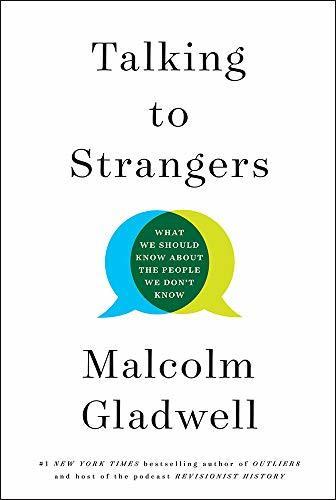
"Talking to Strangers" by Malcolm Gladwell examines how we interact with people we don’t know and why those encounters often go wrong. Gladwell opens with the case of Sandra Bland, a Black woman who was pulled over for a minor traffic violation and later died in jail. He uses this tragic example to show how police officers and civilians bring flawed assumptions into first meetings.
Gladwell introduces the concept of the “default to truth.” He argues that our brains assume honesty until proven otherwise. This mental shortcut helps society function—imagine if we doubted every word we heard. Yet, it also means we miss signs of deception and misread intentions.
He then digs into the idea of “transparency.” We expect a person’s face and body language to match their thoughts and feelings. If someone seems calm, we trust them. But Gladwell shows that some people mask emotions so well that we can’t tell what they’re really thinking.
In one chapter, Gladwell recounts the case of Bernie Madoff. Madoff fooled investors for decades by projecting sincerity. His outward confidence led people to ignore red flags in his financial reports. This story illustrates how dangerous it can be to trust appearances.
Gladwell also explores the spy world. He tells the tale of Ana Montes, a high-ranking U.S. defense analyst who spied for Cuba for years. Her colleagues vouched for her honesty because she didn’t fit the profile of a traitor. Their misplaced trust cost national security dearly.
Next, he looks at the legal system. Gladwell analyzes videos of police interviews with suspects. He shows how officers expect suspects to display guilt through fidgeting or lack of eye contact. Those cues often aren’t reliable, and innocent people sometimes confess to crimes they didn’t commit.
In another brief aside, Gladwell examines a case from Britain. A diplomat misjudged a suspect’s politeness as admission of guilt. He arrested him on flimsy evidence, and the suspect spent months in prison before charges were dropped. It was a harsh lesson on mistaken impressions.
The book then shifts to international diplomacy. Gladwell discusses Neville Chamberlain’s meeting with Hitler in 1938. Chamberlain misread Hitler’s charm as proof of peaceful intentions. His gullibility helped pave the way to World War II.
Gladwell returns to modern policing. He profiles Joe Friday, founder of a precinct in New York’s Harlem. Friday trained officers to listen without bias, to ask open-ended questions and let suspects tell their stories. This careful approach reduced false arrests.
He explores the story of Amanda Knox. Knox’s odd behavior after her roommate’s murder led investigators to paint her as guilty. Yet Gladwell argues the police interpretation of her emotions was warped by cultural expectations and false assumptions.
Later, he discusses deception in digital life. Online dating and social media let strangers craft perfect images of themselves. We swipe and “like” based on polished profiles. Gladwell warns that our default to truth doesn’t adapt well to virtual worlds full of curated personas.
He then offers strategies to improve communication with strangers. First, he advises asking more questions instead of making statements. Next, he suggests watching for inconsistencies over time rather than quick cues. And he stresses the value of humility—the willingness to admit when we’ve misjudged someone.
Gladwell wraps up by acknowledging that talking to strangers will always carry risk. But he reminds us that better frameworks and more listening can reduce misunderstandings. He urges readers to balance healthy skepticism with empathy.
In the end, "Talking to Strangers" challenges us to rethink our most basic social skill. By understanding our cognitive biases and adopting new approaches, we can make more accurate judgments and prevent needless harm when we meet those we don’t know.
Ultimately, Gladwell leaves us with a question: will we continue to default to truth without question, or will we learn to probe a bit deeper? The answer could reshape how we relate to everyone we encounter, stranger or not.
Detailed Summary
Key Takeaways
1. Default to Truth
“We tend to believe what people tell us, even when it defies common sense.”
The Human Bias Toward Credibility: Gladwell introduces the idea that we generally assume honesty when we meet strangers. He uses the case of CIA spy Ana Montes, who fooled colleagues for years. Her success shows that our instinct to trust often overrides skepticism.
We rarely challenge statements at face value. Gladwell argues this bias emerged from evolutionary needs. In small communities, mistrust carried heavy social costs. Over time, trusting strangers became adaptive, even if it sometimes backfires.
Consequences of Unchecked Trust: In the real world, defaulting to truth can lead to grave errors. Take the case of Bernie Madoff’s victims. Investors trusted his reputation despite warning signs. Their faith cost them billions.
Society suffers when institutions mirror this bias. Police interrogators often believe confessions are genuine. Wrongful convictions illustrate how trust can override evidence. Gladwell warns that reform needs to address our innate tendency rather than just training.
Key points:
- Trust serves an evolutionary purpose
- Defaulting to truth streamlines social interactions
- Overconfidence in credibility leads to deception
- Institutions often mirror human trust biases
- Reforms must counter innate trust tendencies
2. Illusion of Transparency
“Strangers often misread emotional cues, seeing transparency where none exists.”
Reading Feelings Where There Are None: Gladwell discusses how we overestimate our ability to read strangers’ emotions. He contrasts public figures who mask feelings under pressure with average people. This mismatch creates faulty impressions.
He explores Sandra Bland’s arrest. Police believed her calm demeanor masked hostility. In fact, Bland was anxious and confused. This misreading escalated a routine traffic stop into tragedy.
When Misreading Costs Lives: Errors in reading strangers can prove fatal. Law enforcement relies on “behavioral signals” to assess threats. Research shows these signals often mislead, harming both officers and civilians.
In broader contexts—like job interviews or diplomacy—misreading emotions erodes trust. Employers might reject competent applicants for perceived disinterest. Diplomats may misinterpret a leader’s calm as appeasement. Gladwell insists on humility in our judgments.
Key points:
- We overstate our emotional insight
- High-pressure roles demand concealed emotions
- Police rely on flawed behavioral cues
- Misreads can escalate minor incidents
- Humility improves interactions
3. The Power of Contextual Coupling
“Actions are tied to places and times in ways that we often ignore.”
Linking Behavior to Environment: Gladwell coins “coupling” to describe how behavior anchors to specific contexts. He examines a small town’s crime spike linked to a drug influx. When the drug suppliers left, crime dropped.
This shows behavior isn’t free-floating. We need to study environments to predict actions. Ignoring context leads to flawed policies and misdirected blame.
Designing Better Institutions: Coupling has implications for urban planning and policing. Instead of blanket surveillance, targeted interventions in hotspots yield better results. New York’s broken-windows approach illustrates how context shapes outcomes.
Businesses benefit too. Retailers who rearrange store layouts to influence shopper flow often boost sales. Gladwell’s point: change the context and you change behavior. Policy makers must embrace this principle to craft effective solutions.
Key points:
- Behavior links to specific contexts
- Crime patterns follow environmental shifts
- Context-aware policies outperform broad measures
- Urban design influences public conduct
- Businesses leverage context for profit
4. Transparency vs. Context
“We mistake transparency for understanding, but we need both context and content.”
Distinguishing Surface Clarity from Depth: Gladwell critiques the belief that reading facial expressions gives true understanding. He refers to poker players and CIA interrogators who rely on visible cues. Yet cultural and individual differences render those cues unreliable.
True insight demands context. Understanding motives, histories, and environments yields deeper clarity. We must resist the lure of quick, visible clues and seek fuller narratives.
Rethinking Intelligence Gathering: Security agencies train to spot deceit in strangers. Yet false positives harm innocent people. Studies of TSA screenings show minimal success rates in predicting threats purely from behavior.
Gladwell recommends combining data with context. Profiling based on travel patterns, networks, and histories improves accuracy. Broader application spans hiring, law enforcement, and healthcare. Contextual intelligence reduces errors.
Key points:
- Facial cues alone mislead
- Culture shapes emotional expression
- Deeper context offers real insight
- Intelligence needs multifaceted data
- Context reduces false assessments
5. Case of Sandra Bland
“A routine traffic stop became a fatal encounter because strangers miscommunicated.”
Escalation Through Misunderstanding: Gladwell recounts the 2015 traffic stop of Sandra Bland in Texas. A minor lane change violation spiraled into her arrest. Both Bland and the officer misread each other’s signals.
Each side assumed the other intended hostility. This spiral shows how strangers’ interactions can escalate quickly. Without shared norms or trust, small conflicts become critical incidents.
Reforming Police Procedures: Bland’s case sparked nationwide protests. It highlighted systemic issues in police training and community relations. Departments now adopt de-escalation protocols, partly inspired by Gladwell’s analysis.
Community policing models gain traction. By fostering ongoing relationships, officers and residents learn shared cues. Such efforts reduce confrontations and build trust over time.
Key points:
- Minor infractions can escalate rapidly
- Mismatched assumptions fuel conflict
- Shared norms prevent misunderstandings
- De-escalation training addresses biases
- Community policing builds mutual trust
6. Importance of Conversation Quality
“We fool ourselves into believing that mere talk makes connection.”
Beyond Small Talk: Gladwell examines how chat doesn’t guarantee understanding. He looks at high-stakes interviews where conversations miss critical signals. Participants believe they connect, yet disconnect remains.
He stresses active listening and empathetic questioning. Effective dialogue demands genuine curiosity. That goes beyond scripted lines or superficial exchanges.
Improving Professional Interactions: In medicine, lackluster doctor–patient conversations lead to misdiagnoses. Studies show open-ended questions yield richer information and better outcomes. Healthcare systems now train physicians in patient-centered communication.
In business, sales teams adopt consultative selling. They probe client needs rather than pitching products. This shift matches Gladwell’s call: quality conversations foster real bonds and reveal truths.
Key points:
- Superficial talk breeds false confidence
- Active listening enhances insight
- Empathy deepens understanding
- Open-ended questions unlock details
- Better dialogue improves outcomes
Future Outlook
Gladwell’s insights push us to rethink how we approach strangers. In an age of global travel and digital interaction, our default trust and misreading risks multiply. Future research may focus on developing tools that blend data-driven context with human judgment, making our encounters safer and more truthful.
Policymakers and institutions will likely adopt coupling and context principles more broadly. From policing to public health, strategies that consider environment and history can replace one-size-fits-all approaches. This shift could yield more effective interventions and reduce unintended harms.
On a personal level, readers may become more cautious in first impressions. Embracing humility about our listening and reading skills—paired with curiosity—might foster deeper connections. As we refine conversation techniques, we edge closer to understanding strangers without sacrificing trust or security.







