
Summary
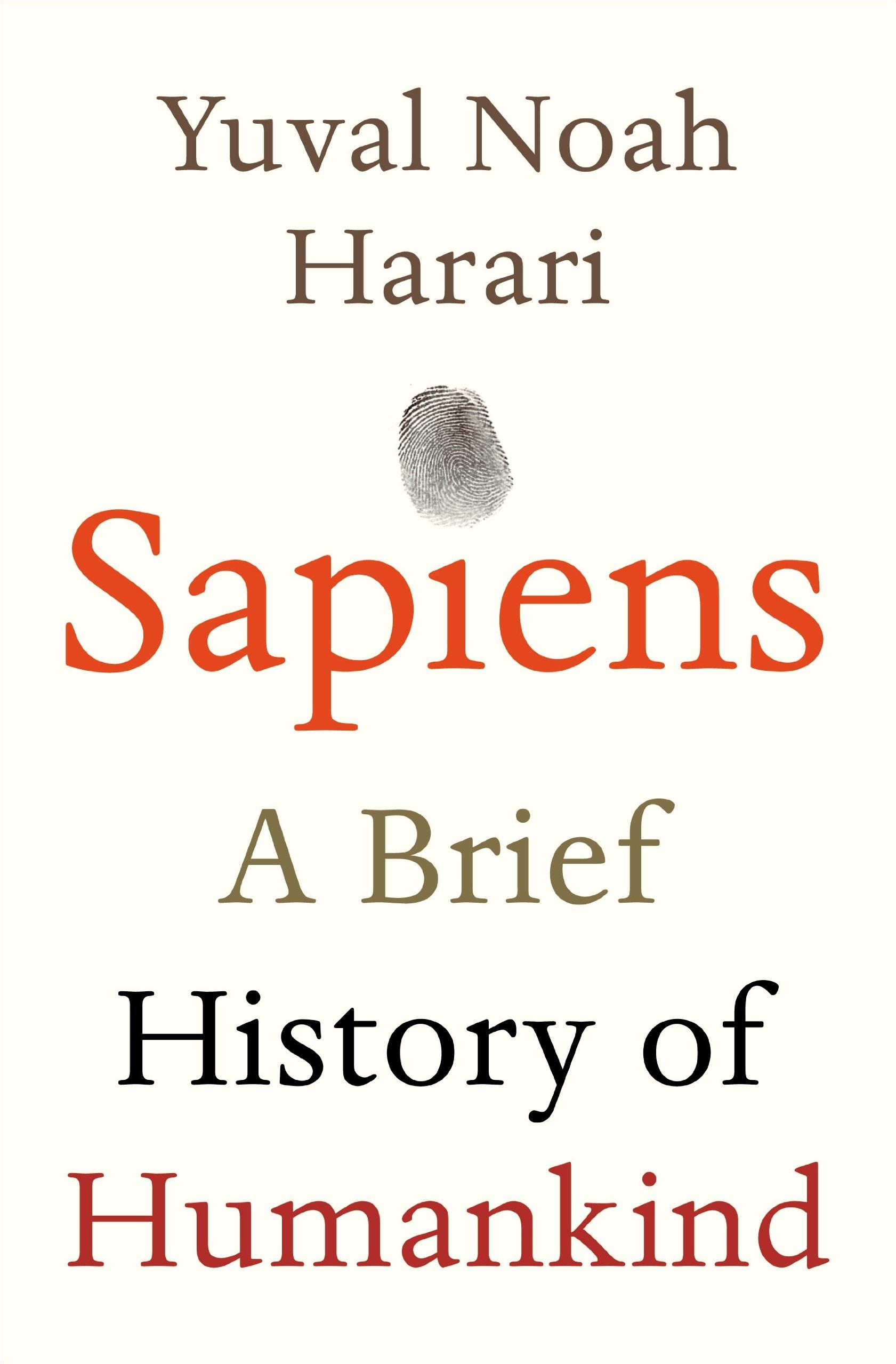
Sapiens: A Brief History of Humankind by Yuval Noah Harari offers a sweeping look at our species’ journey from insignificant apes to planetary influencers. Harari argues that three major revolutions shaped humanity: cognitive, agricultural, and scientific. He traces each leap in our capacity to cooperate, adapt, and reshape the world around us.
Harari begins with the Cognitive Revolution roughly 70,000 years ago. He shows how Homo sapiens developed the unique gift of fiction, enabling them to share myths about gods, nations, and money. This shared belief let large numbers of strangers cooperate flexibly and pursue collective goals. It explains why Sapiens outlasted other human species like Neanderthals.
With clear examples, Harari examines early foragers’ lives on the African savanna. He suggests that hunter-gatherers lived more varied diets and had more leisure time than early farmers. But that picture shifts when the Agricultural Revolution arrives. Around 12,000 years ago, humans domesticated plants and animals, settled in villages, and formed rigid social hierarchies.
The Agricultural Revolution turned out to be a double-edged sword. It fueled population growth but brought harder work, worse nutrition, and more disease. Harari challenges the idea that farming automatically improved life. Instead he portrays it as a trap: once people grew dependent on a few crops, they lost flexibility and gained new struggles.
In parallel, Harari tracks how large empires and universal religions spread. He describes the rise of Mesopotamian city-states and the Persian, Roman, and Chinese empires. Each empire united millions under shared laws, currencies, and gods. Harari argues that these unifying systems allowed people to cooperate across vast distances and sustain complex economies.
Religion played a central role in unification. Harari explores how Judaism, Christianity, Islam, Hinduism, Buddhism, and Confucianism offered moral codes binding societies together. He underscores that these faiths taught people to look beyond blood ties—that loyalty could extend to strangers governed by the same beliefs.
Next Harari turns to money, which he calls the most universal and most efficient system of mutual trust ever devised. Unlike empires or religions, money doesn’t demand faith in a single culture or god. It flows across borders, incentivizing trade in ways no king or priest could enforce.
By the time of the Scientific Revolution in the 16th century, Europeans had adopted empiricism and a willingness to admit ignorance. Harari credits this shift for unleashing modern science. He chronicles breakthroughs in astronomy, medicine, and physics. Suddenly humanity sought power over nature rather than simply myths about it.
Science fueled empires and capitalism. Harari explains how joint-stock companies and banks rose to finance exploration and trade. Investors risked money on ships bound for unknown coasts, expecting huge returns. This marriage of science and commerce transformed wealth creation and accelerated colonial expansion.
Capitalism, Harari suggests, runs on the belief in future growth. People borrow, invest, and consume based on the promise that tomorrow will be more prosperous. This faith underpins modern stock markets, national debts, and pension funds. Yet it also hinges on perpetual consumerism and environmental costs.
Harari then explores the Industrial Revolution and its impact on politics and society. Machines replaced human and animal labor, boosting productivity. Cities swelled as factories drew workers. Governments shifted from monarchies to constitutional systems that could mobilize masses through taxation and conscription.
In the modern era, power moved from God and kings to money and science. Harari highlights how ideologies like liberalism, socialism, and nationalism offered new collective visions. Each answered the same question: how can strangers cooperate for the common good? Their answers still shape global politics today.
As energy demands soared, fossil fuels became the engine of progress. Harari critiques our reliance on oil, coal, and gas. He warns that climate change and biodiversity loss may represent the biggest crisis in human history. Understanding our past, he argues, helps us weigh tomorrow’s choices wisely.
Toward the end, Harari ponders the future of Sapiens. Developments in biotechnology and artificial intelligence could soon redefine our bodies, minds, and societies. He asks whether we’ll merge with machines or engineer new life-forms. Such questions push us to reconsider what it means to be human.
Throughout Sapiens, Harari maintains a balance of skepticism and wonder. He invites us to question widely held narratives and to reflect on the myths—about progress, freedom, and happiness—that guide our lives. In doing so, he offers a powerful framework to understand how we got here and where we might go next.
Detailed Summary
Key Takeaways
1. The Cognitive Revolution
"Sapiens think in stories rather than in terms of restricted, utilitarian relationships."
Imagining New Realities: About seventy thousand years ago, Homo sapiens underwent a mental transformation. They developed the capacity to weave intricate tales. This shift let them cooperate flexibly in large groups and share myths about gods, nations, or legal systems.
With this new mental toolkit, small bands of hunters and gatherers could unite. They aligned behind shared beliefs about totem animals or ancestral spirits. In turn, they formed social networks far larger than what biological instincts alone would allow.
Building Complex Societies: By telling common stories, Sapiens built tribes that numbered in the thousands. They created social orders that rested on shared fiction rather than genetic kinship. This ability set the stage for villages, cities, and later empires.
The Cognitive Revolution explains why Homo sapiens outpaced other human species. While Neanderthals lived in small clan units, Sapiens formed alliances across wide territories. They traded, plotted wars, and transmitted innovations more rapidly than any rival species could.
Key points:
- Enabled large-scale cooperation through shared myths
- Allowed flexible social bonds beyond kin
- Drove rapid spread of ideas and innovations
- Outpaced other human species
- Laid groundwork for villages and empires
2. The Agricultural Revolution
"You did not domesticate wheat. It domesticated you."
Farming as a Trap: Around twelve thousand years ago, Sapiens shifted from foraging to farming. They planted seeds, herded animals, and settled in permanent villages. Farming produced food surpluses, but it also demanded relentless labor.
Contrary to the common view of progress, Harari argues farming enslaved humans to fields. Hunter-gatherers enjoyed varied diets and short workdays. Early farmers faced hard lives, disease, and social inequality as they cultivated cereal crops.
Unequal Societies and Population Boom: Agriculture supported far larger populations than foraging. Villages grew into towns, towns into cities, and new classes emerged. Leaders and priests gained power over peasants and laborers.
Farming societies also spurred technological advances in tools, storage, and trade. Yet they entrenched hierarchies. Today’s social inequalities, land ownership disputes, and even dietary shifts trace back to this turning point.
Key points:
- Shift from mobile foraging to settled farming
- Food surpluses fueled population growth
- Intense labor replaced leisure
- Social hierarchies and private property emerged
- Laid foundation for cities and states
3. The Birth of Unified Myths
"Coins are bits of paper whose value exists only in our imagination."
Shared Beliefs as Glue: Harari shows that money, religion, and empires rest on collective fiction. People trust paper money because they believe others accept it. Religions thrive on faith in invisible entities. Empires expand on the idea of shared nationality.
These imagined orders let millions cooperate and coordinate. Soldiers obey flags they can’t touch. Traders buy goods with numbers in bank accounts. All rely on mutual agreement in stories.
Global Networks and Institutions: Unified myths underpin modern institutions: banks, legal systems, and corporations. They let strangers trust one another across continents. Global trade, diplomacy, and digital commerce all need shared stories of value and law.
Yet these myths also carry risks. When trust collapses, markets crash and faith dwindles. Understanding the fiction behind our systems can help us manage crises and rebuild resilient institutions.
Key points:
- Money functions on collective belief
- Religions unite large populations
- Empires legitimize rule via shared myths
- Institutions depend on imagined orders
- Trust in fiction sustains modern life
4. Science and Empire
"The marriage of science and empire has enabled our species to expand its power and reach."
Curiosity Meets Conquest: From the fifteenth century onward, European empires backed scientific research. They sought new lands, spices, and knowledge. In turn, science provided better maps, ships, and weapons.
This synergy let explorers sail farther. They charted coastlines, cataloged plants and animals, and built global trade routes. Colonies sprouted across the Americas, Africa, and Asia.
The Modern World Order: Science-driven empires reshaped economies and cultures. They spread crops like potatoes and maize worldwide. They exchanged technologies, but also inflicted colonial rule and resource extraction.
Today’s geopolitical landscape still reflects that legacy. Former colonies grapple with borders drawn by imperial powers. Scientific institutions remain tied to national interests and global influence.
Key points:
- Empires funded scientific expeditions
- Science improved navigation and warfare
- Colonial expansion spread species and ideas
- Global trade networks emerged
- Modern geopolitics shaped by imperial science
5. Capitalism’s Rise
"Capitalism is unique in that it relies on the future growth of an economy."
Faith in Tomorrow: Harari describes capitalism as an economic system built on trust in growth. Investors buy stocks and bonds expecting higher returns in the future. Banks lend money believing borrowers will repay with interest.
This optimism fuels innovation. Companies invest in research, develop new products, and explore markets. The cycle of credit and investment keeps economies expanding—at least in theory.
Booms, Busts, and Consumer Culture: Capitalism brought unprecedented wealth and technology. It lifted millions out of poverty. Yet it also sparks financial crises when optimism falters. The 2008 crash exemplified the risks of overheated markets.
Moreover, consumerism reshapes culture. People identify with brands and chase material status. Environmental challenges arise from endless production and consumption.
Key points:
- Depends on belief in continuous growth
- Drives investment in innovation
- Leads to financial cycles of boom and bust
- Fuels global consumer culture
- Creates environmental pressures
6. Pursuit of Happiness
"History proceeded by drawing large numbers of strangers into cooperative networks.�Yet these networks didn’t make people happier."
Well-Being vs. Progress: Harari examines whether material progress equals human happiness. Despite longer lives and abundant goods, many remain stressed and anxious. Work hours rose in some societies, and income inequality widened.
He questions if GDP growth measures real well-being. Psychological research shows relationships, community, and meaning matter more than possessions. Sapiens still seek fulfillment beyond wealth and power.
Redefining Success: This takeaway challenges policymakers to focus on happiness indices, not just economic metrics. Nations like Bhutan experiment with Gross National Happiness over GDP.
On a personal level, people reassess career choices, social bonds, and consumption habits. The dialogue on mental health and life satisfaction grows louder as we debate what progress truly means.
Key points:
- Economic gains don’t guarantee happiness
- Quality of life depends on relationships
- Calls into question GDP as success metric
- Spurs interest in well-being indices
- Encourages rethinking materialism
Future Outlook
Harari’s journey through human history offers more than a retrospective. It prompts us to consider how we shape tomorrow’s stories. As biotechnology and artificial intelligence advance, future myths may revolve around engineered life or digital consciousness.
We must ask: which shared fictions will guide our global cooperation? Will we craft narratives that foster ecological balance, equity, and mental well-being? Or will we cling to growth-at-all-costs ideologies that drive division?
Ultimately, Sapiens urges us to take agency. Our ability to imagine remains our greatest asset. The myths we choose now will define societies for generations to come.







