Summary
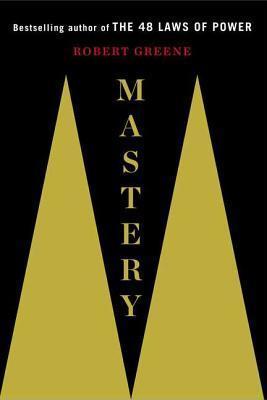
The book Mastery by Robert Greene explores how individuals can attain the highest level of skill and creativity in any field. Greene argues that mastery is not an innate gift reserved for a chosen few but a process open to anyone willing to commit themselves fully. He outlines a clear roadmap, tracing the journey from eager novice to world-class expert, and supports his points with vivid historical examples.
Greene begins by describing the critical first step: the apprenticeship phase. Here, you learn to observe carefully, absorb foundational knowledge, and develop practical skills under the guidance of mentors. This stage demands patience as you tackle routine tasks, sometimes menial or repetitive, to build muscle memory and mental frameworks.
Finding the right mentor, Greene stresses, can accelerate your progress and shield you from common errors. He recommends seeking someone who not only excels technically but also embodies humility and generosity. By emulating a mentor’s habits, work ethic, and thought patterns, you shortcut the trial-and-error process and internalize proven strategies.
Once you secure mentorship, Greene insists you must practice deliberately. That means setting specific goals, breaking complex skills into manageable parts, and drilling each component with intense focus. You should embrace feedback, even when it stings, because honest critique reveals blind spots and prevents you from cementing bad habits.
After several years of disciplined practice, you enter the creative-active phase. Here, you start combining the fundamentals into original work. You sketch new designs, propose novel experiments, or invent fresh applications. This stage calls for experimentation and boldness—pushing beyond what you’ve learned toward uncharted territory.
Alongside technical skill, Greene highlights the need for social intelligence. He shows how understanding others’ motivations, reading subtle cues, and forging alliances can make or break your rise. Even the greatest talent can falter if they ignore politics or mishandle relationships in their field.
As you gain confidence, you must learn to balance intuition and analysis. Greene describes this as developing an internal radar that signals opportunities and risks without conscious calculation. Highly skilled practitioners can sense patterns and possibilities at a glance, freeing them to innovate on the fly.
Inevitable setbacks will test your resolve. You’ll face critics, envy, and moments of self-doubt. Greene urges you to treat obstacles as data—analyze what went wrong, then adjust your approach. Persistence, he warns, is nonnegotiable; the journey to mastery spans decades, not months.
At the summit lies mastery itself, a state in which action and reaction fuse seamlessly. Decisions flow without hesitation, and creativity springs naturally. Greene likens this to a chess grandmaster seeing twenty moves ahead or a master musician improvising spontaneously.
Greene illustrates his points with compelling case studies. Leonardo da Vinci began as a curious teenager sketching birds in flight, then apprenticed under Verrocchio, absorbing techniques before transcending them. Charles Darwin labored through exhaustive research on the Beagle voyage, cataloging specimens until he uncovered the micro-variations that forged evolutionary theory.
Mozart shows another path. He debuted as a child prodigy replicating existing compositions, then evolved into a composer who bent classical forms to his will. Temple Grandin, an autism advocate, used her visual thinking to revolutionize livestock handling—applying empathy and design thinking in unprecedented ways.
Mastery demands lifelong learning. Greene stresses the importance of revisiting fundamentals even at the top. By maintaining humility, you remain open to fresh insights, ensuring that you don’t plateau or grow complacent.
Greene closes by reminding you that the real joy lies in the process, not the accolades. As you immerse yourself in your craft, you enter a flow state where work becomes play and progress feels effortless. True mastery, he says, reinvents both the individual and the field itself.
Ultimately, Mastery invites you to view your life as a grand apprenticeship. Whether you’re an artist, scientist, entrepreneur, or craftsman, the same principles apply. With patience, persistence, and passion, you too can join the ranks of history’s masters.
Detailed Summary
Key Takeaways
1. The Apprenticeship Phase
“The best way to gain power is to do exactly what you’re told.”
Structured Learning: In Mastery, Robert Greene outlines a clear path to skill development through the Apprenticeship Phase. This stage demands humility, curiosity, and a willingness to absorb knowledge from any source. Greene argues that no matter your prior talent or ego, you must commit to learning fundamentals before innovating.
He divides this phase into three parts: deep observation, active learning, and repetitive practice. First, you watch and listen more than you speak. Next, you take on small tasks to apply what you see. Finally, you refine your skills through constant repetition. This method mimics how craftsmen and artists learned for centuries and still applies today.
By treating yourself as a lifetime student, you build a strong foundation. This approach contrasts with our instant-gratification culture. Greene insists that the real work happens when no one’s watching and that shortcuts only undermine genuine mastery.
Building Lasting Expertise: Mastery’s Apprenticeship Phase reshaped how professionals train in many fields. In trades like carpentry or medicine, formal apprenticeships still mirror Greene’s model. New hires shadow veterans, handle simpler tasks, then advance. Companies in tech and consulting adopted structured onboarding that resembles this early stage.
Beyond industries, individual learners embrace online tutorials, mentorships, and project-based learning. They track hours spent on core skills before branching out. This discipline reduces burnout and imposter syndrome. When learners see steady progress, they grow more confident.
Historically, mastery took decades. Greene shows that focused apprenticeships can compress that timeline. By immersing yourself in a craft, you gain insights no casual dabbling can reach. Societies that honor this deep work often produce groundbreaking art, science, and innovation.
Key points:
- Begin with observation and listening
- Perform small tasks to apply learning
- Repeat core skills to build muscle memory
- Suppress ego and embrace humility
- View yourself as a lifelong learner
2. Finding the Ideal Mentor
“A mentor will turn your learning curve into a straight line.”
Guided Transformation: Greene dedicates a full chapter to the mentor-student relationship. He argues that a wise mentor accelerates your growth by offering feedback, sharing their network, and modeling excellence. Mentors help you avoid blind spots and shorten your trial-and-error cycle.
He warns against choosing the wrong guide: someone who fosters dependence or pushes you toward their own agenda. Instead, seek mentors who challenge your assumptions and let you experiment. The ideal mentor steps back once you’ve internalized key lessons, encouraging you to find your own voice.
This dynamic shifts power from a transactional exchange to a transformational alliance. It’s not about copying a style verbatim but absorbing principles to chart your own path. Greene emphasizes gratitude paired with self-reliance.
Shaping Future Leaders: Organizations now run formal mentorship programs informed by Greene’s ideas. They match seasoned veterans with emerging talent. This approach enhances employee retention and cultivates an internal culture of learning. Mentees gain confidence and industry savvy faster.
On a societal level, mentorship networks in medicine, academia, and the arts preserve institutional knowledge across generations. By documenting best practices, they maintain high standards. In startups and creative circles, informal mentorships drive innovation by pairing diverse skill sets.
Historically, great masters—from da Vinci to Einstein—relied on patrons and advisors. Greene revives that tradition for the 21st century. His blueprint ensures that each generation builds on accumulated wisdom rather than reinventing the wheel.
Key points:
- Seek mentors who challenge and guide
- Avoid dependency or blind copying
- Absorb principles, then innovate
- Offer gratitude and show progress
- Transition from guided to independent work
3. The Power of Practice
“Repetition is the mother of skill.”
Deliberate Practice: Greene highlights that random practice never yields mastery. Instead, you need deliberate practice: targeted, effortful, and feedback-driven. He draws on research from psychologists Anders Ericsson and K. Anders Ericsson, showing that experts log tens of thousands of focused hours.
First, define specific goals. Next, isolate weak points and address them methodically. Finally, get immediate feedback—either from a mentor, peer, or self-assessment. This loop of action and correction rewires your brain for higher performance.
Greene explains that deliberate practice requires discipline. It’s often uncomfortable, even boring. Yet those who endure it gain deep, automated control over complex tasks. This level of mastery separates true experts from competent amateurs.
Innovation Through Mastery: Deliberate practice has transformed sports, music, and business. Athletes use video analysis to break down movements. Musicians focus on tricky passages for weeks. In corporate settings, simulations and drills prepare teams for high-pressure scenarios.
This structured approach also fuels scientific breakthroughs. Laboratories set rigorous protocols and peer reviews to refine experiments. Over time, they build up a body of reliable data that forms the basis for new technologies and therapies.
Greene’s lesson extends to personal hobbies too. Whether learning a language or cooking, deliberate practice brings faster, more satisfying results. Societies that value deep work over multitasking often drive the greatest leaps forward.
Key points:
- Set precise learning goals
- Target and improve weaknesses
- Seek immediate, honest feedback
- Embrace discomfort and monotony
- Automate skills through repetition
4. Developing Social Intelligence
“Mastery requires an understanding of human nature.”
Interpersonal Insight: Beyond technique, Greene insists that social intelligence plays a critical role. Mastery isn’t a lonely endeavor. When you grasp others’ motivations and emotions, you navigate politics, form alliances, and spread ideas more effectively.
He details strategies like mirroring body language, listening actively, and detecting nonverbal cues. These tactics build rapport and trust. Greene also warns against manipulation: genuine social skill comes from empathy rather than deceit.
By honing social intelligence, you turn individual brilliance into collective progress. Teams with masters communicate better, resolve conflicts faster, and stay aligned on shared goals.
Collaborative Excellence: Companies like Google and Pixar credit emotional intelligence for their innovative culture. They train employees in conflict resolution and constructive feedback. This soft-skill focus leads to stronger collaboration and fewer stalled projects.
In politics and diplomacy, social intelligence can prevent misunderstandings and de-escalate crises. Negotiators who read subtle signals often clinch better deals. Greene’s principles echo tactics used by successful statespeople throughout history.
On a community level, social mastery fosters mentorship circles and knowledge-sharing networks. When experts share insights freely, they raise the skill level of the whole group.
Key points:
- Read and mirror nonverbal cues
- Listen with genuine curiosity
- Build trust through empathy
- Avoid manipulation for its own sake
- Use social skill to unite teams
5. Embracing Resistance and Setbacks
“Obstacles are inevitable; how you respond determines your path.”
Resilience in Practice: Greene argues that setbacks aren’t signs to quit but tests to improve. Resistance—in the form of failures, criticism, or boredom—reveals weak spots in your approach. Instead of avoiding challenges, you should seek them out as learning opportunities.
He shares stories of masters who endured years of rejection before success. Thomas Edison reportedly tried thousands of materials before his lightbulb worked. Greene uses these anecdotes to illustrate that persistence rewires your brain to handle adversity with creativity.
By reframing obstacles as feedback, you build mental toughness. This resilience becomes a core element of your personal mastery journey.
Cultivating Grit: In education, teachers now stress growth mindsets. They praise effort over innate talent. Students who persist through tough problems develop confidence and self-efficacy. Over time, this resilience drives academic and career success.
Startups embrace “fail fast, learn faster” to refine products under real-world conditions. Each pivot or iteration hones their offering. The most resilient ventures survive funding crunches and market shifts.
Across history, inventors and artists who flourished did so by persisting when peers gave up. Greene’s emphasis on resistance aligns with modern research on grit and long-term goal attainment.
Key points:
- View setbacks as feedback
- Seek challenges intentionally
- Learn from criticism and failure
- Develop mental toughness
- Persist until you refine solutions
6. Awakening Creative-Active Mind
“True mastery requires a creative spark.”
From Skill to Innovation: In the final phase, Greene describes the Creative-Active Mind. After mastering basics and social nuances, you harness your unique perspective to innovate. This stage blends deep knowledge with fearless experimentation.
He shows how masters like Mozart and Pasteur broke from tradition by asking new questions. They didn’t discard their foundation. Instead, they used it as a launchpad for original ideas. Greene encourages you to practice mental branching: combine concepts across fields.
Creative-active work carries risks. You may fail more often. Yet these failures carry high teaching value. Eventually, you forge breakthroughs that redefine your domain.
Driving Breakthroughs: Interdisciplinary research thrives on the creative-active mindset. When biologists learn coding or artists study neuroscience, new methods emerge. These cross-pollinations spark discoveries in AI, medicine, and the arts.
Companies like Apple and Tesla foster cultures where engineers and designers collaborate. They break down silos to invent products that surprise markets. Greene’s framework explains why this integration succeeds: masters know when to follow rules and when to bend them.
On a personal level, individuals who combine passions—like a musician who codes or a chef who studies chemistry—often carve out unique niches. Their work stands out because it transcends standard practice.
Key points:
- Fuse knowledge from different fields
- Experiment without fear of failure
- Use mastery as a springboard for creativity
- Balance tradition with innovation
- Pursue original questions relentlessly
Future Outlook
Greene’s Mastery arrives at a time when quick fixes and gimmicks dominate popular advice. Yet he reminds us that true achievement demands patience and depth. In the future, educators and employers may shift focus back to long-term skill cultivation rather than short-term gains.
Technology will continue to automate routine tasks. That trend will raise the value of uniquely human skills: creativity, empathy, and strategic vision. Greene’s blueprint offers a roadmap for acquiring those skills deliberately.
Ultimately, societies that invest in mastery—through mentorship programs, deliberate practice frameworks, and resilience training—will likely spur the next wave of innovation. Individuals who heed Greene’s call will stand ready to lead in an ever-changing world.