
Summary
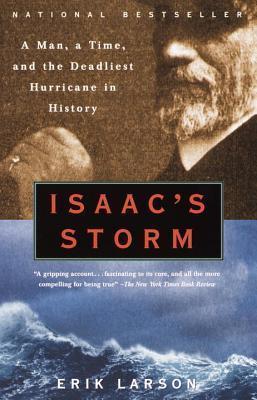
Isaac’s Storm by Erik Larson traces the life of Isaac Cline, a young meteorologist whose career would entwine tragically with the deadliest hurricane in U.S. history. Born in rural Texas, Cline showed an early knack for science, booking passage to New Orleans to study at the fledgling U.S. Weather Bureau. His zeal for predicting storms suited an agency still scrambling to understand nature’s fury. Yet no training could ready him for what lay ahead in Galveston.
Cline arrived in Galveston in the mid-1890s, a bustling port city perched on a low-lying island. Its residents took pride in their modern seawall plan—still on drawing boards—and in the booming trade routes that funneled cotton and goods through its docks. The Weather Bureau assigned him as the local forecaster and chief observer. He installed measuring equipment, logged barometric pressures, and scanned telegraph reports from Gulf ports. It felt scientific, precise, even safe.
Meanwhile, meteorology hovered between art and guesswork. Scientists knew about cyclones and pressure gradients, but they lacked satellites or real-time data. Telegraph lines carried sporadic warnings from Havana and Key West, yet these often arrived too late or were misread. Despite pockets of progress in storm tracking, the bureau’s directors hesitated to alarm the public. They feared causing panic or disrupting commerce more than they feared a storm’s wrath.
In the summer of 1900, that caution nearly proved fatal. Warm waters brewed an ominous swell in the Gulf of Mexico, feeding a gathering storm far from prying eyes. Cline noted falling barometers and shifting winds in his journals, but he doubted the reports of a monster storm. Galveston’s sandy barrier and proposed seawall seemed enough protection. He reassured friends that a direct hit was unlikely.
Local sentiment mirrored his skepticism. Business owners worried that talk of a hurricane would scare away customers and investors. Newspapers downplayed any threat. Even the city government balked at extra expenses for sandbagging or raising houses. They trusted Cline’s calm assurances more than vague warnings from distant ports. In the Gulf breeze, people walked their boardwalks, unaware of the brewing catastrophe.
A week before September 8, Cline received word of a dangerous storm near Cuba. He and his fiancée, Cora, prepared to shelter in his second-floor Weather Bureau office. Iron bars and sandbags offered a thin shield. Their hedge against nature’s worst felt pitiful but necessary. Friends brought provisions, and neighbors boarded windows.
When the hurricane hit, Galveston faced a storm surge thirty feet high. It roared ashore like an angry sea god, smashing piers, ripping homes from their foundations, and submerging entire blocks. Cline paced in his office, watching his instruments shatter and telegraph wires snap. He realized then that his earlier certainty had been misplaced. Outside, the roar of wind drowned out human cries.
He led rescue parties through flooded streets, wading waist-deep in black water. He improvised stretchers from doors and shutters, ferrying injured and dying to makeshift hospitals. Night brought little relief. He witnessed bodies floating in the currents and survivors clinging to rooftops. Exhaustion blurred his vision, but he pressed on, driven by duty and guilt.
By dawn, Galveston resembled a dark, watery grave. The dead numbered more than six thousand, though exact tallies eluded officials. Cline and his team worked tirelessly to restore telegraph lines, send word to Washington, and marshal outside aid. Relief trains trudged through ruined landscapes, delivering doctors, supplies, and weary Red Cross volunteers.
Public outrage followed, but it focused less on Cline than on the Weather Bureau’s hesitant policies. Critics blamed bureaucratic red tape for inadequate warnings. Congress held hearings that exposed communication failures and outdated forecasting methods. The bureau pledged reforms: stricter storm-alert protocols, better training, and expanded telegraph networks along the coast.
Galveston itself embarked on an ambitious rebuilding. Workers raised the island by several feet and constructed a steel-and-concrete seawall. Houses sat on jacks while crews poured sand beneath. Streets became causeways above the marsh. The city rose again, scarred but determined, a testament to human ingenuity confronting nature’s cruelty.
Through it all, Isaac Cline carried a heavy burden. He married Cora but struggled with sleepless nights filled with the storm’s guttural roar. Although he continued his meteorological career elsewhere, he never fully forgave himself. His detailed journals and reports became case studies in meteorology classes, teaching future forecasters both the power of data and the peril of underestimating nature.
Erik Larson weaves Cline’s personal story into the broader tapestry of early twentieth-century science and society. He shows how a flawed system combined with human pride to amplify disaster. Yet Larson also celebrates resilience—both of a city built on shifting sand and of individuals determined to learn from tragedy.
Isaac’s Storm ends by reflecting on how the 1900 hurricane reshaped weather forecasting and disaster preparedness. It reminds us that while we chase precision, nature remains unpredictable. The lessons of Galveston still resonate today. They urge us to heed data, prepare early, and never mistake our confidence for invincibility.
Detailed Summary
Key Takeaways
1. The Birth of Modern Meteorology
“They were standing on the edge of science and superstition.”
From Folk Observations to Systematic Science: At the turn of the twentieth century, weather forecasting rested largely on sailors’ logbooks and local lore. People watched the sky, read barometers, and relied on seafaring traditions. But Isaac Cline and his colleagues at the U.S. Weather Bureau sensed that a more systematic approach could save lives. They began to standardize data collection, sending telegraphed observations from remote stations into a central office in Washington.
This shift marked the dawn of modern meteorology. Instruments became more precise. Observers trained in instrumentation replaced casual record-keepers. Isaac’s Storm shows us how meteorology moved beyond anecdote. It embraced measurement, networks, and timely warnings. The weather bureau’s change in practice laid groundwork for twenty-first-century forecasting.
Laying the Groundwork for Forecasting: By refining data collection, the Weather Bureau dramatically improved storm tracking. Each telegraphed report built a lattice of real-time information. Over time, forecasters learned to spot pressure drops and wind shifts that signaled an oncoming hurricane. These developments reduced false alarms and saved countless lives.
Yet Isaac’s Storm also highlights early limitations. Telegraph lines broke in high winds. Observers failed to interpret signals. Political pressures sometimes censored warnings. Still, this era set a precedent. Today’s satellite and radar networks trace their origins to Cline’s effort to standardize weather data.
In areas prone to storms, communities now rely on bulletins that echo those first telegraphed warnings. Modern meteorology’s global reach—linking thousands of stations—sprang from this humble beginning.
Key points:
- Standardized barometers and anemometers
- Telegraphed weather observations
- Centralized forecasting office
- Training of dedicated observers
- Foundation for satellite and radar networks
2. Human Hubris and Nature’s Fury
“Many believed Galveston was immortal.”
Overconfidence in Civil Engineering: By 1900, Galveston stood as Texas’s richest city. Wealthy merchants, eager to show their confidence, built elegant homes right on the shore. They leveled dunes to make way for broad boulevards and erected grand hotels overlooking the Gulf. Locals talked openly of a seawall—“We don’t need it,” they scoffed. They felt their concrete and brick structures would hold against any storm.
Erik Larson unpacks how that hubris blinded officials. Meteorologists warned of a strong hurricane off Cuba, but politicians feared harming tourism. The city’s pride outweighed caution. Isaac Cline himself wrote in the paper that storms rarely threatened. This misplaced pride set the stage for one of America’s worst natural disasters.
Engineering Failures and Lost Lives: On September 8, 1900, the hurricane roared ashore at an estimated Category 4 or 5. Without a seawall, Galveston’s low elevation offered no defense. Waves surged over neighborhoods. Homes collapsed under wind and water. Over 6,000 people died.
The tragedy prompted a radical shift in coastal engineering. Within months, survivors broke ground on a ten-mile seawall and raised the city through sand pumps. Their work became a model for storm defenses worldwide. Yet the loss remains a caution: human designs cannot ignore nature’s raw power.
Today’s coastal planners study Galveston’s fate when balancing development, tourism, and safety. The lesson endures: humility must guide engineering, not arrogant confidence.
Key points:
- Galveston as wealthy port city
- Rejection of seawall proposals
- Political and social overconfidence
- Catastrophic failure in 1900 storm
- Global influence on coastal defenses
3. Data Misinterpretation under Pressure
“We can’t alarm the public for every surge of wind.”
Conflicting Signals and Bureaucratic Constraints: Isaac Cline faced a thorny dilemma. He saw barometric readings plummeting, yet higher officials in Washington urged caution. They feared false alarms would erode public trust and harm business. Isaac hesitated to issue a hurricane warning. Instead, local bulletins downplayed the threat, citing sporadic data from drifting ships.
Larson shows how bureaucratic pressures twisted scientific judgment. The Weather Bureau operated under the Post Office Department. It valued postal schedules and coastal shipping more than public safety. Observers learned to filter distress signals. In effect, politics overruled science.
When Bureaucracy Overrides Safety: The human cost of that hesitation proved staggering. If Cline had the freedom to share every ominous reading, residents might have evacuated. Instead, they stayed in vulnerable homes. Many perished under mud and timber.
Afterward, public outrage forced reforms. The Weather Bureau gained more autonomy. It shed the Post Office Department’s financial influence. Freed from shipping-industry bias, it evolved toward a mission of public protection. Cline’s regret stands as a lesson: transparency and scientific independence can mean the difference between warning sent and lives saved.
Key points:
- Pressure from Washington to avoid false alarms
- Selective release of weather data
- Conflict between commerce and safety
- Deaths tied to under-warning
- Institutional reforms post-1900
4. Social Inequity Exposed by the Storm
“The poor died first, then the rest followed.”
Class and Survival: Galveston in 1900 was sharply divided. Wealthy districts sat on higher ground behind dunes. The working class lived in low-lying neighborhoods of simple wood homes. When the surge hit, poor areas flooded first. Elevated mansions stood a chance; shanties vanished.
Larson recounts stories of laborers—mostly Black and immigrant—who perished without warning. Survivors with means climbed onto rooftops or fled inland. The hurricane turned class lines into casualty lines.
Unequal Impact and Long-Term Change: The catastrophic loss galvanized relief efforts that overlooked the poorest victims. Aid groups prioritized downtown cleanup. Reconstruction favored commercial districts. Many displaced families never returned.
Yet the disaster also spurred early social awareness. Journalists documented migrant labor camps and racial disparities in relief. These reports contributed to Progressive-era calls for better municipal services and housing reform. Galveston’s storm stands as an early case study in how natural disasters magnify existing social divides.
Key points:
- Higher-ground mansions vs. low-lying shacks
- Disproportionate deaths among poor and minorities
- Biased relief and rebuilding efforts
- Journalistic exposure of inequality
- Influence on Progressive reforms
5. Personal Tragedy and Public Duty
“I have lost a sister… and I can’t forget their faces.”
Isaac Cline’s Inner Conflict: Isaac Cline, the chief meteorologist in Galveston, grappled with the worst personal loss of his life in the very storm he tried to forecast. His beloved younger sister, Linnie, drowned along with hundreds of locals. Isaac struggled to reconcile public duty with personal grief.
Larson uses Cline’s diaries and letters to reveal the emotional toll. In the immediate aftermath, Isaac organized relief hotels and morgues. He also fought depression, haunted by images of his sister’s face. His story illustrates how first-responders often bear deep emotional scars while performing heroic work.
Mental Health in Disaster Response: Cline’s experience foreshadowed modern concerns about trauma among rescue workers. Back then, emotional care was nonexistent. He soldiered on, helping rebuild a city that had taken his own kin. His silent suffering went unaddressed.
Today, disaster-response agencies incorporate psychological support for workers. Isaac’s Storm reminds us why. When public servants witness immense loss, they need debriefing, counseling, and resilience training. We honor them best by caring for their minds, not just applauding their deeds.
Key points:
- Cline’s sister Linnie among victims
- Organization of rescue and relief
- Personal diaries revealing grief
- Lack of early mental-health support
- Modern protocols for responder welfare
6. From Tragedy to Scientific Progress
“We learn more from our failures than our successes.”
Turning Disaster into Knowledge: After Galveston’s devastation, meteorologists analyzed every data point. They improved storm-path models, refined pressure charts, and standardized gale-warning flags. The hurricane’s aftermath became an inadvertent laboratory. Each broken telegraph pole taught engineers about infrastructure resilience.
Isaac Cline spearheaded many studies. He published technical papers on storm surges and wind patterns. His work influenced the eventual creation of the National Hurricane Center. Larson shows how even darkest moments can spark advances.
Legacy in Forecasting and Planning: In the decades after 1900, forecasting accuracy rose steadily. The hurricane survivors’ stories fueled funding for more weather stations along the Gulf Coast. Seawalls and raised streets protected other towns. Evacuation plans became standard.
By mid-century, forecasters could predict landfall within hours, not days. Modern hurricane-tracking satellites continue that trajectory of progress. Each technological leap traces back to lessons learned in Galveston’s mud and loss.
Key points:
- Post-storm scientific studies
- Publication of detailed storm analyses
- Creation of specialized hurricane centers
- Improved coastal engineering standards
- Evolution toward satellite forecasting
Future Outlook
As Isaac’s Storm makes clear, the interplay of human ambition and natural forces defines our past and shapes our future. Today, climate change brings warmer oceans and more frequent intense hurricanes. We build seawalls and evacuation routes, but we also face new questions: Where do we draw the line between coastal development and safety? How do we ensure that the poorest among us don’t again pay the highest price?
In research circles, Cline’s lessons echo in advanced modeling and big-data analytics. Meteorologists now harness millions of data points—from drones, buoys, and satellites—to predict storm behavior. Yet they can’t escape the old tension between commerce and caution, between political will and public safety.
Policy-makers, city planners, and citizens must remember Galveston’s story. Investment in resilient infrastructure and transparent warning systems remains vital. As sea levels rise, humility before nature must guide our designs. If we heed the storm’s memory, we may avert another tragedy of misplaced confidence and lost lives.







