Summary
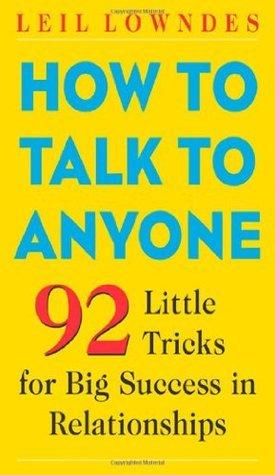
How to Talk to Anyone: 92 Little Tricks for Big Success in Relationships by Leil Lowndes shows practical ways to connect with anyone, anywhere. The author draws on research from psychology, sociology, and business to reveal simple tweaks in body language, tone, and word choice. Each trick builds on the idea that small changes in how you present yourself can spark interest and trust.
Lowndes begins by stressing the power of first impressions. She advises readers to slow down their initial approach, adopt an open posture, and smile genuinely. Doing so signals warmth and confidence. She calls this the Flooding Smile, where you pause just long enough to let your grin register on your face, making it seem more sincere.
Next, she tackles eye contact. Rather than a fixed stare, she suggests a technique called Sticky Eyes. You lock onto someone’s gaze just a little longer than usual, then look away briefly before returning. This invites a sense of intimacy without making the other person uncomfortable.
Leil then shifts to conversation openers. She cautions against generic questions like “How’s it going?” Instead, she recommends distinctive comments about the setting, the speaker’s outfit, or a shared experience. This “Broken Record” approach involves repeating a unique compliment or observation to keep the focus on what matters most.
Voice tone plays a big role in rapport. Lowndes urges readers to speak in a slightly lower register, adopt a moderate pace, and vary volume to emphasize key points. She calls this the Big Baby Pivot—a nurturing tone that conveys interest and reassurance.
When it comes to listening, she warns against letting your mind drift. Instead, she offers the Parroting Trick, where you repeat back key words or phrases to show you’re fully engaged. This not only validates the speaker but also slows the conversation to a more comfortable rhythm.
Leil includes techniques for stronger small talk too. She highlights the use of open-ended questions that invite stories rather than yes-no answers. For instance, instead of “Did you like the movie?” you might ask, “What scene in the movie stayed with you?” That simple shift yields richer detail and keeps the dialogue flowing.
The author also outlines how to recall names instantly. She recommends visual anchors—imagining a person’s name written on their forehead or associating it with a vivid image. Such mental snapshots stick far better than rote repetition.
In group settings, she advises against remaining on the sidelines. The Flooding Smile works here too—scan the room, make eye contact with each person in turn, and let your energy sweep across the group. That invites others to join your circle.
Leil doesn’t neglect body language beyond smiles and eyes. She teaches the Micro-Mirror technique: subtly match another person’s gestures and posture to foster unconscious rapport. The key is delicate mimicry that feels natural.
When conflicts arise, she recommends a tactic called the Broken Record Apology. Acknowledge the other person’s feelings, repeat a sincere “I’m sorry you feel that way,” and resist the urge to explain or defend immediately. That defuses tension and opens the door to resolution.
In networking situations, Leil urges readers to master the Art of the 30-Second Commercial. You craft a concise, vivid self-description that highlights your unique value. That way, acquaintances remember you long after the brief encounter ends.
She also delves into phone and email etiquette. Phone calls should start with a smile, which you can actually hear in your voice. For emails, she suggests using active language, short paragraphs, and a conversational tone—like you’re speaking directly to the reader.
Lowndes closes with advice on lasting impressions. She coins the Swiveling Spotlight: after a meeting or call, send a brief, personalized follow-up message. Mention something specific you discussed to show genuine attention and maintain the connection.
By weaving together these 92 little tricks, How to Talk to Anyone offers a toolkit for anyone who wants to grow more confident, engaging, and successful in social or professional settings. Each technique stands on its own but also fits into a larger strategy: show sincere interest, communicate clearly, and leave people feeling better about themselves—and about you.
Detailed Summary
Key Takeaways
1. The Power of First Impressions
“You never get a second chance to make a first impression.”
Making an Instant Connection: Lowndes argues that the first few seconds of meeting someone set the tone for the entire relationship. She explains how subtle cues—posture, eye contact, and facial expressions—combine to create an immediate judgment in another’s mind. People decide within moments whether you seem confident, friendly, or trustworthy.
She recommends techniques like the “Flooding Smile,” where you pause before smiling to let the other person see sincerity. You also learn to angle your body toward them, showing interest without overdoing it. These small tweaks create a welcoming aura that draws people in.
Shaping Social Success: In the real world, strong first impressions open doors. A genuine smile can break the ice at job interviews and networking events. Employers and clients remember a confident greeting long after the details of a conversation fade.
Historically, societies have valued etiquette and poise. Lowndes updates these old rules for the modern era. She shows how mastering first impressions can influence promotions, friendships, and even romantic prospects. The trick lies in authenticity combined with practiced skill.
Key points:
- Smile intentionally with a brief pause
- Maintain open body posture
- Make steady, warm eye contact
- Use a friendly tone of voice
- Project confidence without arrogance
2. Mastering Body Language
“Your body speaks louder than words.”
Nonverbal Communication: Lowndes stresses that more than half of all meaning comes from nonverbal cues. Crossing arms or slouching can signal disinterest. Open gestures and leaning in show engagement.
She introduces the concept of “Mirroring.” By subtly copying another’s posture or gestures, you build rapport. It’s not about mimicry but creating a sense of harmony. Done correctly, it helps people feel understood and comfortable.
Building Trust and Rapport: Nonverbal signals can build or erode trust in seconds. In negotiations, matching gestures can foster goodwill and make the other party more cooperative. In customer service, leaning forward signals concern for the client’s needs.
Across cultures, body language varies, but the principle of mirroring remains potent. When business leaders adopt these tactics, they often report smoother meetings and quicker consensus. In personal life, it deepens friendships by showing empathy at a subconscious level.
Key points:
- Observe and match posture
- Use open hand gestures
- Lean in to show interest
- Keep arms uncrossed
- Maintain relaxed facial expressions
3. The Art of Small Talk
“The key to any conversation is to make the other person feel truly listened to.”
Starting Conversations with Ease: Lowndes dispels the myth that small talk is meaningless. She calls it a “social lubricant” that gets deeper talk flowing. Simple topics like weather, recent events, or shared surroundings can break silence.
She offers the “Eyebrow Flash” as an opener. A quick eyebrow raise followed by a genuine question—“Enjoying the conference?”—can spark dialogue. It’s a subtle way to invite someone into conversation without feeling intrusive.
Creating Connection Opportunities: Small talk can lead to big opportunities. At conferences, those who master it often land collaborations or job leads. In social gatherings, they meet potential friends and mentors.
Historically, great leaders and diplomats knew how to ease into talks. By modern standards, the ability to start and sustain friendly banter remains a prized skill. It builds networks and smooths cultural barriers.
Key points:
- Use situational observations
- Ask open-ended questions
- Offer genuine compliments
- Pause briefly before responding
- Shift to deeper topics gradually
4. Active Listening Techniques
“To be interesting, be interested.”
Engaging with Empathy: Lowndes highlights listening as the secret to memorable conversations. Instead of planning your next remark, she urges you to focus entirely on the speaker. A nod, a “Really?” or a reflective repeat of a key word shows you care.
She calls this the “Parroting Technique.” You repeat the last few words someone said as a question—“You just moved to Chicago?”—and then let them expand. It makes people feel understood and keeps the dialogue flowing.
Strengthening Relationships: Active listening fosters deep bonds. Friends and colleagues trust you when they see you pay full attention. In counseling or management, it can defuse conflicts and reveal hidden needs.
In communities, good listeners become pillars of support. They often rise to leadership roles because others feel safe sharing with them. Lowndes shows that listening is not passive. It’s an active skill that shapes social harmony.
Key points:
- Maintain eye contact
- Use brief verbal encouragers
- Echo key phrases
- Avoid interrupting
- Ask clarifying questions
5. Effective Compliments
“A well-chosen compliment can brighten a person’s day.”
Authentic Praise: Lowndes notes that vague compliments ring false. Instead, she advises specific praise—“That presentation showed great attention to detail.” She calls this the “Precision Praise” method.
Specificity signals sincerity. People remember the detail you point out. It becomes a positive memory linked to your name. You appear thoughtful and observant rather than flippant.
Boosting Morale and Influence: In the workplace, targeted compliments can motivate teams and improve morale. Managers using Precision Praise see higher productivity and loyalty. Peers feel respected rather than patronized.
Socially, genuine praise builds goodwill. In communities, complimenting local efforts lifts spirits and fosters cooperation. Lowndes argues that well-timed, specific praise creates ripples of positivity that benefit everyone.
Key points:
- Note specific actions or traits
- Avoid generic adjectives
- Deliver compliments promptly
- Use a warm tone
- Pair praise with a sincere smile
6. Closing Conversations Gracefully
“Always leave them wanting more.”
Ending on a High Note: Lowndes teaches that how you end matters as much as how you start. A strong closing ensures people remember you positively. She suggests summarizing a highlight—“It was great hearing about your project”—followed by a promise to reconnect.
She calls this the “Tease and Promise” exit. You offer a hint of a future discussion—“I’ll send you that article we talked about”—and then depart. It leaves the other person intrigued and eager to follow up.
Fostering Ongoing Connections: A memorable exit encourages future contact. In networking, those who close well send more follow-up emails and secure more meetings. In friendships, they deepen bonds by hinting at shared plans.
Historically, great orators mastered memorable endings. They understood that people recall last impressions vividly. Lowndes applies this wisdom to everyday talk, showing you can harness closing power in any setting.
Key points:
- Summarize a key point
- Offer a follow-up
- Keep it brief
- End with a smile
- Depart confidently
Future Outlook
Lowndes’s practical insights will shape how we teach social skills in the digital age. As remote work and virtual meetings grow, her techniques for genuine connection remain vital. You can apply eye contact principles even on video calls and use Precision Praise in chat messages.
Researchers may build on her work to study the neuroscience of rapport and trust. Future training programs could blend her methods with AI coaching, offering real-time feedback on body language and tone. Her 92 tricks serve as a foundation for next-generation social training tools.
In a society that often favors screens over face-to-face talk, Lowndes reminds us of human warmth. Her book will influence educators, therapists, and business leaders. It paves the way for stronger bonds and more empathetic communities in the years ahead.







