Summary
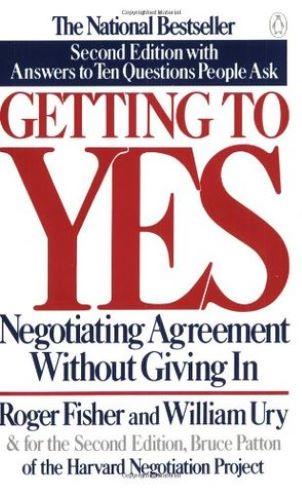
Getting to Yes, by Roger Fisher, William Ury, and Bruce Patton, shows how people can reach fair agreements in disputes without giving in to pressure. The authors open by noting that most negotiators take either a hard or soft stance. Hard negotiators push their demands while soft ones yield quickly to avoid conflict. Both styles, they argue, can leave value on the table or breed ill will. Instead, they propose a principled approach aimed at producing wise, mutual gains.
They begin by urging negotiators to separate people from the problem. Relationships can suffer when parties confuse personalities with issues. Therefore, they advise you to treat emotions with respect and to build rapport before tackling substance. For example, listening actively and acknowledging concerns can defuse tension. When negotiators address perceptions and guard against hidden feelings, discussions stay constructive.
Next, the authors encourage focusing on interests rather than positions. Positions state demands, while interests explain why those demands matter. By exploring underlying needs, each side can uncover shared goals or compatible wants. For instance, two departments fighting over budget can reveal a mutual interest in boosting overall efficiency. Brainstorming options that satisfy both sets of interests transforms battles into collaboration.
Once interests emerge, Fisher and his coauthors ask negotiators to invent options for mutual gain. They suggest setting aside judgment initially to widen possibilities. Parties can generate ideas together by asking “What if?” questions or using analogies from other settings. As an example, two neighbors disputing fence height might consider a tiered garden wall. They warn, however, against fixating on a single solution too soon.
After gathering options, negotiators should insist on objective criteria. Decisions based on fair standards earn legitimacy and reduce power struggles. Criteria might include market value, expert opinion, legal precedent, or tradition. When parties agree on these yardsticks up front, they can evaluate options without bias. The authors illustrate this in wage talks where an outside survey of comparable wages settles debates swiftly.
A critical concept in the book is BATNA, or Best Alternative to a Negotiated Agreement. Knowing your BATNA gives you leverage and helps you walk away when terms fall short. You can’t negotiate effectively if you lack a clear fallback. For instance, a job seeker strengthens her position by lining up another offer. In contrast, a weak BATNA forces you to accept unfair deals.
Fisher and colleagues also examine how to improve your BATNA while limiting your counterpart’s alternatives. They recommend research, networking, and creative planning before talks begin. At the same time, you can quietly lower their confidence in rival options by sharing information selectively. Done skillfully, this shifts the balance of power without provoking hostility.
The authors dedicate a chapter to communication, calling it the “back-and-forth dance” of negotiation. They urge negotiators to listen actively, restate opposing views, and ask open-ended questions. This method—called active listening—helps uncover hidden concerns and shows respect. As a result, parties feel understood and tend to reciprocate with frank disclosures.
They then tackle how to negotiate with difficult people—those who use dirty tricks or stonewall. The book offers specific defenses, like calling out tactics directly or refusing to accept unreasonable ultimatums. One recommended move is negotiation jujitsu: when the other side attacks your position, you turn their force into a joint search for objective criteria. That defuses aggression and refocuses attention on substance.
Fisher and his coauthors introduce the one-text procedure for multiparty talks. Instead of each side drafting proposals, a neutral mediator circulates a single document. Parties comment and revise that text iteratively. This method prevents hardening positions and fosters joint ownership. It proved effective, they note, in international arms-control and labor-management talks.
The authors stress that implementation matters as much as agreement. They propose drafting clear, specific, and realistic action plans covering who does what, by when, and how to resolve future disputes. Even the fairest deal can unravel without follow-through. In one example, two companies agreed on price formulas but left delivery terms vague—and later faced costly delays.
Throughout the book, the authors weave in real-world anecdotes, from business deals to diplomatic breakthroughs. They recount how two tribes divided grazing land by mapping neutral zones, or how neighbors settled noisy party disputes by taking turns. These stories bring principles to life and show that fair negotiation applies to everyday problems as well as grand conflicts.
Towards the end, Fisher, Ury, and Patton address common objections. They explain that principled negotiation doesn’t mean losing power or being soft. Instead, it refines power by relying on fair standards. They emphasize that this approach builds lasting relationships and reduces the need for costly enforcement or future battles.
In closing, Getting to Yes offers a clear, practical framework. It reminds you to treat people kindly, dig into interests, craft creative options, and rely on objective criteria. By improving your BATNA and using active listening, you can steer talks toward breakthroughs. Whether you haggle over salary, settle a neighborhood dispute, or broker peace between nations, these tools help you reach wise, fair agreements without giving in.
Detailed Summary
Key Takeaways
1. Separate People from the Problem
“Be soft on the people, hard on the problem.”
Managing Relationships: Negotiators often let emotions cloud judgment and strain relationships. Fisher, Ury, and Patton urge parties to treat each other respectfully. They recommend stepping away from personal attacks and focusing on the issues. When people feel heard, they lower their guard and open up to solutions.
The book explains that miscommunication and misperception fuel conflict. Emotions flare when negotiators assume motives or assign blame. By actively listening and acknowledging feelings, negotiators build trust. They then reframe the discussion around common goals rather than past slights. This shift calms tensions and clears the way for constructive talk.
Building Durable Agreements: This principle reshaped diplomacy and business. Mediators worldwide now coach disputants to speak calmly and listen closely. In labor negotiations, teams trained in separating people from the problem often reach contract terms faster and with fewer strikes. They report stronger long-term relationships and less resentment.
On the international stage, negotiators adopt this approach to defuse crises. Back-channel talks often start with confidence-building measures. They show respect for the other side’s concerns. This softens hardened positions and makes formal peace talks more fruitful. In day-to-day life, couples and neighbors apply the same tactic to resolve disagreements without hurting bonds.
Key points:
- Recognize emotional triggers and pause before reacting
- Practice active listening to validate feelings
- Reframe personal attacks into problem statements
- Express appreciation for the other side’s perspective
- Maintain focus on shared objectives
2. Focus on Interests, Not Positions
“Behind opposed positions lie shared and compatible interests.”
Finding Common Ground: When negotiators haggle over fixed positions, they often miss creative solutions. The book urges parties to dig deeper and ask “Why?”. Why does each side want this outcome? By uncovering underlying needs, negotiators discover shared or complementary interests.
For instance, two departments might fight over budget lines. One needs funds for research; the other to improve equipment. By exploring interests, they might share resources or collaborate on a joint project. This move turns a zero-sum battle into a win-win outcome. The authors show how probing questions and open dialogue reveal these hidden motivations.
Innovating Win-Win Deals: This insight revolutionized contract design. Companies now hold “interest brainstorming” sessions. They list all needs and concerns before setting targets. These discussions yield package deals where both sides gain more than by stubbornly claiming positions.
In government policy debates, advocates use interest analysis to bridge partisan divides. Instead of insisting on fixed laws, lawmakers explore each other’s goals. They craft hybrid measures satisfying safety, cost, and freedom concerns all at once. This approach cuts gridlock and produces more durable policies.
Key points:
- Ask “Why?” to reveal true needs
- List all interests for both sides
- Distinguish interests from rigid positions
- Seek overlaps and complementary goals
- Use dialogue to surface hidden motivations
3. Invent Options for Mutual Gain
“Before deciding what to do, invent as many options as possible.”
Unlocking Creativity: Parties often jump to conclusions and declare solutions off-limits. Getting to Yes recommends postponing judgment and brainstorming freely. Quantity matters. The more ideas you generate, the higher the chance of hitting upon a creative solution.
The authors advocate broadening the pie before dividing it. Negotiators list options without evaluating them. Then they mix and match pieces to form deals that satisfy both sides. This exercise yields trade-offs. One side might accept delay in exchange for a price break. The other gains time to ramp up production.
Expanding Possibilities: In procurement, buyers now ask suppliers for multiple bids and variants. They compare bundles of goods, extended warranties, or service agreements. This practice saved firms millions by finding unconventional packages that standard RFPs overlooked.
In community planning, stakeholders brainstorm land use options together. They imagine mixed-use zoning, green spaces, and revenue streams. This inclusive process reduces opposition and speeds project approval. Citizens feel they helped shape the plan, so they back it rather than resist.
Key points:
- Defer judgment during idea generation
- Aim for quantity over quality at first
- Combine and modify ideas to suit both sides
- Consider trade-offs rather than single solutions
- Use brainstorming rules to ensure creativity
4. Insist on Objective Criteria
“Fair standards and procedures determine the outcome.”
Anchoring to Principles: Subjective demands breed impasse. The book counsels reliance on external benchmarks. Parties agree in advance to measures like market value, expert opinion, or legal precedent. These criteria stand apart from personal will or power.
Objective standards depersonalize negotiations. When both sides commit to them, they justify proposals by appealing to facts rather than force. This step reduces finger-pointing. It also lets negotiators challenge bad arguments without attacking the other party.
Fair and Enduring Solutions: This method underlies modern arbitration and mediation. Arbitrators apply agreed benchmarks instead of personal biases. Decisions gain legitimacy because they flow from neutral sources. Stakeholders respect awards and comply more readily.
In corporate mergers, valuation disputes now hinge on clear metrics like EBITDA multiples or asset appraisals. Parties draft these standards in term sheets. This prevents last-minute fights over subjective judgments. Boards can then focus on strategic fit rather than haggling over vague numbers.
Key points:
- Select neutral, widely accepted benchmarks
- Agree on evaluation procedures beforehand
- Use data, market studies, or expert reports
- Refer back to criteria when disputes arise
- Avoid power plays by citing objective standards
5. Know Your BATNA
“The best alternative to a negotiated agreement.”
Empowering Your Stand: BATNA stands for Best Alternative to a Negotiated Agreement. Fisher and colleagues urge every negotiator to develop this fallback before talks begin. Knowing your reservation point boosts confidence and prevents you from accepting weak deals.
The book details how to identify, improve, and compare alternatives. You list options if talks break down. Then you assess their value and feasibility. A strong BATNA gives leverage. A weak one warns you to make concessions or walk away if terms stray below your baseline.
Shifting Power Dynamics: Sales teams now calculate BATNAs for every deal. They know the next likely buyer or internal sale options. This insight changed pricing policies. Reps stop discounting prematurely when they realize they have solid backup offers.
In diplomacy, envoys research alternative alliances or aid sources. They avoid desperate compromises by showing they can pivot if pressured. This posture earns respect at the table. Negotiators with weak fallbacks face tougher bargaining but can protect themselves by improving their BATNA in advance.
Key points:
- Identify all possible walk-away alternatives
- Quantify and compare each option realistically
- Set your reservation price based on BATNA value
- Use BATNA to gauge when to accept or reject offers
- Strengthen your fallbacks before negotiations
6. Handle Hard Bargainers with “Negotiation Jujitsu”
“When they push, you pull.”
Redirecting Attacks: Tough negotiators use threats and stubborn positions. The authors advise against matching force with force. Instead, you “turn their attack into joint problem-solving.” You ask questions, request the reasoning behind demands, and invite them to propose fair criteria.
This soft approach disarms aggression. By refusing to argue over status or power, you shift focus to the merits of each issue. You respond to attacks by probing motives, not by counterattacking. This tactic often turns a hostile atmosphere into cooperative dialogue.
Defusing Deadlocks: Companies train executives in these techniques to break supplier standoffs. When a vendor threatens to walk, buyers ask, “Help me understand your cost drivers.” The vendor often reveals hidden constraints or interests that open new trade-off possibilities.
In public disputes, mediators coach civic leaders to apply negotiation jujitsu. Instead of rejecting protest demands outright, officials ask, “What outcome would you call fair?” This shift moves the debate from adversarial positions to shared problem definition. It paves the way for policy compromise.
Key points:
- Welcome strong demands with calm curiosity
- Ask “Why?” and “How else could we do this?”
- Invite criteria-based solutions from the other side
- Avoid counterthreats and maintain courtesy
- Use their energy to fuel joint brainstorming
Future Outlook
As negotiation grows more central in global affairs, Getting to Yes remains essential. Its principles influence conflict resolution training from boardrooms to peace talks. We can expect further research on cultural adaptations, as negotiators tailor soft-on-people tactics to diverse norms.
Technology also shapes the future. Online platforms may integrate BATNA calculators and option-generation tools. Virtual reality simulations could help trainees practice separating people from problems in immersive scenarios. These innovations will stem from the foundational ideas in this book.
Finally, the emphasis on objective criteria will guide AI-mediated negotiations. Algorithms can analyze market data and legal precedents in real time to propose fair benchmarks. Yet they cannot replace the human touch of active listening and empathy. The challenge will lie in blending machines’ precision with people’s emotional intelligence to uphold the spirit of principled negotiation.