Summary
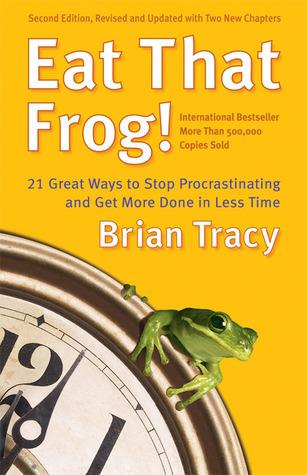
Eat That Frog! by Brian Tracy offers a straightforward yet powerful approach to overcoming procrastination and boosting your productivity by tackling your most important tasks first.
Tracy introduces the “frog” as your biggest, most challenging task—the one you’re most likely to avoid but also the one that can deliver the greatest results. He argues that if you eat that frog early in the day, everything else will feel easier by comparison. This simple metaphor sets the stage for a series of practical strategies.
The author emphasizes the need for clear goals. You can’t eat a frog if you don’t know what it is. He urges you to write down what you want to achieve in every area of your life. By putting goals on paper, you give them structure and commit to them. This step alone makes it far more likely you’ll follow through.
Once you’ve defined your goals, Tracy guides you to plan each day thoughtfully. He suggests creating a list of tasks the night before. That way, you start your morning with purpose instead of guessing what to do. A well-planned day keeps you focused and reduces the stress of scrambling for priorities.
To organize tasks effectively, Tracy lays out the ABCDE method. You label each activity: A for must-do, B for should-do, and C for nice-to-do. The D category covers tasks you can delegate, while E marks those you can eliminate entirely. This hierarchy ensures you spend time only on what truly matters.
In another chapter, Tracy shows how the 80/20 rule applies to productivity. He explains that 20 percent of your activities usually account for 80 percent of your results. By identifying and prioritizing that critical 20 percent—your “frogs”—you maximize your impact. He encourages you to concentrate effort where it yields the greatest benefit.
Thinking on paper is a practice Tracy recommends for clarity and creativity. When you brainstorm, sketch ideas, or map out solutions on paper, you tap into your subconscious. That tactile process helps you spot patterns and crack complex problems. It also convinces your mind that those frogs are doable.
Procrastination, Tracy insists, boils down to lacking self-discipline. He breaks it into two parts: having clear direction and using time effectively. If you combine a compelling goal with a systematic plan, you’ll naturally push yourself to act. He also warns against waiting for motivation—it often follows action, not the other way around.
Technology and distractions can derail your best intentions. Tracy alerts you to the danger of constant email checks, social media, and unnecessary meetings. He advises setting aside blocks of uninterrupted time for deep work. During those periods, turn off alerts and silence your phone. Such radical focus helps you chew through that frog before distractions creep back in.
Single-tasking, not multitasking, takes center stage in Tracy’s philosophy. When you scatter your attention across several tasks, you waste time shifting gears. Instead, he says, immerse yourself fully in one activity until you complete it. You’ll not only finish more quickly but also produce higher-quality work.
Continuous improvement rounds out the book’s lessons. Tracy encourages you to adopt a learner’s mindset by reading, attending seminars, and practicing new skills. He calls this “sharpening the saw,” borrowing from Stephen Covey. The better you get, the easier your frogs become to swallow.
Self-discipline extends beyond work. Tracy argues that nurturing habits like punctuality, orderliness, and persistence in every area fuels success. When you commit to excellence in small things, you build confidence for tackling larger challenges. In time, self-discipline becomes second nature.
Motivation won’t always strike on its own. That’s why Tracy suggests giving yourself rewards for progress, visualizing your goals vividly, and surrounding yourself with supportive people. Positive reinforcement can turn a daunting frog into a welcome challenge. A few small wins inspire momentum.
Finally, the author underscores the importance of health and balance. He reminds you that adequate rest, proper nutrition, and physical exercise boost your mental energy. When your body feels strong, you’ll face difficult tasks with more resilience. It’s hard to eat a frog on an empty tank.
In short, Eat That Frog! distills productivity into a set of clear, actionable steps. By defining your goals, prioritizing ruthlessly, eliminating distractions, and building discipline, you’ll transform how you work. Eat that frog first, Tracy promises, and your day—and your life—will never be the same.
Detailed Summary
Key Takeaways
1. Clarify Your Most Important Task
“If you have to eat two frogs, eat the ugliest one first.”
Identifying the Key Action: Brian Tracy urges you to single out the task that yields the greatest results. He calls this task the 'frog.' You list all your tasks, then choose the one with the biggest payoff. By defining your top action clearly, you know exactly where to invest your energy each day.
When you know what matters most, you avoid drifting into low-value activities. Tracy shows that clarity cuts through overwhelm. You stop juggling minor chores and start focusing on what moves you forward.
Sharper Focus, Faster Progress: People who identify their most important task first tend to finish projects sooner. In workplaces, teams with clear daily priorities see better performance reviews and higher morale. They spend less time in endless meetings and more time in quality work.
On a personal level, you feel a sense of accomplishment early in the day. That momentum carries you through routine tasks with more energy. Over months, this habit builds confidence and improves goal attainment.
Key points:
- List all tasks to spot your ‘frog’
- Rank tasks by impact before acting
- Tackle high-value work first
- Avoid lesser chores until later
- Build momentum from early wins
2. Use the 80/20 Rule
“Eighty percent of the value of everything you do is contained in twenty percent of the activities.”
Leveraging the Pareto Principle: Tracy adapts the Pareto Principle to daily work. He explains that a minority of your tasks generate a majority of your results. By spotting that vital twenty percent, you focus on work that truly matters. This rule helps you streamline efforts and boost productivity.
He guides you to review past outcomes. Which tasks produced the most impact? Once you know the high-value actions, you prioritize them. That way you don’t waste time on endless low-yield efforts.
Maximizing Results with Less Effort: Organizations that apply 80/20 see sharper profit margins. They drop underperforming projects and double down on star products. In service settings, staff focus on the 20 percent of clients that bring in 80 percent of revenue.
Individually, you clear clutter. You reduce stress by ditching busywork. Over time, your refined focus lets you achieve more with fewer hours, freeing energy for innovation and growth.
Key points:
- Identify top 20% tasks by outcome
- Eliminate or delegate low-value work
- Allocate bulk of time to high-yield activities
- Review results regularly
- Refine focus based on shifting priorities
3. Plan Every Day in Advance
“Plan each day in advance before you begin it.”
Daily Blueprint for Success: Tracy insists on nightly planning. Before you close your day, write down your tasks for tomorrow. You rank them by importance and estimate time needed. This simple routine ensures you hit the ground running at sunrise.
Having a clear plan cuts decision fatigue. You avoid hours lost to figuring out what’s next. Tracy notes that time spent planning yields five to ten times more productivity later in the day.
Proactive Work Habits: Teams that plan daily hold brief stand-ups to assign priorities. They report higher project success rates. They finish deliverables ahead of deadlines and with fewer errors.
On a personal level, you reduce stress. You know exactly what to tackle first instead of reacting to email pings. That calm clarity boosts your confidence and your ability to handle surprises.
Key points:
- Schedule planning time each evening
- List tomorrow’s tasks with priorities
- Estimate time blocks realistically
- Use planner or digital tool consistently
- Review and adjust plan as needed
4. Apply the ABCDE Method
“When you organize your tasks into A, B, C, D and E categories, you gain control.”
Systematic Task Categorization: The ABCDE system labels tasks by importance: A-tasks are must-dos, B-tasks should-dos, C-tasks are nice-tos, D-tasks you delegate, and E-tasks you eliminate. Tracy shows how this simple code keeps you from mistaking busywork for progress.
By assigning categories, you shape clear action steps. You never confuse minor paperwork with mission-critical decisions. Each morning, you tackle all A-tasks before moving to B.
Enhanced Decision-Making: Managers using ABCDE cut wasted hours on unimportant work. They delegate D-tasks, freeing senior staff for strategy. They eliminate E-tasks and reduce burnout.
For individuals, this method clarifies choices. You say no to distractions and yes to your goals. That focus fosters steady momentum and ensures you spend time on what truly counts.
Key points:
- Label tasks A through E by priority
- Complete all A-tasks before any B
- Delegate D-tasks confidently
- Remove E-tasks outright
- Re-evaluate categories weekly
5. Practice Creative Procrastination
“Since you can’t do everything, you must learn to deliberately procrastinate on tasks of low value.”
Selective Delay for Better Focus: Tracy reframes procrastination as a tool. He says you can’t avoid delay altogether, so you delay tasks that don’t matter. You choose what to defer, freeing mental space for urgent work.
This creative procrastination isn’t about laziness. It’s about conscious choice. You keep your mind clear for truly important tasks and avoid guilt over neglected chores.
Mental Bandwidth Optimization: High-performers use this principle to resist tiny requests that derail them. They direct interruptions to team members. They publish “office hours” so low-priority items wait their turn.
You build stronger boundaries. You protect your focus zone and carve out deep work sessions. Over time, you reclaim hours otherwise lost to every small ask that pops up.
Key points:
- Identify low-value tasks to defer
- Set explicit time windows for shallow work
- Block out deep work sessions
- Communicate boundaries with colleagues
- Review deferred tasks periodically
6. Leverage Technology Wisely
“Use technology as your servant, not your master.”
Selective Tech Adoption: Tracy warns against letting tools dictate your time. He encourages you to adopt only those apps and gadgets that boost productivity. You avoid jumping on every new platform that promises instant gains.
He suggests a tech audit: list all digital tools you use, then drop or disable those that don’t serve your highest priorities. That way you reduce digital clutter and information overload.
Streamlined Digital Workflow: Companies that standardize on a few core tools see fewer integration issues and higher user adoption. They automate routine tasks and free staff for creative work.
Individually, you gain more uninterrupted time. You check email less often and resist social media traps. That focused attention leads to better work quality and faster progress.
Key points:
- Audit all current productivity tools
- Keep only essentials that support key tasks
- Automate repetitive digital chores
- Limit notifications to high-priority alerts
- Review tech choices every quarter
Future Outlook
As we move deeper into an era of constant distraction, Tracy’s principles grow ever more relevant. Teams will rely on clear task-prioritization to compete globally. Leaders may integrate Eat That Frog! routines into corporate training programs, shifting culture from busy to truly productive.
On an individual level, self-managers will refine these ideas further. They’ll blend new time-tracking apps with proven routines like nightly planning and the ABCDE method. Creative procrastination may even spawn new personal-efficiency tools that help us defer wisely.
Ultimately, Tracy’s core message stands: You shape your results by choosing what you do first. As work gets more complex, that timeless advice will guide us through project overload toward smarter, more focused success.