Summary
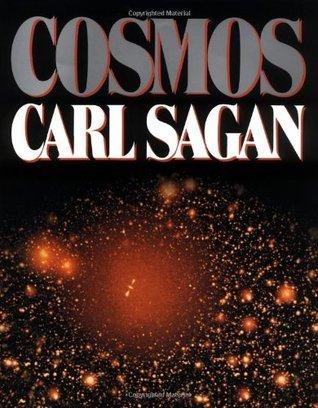
Carl Sagan’s Cosmos invites you on an expansive journey through space, time, and the human spirit. From the silent depths of interstellar space to the intricate workings of the human brain, Sagan intertwines scientific discovery with poetic wonder. He guides us through ten chapters that weave history, science, and philosophy into a single cosmic tapestry.
Sagan begins by tracing our place in the universe. He describes how early stargazers in ancient Mesopotamia and Greece looked up and formed myths. Over centuries, scholars like Copernicus and Galileo challenged those stories with telescopic observations. Sagan shows how science freed us from superstition and set the stage for modern cosmology.
In the next section, he focuses on the laws of nature. He illustrates how Newton’s gravity explains planetary motions and how Einstein’s relativity deepened that insight. Each law emerges from careful observation, experiment, and mathematics. Sagan underscores that these laws hold across vast distances and times.
Then he turns to the Milky Way, our galactic home. He traces how astronomers mapped its spiral arms and measured its size. Sagan shares anecdotes about pioneering observations at the Mount Wilson Observatory. His passion for uncovering hidden structures in the night sky shines through.
Sagan shifts to the birth and death of stars. He shows how nuclear fusion in stellar cores forges the elements essential for life. He compares the life cycle of a star to a human life: birth in a nebula, a long main sequence phase, and dramatic death as a supernova or a gentle fade into a white dwarf. Each stage leaves traces across the cosmos.
In a shorter reflection, Sagan ponders the possibility of life beyond Earth. He describes the Drake Equation as a way to estimate the number of civilizations in our galaxy. While the numbers remain uncertain, he insists that exploring this question expands our horizons and humility.
He expands on planetary exploration by recounting the history of spacecraft missions. From Mariner’s first flybys of Mars to Voyager’s grand tour of the outer planets, each mission brought new surprises: volcanic moons, planetary rings, odd weather patterns. Sagan emphasizes how robotic explorers inform our understanding of potential habitats for life.
Sagan dedicates a chapter to Earth itself. He describes it as a pale blue dot suspended in a sunbeam. He contrasts the fragility of our atmosphere with the barren worlds around us. He urges us to cherish our planet’s biosphere and to take responsibility for its well-being.
He then explores the history of scientific thinking. He recounts the rise and fall of geocentric models, the clash between reason and dogma in the Middle Ages, and the scientific revolution that birthed modern astronomy. Sagan argues that skepticism and open inquiry drive progress.
In a more personal tone, Sagan contemplates the role of human consciousness. He illustrates how our brains decode sensory data, construct memories, and imagine futures. He reminds us that the same atoms in our bodies once formed in stellar furnaces.
Sagan offers a spirited defense of science as a candle in the dark. He warns against pseudoscience, superstition, and the perils of anti-intellectualism. He admires scientists who challenge old ideas while remaining open to new evidence.
He turns to the search for extraterrestrial intelligence (SETI). He describes radio telescopes scanning the skies and projects like Project Ozma. He narrates the excitement over potential signals and the careful verification process that follows any candidate detection.
In a concise aside, he addresses the ethical dimensions of space exploration. He asks whether we have the right to alter other worlds or if we should merely observe. The question invites reflection on how we treat our own environment.
Toward the end, Sagan reflects on the future of humanity. He envisions a civilization that might spread across the Milky Way, carrying our curiosity and compassion outward. He balances optimism with caution, reminding us of the responsibility that comes with technological power.
He concludes by celebrating the cosmic calendar, a metaphor that compresses the 13.8-billion-year history of the universe into a single year. In that scale, human history occupies the final seconds of December 31. The message rings clear: our time is brief, our potential vast, and our duty urgent.
Detailed Summary
Key Takeaways
1. The Vastness of the Cosmos
“The Cosmos is all that is or ever was or ever will be.”
Infinite Expanse: Carl Sagan opens by inviting us to grasp the immensity of space. He traces light years and galaxies to show that our home planet occupies a speck in a boundless sea of stars.
This perspective shifts our view from local concerns to universal wonder. Sagan uses clear analogies, such as comparing cosmic distances to calendar scales, to help readers feel the scale without jargon.
He stresses that by studying distant worlds, we learn more about our own evolution and fate.
Humbling Perspective: Realizing the Cosmos’s vast scale undermines human self-importance. Historically, it spurred the shift from geocentrism to heliocentrism and later to our understanding of galactic structure.
Today, this insight informs space policy and exploration priorities. It reminds scientists and policymakers to approach planetary stewardship with humility.
On a societal level, it fosters a sense of shared destiny and global unity, encouraging collaboration across borders.
Key points:
- Highlights the scale of the universe
- Uses clear analogies for distances
- Connects cosmic study to self-understanding
- Challenges human egocentrism
- Promotes global perspective
2. The Pale Blue Dot
“That’s here. That’s home. That’s us.”
Tiny World: Sagan uses the famous Voyager 1 image to show Earth as a tiny dot against the void. He crafts vivid language to make us feel our planet’s fragility.
He recounts how a simple camera command produced a moment for humanity to pause. The image became a symbol: all human history unfolded on that dot.
Through this, he urges care for our shared home and empathy for all life.
Environmental Call: The Pale Blue Dot underscored environmental awareness. It influenced movements like Earth Day and modern climate initiatives.
By framing Earth’s fragility visually, it boosted support for conservation and sustainable policy. It reminded leaders that we have no backup planet.
Culturally, the image became an icon in art and literature. It shaped environmental ethics and global cooperation efforts.
Key points:
- Voyager 1 image as symbol
- Emphasizes Earth’s fragility
- Spurred environmentalism
- Influenced policy and culture
- Unites humanity
3. Embracing the Scientific Method
“Science is more than a body of knowledge; it’s a way of thinking.”
Method over Fact: Sagan argues that science’s true power lies in its critical inquiry. He shows how hypotheses, experimentation, and revision lead to deeper understanding.
He recounts historical examples—from Galileo’s telescope to the discovery of DNA—to illustrate how doubt and testing drove progress.
By valuing method over static facts, he invites readers to adopt skepticism and curiosity in daily life.
Rational Society: Promoting scientific thinking helps societies resist misinformation. It underpins public health measures, technology development, and policy decisions.
Educational systems that stress inquiry over memorization produce more adaptable citizens. They can navigate complex challenges like pandemics and climate change.
Sagan’s call remains vital in the digital age, where critical evaluation of sources is essential.
Key points:
- Highlights inquiry over memorization
- Uses historical breakthroughs
- Encourages skepticism
- Supports informed policy
- Fights misinformation
4. Interconnected Universe
“We are star stuff pondering the stars.”
Cosmic Chemistry: Sagan shows how elements in our bodies forged in stars. He walks through nuclear fusion in stellar cores and supernova dispersal of heavy atoms.
He links astrophysics to biology, showing that life’s building blocks originate in ancient stellar processes.
This unity of disciplines underscores a profound connection between humans and the Cosmos.
Cross-Disciplinary Insight: Understanding cosmic chemistry drove advances in astronomy, geology, and medicine. For example, radiometric dating relies on radioactive decay in stars.
It fosters interdisciplinary research—astrobiology, geochemistry, and planetary science merge insights.
On a philosophical level, it inspires wonder and a sense of belonging to a larger narrative.
Key points:
- Stars produce essential elements
- Connects physics and biology
- Enables radiometric dating
- Fuels interdisciplinary research
- Inspires unity
5. Life Beyond Earth
“The universe seems neither benign nor hostile, merely indifferent.”
Search for Extraterrestrials: Sagan explores the possibilities of life beyond Earth. He reviews conditions required for biology—liquid water, energy sources, and chemical ingredients.
He assesses planets and moons in our solar system and speculates on exoplanets around distant stars.
He presents the Drake Equation to estimate communicative civilizations, showing both its promise and uncertainty.
SETI and Exploration: Sagan’s advocacy fueled funding for SETI programs and robotic missions to Mars and Europa. It shaped NASA’s search for biosignatures.
It prompted the development of new telescopes and instruments capable of detecting exoplanet atmospheres.
Public fascination with alien life drives education and policy support for space research.
Key points:
- Explores habitable conditions
- Introduces Drake Equation
- Reviews solar system targets
- Influences SETI funding
- Drives telescope innovation
6. Cosmic Evolution
“The history of the universe is the history of creation.”
Timeline of Everything: Sagan traces cosmic history from the Big Bang to intelligent life. He narrates key epochs: nucleosynthesis, galaxy formation, star cycles, and planet births.
He weaves scientific data with poetic prose, making complex events feel accessible.
By placing humanity within this timeline, he frames our story as a natural outcome of cosmic processes.
Perspective on Time: This timeline influenced education in cosmology and astronomy. It underlies modern curricula that teach deep time concepts.
It helps people grasp geological and evolutionary scales, combating presentism in environmental debates.
Philosophically, it enriches our sense of legacy and responsibility within a long-running universal saga.
Key points:
- Chronicles Big Bang to present
- Uses poetic narration
- Frames humanity as cosmic result
- Educates deep time
- Shapes philosophical outlook
Future Outlook
Carl Sagan’s Cosmos set the stage for modern space science and public engagement. Its ideas spark new research on exoplanets, astrobiology, and cosmic origins. As technology improves, we’ll probe deeper into planetary atmospheres and search for biosignatures.
Looking ahead, Sagan’s call for scientific literacy remains urgent. In an era of data overload, teaching curiosity and critical thinking could shape wise policy on climate, pandemics, and emerging technologies.
Finally, the sense of unity Sagan championed may guide humanity toward cooperative ventures—like multinational space stations or joint planetary missions. His vision of cosmic citizenship continues to inspire us.