Summary
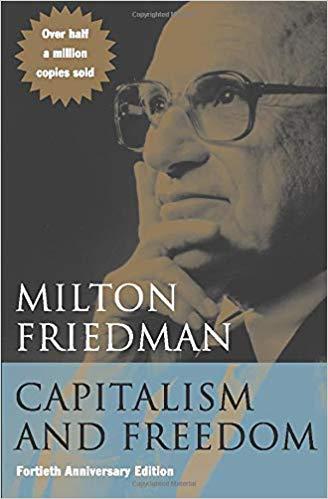
Capitalism and Freedom, written by Nobel laureate Milton Friedman, explores the intimate link between economic freedom and political liberty. Friedman argues that government intervention often leads to restrictions on individual choice and undermines democratic values. He presents a clear case for a minimal state role, asserting that personal and economic freedoms reinforce one another.
Friedman begins by defining economic freedom as the freedom to compete in markets and make voluntary exchanges. He emphasizes that free markets allocate resources efficiently, driven by price signals rather than political decree. Without government overreach, prices reflect true costs and benefits, guiding producers and consumers in their decisions.
Turning to the role of government, Friedman insists that its primary functions should be limited to enforcing law and order, protecting property rights, and providing a stable monetary framework. He warns against expanding public services into areas best served by private enterprise. Such expansions often lead to waste, mismanagement, and reduced incentives for innovation.
In his essay on monetary control, Friedman critiques discretionary monetary policy. He contends that central banks, when allowed to manipulate money supply unpredictably, create inflation and economic instability. Instead, he proposes a steady, fixed growth rate in the money supply, which he believes would stabilize prices and support sustainable growth.
Friedman examines occupational licensure, arguing that many licenses serve more to protect incumbents than the public. He points out that licensing can erect barriers to entry, limit competition, and drive up prices. He calls for replacing restrictive licenses with simple certification systems that inform consumers without limiting who may offer services.
When discussing social welfare, Friedman questions the effectiveness of direct government aid programs. He notes that welfare often discourages work and creates dependency. In its place, he favors a negative income tax—a system of direct payments to individuals below a certain income level—to maintain incentives while alleviating poverty.
Education represents another arena where Friedman advocates market principles. He envisions a voucher system in which public funds follow the student to the school of their choice, whether public or private. He argues that competition among schools would improve quality, empower parents, and reduce bureaucratic inefficiency.
Friedman also addresses discrimination. He suggests that free markets naturally discourage racial or gender bias since discrimination raises costs for businesses. When firms compete openly for labor and customers, they benefit by hiring the best workers and serving the widest market.
On international trade, Friedman opposes protectionism. He believes tariffs and quotas hurt consumers by raising prices and limit producers by cutting off cheaper inputs. He urges open borders for goods and capital, fostering peace and prosperity through interdependence.
Friedman warns against the rising influence of special interest groups that lobby government for favors. He shows how such groups distort policy, divert resources to less productive uses, and trap taxpayers in endless cycles of regulation and subsidy.
In exploring the dangers of government expansion, Friedman turns to the concentration of power. He asserts that as governments take on more roles, individual responsibility erodes and citizens become more reliant on state decisions. He views this trend as a threat to personal autonomy.
Toward the end, Friedman acknowledges that a purely laissez-faire system may never exist in practice, but he insists that market-oriented reforms can yield significant gains. He calls for gradual shifts toward freer markets rather than sudden upheavals that risk political backlash.
Friedman concludes by restating his core thesis: economic freedom fosters political freedom. He warns that when governments intrude into markets, they risk undermining democratic values and individual rights. He urges readers to defend free enterprise as essential for liberty.
Throughout Capitalism and Freedom, Friedman uses clear examples—historical episodes, policy experiments, and statistical evidence—to support his claims. His conversational tone and straightforward vocabulary make complex ideas accessible.
By linking theory to practical policy, Friedman invites debate on how nations can structure their institutions to promote both prosperity and freedom. He leaves readers with a compelling case that markets, when paired with limited government, offer the best hope for human progress.
Detailed Summary
Key Takeaways
1. Economic Freedom Underpins Political Freedom
“History suggests that capitalism is a necessary condition for political freedom.”
Linking Markets and Liberty: Friedman opens by tracing the tight bond between economic freedom and political freedom. He argues that when individuals can choose how to produce, exchange, and consume goods without heavy state control, they also defend their right to speak, assemble, and vote. Free markets force governments to limit themselves or risk public backlash. Citizens with economic power refuse to accept arbitrary rules.
He illustrates this link by examining twentieth-century totalitarian regimes. In Nazi Germany or Stalinist Russia, central planning tightly controlled every aspect of the economy. That control bled into censorship, surveillance, and repression. By contrast, liberal democracies with open markets tend to tolerate dissent and guarantee civil liberties. Markets create dispersed power—both economic and political—forcing government to respond to public pressure rather than command the populace.
Empowering Individuals Against Tyranny: When markets remain free, individuals can resist coercion by moving resources or voices elsewhere. A farmer can sell abroad if the domestic market shuts him down. An author can publish overseas if publishers at home ban his work. That mobility limits a government’s ability to impose uniform orthodoxy.
Friedman points to historical examples. In post-war West Germany, rapid economic recovery coincided with robust press freedom. Meanwhile, East Germany, under central planning, suppressed political dissent. Over decades, West Germans enjoyed rising living standards and expanding civil rights. Their counterparts faced falling real incomes and a pervasive security apparatus.
Today’s debates over digital censorship echo Friedman’s concerns. Tech platforms that act like state censors can choke free expression. If users have alternative services or decentralized networks, they can reclaim speech freedoms. Conversely, a single dominant platform vets content centrally, undermining both economic and political choice.
Key points:
- Markets and civil liberties grow hand in hand
- Central planning concentrates power, risking tyranny
- Free trade and investment diffuse government control
- Economic mobility underwrites political dissent
- Open economies link citizens to global communities
2. Limited Government Promotes Efficiency
“The government solution to a problem is usually as bad as the problem.”
Scope of State Intervention: Friedman asserts that government should confine itself to functions that markets cannot perform. He concedes public goods like national defense, police, and a stable currency. But when the state tackles education, healthcare, or housing, it often distorts incentives and erects bureaucratic barriers.
He dissects government failure. Officials lack the price signals and profit motive that guide resource allocation in the private sector. Their decisions rely on imperfect data and political bargaining. The result: chronic shortages or surpluses, low quality, and high costs. Friedman cites wartime rationing, New Deal agencies, and contemporary welfare programs as cautionary tales.
Real-World Consequences of Bureaucracy: Consider public housing projects. When the state funds and manages apartments, it often underprices rent, creating excess demand. Maintenance budgets shrink, and buildings crumble. Meanwhile, private developers innovate to attract tenants with better amenities and responsive service.
In healthcare, government insurers negotiate price controls that reduce supply. Doctors face wage caps, limiting hours and practice investment. Patients endure long waits and rising taxes. By contrast, competitive insurance and provider markets drive cost containment through innovation—telemedicine, specialty clinics, and personalized care packages.
Friedman’s prescription isn’t anarchy but clarity. The state should enforce contracts, protect property rights, and maintain the rule of law. Everything else, from schools to roads, thrives under private management backed by voluntary exchange.
Key points:
- Government lacks market price signals
- Bureaucracies breed inefficiency and waste
- State price controls distort supply and demand
- Private firms innovate to satisfy customers
- Limited state roles ensure clearer accountability
3. Monetary Stability Requires Rule-Based Policy
“Inflation is taxation without legislation.”
Controlling the Money Supply: Friedman devotes a key chapter to monetary policy. He contends that central banks hold immense power to create or destroy money. Left unchecked, they inflate the currency, eroding purchasing power and redistributing wealth arbitrarily.
He introduces the k-percent rule: the central bank should expand the money supply at a fixed annual rate tied to real output growth. This predictable rule prevents political meddling and reduces business-cycle fluctuations. By adhering to a steady growth path, monetary authorities avoid the boom-and-bust cycles caused by attempts to fine-tune the economy.
Anchoring Expectations and Growth: Inflation distorts savings and investment decisions. When prices rise unpredictably, firms hesitate to commit long-term. Workers demand wage increases to keep pace with cost of living. A vicious cycle forms, trapping economies in low-growth equilibrium.
Friedman’s rule would restore confidence. Businesses could plan expansions, knowing money remains stable. Savers would receive real returns, boosting capital formation. Empirical studies of the late twentieth century support this view: countries with low, stable inflation—Germany, Switzerland, Japan—outperformed high-inflation peers.
Adopting a rule-based framework also insulates policy from political pressure. During election cycles, governments often push for loose money to stimulate output. Friedman warns that short-term gains lead to long-term pain: higher interest rates, unemployment, and credit crunches once inflation fears set in.
Key points:
- Uncontrolled money printing fuels inflation
- Rule-based monetary growth stabilizes prices
- Predictability fosters investment and savings
- Inflation acts as hidden taxation
- Political cycles disrupt discretionary policy
4. Negative Income Tax Simplifies Welfare
“The negative income tax would accomplish the same objective as the present welfare system with far less coercion and far greater benefit to the people.”
Redesigning Social Support: Friedman proposes replacing complex aid programs with a negative income tax (NIT). Under NIT, households earning below a threshold receive a guaranteed subsidy. The payment phases out gradually as income rises, preserving work incentives.
He criticizes overlapping welfare schemes—food stamps, housing vouchers, AFDC—that jump abruptly at income cutoffs. Recipients face high effective marginal tax rates that discourage extra work. NIT’s smooth tapering avoids welfare traps and reduces administrative overhead.
Reducing Poverty and Bureaucracy: A well-designed NIT could lift millions out of poverty while costing less than existing programs. Low-income families gain clarity: they know exactly how much they’ll receive at each income level. That transparency encourages job searches and part-time work.
Administrators benefit too. One single check replaces dozens of benefit offices. Fraud detection simplifies to auditing income reports. Politicians find it easier to build broad coalitions around a uniform subsidy than defend dozens of niche programs.
While no country has fully adopted NIT, partial experiments—like the Earned Income Tax Credit in the U.S.—reflect its principles. Studies show EITC raises labor participation among single parents and reduces child poverty.
Key points:
- Guaranteed subsidy below income threshold
- Smooth phase-out avoids welfare cliffs
- Encourages work and self-sufficiency
- Simplifies administration and cuts costs
- Boosts transparency and fairness
5. School Choice Empowers Parents and Teachers
“Competition … forces schools to be more responsive to parents and pupils.”
Vouchers and Educational Markets: Friedman turns to education as another sector where markets outperform monopolies. He advocates school vouchers—public funds that follow students to the schools parents choose, be they public, private, or religious.
Under exclusive government provision, schools face little accountability. Funding ties to enrollment, not performance. Vouchers introduce competition: schools must innovate curricula, manage budgets prudently, and address parent concerns to attract students and secure funding.
Raising Standards Through Choice: In voucher systems, underperforming schools lose students—and funding—while innovative schools grow. Administrators learn to focus on outcomes. Teachers embrace new teaching methods and curricula aligned with children’s needs.
Empirical evidence from Milwaukee’s voucher program confirms modest test-score gains among participants. Studies from the Netherlands and Sweden show similar patterns: even when vouchers don’t boost test scores markedly, they expand learning styles and parental satisfaction.
Opponents worry about equity and social cohesion. Friedman counters that well-designed voucher schemes include safeguards for low-income families and prevent cream-skimming. Open competition levels the playing field rather than cementing status-quo privileges.
Key points:
- Funds follow students, not institutions
- Competition drives quality improvements
- Parents gain control over schooling choices
- Diverse providers meet varied needs
- Evidence shows modest academic and satisfaction gains
6. Free Trade Fosters Peace and Prosperity
“Protectionism makes us poorer; free trade will improve our standard of living.”
Opening Borders to Commerce: Friedman criticizes tariffs, quotas, and import restrictions that shield domestic industries. Although these measures benefit narrow special interests, they impose higher costs on consumers and provoke retaliatory measures abroad.
He explains comparative advantage: even if one country excels at producing everything, trade still benefits both parties. Each can specialize in goods where they hold relative efficiency, exchange surpluses, and enjoy a broader consumption set with lower prices.
Economic Growth and International Stability: Open trade expands markets for exporters and lowers input costs for manufacturers. Consumers gain access to diverse products at lower prices, raising real incomes. Competition spurs firms to innovate, cut waste, and adopt best practices from global peers.
Historically, eras of liberal trade—late nineteenth century and post-World War II—coincide with rapid growth and falling poverty rates. Conversely, protectionist episodes—1930s Smoot-Hawley tariffs—worsened the Great Depression and frayed international cooperation.
Friedman warns that trade barriers also stoke political tensions. Nations threatened by tariffs respond in kind, undermining diplomatic ties. Free trade thus becomes a force for peace, tying countries together in mutual economic interest rather than suspicion.
Key points:
- Comparative advantage boosts efficiency
- Consumers enjoy lower prices and variety
- Exporters access wider international markets
- Trade liberalization links to global peace
- Protectionism breeds retaliation and inefficiency
Future Outlook
Friedman’s arguments resonate strongly in the twenty-first century. Digital platforms now rival national currencies, renewing debates over monetary stability and rule-based policies. Cryptocurrencies reflect his call for competitive monetary systems. They challenge central banks and spur proposals for transparent, predictable frameworks.
On welfare reform, policymakers continue experimenting with basic income pilots worldwide. Alaska’s permanent fund dividend and Finland’s trial basic income echo Friedman’s negative income tax ethos. These initiatives test the tension between universal support and work incentives.
Education remains a battleground. Charter schools, online learning, and micro-schooling extend Friedman’s voucher model. As remote and hybrid methods become mainstream, parents exercise greater choice. The challenge lies in ensuring equity: technological access, quality oversight, and safeguards against segregation.
Global trade debates likewise persist. Rising protectionism contrasts with integrated supply chains that bind nations economically. Friedman’s emphasis on free trade urges policymakers to resist populist pressures, emphasizing long-term gains over short-term political wins.
In short, Capitalism and Freedom provides a blueprint for balancing individual liberty with limited government. Its core principles—rule-based monetary policy, market competition, and minimal coercion—continue to inform contemporary reforms. As new challenges emerge, scholars and leaders revisit Friedman’s work for guidance on sustaining both prosperity and freedom.