Summary
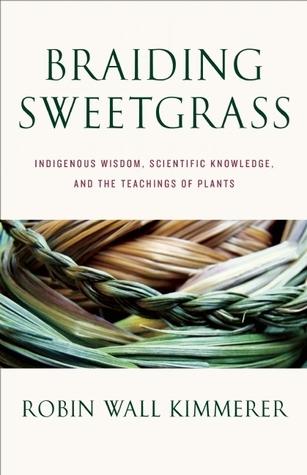
Braiding Sweetgrass by Robin Wall Kimmerer weaves together Indigenous wisdom, scientific knowledge, and the stories of plants to show us a new way of relating to the more-than-human world. Kimmerer, a botanist and member of the Citizen Potawatomi Nation, invites us to learn from plants by embracing gratitude, reciprocity, and kinship.
In the opening essays, Kimmerer recalls her childhood learning from her mother how to speak with plants. She describes gathering maple sap with reverence, thanking the tree for its gift. These early lessons set the tone: nature is not a resource to own but a community to which we belong. She uses simple language, yet her sense of wonder feels infectious.
Later, she explores the science behind ecological restoration. She explains how mosses act as pioneers on bare rock, creating soil that other plants need. Meanwhile, she shares an anecdote about watching moss reclaim an old log in her yard and how it taught her about resilience. Through this story, she shows us that science and story can sit side by side.
Kimmerer then turns to the idea of the “gift economy” in Indigenous cultures. She contrasts our market-based view with societies that see gifts as binding relationships. She recalls harvesting sweetgrass respectfully, offering tobacco to the earth before taking any blades. That small ceremony captures a larger truth: giving matters as much as receiving.
Another essay describes her work on a restoration project in the Great Lakes. She and her team plant sedges and rushes to rebuild wetlands. Day after day they wade through mud, carrying bundles of young plants. At first, she admits, she judged the effort only by survival rates. Over time, she learned to celebrate each sprout as a friend returning home.
In a short, poignant vignette, Kimmerer watches chickadees at her feeder. She dubs them the “dominant feathered tribe,” marveling at their boldness. They teach her that generosity can be playful. She fills the feeder each day, offering sunflower seeds and watching their cheerful dance.
Later essays explore our disconnection from the land. She argues that we’ve lost the language of reciprocity and therefore the ability to give back. She suggests simple steps: say thank you before eating, plant a garden, join in a restoration project. These acts help rebuild bonds long frayed by extraction and indifference.
She describes a community workshop on building a “Three Sisters” garden of corn, beans, and squash. Elders tell stories of how each plant supports the others. Corn gives structure, beans fix nitrogen, squash shades the soil. As participants dig and plant, they listen to old songs and share laughter under the sky.
One of the longest essays recounts her collaboration with the Onondaga Nation to reintroduce wild rice. She paddles in a canoe, her paddle dipping into still water that reflects the sky. Harvesters stand waist-deep, knocking ripe grains into their canoes. She watches and learns: respect, patience, and ceremony matter as much as technique.
A shorter reflection shows Kimmerer reading to her daughter about plant families. She wonders if her child will grow up viewing earth’s beings as siblings rather than as commodities. That small hope underlines the book’s larger aim: changing how we see the world, one heart at a time.
She also examines invasive species and how we respond to them. Instead of mere eradication, she asks what gifts these newcomers may bring. Often they signal deeper shifts in the ecosystem. Her view challenges us: can enemies become teachers if we slow down and listen?
In another chapter, she offers a love letter to the sunflower. She traces its journey from homeland to global fields. She paints the sunflower’s face following the sun, and she marvels when the seeds feed both birds and bears. The sunflower becomes a symbol of generosity, resilience, and light.
Kimmerer then addresses climate change through the lens of gratitude. She notes that trembling aspen stands can sequester carbon, while grief for the trees we’ve lost can fuel our resolve. She argues that if we practice thankfulness for each breath of clean air and each green leaf, we may find the will to protect what remains.
Toward the end, she offers guidance for creating a new story of nature. She suggests blending Indigenous practices with ecological science. She invites scientists to muddy their boots in the field and invites poets to learn plant names. She believes that healing the earth begins with learning a new language of kinship.
Finally, Kimmerer leaves us with an image of circle gatherings. People come together to share food, stories, and tobacco ties. They speak and listen in equal measure, each voice honored. In this circle, the earth is present, too. If we step into that circle, she promises, we will find our way back to each other—and to the living world that gave us life.
Detailed Summary
Key Takeaways
1. The Principle of Reciprocity
“In the economy of the gift, nothing is for nothing.”
Mutual Exchange: Kimmerer opens by describing how many Indigenous cultures see life as a circle of giving and receiving. She contrasts this with the modern view that treats nature as a warehouse of resources. Through personal stories, she shows reciprocity at work in her own family gathering maple sap and sharing it with others.
She highlights how the act of giving creates connection and responsibility. In this view, a gift is never truly free. It comes with an obligation to reciprocate, to honor the giver, and to maintain balance. This form of exchange weaves people, plants, and animals into a living community.
Balancing Human and More-Than-Human Worlds: When communities adopt reciprocity, they shift from extraction to stewardship. Farmers who share seeds with one another maintain genetic diversity and social bonds. In Indigenous contexts, gift economies have preserved ecosystems for millennia.
In contemporary conservation, reciprocal relationships inspire restoration projects. Volunteers plant trees, give time, and then receive a restored forest. That act reinforces human investment in the land’s future. It challenges policymakers to treat natural areas not as commodities but as partners in a mutual relationship.
Key points:
- Gifts build obligation and care
- Reciprocity fosters community bonds
- Shifts focus from taking to giving
- Drives sustainable stewardship
- Frames nature as partner, not resource
2. The Power of Gratitude
“Gratitude is the memory of the heart.”
Remembering Through Thanks: Kimmerer recounts how her grandmother taught her to say ‘thank you’ to the earth before meals. That simple ritual rooted her in awareness of every ingredient’s journey—from soil to plate.
She argues that gratitude rewires our perception. Rather than passively receiving, we become active participants. This mindset invites humility. It reminds us we depend on a complex web of life that we must honor.
Cultivating Environmental Ethics: Cultures that practice gratitude tend to limit waste and overconsumption. In Japan, forest bathing and rituals of thanks have guided sustainable forestry for centuries. Pilgrimages to sacred groves reinforce reverence for living systems.
Educators who integrate gratitude exercises see students develop empathy for nonhuman life. Urban planners who hold public thanksgiving ceremonies for parks often find stronger community advocacy for green spaces. Gratitude reshapes policy by embedding ethical regard for the living world.
Key points:
- Enhances awareness of interdependence
- Promotes humility before nature
- Reduces wasteful behavior
- Builds empathy through ritual
- Informs ethical environmental policy
3. Gift Economies of Plants
“The more something is shared, the greater its value becomes.”
Plants as Givers: She details how plants offer pollen, berries, and roots freely to humans and other species. Sweetgrass, cedar, and tobacco hold deep cultural significance in many Indigenous traditions as gifts rather than commodities.
Kimmerer explains that in a gift economy, value multiplies through sharing. When someone offers sweetgrass braids, they build trust and mutual care. The gift prompts a moral call: to respect, to cherish, and eventually to reciprocate those offerings.
Rethinking Economic Models: Mainstream markets price goods based on scarcity, not generosity. That mindset leads to hoarding and ecological damage. In contrast, community seed libraries allow gardeners to borrow seeds and return multiples after harvest.
Such systems have revived heirloom varieties and strengthened food security. They show that generosity-driven economics can outperform competitive markets when it comes to biodiversity and social cohesion. Policymakers could study gift economies to craft alternative economic incentives.
Key points:
- Plants gave resources freely
- Value grows through sharing
- Builds cultural trust and reciprocity
- Supports biodiversity via seed libraries
- Offers a model beyond profit-driven markets
4. Indigenous Knowledge as Science
“Traditional knowledge is a science of particular place.”
Local Wisdom Meets Research: Kimmerer argues that Indigenous knowledge complements Western science. She shares how her Potawatomi heritage taught her to observe plant behavior, soil conditions, and weather patterns across seasons.
That intimate, place-based understanding often anticipates ecological shifts before large-scale studies do. She calls for integrating both knowledge systems. That approach deepens our insight and guides more effective environmental solutions.
Bridging Knowledge Systems: In fire management, tribal burning practices reduce wildfire risk more sustainably than mechanical thinning. Governments now consult tribal elders to plan controlled burns.
In fisheries, combining sonar data with fishers’ yearly observations has led to more accurate stock assessments. When academia respects and funds Indigenous research, communities gain agency over land stewardship. It fosters equity and environmental justice.
Key points:
- Local knowledge reveals micro-scale patterns
- Complements broad scientific data
- Guides sustainable fire and fish practices
- Elevates tribal authority in management
- Promotes equitable environmental science
5. Kinship with the More-Than-Human
“We are all related.”
A Web of Life: Kimmerer describes how many Indigenous languages use the same word for relatives and plants, affirming kinship. She felt that bond while learning to weave chair seats from cattail fibers handed down through generations.
By calling plants and animals ‘relations,’ she reframes exploitation into family care. This shift changes how we treat landscapes. It asks us to listen, to learn their languages, and to act as guardians rather than conquerors.
Transforming Conservation Ethics: Conservationists who see animals as kin design wildlife corridors that respect migration patterns. Urban planners who acknowledge urban trees as neighbors allocate spaces for root growth rather than ripping them out.
This ethic also fuels climate activism. When you call a coral reef cousin, its bleaching feels personal. That connection spurs people to demand carbon cuts. Kinship language can drive policies that protect not just resources but living kin.
Key points:
- Language shapes respect for life
- Kinship reframes stewardship
- Guides humane conservation design
- Fuels personal investment in ecology
- Transforms activism into care
6. Restoration as Reciprocity
“Healing the land heals the people.”
Mutual Renewal: She chronicles a project to restore a local wetland ravaged by pollution. Volunteers planted sedges, removed invasive species, and reconnected old channels to revive seasonal floods.
Kimmerer watched how the community found healing alongside the marsh. Children who once feared the swamp learned to wade in its waters. The project showed that restoring ecosystems and human well-being go hand in hand.
Regenerating Community Health: Cities that green vacant lots often see lower crime and improved mental health. Restored wetlands buffer floods and recharge groundwater, protecting homes and farms.
In Indigenous contexts, land restoration revives cultural practices—basket weaving, medicine gathering, and ceremonies. That cultural resurgence strengthens social ties and mental wellness. Across contexts, reciprocity-based restoration yields environmental and human health gains.
Key points:
- Projects revive degraded ecosystems
- Communities gain mental and physical health
- Flood control and water recharge
- Revives cultural traditions
- Models mutual healing
Future Outlook
Braiding Sweetgrass invites a new paradigm: one that weaves science and Indigenous wisdom into a single tapestry. As climate challenges mount, policymakers and practitioners must heed its call for reciprocity. That means crafting laws that reward restoration, honor gift economies, and integrate traditional burning and planting methods.
In education, students can learn to practice gratitude and note seasonal rhythms. Universities might partner with tribal nations to co-teach place-based courses. Businesses could adopt gift-based models, sharing profits with the earth and community.
Ultimately, Kimmerer’s work points toward a future where humans embrace kinship with land, water, and all living beings. If we follow her lessons, we can shift from a culture of extraction to one of mutual care—ensuring that Earth’s gifts continue for generations to come.