Summary
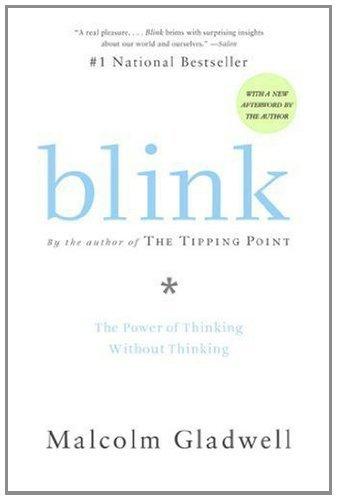
“Blink: The Power of Thinking Without Thinking” by Malcolm Gladwell explores the surprising strengths and hidden pitfalls of our snap judgments. Gladwell shows how we rely on thin slices of information—mere moments of experience—to make decisions that can be both astoundingly accurate and dangerously wrong. He introduces the concept of rapid cognition, presenting it as a vital complement to thoughtful analysis.
Gladwell opens with the story of psychologist John Gottman, who can predict with over 90 percent accuracy whether a couple will divorce just by observing seven minutes of their conversation. This tale sets the stage for understanding how tiny cues—body language, tone, phrasing—carry immense weight. Gladwell argues that these instincts operate below conscious awareness, yet they guide many of our everyday choices.
Next, Gladwell turns to the world of art authentication, recounting how experts at the Getty Museum dismissed a statue as inauthentic based solely on a fleeting impression. In that instant, they spotted a flaw in the neck that contradicted true Greek craftsmanship. They later discovered scientific evidence to confirm the forgery. This example underscores how first impressions can be both swift and valid when shaped by deep expertise.
However, Gladwell warns that these gut reactions can misfire when fueled by bias. He examines a case involving police officers who fired on an innocent man after misreading his behavior. Under pressure and stress, they fell back on stereotypes, leading to tragic results. Gladwell uses this episode to show how rapid cognition can spiral into prejudice unless we learn to control our assumptions.
The book then explores the “adaptive unconscious,” a part of our mind that filters and processes huge amounts of information without us noticing. Gladwell describes experiments in which participants judge teacher quality from a few seconds of video, often matching lengthy student evaluations. He suggests that our adaptive unconscious excels at pattern recognition but struggles when contexts shift or data feel unfamiliar.
In one vivid chapter, Gladwell tells the story of the crowd at Air France Flight 447, which crashed into the Atlantic in 2009. He argues that the pilots’ training taught them to rely on a checklist mindset rather than trusting unusual sensations in the cockpit. As alarms blared, they couldn’t interpret the data correctly and froze. Gladwell contrasts this with “mindful” experts who stay attuned to subtle shifts in their environment.
Gladwell then examines the “Warren Harding Error,” a phenomenon where we overvalue appearance and charisma. Harding looked presidential, so voters overlooked his incompetence. Our snap judgments often favor superficial qualities. Gladwell warns that relying on such cues can mislead us in hiring, dating, or electing leaders.
To show how to improve rapid cognition, Gladwell discusses “priming”—the idea that subtle triggers can shape our unconscious thoughts. He recounts an experiment in which people exposed to words related to old age walked more slowly afterward. By changing our environment, we reshape the frames through which we see the world. This chapter argues we can harness unconscious associations to guide us wisely.
Another section looks at blind auditions in orchestras. When musicians perform behind a screen, more women get hired. Removing visual cues prevents instant judgments based on gender or appearance. Gladwell uses this example to highlight how organizations can redesign processes to reduce bias and let true talent shine.
Gladwell also delves into the role of intuition in war. He profiles military experts who must make life-or-death calls with scant information. Some excel by honing their subconscious patterns, while others flounder because they cling to rigid protocols. The key, he suggests, lies in training that blends practice, feedback, and reflection.
Toward the end, Gladwell discusses how chefs like Heston Blumenthal use rapid cognition in the kitchen. They taste a dish and instantly know which spices are missing. Years of experience build a mental library of flavors that helps them innovate. This chapter celebrates intuition as a refined skill developed through practice and passion.
Finally, Gladwell offers practical advice: be aware of when to trust your gut and when to slow down. He encourages readers to notice situations where snap judgments work best—areas of expertise and familiarity. Conversely, he urges caution in new or high-stakes scenarios, where deliberate thinking can correct unconscious errors.
Blink concludes by reminding us that thin-slicing isn’t magic; it’s a skill we can strengthen by examining our biases, refining our instincts, and designing fair systems. Gladwell leaves us with a deeper appreciation for the power and peril of decisions we make in the blink of an eye. The book invites us to watch our minds more carefully and choose when to blink—and when to pause.
Detailed Summary
Key Takeaways
1. Thin‐Slice Judgments
“We thin‐slice because the alternative is too slow.”
Instant Assessments: Gladwell introduces thin‐slicing as our ability to make rapid assessments based on limited information. He shows that this snap judgment often relies on cues we don’t consciously notice. When you meet someone briefly, your brain filters countless details—tone, posture, facial expression—and produces a first impression in a fraction of a second.
This process differs from deliberate analysis. While careful reasoning demands time and extensive data, thin‐slicing taps into our unconscious expertise. It draws on patterns we’ve internalized through experience. Thus, experts can judge art, music, or people using only a glance at minimal evidence.
Everyday Decisions: Thin‐slice judgments shape many real‐world interactions. In hiring, employers often decide within seconds whether a candidate seems a good fit. Police officers make split‐second calls about threats. Even doctors can diagnose certain conditions quickly by spotting subtle signs.
Yet snap judgments also carry risks. A fleeting glance can trigger stereotypes or biases. When unexamined, these biases may affect everything from courtroom verdicts to medical care. Gladwell suggests that training and awareness can help mitigate errors while preserving the speed advantage of thin‐slicing.
Key points:
- Allows rapid decisions with minimal data
- Relies on unconscious pattern recognition
- Differs fundamentally from slow, analytical reasoning
- Offers both efficiency and vulnerability to bias
- Experts refine thin‐slicing through experience
2. The Locked Door Phenomenon
“People know more than they can tell.”
Hidden Knowledge: Gladwell explores how intuition often arises from information we can’t consciously explain. He calls this the locked door phenomenon: we sense truths without being able to articulate the underlying reasoning. Our minds digest complex patterns behind a mental barrier, delivering a ‘gut feeling.’
This barrier prevents us from describing every cue. You might decide a relationship won’t work without pinpointing the single reason. The locked door explains why people feel confident in judgments they struggle to justify verbally.
Implications for Communication: The locked‐door phenomenon affects how experts teach novices. A master chess player sees patterns at a glance but can’t list every factor leading to a winning move. This gap challenges traditional teaching that relies on explicit rules.
In therapy, patients may report feelings they can’t trace to specific events. Therapists learn to trust these signals as valid. Recognizing the locked‐door phenomenon encourages us to value intuition and seek methods—such as storytelling or guided reflection—to bring hidden insights closer to awareness.
Key points:
- Intuition stems from unconscious pattern absorption
- We often lack verbal access to our reasons
- Creates a gap between knowing and explaining
- Challenges rule‐based teaching and training
- Validates trusting gut feelings when grounded in experience
3. Priming and First Impressions
“Trivial factors can trigger powerful emotional responses.”
Environmental Cues: Gladwell shows that subtle primes—background cues we hardly notice—can shape our feelings and choices. In one study, participants rated a product more positively when researchers scented the room with a pleasant aroma. Another experiment found that mere exposure to certain words affected how people interpreted ambiguous statements.
These findings reveal that our unconscious mind reacts to minuscule signals. They can alter our mood, judgments, and behavior without our conscious consent. Priming demonstrates that context matters at every level of decision‐making.
Marketing and Behavior: Marketers harness priming to influence consumer choices. A store might play soft music to encourage leisurely shopping or display fresh‐baked cookies to create warmth. Online, website design and color schemes prime users to trust a brand.
Schools and workplaces can also use priming positively. Placing uplifting posters in hallways may boost morale. But negative primes—such as cluttered environments—can impair focus. Understanding priming empowers us to design spaces that foster better outcomes.
Key points:
- Subtle environmental cues influence emotions
- Priming shapes judgments without awareness
- Companies use priming in advertising and design
- Positive primes can improve mood and performance
- Negative primes risk undermining goals
4. The Dark Side of Rapid Cognition
“Blinking is not thinking.”
Risky Overconfidence: While rapid cognition brings advantages, it can misfire. Gladwell recounts cases where expert firefighters misread threats, leading to tragic outcomes. Their intuition told them it was safe, but they missed critical signs—the kind that require careful data gathering.
Overconfidence in thin‐slicing can close off further inquiry. When we trust our first impressions too much, we may ignore contradictory evidence. Gladwell warns that reflexive thinking isn’t foolproof; it needs checks and balances.
High‐Stakes Errors: In medicine, a quick diagnosis can save lives, but a hasty one may misdiagnose a serious condition. Pilots or military commanders could misinterpret subtle signals and make catastrophic choices.
Gladwell recommends ‘mindful practice,’ where experts review their split‐second calls and examine errors. By reflecting on when intuition fails, they refine their internal filters. Balancing speed with periodic analysis reduces the dangers of overreliance on gut judgments.
Key points:
- Powerful but fallible form of cognition
- Overconfidence can block critical evidence
- Leads to dangerous errors in high‐risk fields
- Calls for mindful reflection on mistakes
- Suggests combining intuition with verification
5. Adaptive Unconscious Expertise
“Practice allows our brain to recognize patterns in seconds.”
Building Reliable Intuition: Gladwell argues that consistent practice hones our rapid‐thinking skills. Musicians, athletes, and seasoned professionals develop an internal database of patterns through repeated exposure. This database fuels accurate gut reactions.
For instance, a veteran firefighter spots subtle smoke patterns and anticipates structural collapse. A practiced art historian can date a sculpture by its style at a glance. Such expertise arises not overnight but via deliberate, focused repetition.
Training for Snap Judgments: Organizations can design training that accelerates pattern absorption. Simulations for pilots or surgeons can replicate critical scenarios in compressed time. These drills strengthen the adaptive unconscious and improve real‐world performance.
However, training must expose learners to diverse cases to avoid narrow pattern sets. If firefighters only confront one type of blaze, they may misread novel situations. Broad, varied practice ensures that thin‐slicing remains accurate across contexts.
Key points:
- Expertise grows with focused repetition
- Experience builds unconscious pattern libraries
- Critical for fields needing split‐second decisions
- Training should include diverse scenarios
- Supports reliable rapid cognition
6. Cultivating Balanced Decision-Making
“We need to fight to get the right balance between quick, intuitive thinking and thoughtful analysis.”
Dual‐Process Harmony: Gladwell highlights the need to blend fast and slow thinking. He doesn’t dismiss conscious analysis; instead, he suggests we learn when to trust intuition and when to pause. Decision quality improves when we know which mode to engage.
For routine or well‐practiced tasks, relying on intuition saves time and often yields good results. But when faced with unfamiliar or high‐stakes scenarios, we benefit from deliberate deliberation. Recognizing context guides us to the appropriate thinking style.
Applications in Leadership: Leaders can cultivate this balance by encouraging quick responses in familiar areas and structured reflection for novel challenges. In business strategy, brainstorming ideas might leverage rapid judgments, while final investment decisions require detailed analysis.
Teams can build protocols: frontline staff use their instincts in emergencies, but they debrief afterward. Such systems ensure fast action with an opportunity to learn from outcomes. This dynamic interplay of fast and slow thinking optimizes performance across domains.
Key points:
- Advocates blending intuitive and analytical thought
- Uses intuition for routine, proven tasks
- Calls for analysis in novel or critical situations
- Recommends systems that allow reflection post‐action
- Enhances leadership and organizational learning
Future Outlook
Gladwell’s exploration of rapid cognition sparks new research into training methods that harness intuition without sacrificing accuracy. As neuroscience uncovers more about the brain’s pattern‐recognition networks, educators and employers will refine programs to sharpen beneficial instincts while curbing biases.
In technology, AI systems mirror thin‐slicing by spotting patterns in vast datasets. Future tools may augment human intuition, flagging anomalies that even experts miss. Combining human and machine rapid cognition promises breakthroughs in fields from diagnostics to security.
Society will continue to debate the ethics of snap judgments. As we rely on quick decisions in areas like policing or lending, transparency about the risks of bias becomes crucial. Gladwell’s work urges us to build safeguards—training, oversight, and accountability—to ensure that thinking without thinking serves everyone fairly.