Summary
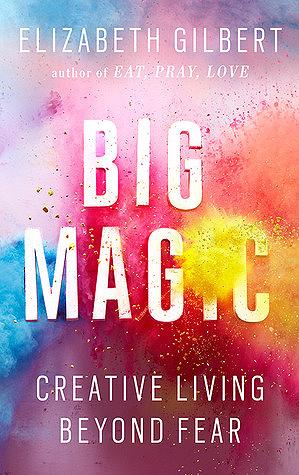
Big Magic: Creative Living Beyond Fear by Elizabeth Gilbert invites you on a journey through the mysterious realm of creativity. Gilbert calls creativity a generous force that flits through the world, seeking willing collaborators. She writes with warmth and honesty, urging you to shed self-doubt and embrace the joy of making things. Along the way, she shares her own successes and missteps, weaving in personal anecdotes that feel like a chat with a wise friend.
Gilbert begins by defining the two main characters in every creative act: you, the mortal creator, and fear, the uninvited companion. She insists fear will always tag along when you embark on a creative venture, but it need not call the shots. You can acknowledge fear politely—“Thank you for trying to protect me, but I’ve got this”—and steer your own ship. Gilbert’s lighthearted tone shows that fear loses much of its power once you name it and send it on its way.
Next, she personifies ideas as living entities that float around looking for humans to give them form. An idea might hover near you for years, waiting until you finally feel brave enough to bring it into the world. Gilbert shares a charming story of an idea she ignored for months, only to find it rekindled later when she was ready. She suggests that ideas have their own agendas; if you don’t claim one, another eager creator will.
In the chapter on enchantment, Gilbert asks you to notice the grace that enters when you follow inspiration without agenda. She describes moments when ideas reveal themselves in dreams, chance conversations, or sudden flashes of insight. These small miracles, she argues, remind us that creativity is a gift, not something we must force. When you relax and say yes, the process becomes less toil and more play.
She then turns to the question of permission. Too often, we wait for someone else—an editor, a teacher, a critic—to bless our efforts. Gilbert urges you to give yourself permission to create, right now, without waiting for external validation. She admits that this step felt radical for her as a struggling writer. By granting herself permission, she reclaimed her power and found that other doors opened naturally.
Gilbert acknowledges that resistance comes in many forms: writer’s block, self-criticism, distraction. To conquer these, she offers stories of her own battles with procrastination and doubt. One anecdote describes her wrestling with a difficult passage only to break through by writing badly on purpose. The secret, she says, is to show up consistently, even when inspiration feels distant.
Persistence, Gilbert contends, trumps talent. You don’t need to wait for the perfect mood or moment. Instead, build a daily habit of showing up at your craft. She likens it to a romantic relationship: you keep courting your project even on days when you feel uninspired. Over time, that loyalty pays off in momentum and skill.
Failure finds a place in Gilbert’s world, too. She views failures as experiments that teach you what doesn’t work and guide you toward what does. She recalls a business venture that collapsed spectacularly, only to reveal insights she carried into later successes. According to Gilbert, every flop carries an unexpected gift, if you care to look for it.
Trust forms the backbone of her creative philosophy. Gilbert asks you to trust in the process, trust in your instincts, and trust in the universe’s benevolence. She describes the moment when she realized writing felt like a calling, not just a job. That sense of trust, she says, frees you to take creative risks without fearing the outcome.
In exploring divine mechanics, Gilbert admits she doesn’t have all the answers. She doesn’t claim creativity is divinely ordained, but she remains open to the idea that something larger than us stirs the creative impulse. She references various traditions and myths, not to preach, but to remind us that artists through the ages have sensed a magical undercurrent in their work.
Throughout, Gilbert circles back to joy. She insists creativity should feel like an act of love, not a chore. When deadlines or market pressures override delight, you lose the spark that sustains you. She challenges you to protect your curiosity and playfulness above all else.
Gilbert peppers her book with practical tips: carry a notebook everywhere, keep a low opinion of perfection, cultivate a supportive community. She reminds you that creative living isn’t a solo quest. Connecting with fellow seekers can fuel fresh perspectives and provide much-needed encouragement.
By the end, you’re left with a sense of possibility. Big Magic doesn’t promise fame or fortune. Instead, it offers a blueprint for a life driven by creativity, courage, and curiosity. If you follow Gilbert’s advice—be brave, stay persistent, welcome wonder—you’ll discover that crafting things matters more than the things you craft.
Big Magic ultimately invites you to live creatively in every corner of your life, not just in art or writing. Whether you bake brownies, sketch doodles, or lead meetings, you can honor the muse by showing up with playfulness and purpose. Gilbert’s voice lingers long after you close the book, reminding you that the greatest magic lies in your willingness to try.
So pick up your pen, turn on that camera, or start that side project you’ve shelved for too long. The world has its own ideas waiting for you, and Big Magic wants you ready. After all, life is short—and creativity, like love, thrives in the brave heart.
Detailed Summary
Key Takeaways
1. Embrace Creative Permission
“Permission. Give yourself permission to live a big life.”
Granting Yourself Freedom: Elizabeth Gilbert insists that the first step in creative living lies in granting yourself permission. Few things block creativity more than self-doubt. When you allow yourself to begin, you dismantle the goading voice that says you’re not good enough.
In Big Magic, Gilbert frames permission as an act of self-compassion. You don’t need anyone else’s approval. You simply start on your own terms. That simple shift changes how you approach ideas, fears, and daily tasks.
Shifting Cultural Expectations: By advocating self–permission, Gilbert challenges the notion that creativity must be earned. In many societies, art remains reserved for a select few with rare talent. Gilbert sidesteps that barrier. She argues creativity thrives when we embrace it regardless of our status.
This mindset shift ripples outward. In classrooms, workplaces, and community centers, people begin to value the creative spark over technical skill. Their willingness to try seeds fresh projects, unexpected collaborations, and a more vibrant culture.
Key points:
- Blocks self–doubt at the start
- Questions gatekeeping of talent
- Centers self–compassion as a creative tool
- Encourages autonomous creative action
2. Tolerate the Tension of Fear
“The trick is to stop competing with your fear.”
Working With Fear: Gilbert doesn’t tell you to eliminate fear. Instead, she urges you to make fear your companion. She suggests naming it, acknowledging its shape and hue, then moving forward anyway.
She uses anecdotes from her own life to show that fear always edges close when an idea knocks. Yet she reminds you that fear and creativity can occupy the same space. You need not wait for fear to vanish before you act.
Transforming Personal Obstacles: This approach empowers individuals who have long felt paralyzed by perfectionism. When fear stops being the enemy, it becomes another part of your system. You learn to launch projects, journals, or businesses while fear lurks just offstage.
Over time this practice builds resilience. People see setbacks as bumps in a road rather than impassable walls. They take more creative risks in art, writing, and even daily problem–solving.
Key points:
- Acknowledges fear as natural
- Encourages naming and accepting fear
- Promotes action despite anxiety
- Builds long–term creative resilience
3. Trust in Inspiration’s Presence
“Ideas want to be born.”
Personifying Ideas: Gilbert breathes life into inspiration by treating ideas like living entities. She describes them as floating by in a cosmic hall, looking for a willing mind to attach to.
This playful metaphor reminds you that creativity often arrives unbidden. You can’t force inspiration, but you can stay open. When you show up consistently, ideas feel welcome.
Encouraging Openness to New Work: When creative teams adopt this belief, they shift from chasing big breakthroughs to cultivating readiness. They schedule consistent writing sessions or design sprints simply to greet ideas when they appear.
Across industries, this stance also reduces anxiety. It fosters environments where brainstorming becomes a game rather than a test. People begin to listen for ideas instead of scolding themselves for not having them.
Key points:
- Views ideas as living guests
- Highlights the importance of presence
- Shifts focus from forcing to welcoming
- Fosters playful creative practice
4. Give Up Perfectionism
“Your fear is boring.”
Letting Go of Flawlessness: Gilbert labels perfectionism as a form of self–calibrated fear. It demands flawless results before you can share work with the world. This demand often stops projects midstream.
She warns that perfectionism hides behind high standards. Yet it rarely leads to improved final work. Instead, it keeps you stuck in an endless loop of revision.
Boosting Productivity and Joy: Once creators drop the drive for perfection, they publish more. Writers finish manuscripts. Painters sell pieces. Entrepreneurs launch ventures.
At the societal level, releasing perfectionism opens diverse voices. People who feared ridicule now contribute. We see a bloom of podcasts, blogs, and handmade goods. Our culture grows richer through varied expression.
Key points:
- Identifies perfectionism as fear
- Shows how it blocks completion
- Encourages timely sharing of work
- Leads to increased creative output
5. Prioritize Pleasure Over Approval
“Do what you love, and love what you do.”
Finding Joy in the Process: Gilbert urges you to seek joy in the act of creation itself. She reminds you that if you chase only external rewards—money, fame, praise—you risk losing your original spark.
She recounts her own writing journey: the first draft felt like play, the subsequent edits became performance. That shift nearly killed her passion. She learned to guard her inner pleasure even when the world cheered.
Cultivating Sustainable Creativity: When people focus on internal reward, they last longer in artistic fields. They wake early to write because it feels good, not because they crave likes on social media.
This shift also changes consumer culture. Audiences learn to value authenticity. They support artists for the work’s heart rather than its hype. Markets respond by nurturing diverse, joy–driven creators.
Key points:
- Emphasizes intrinsic motivation
- Warns against chasing accolades
- Draws from author’s personal history
- Supports long–term creative health
6. Commit to Consistent Practice
“Show up every day, and keep showing up.”
Building Creative Discipline: Big Magic highlights that inspiration alone won’t carry your work. Gilbert stresses the need for routine. She asks you to carve time—daily or weekly—for your craft.
Making a habit of creation trains your mind. It turns sporadic bursts into steady progress. Even on uninspired days, the act of showing up sends a message to ideas: you’re ready.
Strengthening Creative Ecosystems: When individuals maintain regular practice, they accumulate small wins. Over months, these compound into major accomplishments like books, albums, or inventions.
On a communal level, such consistency fosters mentorship. Veteran creators can guide newcomers through shared rituals—writing groups, critique circles, co–working spaces. This network effect amplifies collective creative output.
Key points:
- Stresses routine over sporadic bursts
- Trains mind to expect creation
- Leads to gradual skill building
- Supports peer networks through shared schedules
Future Outlook
Gilbert’s invitation to treat creativity as an everyday companion will shape future conversations about work and wellness. As more people embrace the idea that art need not be elite, we’ll see creative expression woven into schools, offices, and communities. Workshops and curricula will adopt playfulness and fear–tolerance as core skills alongside literacy and numeracy.
On the research front, psychologists may deepen studies on how curiosity and joy fuel resilience. Organizations could redesign performance reviews to reward risk–taking and regular creative practice rather than risk avoidance. Policy makers might fund public spaces that host informal art sessions, freeing citizens to explore ideas without judgment.
Ultimately, Big Magic’s ethos encourages a shift from our achievement–only culture toward one that values the process itself. As we grant ourselves permission, we’ll discover untapped potential, remind society that creativity belongs to everyone, and redefine success as the joy of making something new.