
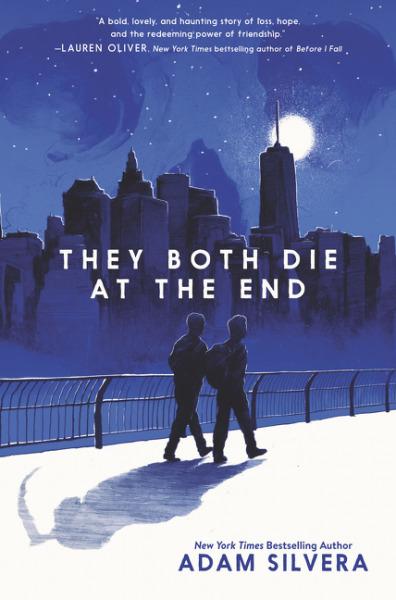
Summary
They Both Die at the End by Adam Silvera follows two teenagers, Mateo Torrez and Rufus Emeterio, who receive unexpected phone calls on September 5th, the day they are destined to die. In the near-future world Silvera imagines, a company called Death-Cast informs individuals of their End Day. It’s a grim service, yet society has adapted with Last Friend apps, intended to connect those with one day left. Neither Mateo nor Rufus knew what to expect from that call, but both felt an urgent need to live their final hours fully.
Mateo Torrez spends most of his life indoors, shielded by fear after a childhood illness. He’s cautious and introverted, preferring books and morning coffee over the chaos of crowds. When he learns that today is his last, he hesitates at first, paralyzed by dread. But then he decides he won’t waste these hours hiding. He opens his Last Friend app profile, hoping someone might share this terrifying final stretch.
Rufus Emeterio has a different past entirely. He survived a family tragedy and a violent attack that left him with scars—both visible and hidden. Rufus learned to fight back and to stand up for those who couldn’t. Since losing his closest family, he’s been searching for purpose. When Death-Cast calls him, he vows to fill his last day with action, to prove life still matters.
Neither Mateo nor Rufus planned to spend their End Day alone. The Last Friend app connects them: Mateo’s request—gentle and nervous—meets Rufus’s brash, empathetic willingness. They exchange messages that carry the weight of two souls acutely aware of their mortality. While Rufus checks Mateo’s pictures, he sees fear, and Mateo sees courage. Sparks of friendship ignite under the most unlikely circumstances.
They agree to meet at Mateo’s brownstone on the Lower East Side. Rufus arrives first, anxious but ready. Mateo opens the door clutching a journal. In a quiet foyer, they share nervous laughter—like misplaced teenagers pretending everything is normal. Rufus’s confidence steadies Mateo, while Mateo’s quiet honesty softens Rufus’s edge. An unspoken bond forms instantly.
The two set out into the city that Juliet Ellis once loved, green parks and neon streets alive with strangers. Rufus steals a snack from a vendor because it feels rebellious. Mateo guides them to his favorite bookstore where he reads aloud passages that comfort him. Together they ride a rumbling subway, spotting street art in a filthy tunnel. They chase moments of joy like runaway balloons.
Afternoon brings an unexpected detour. They track down Rufus’s crew—his best friends, who mourn and laugh over the radio in Rufus’s ear. Mateo watches Rufus melt into a world of shared jokes and nicknames. It’s the first time he sees Rufus without his mask of bravado. Meanwhile, Mateo texts his mother, trying to convey love in short phrases. Neither of them quite believes this day is the last.
They head to a rooftop party Mateo’s older sister hosts in Brooklyn. Lights glow across the skyline. Laughter, a little too loud, skips over both of them like wind. Mateo feels euphoria laced with panic: every second flashes past, promising hope and heartbreak. Rufus dances with reckless abandon, determined to outrun time.
Night deepens. Rufus and Mateo slip away from the crowd and find a canal path by a quiet pier. They share stories: Mateo about his parents’ divorce, and Rufus about being the only one left after his parents’ deaths. Neither spares grief. Their confessions echo off the water. A false calm settles in the air.
Then tragedy unspools. A car screeches through a red light—not drunk, not malicious, just a moment of negligence. Rufus pushes Mateo out of the way but can’t save himself. Mateo cradles Rufus by the curb as sirens approach. Rufus smiles through the pain and murmurs that this day was the best he’s ever had. He thanks Mateo for being his Last Friend.
In Rufus’s final breath, Mateo holds him close and vows he won’t forget. He presses a kiss to Rufus’s temple despite the wet chill of blood. That moment sears into Mateo’s memory. Strangers gather, forming a respectful circle. Mateo looks up at the indifferent city lights and whispers Rufus’s name into the night.
Mateo staggers home, the world strangely empty. He reopens his journal and writes the story of the day he lost his Last Friend. He recalls Rufus’s jokes, the subway grime, their rooftop dance, the canal’s hush. Each memory becomes a gift he refuses to let go. His tears soak the pages but also bring clarity: love can bloom even on the End Day.
On September 6th, Mateo wakes at dawn. The air feels lighter, as if memory itself has buoyed him. He slips on the hoodie Rufus gave him—now stained and precious. He steps out into morning traffic with trembling faith that life might still hold meaning beyond Death-Cast’s verdict. He carries Rufus’s laughter in his heart.
Weeks later, Mateo uses his Last Friend app without expecting more calls. He chronicles his journey online and finds others who have lost their Last Friends. He offers comfort—an echo of Rufus’s compassion. His story draws strangers into shared grief and hope. Mateo learns that endings can give rise to unexpected beginnings.
They both die at the end, but in living those hours fully, Mateo and Rufus reshape each other’s worlds. Their brief connection survives beyond Death-Cast statistics. Through Mateo’s words, Rufus continues to spark courage, reminding readers that every day—no matter how brief—is worth fighting for and sharing with someone who listens.
In the end, Silvera leaves us with an urgent truth: life’s fragility makes each heartbeat precious. You might not know when your End Day arrives, but you can choose to live fiercely and love openly. After all, it’s our final moments that define us—you just might need a Last Friend to help you see it.
Detailed Summary
Plot Summary
1. The End Day Warning
Rufus Emeterio and Mateo Torrez receive an ominous notification just after midnight from Death-Cast, a clandestine service that alerts individuals on the day they will die. Rufus, a 17-year-old living in the Bronx, grapples with the shock while recalling his troubled childhood marked by foster care. Mateo, also seventeen, spends his last morning in his cautious routine—journaling and chatting online—struggling to believe the message.
Meanwhile, neither boy knows the other, yet both feel an urgent need to seize a day they never expected. Rufus must decide whether to isolate himself or embark on a risky quest for meaning. Mateo debates stepping outside his comfort zone. They each agree to enlist the help of an app called Last Friend. It pairs End Day participants seeking companionship in their final hours.
As the morning wanes, Rufus and Mateo submit their profiles. Rufus lists his adventurous spirit. Mateo admits his loneliness. Each swipes through options. Their choices hinge not on knowing each other but on an unspoken yearning for connection. When the app matches them, both hesitate. Then they accept, catapulting them into a day neither will ever forget.
2. An Unlikely Partnership
Rufus and Mateo meet in person for the first time at a busy New York street corner. Rufus arrives first, dressed in casual layers ready for anything. He spots Mateo, clutching his backpack. At first, they exchange nervous smiles. Rufus offers Mateo his jacket against the brisk wind. Mateo warms to Rufus’s easy confidence.
They wander toward a nearby diner. Over coffee and breakfast sandwiches, they trade stories. Rufus reveals his fears and regrets—relationships lost, the words he never said. Mateo listens, offering gentle empathy. In turn, Mateo shares his love for writing and his wish to save money for college. Rufus encourages him to go for it, even though neither will see tomorrow.
By late morning, they step out of the diner. Rufus wants thrills. Mateo hopes for calm beauty. They compromise on a walk through Central Park. Their differences foster balance: Rufus’s boldness urging action, Mateo’s caution anchoring reflection. They realize this day could be more than just a meeting—it might be a moment of belonging neither has felt before.
3. Adventures at Dock Street
Midday, Rufus leads Mateo to Dock Street where a vibrant carnival brims with color and chaos. Rufus buys cotton candy, insisting Mateo taste something sweet before the end. Mateo laughs when pink sugar sticks to his fingers. They ride the Ferris wheel and look out over Manhattan, linking hands without hesitation.
At the top, their conversation turns vulnerable. Mateo admits he always felt invisible. Rufus confesses he often felt unwanted. They promise to keep each other in memory long after death. They shout aloud into the wind, claiming their worth despite society’s indifference.
As they descend, a street magician draws a crowd. Rufus pulls Mateo into the act, daring him to pick a card. When Mateo succeeds, they high-five ecstatically. Strangers cheer. This momentary triumph cements their bond. They leave the carnival with a new sense of purpose—to live fully until their final breath.
4. Facing Fears and Regrets
Afternoon shadows lengthen as Rufus and Mateo take the subway to a hospital rooftop. Rufus insists, “I want to see the city from above.” Mateo hesitates, fear knotting his stomach. Yet Rufus’s belief in him becomes the push Mateo needs. On the rooftop, they stand at the edge, looking down at the city’s pulse.
Mateo clutches onto Rufus as he confesses his deepest regret: never reconciling with his estranged father. Rufus listens, then shares his own regret: not telling his foster sister, Tag, how much she meant. Together, they decide to right one wrong before day’s end. Mateo texts his father, leaving a heartfelt message. Rufus calls Tag and tells her she’s family.
The confessions free them. Tears fall, but laughter follows. Rufus and Mateo lean head to head, feeling less afraid. They realize that courage sometimes means facing hard truths. And it can bring peace, even if only for a few precious hours.
5. Last Moments and Goodbyes
Evening finds Rufus and Mateo at a quiet pier by the Hudson River. The skyline glows as the sun dips below the horizon. They sit close on a bench, shoulders touching. No app, no device, just two souls embracing their finite time.
They share hopes for each other beyond death. Rufus urges Mateo to publish his stories. Mateo vows to carry Rufus’s bravery forward. When Rufus’s watch hits midnight, Mateo grips his hand. Rufus exhales, “I’m ready.” He dies with a glance at Mateo’s tearful face.
Mateo stays until dawn. He writes in his journal, “He taught me how to live.” When his own time arrives, he doesn’t hesitate. His final act is a full stop. Two lives end, but their shared day becomes a testament to friendship and fearlessness.
Characters
1. Mateo Torrez (Protagonist)
“What if I used these last hours to really live?”
Mateo is thoughtful and gentle. He grew up caring for his chronically ill mother, which taught him responsibility but also made him wary of risks. He spends much of his time writing in his journal, seeking solace in words. When he learns it’s his End Day, he initially hides indoors. Yet meeting Rufus helps him break free from self-doubt.
He evolves from a cautious loner into someone willing to embrace joy and confrontation. His final act—calling his father—shows growth in courage and forgiveness. Mateo’s story highlights how human connection can change a person’s last hours into meaningful memories.
2. Rufus Emeterio (Protagonist)
“We’re alive today, so let’s not waste it.”
Rufus is bold and impulsive. He endured a rough childhood in foster care and lost many people he loved. That history makes him treasure every moment. When he discovers it’s his End Day, he decides to spend it seeking thrills. He signs up on Last Friend hoping to find someone who understands him.
Through his friendship with Mateo, he learns to open his heart. Rufus admits the guilt he’s carried and reaches out to Tag, his foster sister. His transformation shows that even on your last day, you can seek redemption and connection.
3. Tag LeBlanc (Supporting Character)
“I’ve got you, no matter what.”
Tag is Rufus’s oldest friend and foster sister. She worked tirelessly to support Rufus during his childhood. When Rufus calls on his End Day, Tag drops everything to be with him. Her fierce loyalty and warmth ground Rufus’s reckless spirit.
Though she’s not central to Mateo’s story, Tag’s presence underscores the theme of chosen family. She represents the bonds we forge beyond blood, and her reunion with Rufus brings him peace in his final moments.
4. Death-Cast (Organization)
“How will you choose to live today?”
Death-Cast is a mysterious agency that notifies people of their last day. It employs specialized couriers called Valentines who deliver the news with care packages. Though impersonal in method, Death-Cast triggers the core conflict—forcing characters to confront mortality.
Its existence raises ethical and philosophical questions about fate, choice, and the value of a single day. Without Death-Cast, Rufus and Mateo might never meet or learn to face their regrets.
5. Last Friend App (Supporting Device)
“Your match awaits—would you like to connect?”
Last Friend serves as a digital matchmaker for those on their End Day looking not for romance but companionship. It pairs Rufus and Mateo anonymously based on simple preferences.
The app’s algorithm brings two strangers together at life’s final hour. It demonstrates how technology can facilitate real human connection, even in the face of death.
Themes Analysis
1. Mortality and Urgency
They Both Die at the End forces characters to confront the certainty of death. Knowing they have one day left makes every moment feel urgent. Rufus and Mateo choose to abandon fear in favor of experiences they’d otherwise postpone.
This theme examines how awareness of finitude can spark boldness. It asks readers to consider their own choices: Do we live as though we might not have tomorrow? The novel suggests that embracing urgency can lead to deeper, more authentic living.
2. Friendship and Connection
At its heart, the book portrays friendship as a salvation. Rufus and Mateo, both isolated in different ways, find belonging in each other’s company. Their bond highlights how emotional intimacy can bloom in the briefest time.
The story shows that true connection requires vulnerability. Both boys share their regrets and fears, and in doing so, they free themselves. The theme celebrates how human connection transforms despair into hope.
3. Regret and Forgiveness
Regret drives much of Rufus and Mateo’s actions on their End Day. Rufus mourns past losses and unspoken words. Mateo fears he never lived fully or reconciled with his father.
By choosing to face regrets head-on—calling Tag and reaching out to his dad—they practice forgiveness. The act of letting go offers them peace. The novel underscores that it’s never too late to seek closure.
Key Plot Devices
1. Death-Cast Notifications
Death-Cast serves as the inciting device that launches the entire narrative. Its cold, precise alerts provide structure: characters learn when they’ll die and must plan accordingly. Without Death-Cast, the urgency and existential stakes vanish.
Moreover, the service underscores themes of fate versus free will. Though Death-Cast delivers certainty, it also empowers characters to make meaningful choices in the face of mortality.
2. Last Friend App
Last Friend bridges strangers at their most vulnerable moment. It drives the central relationship between Rufus and Mateo, guiding their steps throughout the day. The app’s simplicity—matching on basic preferences—keeps the focus on genuine interaction rather than algorithmic love.
It also critiques technology’s role in human connection. Here, it proves capable of fostering real intimacy, suggesting that even in a digital age, authentic bonds remain possible.
3. Valentine Couriers
Valentines are Death-Cast agents who deliver the news and a kit containing comforting items. Their presence adds a human touch to an otherwise stark system. Through brief but kind interactions, they show compassion in the face of tragedy.
They also ground the story’s ethical core. By embodying empathy within a bureaucratic service, Valentines remind us that personal kindness matters, even when death feels inevitable.







