
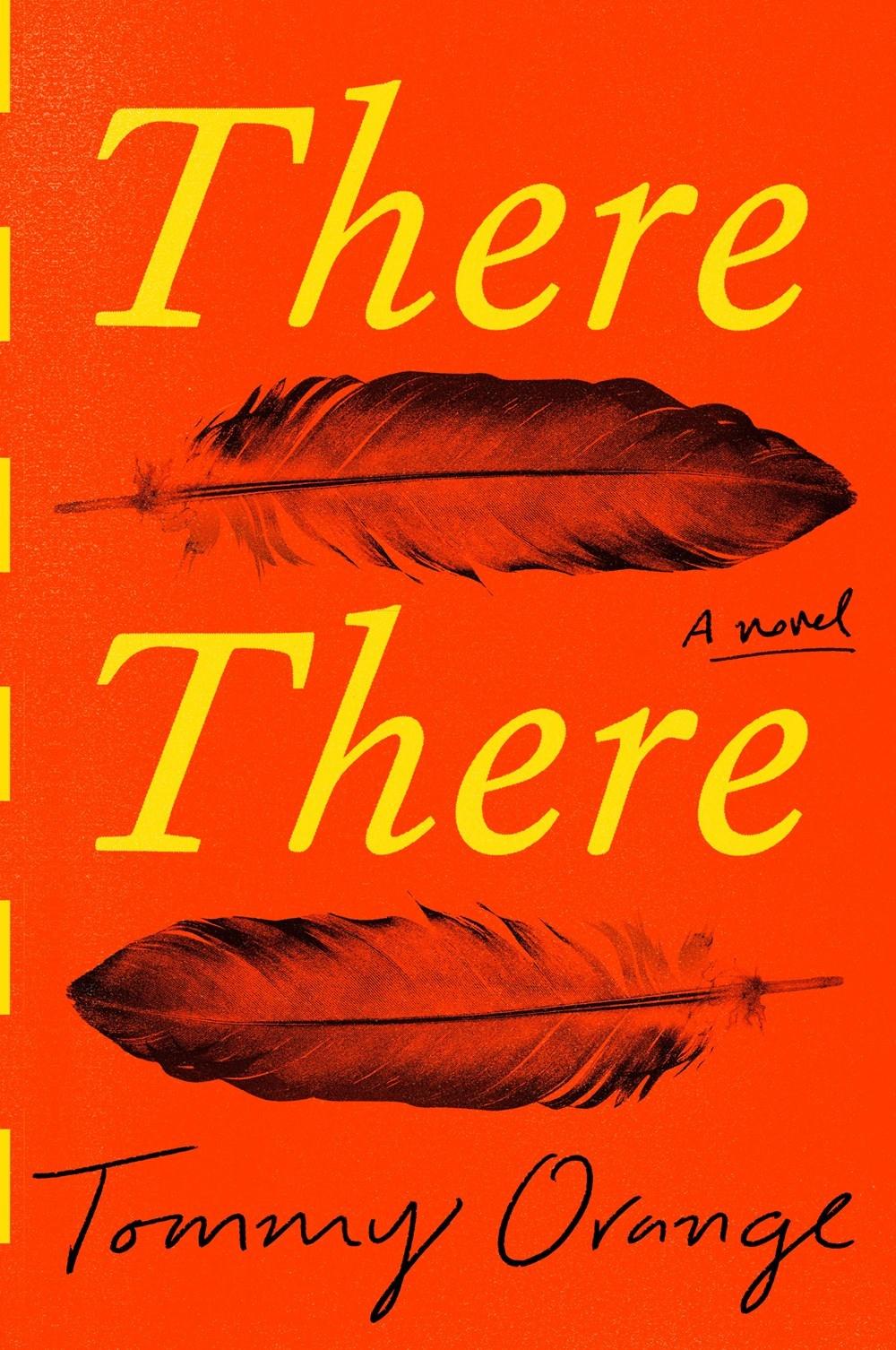
Summary
There There, by Tommy Orange, weaves together the stories of twelve Native Americans who live in and around Oakland, California. Each narrator carries a history of displacement and loss, yet they share a fierce desire to claim a sense of home. Their lives converge as they prepare to attend the Big Oakland Powwow, a celebration meant to honor their roots.
Tony Loneman, a young man with fetal alcohol syndrome, knows himself as “The Drome.” He drifts between friends and petty crime, grasping at any chance to belong. When his uncle, James, ropes him into a robbery at the powwow, Tony feels torn between loyalty and unease. Meanwhile, he still mourns the death of his younger brother and seeks a connection to family.
Dene Oxendene, driven by the desire to preserve oral history, plans a documentary on the powwow. He grew up hearing his uncle speak about their heritage, and now he wants to record stories from relatives and strangers alike. With a camera in hand and hope in his heart, Dene travels from project to project, inviting participants to share voices often ignored by mainstream media.
Opal Viola Victoria Bear Shield carries her own legacy of trauma. She and her sister Lony were evacuated from Wisconsin during the Indian Relocation Act of the 1950s. Their grandmother, “Big Momma,” ruled a tribal boarding school before it closed. Opal now cares for her niece, Jacquie Red Feather, a recovering addict who left the powwow world behind but struggles to mend her past mistakes.
Jacquie Red Feather, freshly sober, wants to reclaim her place among her people. She hopes to reconcile with her daughters, Opal and Lony’s children, who she left behind when addiction took hold. She finds solace in reading self-help books and attending meetings, yet she still fights the tug of guilt. The powwow feels like both home and a test of her new resolve.
Orvil Red Feather learns powwow dancing by watching YouTube videos without asking for permission or guidance. He’s never met his father and wants to connect with culture on his own terms. Clad in regalia he assembles piece by piece, Orvil feels pride and frustration. His older brother, Edwin, returns home from prison on the same day Orvil decides to attend the powwow.
Edwin Red Feather arrives feeling alien in the city where he was born. Prison changed him, but he craves reconnection with his family, especially Orvil. He sees his nephew in full dance regalia and senses a spark—a chance to find redemption. Edwin volunteers to drive Orvil to the powwow, seeking his own path back to community.
Blue, a medical assistant in Oakland, mourns the loss of her grandmother, who raised her with stories of old tribal life. She spreads her grandmother’s ashes at Lake Merritt in a quiet ceremony, imagining the water carrying her ancestor’s spirit back home. Alone on a bench, Blue resolves to attend the powwow, hoping to fill the emptiness with shared laughter and drumbeats.
Bill Davis, an Iraq War veteran and ex-addict, carries a gun in his waistband. He’s obsessed with security and haunted by guilt over his daughter, whose whereabouts he still doesn’t know. Bill sees the powwow as a target for chaos, so he plans to stay on guard—and maybe even intervene if trouble erupts.
Jacquie and Opal reconnect under the looming powwow advertisements. Old wounds surface as they ride BART together. They share memories of their mother, who never quite fit the traditional roles their grandmother enforced. Though their reunion bristles with tension, they realize they need each other to face what’s ahead.
Daniel Gonzales, a rising hip-hop artist, plans to perform at the powwow. He struggles with stereotypes that label Native people as relics of the past. Through rap, Daniel channels anger at poverty, violence, and erasure. He hopes his set will bridge ancestral drumbeats and modern beats, forging a link between history and the future.
Calvin Johnson sells artisan beadwork and horn jewelry on the streets of downtown Oakland. He watches as the city gentrifies around him, pushing out families like his. His fingers ache from repetitive stitching, but each piece holds a story. He plans to set up a booth at the powwow to remind people that art can heal—and resist.
Bill Davis’s nerves snap when he sees a suspicious figure near the entrance. He draws his gun, heart hammering. But then he realizes it’s Tony Loneman, nervously clutching a backpack with stolen rifles. In a desperate moment, Tony panics, fires a shot, and chaos erupts among the dancers and visitors.
Smoke fills the air, drums fall silent, and fear pulses through the crowd. Dene Oxendene instinctively raises his camera, capturing every expression of shock and betrayal. Orvil drops his feathered fan, eyes wide. Jacquie runs toward the commotion, ready to help whoever she can. Each character faces a moment where roots and trauma collide.
In the aftermath, survivors hold each other close. Opal tends to the wounded while Bill Davis lowers his weapon, tears staining his cheek. The powwow’s promise of community lies fractured. Yet as the sun sets over Lake Merritt, broken bones and broken hearts still beat with the possibility of healing. Each person carries home a story—of pain, of survival, but also of hope that the journey forward, though perilous, is worth walking together.
Detailed Summary
Plot Summary
1. Introduction and Family History
Tony Loneman opens the novel in Oakland, haunted by his fetal alcohol spectrum disorder and the nickname “Dene Ox.” He navigates a world full of stereotypes, struggling with identity. We learn about his grandmother’s service in World War II and the loss that shaped Tony’s lineage.
Orange shifts to Orvil Red Feather, who teaches himself powwow dances through YouTube clips. Orvil wrestles with who he is without family or tribal ties. At a powwow in Oakland, he senses the weight of generations in his every step.
These early chapters weave the characters’ pasts and present. We glimpse how trauma and displacement echo from grandparents to grandchildren. The narrative sets the stage for converging lives at the big city powwow.
2. Jacquie Red Feather’s Return
Jacquie Red Feather leaves Los Angeles to confront her past in Oakland. She arrives bruised from sobriety battles, determined to reconnect with her daughters. In flashbacks, we see her promise to a dying sister: to keep the family together.
Back home, she learns Orvil plans to dance. That news both frightens and inspires her. She must face the shame and pride that tie her to her heritage.
Jacquie’s journey threads guilt and hope. She recalls the urban reservation she abandoned. Her homecoming highlights how modern urban Indians bridge tradition and survival.
3. Opal Viola Victoria Bear Shield’s Quest
Opal Bear Shield assumes care of her nephew Orvil and niece Lony. A longtime messenger, she travels between relatives. She lives atop the BART tracks, carrying stories and dreams.
When Jacquie calls, Opal feels obligated to bring the family to the powwow. She packs heirlooms: beadwork, moccasins, a tattered powwow dress. Her home is a shrine to memory, a pulse of Indigenous life in a steel world.
Opal’s chapters reveal her fierce love and loyalty. She remembers trickster tales and boarding school horrors. Her voice ties individual suffering to collective history.
4. Four Directions Powwow Preparations
As characters converge, Orange introduces Edwin Black, a mixed-blood writer desperate for roots. He edits missing persons reports for the local paper. News of Orvil’s dancing sparks his curiosity.
Edwin hides a secret: a thief who keeps stolen goods in his cluttered home. He wrestles with shame and hope for a fresh start. Meanwhile, Dene Ox plans a heist during the powwow to bank money for his unborn child.
These interlocking arcs build tension. They show modern Native lives fragmented by violence, addiction, and forced migration. At the same time, they pulse with creativity, humor, and survival instincts.
5. Heist and Violence Unfold
On powwow day, Dene Ox assembles his crew: his cousin Bill Davis, Orvil and Lony’s uncle, and two friends. They plan to rob the powwow’s vendors, thinking it will solve their money woes. Anxiety builds as they slip into the crowded pavilion.
Simultaneously, Jacquie, Orvil, Lony, and Opal arrive under bright flags and drumming. The crowd’s energy surges around them. Edwin watches from a reporter’s vantage, notebook in hand.
The heist unravels in chaos. Gunshots ring out, sending dancers and elders fleeing. Lives collide in panic and grief. Orange captures the stark contrast between celebration and violence, heritage and loss.
6. Aftermath and Reckoning
In the dusty aftermath, survivors gather. Jacquie cradles her girls, shaken but alive. Opal comforts Orvil as she stares at a pool of spilled blood. Edwin approaches with empathy, his writer’s voice tremulous.
The characters face choices: run, heal, write, remember. Dene Ox lies bleeding, realizing stolen money bought only more pain. Bill Davis flees, burdened by guilt.
Orange closes this section with the promise of healing. Tribal elders speak of forgiveness and memory. Though tragedy struck, community endures through story and songs that rise again.
Characters
1. Tony Loneman (Dene Ox) (Protagonist/Heist Planner)
“I don’t wanna be no joke no more.”
Tony Loneman, marked by fetal alcohol syndrome, sees the world through a haze. His nickname “Dene Ox” stems from his stoic, bull-like stance against cruelty. He feels invisible until he decides to plan a heist, hoping to claim power through fear.
Inside him burns desperation and longing: he wants to provide for a child he may never meet. Yet he wrestles with guilt, suspecting violence will only deepen his isolation. Tony’s arc shows how marginalization drives people to extremes.
2. Orvil Red Feather (Key Supporting Character)
“I learned from a computer but it’s tradition right?”
Orvil teaches himself powwow dancing from YouTube. Without mentors, he grapples with tradition and technology. He wears a borrowed dress that carries ancestral weight on the dance floor.
He wants to feel seen as an Indian, proud and strong. In the powwow’s swirl, he finds fleeting unity. Orvil’s journey underscores how modern youth reclaim heritage through ingenuity and courage.
3. Jacquie Red Feather (Protagonist/Mother)
“I can’t run from my family no more.”
Jacquie abandons sobriety setbacks to reunite with daughters in Oakland. She kept a vow to her dying sister to hold her family together. Her guilt over past neglect fuels her resolve.
As she steps into the powwow’s surge, Jacquie confronts shame and pride. She embodies resilience, bridging the gap between history and healing.
4. Opal Viola Victoria Bear Shield (Supporting Character)
“We carry our stories with us.”
Opal serves as family messenger, carrying news and heirlooms. She lives between stations, atop BART tracks. Her home brims with beadwork, drums, and memories of boarding schools.
She gathers the family for the powwow, believing tradition can heal. Opal represents the thread that weaves fractured lives into a tapestry of survival.
5. Edwin Black (Supporting Character)
“I wanna tell our story right.”
Edwin edits Native missing persons cases for the local paper. He writes to fill the void of his own fractured identity. His quiet life houses stolen objects—symbols of transient claims on belonging.
He hopes to write a novel that captures urban Indian voices. During the powwow’s chaos, he sees the lived reality behind headlines. Edwin’s arc reveals how art can bear witness to trauma and beauty.
Themes Analysis
1. Identity and Heritage
There There explores how urban Native Americans reclaim identity. Characters like Orvil learn tradition through online tutorials. Others, like Jacquie and Opal, carry familial memories of boarding schools and reservations.
The novel shows heritage as living, adaptable, and sometimes painful. Orange suggests identity forms in memory and action, not just bloodlines. His characters weave new traditions from fragments of the past.
2. Trauma and Resilience
Generations of trauma ripple through the novel—from boarding schools to substance abuse. Tony’s disorder, Jacquie’s addiction, Opal’s family losses all echo that pain. Yet Orange never stops at suffering.
He illuminates resilience in laughter, dance, and storytelling. The powwow becomes a healing space where wounds surface and community embraces survivors. Trauma lives on, but so does strength.
3. Urban Indigenous Experience
Orange paints an Oakland full of Native Americans navigating modern city life. He dispels the myth that Indigenous peoples belong only to rural reservations. From housing projects to commuter rails, his characters claim urban space.
This theme challenges stereotypes and expands readers’ understanding. The city becomes a reservation of memory, friction, and renewal. Urban settings shape new traditions and struggles alike.
Key Plot Devices
1. Powwow
The powwow stands at the novel’s center as a climactic gathering. It blends music, dance, and regalia, symbolizing cultural revival. For Orvil, it’s a chance to connect; for Jacquie, to make amends.
Simultaneously, the powwow’s crowd provides cover for Dene Ox’s heist. Violence erupts amid celebration, showing how trauma and hope collide. The event forces every character to confront fate under the smoke of cedar and the beat of drums.
2. Stories and Memory
Oral histories and family tales thread every chapter. Opal carries trickster legends; Jacquie recalls promises to her sister; Edwin writes to preserve lost voices. These narratives shape identity and purpose.
Memory acts as both refuge and burden. Characters re-enact past harms while trying to break free. Orange uses stories to show how the personal and collective pasts guide action and offer paths to healing.
3. Modern Technology
YouTube, news feeds, and surveillance cameras pepper the narrative. Orvil learns dance moves online, while Dene Ox plots using social media tips. Surveillance caught on camera ends the heist swiftly.
Orange highlights technology’s dual role. It helps Native youth reclaim traditions yet also tracks and polices them. Technology becomes another arena where cultural survival and systemic control clash.







