Summary
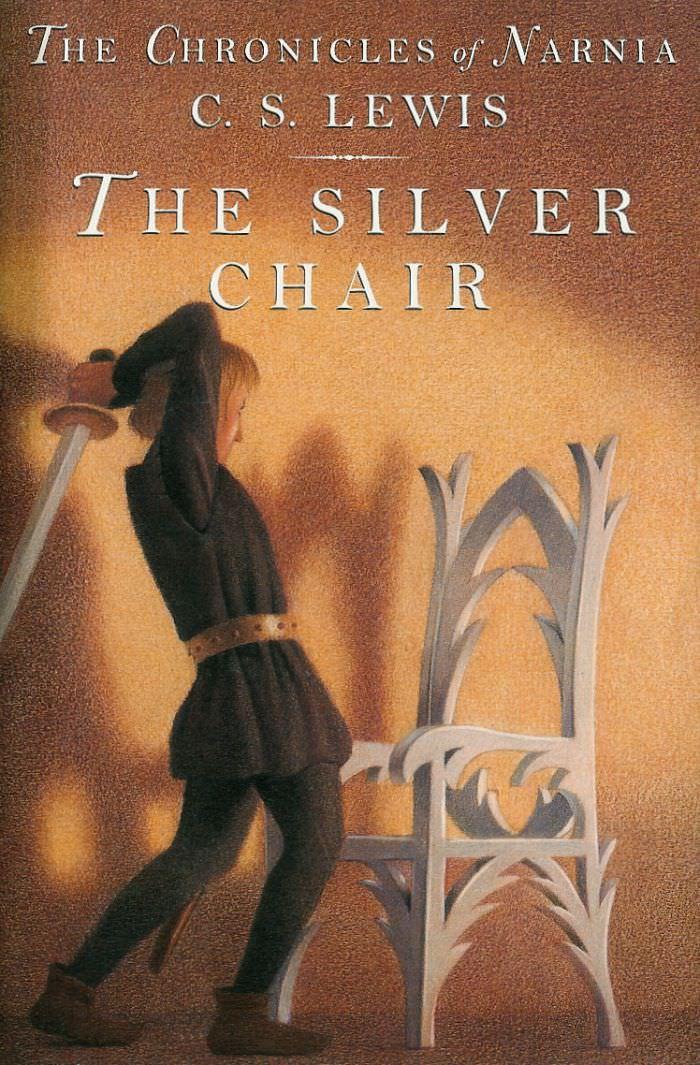
“The Silver Chair” by C.S. Lewis follows the adventures of Eustace Scrubb and his classmate Jill Pole in the magical land of Narnia. After calling for help during a cruel taunting at school, Jill finds herself transported to Aslan’s country. There she meets Eustace, returned from earlier quests in Narnia. Aslan charges them with finding Prince Rilian, the lost heir to the Narnian throne, who vanished years ago.
Their first clue is a ransom note chained to Aslan’s tree. It hints that Rilian lies in the underworld of the giants beyond the north. Aslan gives them four signs to guide their search. Before they depart, he places a silver chair around Jill’s waist: proof of his counsel and a lifeline should she stray or falter.
Under the guidance of Puddleglum, a gloomy but loyal marshwiggle, the three set off northward. They journey through misty marshes and dark forests, always on guard for giants. Puddleglum’s bleak outlook clashes with Jill’s impatience and Eustace’s cautious optimism. Yet his stubborn bravery often saves them.
After days of travel, they reach the country of cold giants. The hills loom like snowy teeth and the wind shrieks through hollow stones. Jill nearly freezes, but Puddleglum’s firekindling skills pull them through. They skulk past giant hovels and overhear scraps of giant talk, piecing together that Rilian might lie underground rather than imprisoned in a high tower.
At last they encounter the River of the Sun, its waters glowing gold beneath a pale sky. They build a raft and drift downstream toward stony stretches. Eustace works the pole while Jill watches for landmarks. By night they camp under broken columns covered in runes, remnants of an older, gentler civilization.
Soon the river curves into a yawning cave mouth. Its walls glitter with veins of ore, and chilled air whispers of hidden depths. Gathering courage, they push the raft inside. Water drips onto slick stones and echoes rebound endlessly. Only the cry of a lonely bird breaks the stillness.
Far ahead they spot faint torchlight. As they approach, the cave opens into a vast hall hung with iron chains. There, beneath an iron chair bolted to the floor, sits a human figure bound hand and foot. The lamplight reveals the prince’s face—gaunt, hollow-eyed, silently begging.
At that moment, a sudden shout echoes from a dais across the hall. A woman in regal robes steps forward, her voice sweet and commanding. She calls herself the Lady of the Green Kirtle and claims to be Rilian’s protector. She urges him to return to her side. Under her spell, the prince shivers and shakes his head no.
Puddleglum urges haste. They lower Jill carefully from the silver chair, then free Eustace and the prince. Jill tastes sudden fear as flickering shadows rise behind them—giant spiders and wraithlike forms summoned by the witch. Steel meets magic in the gloom as Eustace brandishes a sword he’d salvaged along the way.
In the struggle, the silver chair glows with a strange light. For a moment, Jill feels Aslan’s presence guiding her hand. Puddleglum wedges a torch into the witch’s robe and sets her dress alight. With a shriek she vanishes in a swirl of green smoke, her magic undone.
The cave trembles and rocks begin to fall. Eustace scoops up Rilian, and the three dash back toward the raft. Jill instructs Puddleglum to steer while she and Eustace push. They slip through a collapsing arch just as stones crash into the underground river behind them.
Aboveground, dawn is brushing the sky rosy. Rilian, still weak, leans on Jill’s shoulder. He weeps for the years lost under the witch’s spell. Puddleglum makes tea by a small fire, his face streaked with soot. None of them mention how close they came to despair.
They journey south, carrying Rilian home to Narnia’s capital, Cair Paravel. Along the way, the prince recounts how the Lady trapped him to use his voice for evil songs of enchantment. He praises Jill’s courage and Eustace’s quick thinking. Puddleglum simply grumbles that he’d warned them all along.
At Cair Paravel, the king and queen greet Rilian’s return with tears and celebration. Aslan himself appears in a burst of light, praising the rescuers. He confirms that Eustace and Jill have grown in courage and faith. Their old reluctance is gone.
With Rilian seated on the throne, peace returns to Narnia. Jill and Eustace say heartfelt goodbyes, Aslan’s gift of the silver chair left behind as proof of their triumph. They step once more through a door in the hill and awake at their school, forever changed by their journey under Narnian skies.
Detailed Summary
Plot Summary
1. The Schoolboys’ Quest Begins
Eustace Scrubb and Jill Pole stumble into Narnia through a mysterious door in Professor Kirke’s house. They arrive in a dark, endless land, bewildered by its gloom. A tall, solemn maid greets them and presses them to follow. They soon learn that the land lies under an enchantment, and their task is to lift it.
Apprehension shadows their steps as they meet Puddleglum, a marsh-wiggle with a gloomy yet reliable nature. He warns them that strange forces seek to mislead them. Jill, eager to prove herself brave, volunteers to face whatever dangers lie ahead. Eustace, still insecure after his dragon transformation, stays close to Puddleglum for courage.
The three set out, guided only by scant instructions: find Prince Rilian and bring him home. They traverse marshes that cling at their boots and dark woods that whisper doubts. With each step, Jill wrestles with fear, while Eustace fights his own inner dragon memories.
2. The Enchanted Underworld
Their journey leads them into a deep pit where cold wind moans like a spirit in pain. They tumble down into a vast underworld filled with strange architecture and crooked stairways. Unseen watchers flit behind pillars and arches.
They discover a river that threads through colossal caverns. The water glows dimly, revealing statues of warriors frozen in battle. Puddleglum insists they press on, convinced the prince awaits their rescue.
As they descend further, the air grows heavy with enchantment. Jill hears mocking laughter, as if the walls themselves mock her bravery. She steels herself, repeating the professor’s words about faith and truth. Eustace, recalling Aslan’s lessons, resolves not to shrink from danger again.
3. Meeting Prince Rilian
At the heart of the underworld stands a silver chair, enthroned upon a pedestal of black stone. Bound to it sits a man whose grace remains despite his wounds. His eyes gleam with something both regal and distant.
Jill steps forward. She calls his name, but the man, Rilian, answers only with polite confusion. He insists he belongs to the Lady of the Green Kirtle, though his ring glints with Rilian’s crest. Puddleglum senses a spell at work and urges caution.
The intruders argue with Rilian, offering proof of his identity through the ring his mother gave him. But the prince cannot break free of enchantment. Puddleglum cups his hand over a tiny ember and defiantly stamps it out in the river, risking all. The cold water hisses, and the prince blinks, memories flickering.
4. Shattering the Green Witch’s Spell
Suddenly the cavern trembles. The Lady of the Green Kirtle appears in a swirl of emerald mist, her voice honeyed yet cruel. She attacks their resolve, whispering lies about the world above. Eustace nearly succumbs to terror until Jill takes his hand and reminds him of who he truly is.
Puddleglum steps forward. He denounces the witch’s magic in a loud, fiery speech that rings off the cavern walls. The cave begins to crack as he treads on the enchanted fire, refusing to believe her illusions. The Lady’s form wavers.
With one final roar, Puddleglum splashes the ember waters over the Witch’s chair. Light floods in as stones shatter. The witch screams and dissolves into nothing. Freed at last, Rilian rises from the silver chair, dazed but alive.
5. Return Through the Underland
Triumphant yet weary, the four make their climb back toward daylight. The tunnels seem less oppressive now that the enchantment lifts. Moss and faint flowers appear along the walls.
Rilian thanks his rescuers with quiet dignity. He shares tales of the Lady’s plot to seize Narnia through his obedience. Jill feels pride swell in her chest at having saved a prince. Eustace believes again in the magic of friendship and courage.
Their ascent seems shorter until they emerge into a moonlit forest. Stars glitter through black branches. They laugh with relief and lean on each other’s shoulders. The quest feels complete, yet a final test awaits them in Narnia’s hall of state.
6. Restoration of the True King
They reach Cair Paravel’s majestic hall, where joyous music greets them. King Caspian, now aged and wise, weeps at the sight of his long-lost son. Their reunion crowns years of longing and hope.
The court celebrates with songs and feasts. Jill and Eustace bask in the warmth of acceptance. Caspian knights Puddleglum for his valiant heart. Rilian tells of his mother’s love and betrayal, vowing never to forget their sacrifice.
As dawn breaks, Jill and Eustace find the door back to England. They bid farewell to friends both new and old. Stepping into the Professor’s hall, they clutch each other’s hands. They return changed, bearing proof that faith and loyalty shine even in deepest darkness.
Characters
1. Jill Pole (Protagonist)
“I’ll not be frightened any more,” said Jill. “I can’t bear to be superstitious.”
Jill arrives in Narnia trembling with fear but determined to prove her worth. She often stumbles into dangers, yet her courage grows with each trial. She learns to trust in Aslan’s guidance, relying on her quick wits to lead her friends through the underworld.
Her loyalty shines brightest when she steadies Eustace’s nerves and stands firm against the Green Witch’s enchantments. Jill’s journey shows how facing one’s fears—step by step—turns a frightened schoolgirl into a brave heroine. Through her eyes, we learn that faith and friendship can break any spell.
2. Eustace Scrubb (Key Supporting Character)
“No matter what you say, I won’t change my mind again!”
Eustace arrives skeptical of Narnia’s wonders, haunted by his past as a dragon. His cynicism nearly jeopardizes their quest when he freezes at the witch’s illusions. Yet, he recalls Aslan’s transformation lesson and finds new courage.
By the end, Eustace’s loyalty stands firm. He faces fear head-on and helps shatter enchantments. His growth from coward to defender illustrates how past mistakes can fuel future bravery. Eustace embodies redemption and the power of a steadfast heart.
3. Puddleglum (Ally and Guide)
“Supposing we’re in Aslan’s country after all,” said Puddleglum. “Supposing the witch has lied. Suppose we’re wrong?”
Puddleglum, the marsh-wiggle, carries a gloom that borders on comic. He anticipates every calamity and complains at every step. Yet his steadfast sense of duty anchors the quest.
When enchantment threatens, Puddleglum delivers a fierce speech that shatters magic. His loyalty to Narnia and Hesitation only underlines his courage. In his own mossy fashion, he teaches that resolve sometimes comes dressed in skepticism.
4. Prince Rilian (Rescued Heir)
“I remember nothing,” said Rilian. “Yet there’s a touch of something true in your faces.”
Rilian endures years bound to the Silver Chair beneath a false spell. His regal nobility peeks through the enchantment’s haze. When his ring returns his memory, he fights the witch’s voice with desperate strength.
Post-rescue, Rilian’s gratitude blends with humility. He vows to rule wisely, aware how easily power can deceive. His survival and return restore hope to Narnia and reinforce the theme of rightful leadership.
5. The Lady of the Green Kirtle (Antagonist)
“Surely a few harmless words can do no harm?” she whispered.
She weaves illusions so subtle they blur reality. Her silver voice offers safety but leads souls deeper into bondage. She enslaves Rilian through kindness turned cruel.
Her final confrontation with Puddleglum reveals her vulnerability. When faced with firm truth and courage, her magic fractures. The Lady embodies temptation: beauty that blinds and promises that chain.
Themes Analysis
1. Courage Against Despair
The story shows courage not as absence of fear, but as action despite it. Jill trembles yet steps forward into darkness. Puddleglum moans about every hazard, yet he persists. Their bravery comes in the clenching of fists and the steadying of hearts.
This theme resonates beyond fantasy. It reminds readers that hope can flicker in the bleakest tunnels. Each hero faces inner doubts but chooses to press on. Their example whispers: fear may linger, but it need not rule us.
2. Power of Truth
Enchantments thrive on lies and illusions. The Silver Chair traps Rilian with gentle deceit, convincing him of a false reality. Only when Puddleglum rejects sweet falsehoods does the spell falter.
Truth emerges as a living force that shatters illusions. The narrative suggests that reality, though sometimes harsh, sets us free. By clinging to symbols of authenticity—like Rilian’s ring and Jill’s courage—characters reclaim their destiny.
3. Redemption and Transformation
Eustace’s arc echoes a phoenix rising from guilt. Once dragon, he learns that mistakes can fuel growth. His bravery blossoms under Aslan’s guidance and Jill’s friendship.
Transformation in Narnia signifies deeper change of heart. It shows that redemption lies in owning one’s faults and choosing better paths. Through trials, each character sheds past failures, emerging stronger and wiser.
Key Plot Devices
1. The Silver Chair
The Chair serves as the literal and metaphorical bond that holds Rilian captive. Its ornate beauty hides the iron will of enchantment. Reclining in it saps his will and erases his identity.
Once destroyed, the Chair frees not just a prince, but the faith of Narnia’s people. It stands for any force that chains truth. Its shattering illustrates how a single act of defiance can break a system built on lies.
2. Rilian’s Ring
The ring becomes a beacon of remembrance. Its familiar weight on his finger returns lost memories. It symbolizes the power objects can hold in anchoring identity.
When Jill and Eustace present it, they offer Rilian a lifeline. The ring’s true magic arises from its role in rekindling hope. It reminds readers that small tokens can kindle great courage.
3. The Witch’s Enchantment
The Lady of the Green Kirtle uses gentle persuasion to mask her cruelty. She appears as a benevolent guide, lulling her victims into complacency. This enchantment explores how subtle lies corrode the soul.
Its undoing depends on skepticism turned bold. Puddleglum’s defiant step into extinguishing the fire reveals the power of questioning authority. The undoing of enchantment teaches that truth often needs a single act of courage to prevail.







