
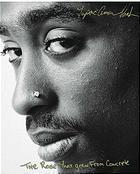
Summary
“The Rose That Grew from Concrete” by Tupac Shakur stands as a poignant anthology of poems that trace the poet’s journey from hardship to hope. In these pages, Tupac reveals a raw sincerity that pulses with his experiences growing up amid poverty, violence, and unyielding streets. He writes not just to recount events but to express the deepest yearnings of a young man who dared to flourish where no one expected a flower to grow.
Early poems in the collection capture the grit of urban life. Tupac describes broken glass, endless nights of sirens, and the constant tension that hangs in the air like smog. He doesn’t flinch from detailing fear, yet he illuminates strength in vulnerability. In “Outlaw,” for example, he admits his faults—anger, impatience, rebellion—but he also claims his right to redemption.
Tupac often turns inward, exploring how pain shapes identity. In the poem “Dreams,” he lays bare his longing for a brighter future, despite the odds stacked against him. His words reveal that hope can be both fragile and defiant. He writes of dreams as seeds planted deep in hardened earth, seeking light.
A sense of love and loss threads through many pieces. He writes to a lover whose name he never speaks directly, yet the tenderness is unmistakable. In one stanza, he confesses, “I loved you like a mother, like a friend,” revealing layers of devotion that transcend time and place. The poems pulse with warmth even as they acknowledge heartbreak.
Tupac also addresses broader social issues. He rails against racism and injustice with lines that cut like broken glass. In “Black,” he writes of skin color as both a badge of pride and a barrier in a world that refuses to see him whole. His words urge readers to confront prejudice, even when it feels impossible.
Violence and mortality appear throughout the collection, but Tupac rarely romanticizes them. Instead, he lays them bare. In “Death Around the Corner,” he describes a friend gunned down in an alley, the echo of gunfire still ringing in his mind. The poem ends not with vengeance but with grief—an acknowledgment that loss changes everything.
Faith, too, finds space in his verses. He alludes to a higher power without naming it, suggesting a quiet trust that sustains him amid chaos. A short poem titled “God” nods to prayer as both comfort and question: can faith soothe an unsteady heart? Tupac seems unsure, yet he keeps praying.
Motherhood emerges as another key theme. In poems dedicated to his mother, Afeni Shakur, Tupac honors her sacrifices and her strength. He recalls nights when she worked two jobs to keep food on their table, and he marvels that she never let go of her dignity. Those lines read like a tribute and a promise to carry her memory forward.
Friendship appears in gentler tones. He praises those who stood by him when the world turned away. A poem called “Homies” thanks friends who shared laughter and tears, who lent him money and encouraged his art. These pages pulse with loyalty—the kind that feels rare and precious.
Romantic love surfaces again with surprising playfulness. In “The Fault in Our Stars,” not the John Green story but Tupac’s own creation, he likens his heart to a star fighting to stay alight. He writes of kissing someone beneath a flickering streetlamp, finding magic in a moment strangers might dismiss. His language sparkles with youth.
Yet Tupac never forgets the struggle. He circles back to the idea of growth amid adversity—his “rose” rising through concrete cracks. In the title poem, he celebrates resilience: a fragile blossom that refuses defeat. That image becomes the collection’s guiding symbol, reminding readers that beauty often springs from hardship.
Several poems adopt a confessional tone, as if he’s talking to himself in the mirror. He admits to fear, to moments when he nearly gave up. But he also vows to keep writing, keep fighting, keep loving. Those confessions feel urgent, like a lifeline thrown across a widening chasm.
A brief but striking poem, “When I Have a Daughter,” reveals Tupac’s hopes for a future generation. He pledges to teach her self-worth and courage, warning her of roads he couldn’t avoid. It’s tender, protective, and it underscores his desire for change to come through his own bloodline.
The collection ends without neat closure. Instead, it leaves readers with a sense of unfinished business and open possibility. Tupac’s final lines speak of tomorrow as a promise rather than a guarantee: “I’ll keep rising” they whisper. And even after the book closes, that promise lingers, urging us to see the rose that still grows in concrete all around us.
Across these poems, Tupac Shakur emerges not just as a rapper or cultural icon but as a sensitive observer of life’s most challenging moments. He blends toughness with vulnerability, anger with hope, and despair with faith. In doing so, he invites readers to witness the miracle of growth in the hardest places—and to believe that beauty can thrive, even when its surroundings say otherwise.
Detailed Summary
Plot Summary
1. Nature of the Collection
“The Rose That Grew from Concrete” isn’t a novel with a traditional plot. Instead, it’s a collection of poems that maps the inner life of its author, Tupac Shakur. In these verses, we move through snapshots of struggle, hope, pain, and resilience. Each poem functions like a vignette—a brief scene—painting a moment in time.
Shakur uses simple yet powerful language to describe growing up in harsh circumstances. He often returns to the central image—the rose growing from concrete—as a symbol of beauty and strength rising despite hardship. That image threads through many of the poems, providing unity to the collection.
Though there’s no linear story, the poems together create an emotional arc. We feel the progression from vulnerability to defiance, from self-doubt to self-belief. By the end, the reader appreciates how a delicate rose can crack concrete, just as an individual can break through barriers.
2. Early Struggle and Self-Doubt
Several early poems dwell on insecurity and fear. The speaker questions his worth. He wonders whether he belongs or will wither under pressure. Lines about “broken wings” or “empty streets” reflect a sense of abandonment and confusion. These poems set the emotional ground for the rest of the collection.
In one piece, the speaker addresses a silent adversary—poverty, prejudice, or self-criticism—asking, “Why do you grow so tall inside my mind?” This confrontation with inner doubt fuels the desire to break free. Though short, these poems resonate: they show how doubt can drive you toward strength when you refuse to stay small.
3. Defiance and Determination
Midway through the book, the voice shifts from uncertainty to resolve. The speaker declares he will rise despite the odds. He confronts “closed doors” and “cold stares,” refusing to be tamed. These poems feature sharper rhythms and tougher imagery—thorns, blades of steel, unyielding walls.
He writes, “I’m a seed with roots so deep they couldn’t stop my bloom.” That line captures his newfound defiance. The seed image reworks the rose metaphor—no longer framed as delicate, but as a force that topples concrete. By the end of this section, we feel the speaker’s pulse quicken. He’s no longer asking permission to grow.
4. Love, Loss, and Longing
Interspersed among the anthems of strength are tender reflections on love and loss. The speaker remembers a vanished romance, describing it as both balm and blade. He recalls late-night talks in a friend’s car and empty bedsheets that still smell like her perfume.
In these poems, the rose becomes a metaphor for lost love too—something beautiful that fell between the cracks. Lines such as “Your memory blooms in corners that time forgot” reveal how love remains alive even after parting. These quieter moments add depth, reminding us that toughness coexists with vulnerability.
5. Social Commentary and Justice
Tupac often brings wider social issues into view. He addresses systemic racism, police violence, and economic injustice. In jagged lines he rails against “blue uniforms” and “paper walls built by men in suits.” The concrete isn’t only literal; it’s the urban landscape shaped by neglect and bias.
Yet even when he speaks of injustice, the rose motif reappears—honoring those who resist oppression. He writes, “See the petals in their fists? They’re picking chains apart.” These poems blend personal and political, suggesting that individual growth and social change go hand in hand.
6. Hope and Transcendence
Toward the close of the collection, the tone grows more meditative. The speaker reflects on mortality and legacy. He wonders what remains after we’re gone. He imagines his poems as seeds cast upon the wind, taking root in other lives.
The final poems return to the rose image with renewed perspective. The speaker accepts that concrete will crack, but he also knows cracks heal over time. He writes, “One day the city will remember my bloom.” These lines leave the reader with a sense of enduring hope—that beauty and truth can outlast even the hardest surfaces.
Characters
Themes Analysis
1. Resilience in Adversity
At the heart of “The Rose That Grew from Concrete” lies resilience. Tupac’s poems explore how people find strength where none seems possible. The repeated rose-breaking-through-concrete image underscores this message. It shows that beauty can emerge from despair.
The poems depict personal struggles—fear, doubt, loss—but they never linger in helplessness. Instead, the speaker confronts obstacles head-on. This theme resonates deeply because it reflects real urban hardships and the universal human drive to survive and thrive.
2. Intersection of Personal and Political
Tupac blends intimate emotion with social critique. Poems about love and identity sit alongside poems about racism and poverty. This interplay suggests that personal freedom and social justice are intertwined. To grow as an individual, one must also challenge structures that constrain entire communities.
By weaving the political into the personal, the collection feels urgent and alive. It reminds readers that no one blossoms in isolation—that every rose fights not only concrete but the forces shaping that concrete.
3. Legacy and Transcendence
Toward the end of the book, the poet turns to questions of mortality and what endures. He imagines his work as seeds scattered across time. This theme of legacy gives the collection a reflective dimension. It asks: How do we live on in others’ hearts?
The final poems offer solace. They suggest that even if one life is brief, the beauty it creates can ripple outward. The rose cracks concrete today, but tomorrow there may be a garden.
Key Plot Devices
1. The Rose Metaphor
The central metaphor of the rose growing from concrete drives the collection’s unity. It appears in varied forms—from delicate petals pushing through cracks to warrior roses with thorns like blades. Each variation deepens our understanding of resilience.
This device shapes readers’ expectations. When we see a new poem, we ask how it reframes the rose image. That question creates cohesion. It also reminds us that hardship and beauty coexist, and that growth often happens in unexpected places.
2. Juxtaposition of Soft and Harsh Imagery
Tupac consistently contrasts delicate elements—petals, whispers, gentle light—with harsh elements—cracked pavement, broken glass, steel bars. This pattern heightens emotional tension. It keeps us alert, shifting between tenderness and toughness.
By placing softness alongside violence, the poems capture the complexities of real life. Joy and pain mingle. Hope and despair coexist. This device enriches the text, making every line feel charged with possibility.
3. Second-Person Address
Several poems speak directly to “you”—the reader or a loved one. This device creates intimacy. It feels as if Tupac is confiding in us. We become participants rather than observers.
The second-person voice also universalizes the message. When he writes, “You are the seed,” it applies to every reader. That choice invites personal reflection. It makes the themes of resilience and growth feel immediate and relevant.







