
Summary
Milo, the protagonist of The Phantom Tollbooth by Norton Juster, starts as a boy who finds everything tedious and dull. He scoffs at school and yawns through conversations, convinced there’s nothing worth his time. One afternoon, he discovers a peculiar tollbooth in his room, complete with a map and an old car. Intrigued despite himself, he pays the toll and turns the key. Suddenly, he speeds off toward an adventure he never expected.
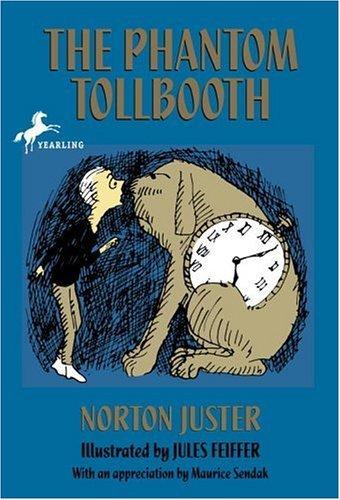
He arrives in the Lands Beyond and quickly realizes this place obeys rules unlike any he’s known. Before long, he meets Tock, a watchdog with a giant clock on his side who ’s always on time. Tock explains that wasted time can cost more than you think. Milo nods, puzzled, but follows the loyal companion without hesitation.
Soon thereafter, they encounter the Humbug, a pompous insect who exaggerates every story and insists he knows all the shortcuts. The three travel to Dictionopolis, a kingdom where words are grown on trees and sold in markets. Here, citizens literally pick their phrases from groves of adjectives and nouns. Milo marvels at how language itself takes shape before your eyes.
In the city’s bustling Word Market, Milo and Tock attend a grand Spelling Bee competition. Contestants race up a podium to spell out words so complex they seem made up. Meanwhile, the Humbug haggles with bakers over a loaf of literal alphabet bread. Milo wanders through stalls stacked high with word baskets, each inviting him to taste their meanings.
They leave Dictionopolis after learning that someone must restore Order in the Kingdom of Wisdom. Their next goal lies in Digitopolis, a land devoted to numbers instead of words. To reach it, they must cross the Mountains of Ignorance, a range filled with treacherous paths and dark caves. Humbug grumbles about how hard it all is.
On the way, they enter the Valley of Sound, where the noise is so loud that thoughts get drowned out. They press onward and soon spot the Castle of Conclusions looming ahead. Inside, Lethargarians sleep on piles of postponed tasks and broken alarms. Milo wakes one by one with firm stomps, convincing them to rise up and leave excuses behind.
Further along, they meet the Whether Man, who stands at a crossroads, debating whether to go left or right. “I’ll decide between two more days,” he tells them after hours of pondering. Frustrated at first, Milo realizes some choices simply require action. Tock nods in agreement, tapping his foot impatiently.
After crossing a narrow bridge, they stumble into the Valley of Unfairness, where demons of cynicism throw insults down at travelers below. The trio ducks behind giant rocks until the insults fade. Milo steels himself and strides forward, refusing to listen to negativity.
At last, they reach Digitopolis, a city where numbers glow like jewels and mathematicians celebrate in massive halls. King Azaz the Unabridged greets them at the gates, insisting that knowledge must balance words and numbers equally. He explains that Princesses Rhyme and Reason, once advisors to both kingdoms, were banished to the Castle in the Air.
The friends set off toward the castle perched on a floating island high above the ground. They board a hot air balloon under the supervision of the thin and sinister Gelatinous Giant, who mutters about how good it is to look down on others. Milo clenches his fists as the balloon rises, determined to reach the top.
Once they arrive, they discover the castle almost empty except for the demons of ignorance who guard every corridor. The air feels heavy with fear and doubt. Milo confronts each demon—expectation, fear, and discouragement—by refusing to believe they own him. Slowly, the locks on the princesses’ door begin to click open.
Behind a tall elm-door, they find Rhyme and Reason, weary but hopeful. The princesses explain how banished wisdom fractured the lands into confusion. Milo offers his hand and promises to guide both kingdoms back to harmony. Their relief echoes through the empty halls.
Returning home through the Phantom Tollbooth proves swift. The princesses resume their roles as royal advisors, and King Azaz and the Mathemagician form an alliance to rule words and numbers in balance. Tock guards the tollbooth entrance, ensuring no time is wasted again.
Back in his room, Milo steps out of the car changed and brimming with curiosity. He thanks Tock and bids him farewell, knowing he can revisit the Lands Beyond anytime. His world at last seems full of purpose, each moment worth exploring.
From that day on, Milo tackles lessons and conversations with eager interest. He never yawns through the ordinary again. Instead, he remembers that every moment holds its own small adventure and every question demands an answer worth finding.
Detailed Summary
Plot Summary
1. Milo’s Dull Beginnings
Milo sits on his windowsill feeling utterly bored. He counts his toys, practices multiplication tables, and even times how long it takes grains of rice to fall through an hourglass. Nothing seems to stir his interest, and he yawns through lessons he simply can’t wait to finish.
One afternoon, a peculiar package arrives with a tollbooth and a map. Milo, curious despite himself, assembles the contraption in his room. He drives through the painted archway in a toy car, expecting little more than another diversion.
Suddenly, Milo finds himself in a sunlit country where words and numbers hold power. He realizes this trip may actually be worth his attention. And so his adventure begins—a journey that turns boredom into discovery.
2. The Doldrums and Rescue of Tock
Milo drives into a gray realm called the Doldrums, where thinking slows down and nothing happens. He becomes lethargic and struggles to move. At the edge of this listless land, he meets Tock, a literal watchdog with a clock on his side.
Tock explains he guards people against wasting time. The two join forces to escape before the Doldrums consume them. Together they dash through the region, spurred on by sudden bursts of laughter and memory of their quest.
They reach a border out of the Doldrums as words tumble around. Roused by each other’s company, they return to the highway with renewed purpose. The rescue cements their friendship and proves that time is precious.
3. Dictionopolis and the Rhyme of Words
Milo and Tock arrive in Dictionopolis, a city dedicated to words. Here, the Letter Market bustles with vendors selling precious syllables. Duke of Words hoards them in his palace vault, assigning value to each utterance.
Milo tastes a word, then tries to grasp its meaning. He watches debates swirl around whether simple words are worth more than big ones. Soon he befriends Princesses of Sound and Silly Words who help him see that every word matters.
But all is not well: trouble brews between the Word Market and the neighboring number realm. Milo learns he must retrieve the stolen kingdom’s number key. He leaves Dictionopolis with new insight into language’s power.
4. Digitopolis and the Island of Numbers
Crossing the River of Reality, Milo reaches Digitopolis, where numbers glow. Here King Azaz’s twin brother Humbug tries to outshine him. The citizens debate whether zero is a number or nothing at all.
Milo meets the Mathemagician in a tower of numerals. She shows him how numbers can be playful—like a game—and profound, like the bases of logic. She entrusts him with the quest to find Rhyme and Reason, missing princesses who keep both realms in balance.
Armed with knowledge and the number key, Milo sets out with Tock to rescue princesses who represent order in words and numbers alike.
5. Rescue in the Mountains of Ignorance
Guided by the map, Milo and Tock journey to the Mountains of Ignorance, where the demons of Insincerity and Laziness lurk. Mirages of easy answers tempt them off the path.
They discover Rhyme and Reason imprisoned in a dark fortress. The demons try to convince Milo to give up the key. He resists, recalling lessons learned in both realms—time is fleeting, words and numbers must harmonize.
With clever riddles and firm resolve, Milo frees the princesses. Their release banishes the demons. Peace returns to Dictionopolis and Digitopolis, thanks to his courage.
6. Homeward Toll and New Perspective
Rhyme and Reason guide Milo and Tock back to the tollbooth. They thank him for his bravery, reminding him that curiosity unlocks wonder. Milo realizes his journey reshaped his view of everyday life.
He steps back through the archway, returning to his room in a heartbeat. The tollbooth vanishes, but his map remains as a reminder. Now, the world of numbers and words seems alive with possibility.
Milo greets his family at dinner with new questions and eager words. His boredom has dissolved into a zest for exploration. He knows every moment holds potential for discovery.
Characters
1. Milo (Protagonist)
“So many things to do, so little time,” thought Milo with sudden excitement.
Milo begins as a boy so bored that he can’t find a reason to smile. He sees life as dull and routine. When he finds the tollbooth, he hesitates but then grows curious enough to explore beyond his room.
Throughout his journey, Milo evolves from passive observer to active problem-solver. He learns to value time, words, and numbers. By rescuing Rhyme and Reason, he gains confidence and a fresh appetite for learning.
2. Tock (Ally and Guide)
“No one wastes Time who uses it.”
Tock is a large dog whose body houses a clock. He patrols the Doldrums, snapping at lazy thoughts. Never late, he embodies punctuality and vigilance.
He doesn’t speak much, but his loyalty speaks volumes. Tock nudges Milo forward when doubts arise. His steady presence reminds Milo that every second counts.
3. Duke of Words (Antagonistic Official in Dictionopolis)
“A word’s worth depends on its scarcity.”
The Duke of Words manages the Word Market, placing high value on rare words. He speaks royally and judges language by its rarity rather than its meaning.
He locks simple words away, arguing they’re beneath notice. Milo challenges his system by tasting words, demonstrating that even small terms carry power. The Duke learns that words need freedom to flourish.
4. Mathemagician (Ally and Mentor in Digitopolis)
“Numbers can dance if you give them space.”
The Mathemagician presides over numbers with authority and warmth. She shows Milo that math can be playful and creative. Her knowledge flows from algebra to geometry with equal grace.
She tasks Milo with restoring harmony between words and numbers. By trusting him with the number key, she affirms his growing insight into balance and reason.
5. Rhyme and Reason (Twin Princesses and Symbols of Balance)
“Without us, words and numbers lose their song.”
Rhyme and Reason govern harmony between Dictionopolis and Digitopolis. Rhyme keeps language joyful, while Reason grounds it in logic. Their absence plunges both realms into chaos.
Once freed by Milo, they restore order. They remind all inhabitants that imagination and logic work best together. Their reunion seals Milo’s achievement and underscores unity.
Themes Analysis
1. Value of Time
The story underscores that time is not infinite. Milo’s initial boredom shows how moments slip by unnoticed when we take them for granted. Tock’s vigilant watch reminds readers to respect each second.
When Milo learns to use time wisely—escaping the Doldrums, rescuing princesses—he demonstrates that purpose fuels every moment. The lesson resonates: life gains richness when we fill our time with curiosity and action.
2. Power of Words and Numbers
Just as words can heal or harm, numbers can reveal patterns or hide truths. Dictionopolis and Digitopolis represent these dual aspects. Duke of Words’s hoarding highlights misuse, while the Mathemagician’s lessons show constructive play.
Milo’s journey teaches that language and math thrive on balance. When Rhyme and Reason return, they unify the realms, illustrating that communication and logic must coexist for meaningful understanding.
3. Curiosity and Learning
Milo starts indifferent but grows eager to learn. His daily life lacked wonder until he embraced the unknown. Each encounter—market debates, numerical puzzles, demon battles—fuels his inquisitiveness.
The tale celebrates learning as an adventure. It insists that open-minded exploration transforms boredom into engagement. Readers see that asking questions and daring to explore unlock hidden doors in everyday life.
Key Plot Devices
1. The Phantom Tollbooth
The tollbooth serves as the portal between mundane reality and a realm of imagination. Its phantom nature—visible yet tangible—signals that wonder lies just beyond perceived limits.
By driving through it, Milo crosses a threshold into self-discovery. The tollbooth reminds readers that stepping outside comfort zones ignites growth and revelation.
2. Tock’s Clock
Tock’s clock-heart physically embodies the theme of time’s value. It paces the story, warning against idleness. His ticks echo accountability, urging Milo to act rather than drift.
As Tock and Milo journey, the clock underscores each decision’s weight. It teaches that mindful pacing keeps adventures purposeful.
3. Rhyme and Reason
The twin princesses personify harmony between creativity and logic. Their capture triggers imbalance in both word and number worlds. Their absence causes conflict, while their rescue restores unity.
They function as both goal and reward. By seeking them, Milo learns respect for language and math equally. Their role cements the narrative’s call for balanced thinking.







