
Summary
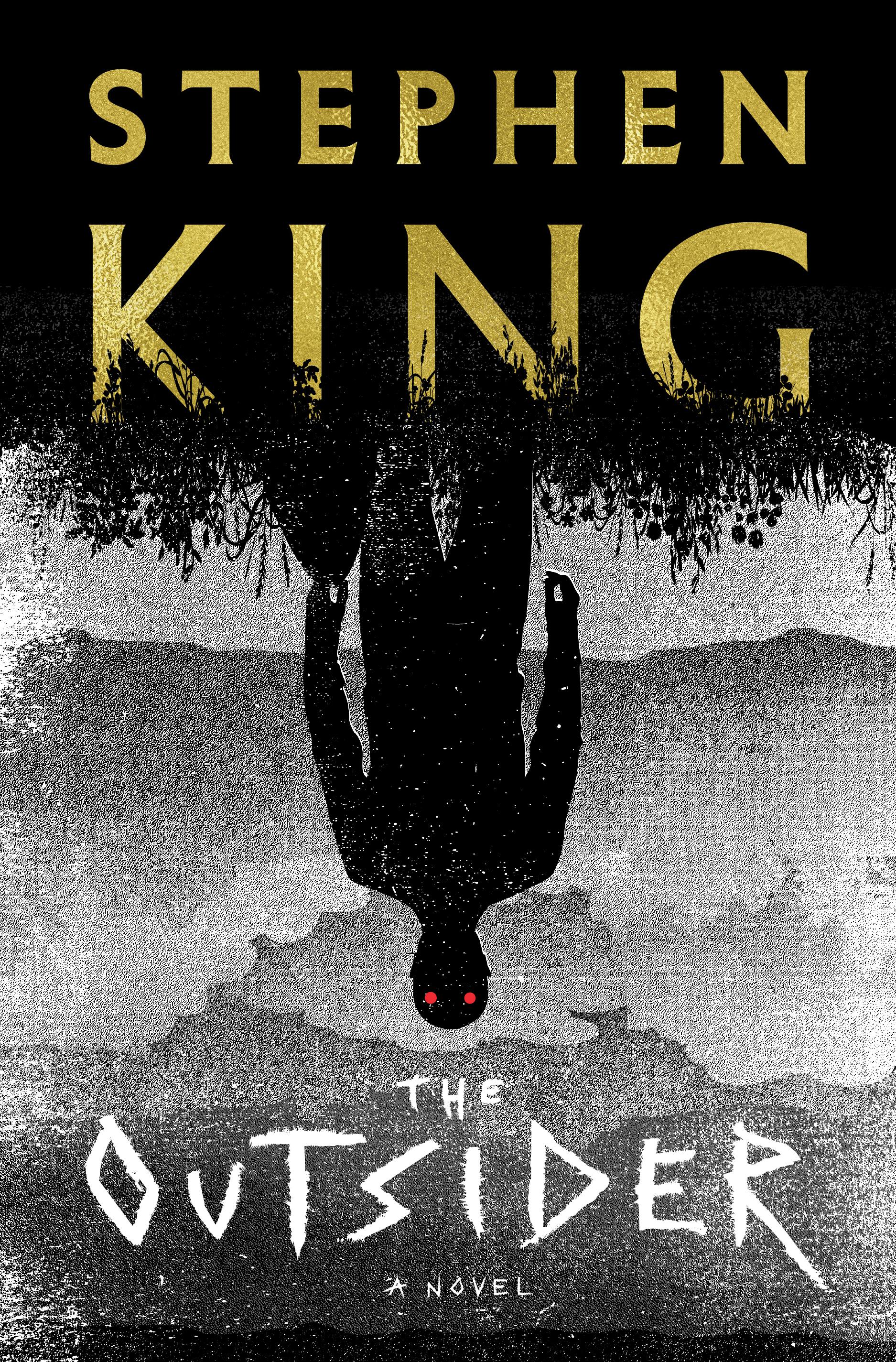
In The Outsider, Stephen King plunges readers into the heart of a brutal murder in Flint City, where an eleven-year-old boy is found savagely killed in a public park. Detective Ralph Anderson and his team race to gather evidence, only to be stunned when it points squarely at a beloved Little League coach, Terry Maitland. Terry’s public persona and solid alibi clash with DNA and videotaped footage, dragging everyone into a stark question: how could a good man commit such a crime?
Ralph’s demand for answers intensifies when the body of the victim shows signs of gruesome mutilation beyond human comprehension. The medical examiner’s report hints at something primal and horrific. Meanwhile, the community reels in shock, torn between supporting Terry and fearing the monster he’s accused of being. Newspapers and social media fan the flames, pushing the town further into chaos.
At the center of it all, Terry Maitland stands before a packed courtroom, proclaiming his innocence with characteristic calm and kindness. He insists he was with children at a birthday party during the murder. His lawyer presents an unshakable alibi, and multiple witnesses confirm his whereabouts. Ralph Anderson, doubting the evidence, struggles to reconcile Terry’s gentle nature with the crime scene photos.
Then comes the extraordinary twist. After police swarm Terry’s house and haul him off to jail, he mysteriously vanishes from a locked holding cell. Surveillance cameras capture nothing, and the cell door remains closed. Officers find only his clothes neatly folded on the cot. It seems impossible, as though he vanished into thin air.
While local authorities grapple with that mystery, a private investigator named Holly Gibney enters the scene. Holly, introduced in King’s earlier Bill Hodges trilogy, recognizes a pattern she’s seen before: impossible crimes paired with impossible suspects. She suspects something uncanny is at work, something that can replicate a person’s appearance and memories.
Holly consults a true-crime podcaster, a skeptic named Claude Bolton, who helps her gather folklore about shape-shifting entities. They uncover old tales from Poland and Texas about a creature known simply as “the outsider,” a being that feeds on human despair. Holly pieces together how it can absorb any person’s identity, commit atrocity, then slip away into the shadows.
Back in Flint City, Ralph’s frustration boils over. He can’t shake the feeling that an innocent man died behind bars—if only for a few hours—while the real killer walked free. His dedication to truth drives him to reach out to Holly, despite his initial distrust of her unorthodox methods. Together, they form an uneasy alliance.
Holly and Ralph stake out the city library after-hours, believing the creature will strike again. It does, appearing first as a librarian and then transforming into the face of the murdered boy’s coach. In a tense confrontation, Ralph fires his weapon, only to see the creature slip away into the stacks. Books flutter and fall; the lights flicker; eerily, the creature leaves no footprints.
As they close in, Holly devises a plan to lure the creature into a trap using carefully curated evidence and a live audience. Their goal is to draw it out into a public space where it can’t hide. Holly’s blend of folklore research and sheer determination guides them, even as tensions rise between Ralph’s procedural caution and her gut-driven impulses.
In a final showdown at the Elks Lodge, the creature appears as Ralph’s friend, Lawton, and then morphs into the detective himself. Ralph recognizes the impostor at the last second and shoots. The creature dissolves in a burst of yellow light, leaving behind only a smoking, twisted corpse. Investigators later confirm the body holds no human DNA.
With the outsider dead, Flint City begins to heal. Terry Maitland, cleared of all charges, returns to his family, though he carries the scars of a nightmare he can’t fully recall. Ralph apologizes for his harsh treatment, while Holly quietly moves on to her next case, her belief in the supernatural now unshakable.
King ends the novel with an unsettling acknowledgment: the outsider could return anywhere, in any face. Readers are left to wonder how many more shadows hide impossible killers, bodies that vanish, and truths that defy all logic. It’s a chilling reminder that evil can mimic the familiar.
Through sharp dialogue and a pace that never loosens, The Outsider explores the nature of identity, the fallibility of perception, and the dark corners of belief. King balances procedural police work with horror’s uncanny suggestions, weaving a story that haunts long after the last page.
In this hybrid of detective thriller and supernatural horror, King asks readers to trust their eyes even as they question what’s real. The Outsider stands as a modern parable about truth’s slipperiness in an age of instant judgment and viral outrage.
By the novel’s close, Flint City’s residents remain changed. They’ve seen how easily fear can corrupt justice and how fragile the line is between human and monster.
Detailed Summary
Plot Summary
1. Discovery of the Crime Scene
One spring morning, Detective Ralph Anderson arrives at Flint City Park to investigate a shocking murder. Little Frankie Peterson lies in a clearing, his body brutally beaten and tied with wire. The boy’s mother, grief-stricken, stands nearby, her tears mixing with the early sunlight. Ralph notes footprints, tire tracks, and a bloody handprint on a nearby tree.
Forensic teams rush in. They dust for prints and collect hair fibers. The crime scene looks meticulously staged, yet violent. Ralph wonders how anyone could commit such cruelty. He pauses by the body, recalling another case—one that ended badly.
Across town, gossip builds. Neighbors whisper about a local teacher who vanished. Ralph ignores them, focusing on evidence. He feels something dark hovering over the park. No one yet imagines what lurks beyond human cruelty.
2. Arrest of Terry Maitland
Investigators find fingerprints and DNA matching local Little League coach Terry Maitland. Terry, beloved by kids and praised by parents, performs badly in a field interview. Officers cuff him on live TV. Ralph watches the feed in disbelief—Terry was miles away that evening.
In the lockup, Terry protests innocence. He speaks calmly, eyes clear and honest. His wife and children weep in the visitors’ room. The town splits: some demand justice, others demand proof. Ralph wrestles with his gut instinct telling him Terry can’t do this.
Prosecutor Howard Mott prepares a swift indictment. Political pressure mounts. Terry’s bail hearing is set. As news crews swarm city hall, Ralph feels dread. He knows the evidence is damning. Something doesn’t add up.
3. Forensic Anomalies and Alibis
Holly Gibney, private investigator with Finders Keepers, contacts Ralph. She highlights oddities: Terry’s DNA on the victim but also hair matching Terry’s twin DNA pattern at a different site. Surveillance tapes place Terry across town during the murder. Shoe prints at the scene don’t match his shoes, but identical left and right prints appear.
At the lab, Claude Bolton examines the samples. He finds two distinct blood types under the boy’s nails. One is Terry’s; the other unknown. Wristwatch and jewelry match Terry’s description, yet his fingerprints on the wire appear fresh. Ralph reviews phone records proving Terry’s presence at a fundraiser miles away.
Ralph orders more testing. He calls Terry’s trial on hold. The courtroom empties as reporters scramble. Ralph feels both relief and fear: relief that Terry might be innocent, fear of what else could explain the evidence.
4. Emergence of the Doppelgänger
Rumors spread of a look-alike spotted near the park. Witnesses describe a man resembling Terry, wearing a dark hoodie, lurking in shadows. Claude recalls myths of shapeshifters. Holly digs deeper, tracing local folklore of El Cuco, a phantom that takes human form.
Ralph visits Terry’s home and sees a second set of muddy footprints. They lead to the woods behind the house and vanish. He regrets his earlier rigidity. Terry’s children present school photos of a man who chased them at a carnival. The kids insist it looked just like their father.
News crews dub the phantom “The Outsider.” The community grows paranoid. Ralph meets Holly at a late-night diner. They compare notes. Both feel unease: the case moves beyond science. They realize someone—or something—is framing an innocent man.
5. Slaughterhouse Confrontation
Holly traces the creature’s scent to an abandoned slaughterhouse. Ralph, Holly, and Jack Hoskins, a retired detective, gear up for confrontation. They creep through dark corridors lined with rusted hooks and bloodstains. The air reeks of stale fear.
A figure darts behind a row of carcasses. Ralph aims his flashlight, revealing distinct features that match Terry—and yet distort. It cackles, teeth gleaming. Holly steps forward, gun drawn. The Outsider lunges.
Bullets rip through the shadows. The beast recoils, dissolving into mist at each hit. Holly fires until her clip empties. Finally, the creature collapses into a puddle. Ralph kneels, extracting a strange talisman from its form. They realize they’ve slain something beyond human realm.
6. Revelation and Exoneration
At dawn, forensic evidence returns: the creature’s blood doesn’t match any human profile. Terry’s records confirm solid alibi. Prosecutors drop all charges. Terry emerges from jail, blinking at cameras. He embraces his family, tears streaking his dirt-smudged face.
Ralph publicly apologizes. The town watches in stunned silence. Terry visits Ralph at headquarters, bearing coffee and gratitude. He shakes Ralph’s hand, offering forgiveness. Ralph feels unworthy but relieved.
News of the Outsider’s defeat spreads. Holly publishes her account in a small journal. She calls it both victory and warning: evil can hide in plain sight.
7. Aftermath and New Beginnings
In the weeks that follow, Ralph returns to patrol duty. He finds it hard to believe the world remains normal. He visits Frankie’s grave, placing a baseball cap on the headstone. He promises justice for other victims, ghostly or real.
Holly closes Finders Keepers for a few days, recovering from the ordeal. She pens a note to Terry and to Ralph, thanking them for trust and courage. She hints at new cases she’ll tackle, eyes bright with determination.
The slaughterhouse stands empty now, reclaimed by weeds. Locals avoid it. At dusk, some say they see lights flicker inside. Ralph hears those rumors with a hollow laugh. He knows they may never truly rest.
Characters
1. Ralph Anderson (Detective and Protagonist)
“I don’t care how many prints you find—if it doesn’t fit, you don’t charge him.”
Ralph Anderson’s a seasoned detective in Flint City’s police force. He’s methodical and stubborn, carving cases with tireless logic. He prides himself on clear evidence and straightforward motives. Underneath, he hides guilt from past mistakes.
When faced with the Outsider’s case, Ralph grapples with conflicting facts. His rigid code falters under inexplicable events. He admits uncertainty and seeks help from Holly. By the end, he grows humble, acknowledging evil may defy reason.
2. Terry Maitland (Accused Coach and Victim of Injustice)
“I’d give my life to protect my boys—yet here I am, begging to say I didn’t do this.”
Terry Maitland lives for baseball. As a coach and teacher, he commands respect from kids and parents alike. He’s patient, encouraging, the kind of man whose smile eases any fear. He loves his family fiercely, making him a pillar in his community.
When arrested, Terry’s world shatters. He survives jail with quiet dignity, fighting despair. His unwavering insistence on innocence earns public sympathy. In the end, he rebuilds trust, finding life scarred yet precious.
3. Holly Gibney (Private Investigator and Ally)
“I know what I saw, and science can’t explain it.”
Holly Gibney brings sharp intuition to Finders Keepers. She notices patterns others miss, fueled by an unrelenting sense of justice. Socially awkward, she defers to logic and facts to navigate human chaos. Under that quiet demeanor, she harbors deep empathy.
In the Outsider case, Holly champions reason and folklore alike. She engages Ralph, challenging his beliefs. Her fearlessness cracks open hidden doors. By the ordeal’s end, she stands stronger, ready for more battles with the unknown.
4. Claude Bolton (Forensic Expert)
“There are two of him in the evidence. I don’t know how.”
Claude Bolton heads Flint City’s crime lab. He thrives on certainties—DNA, fibers, prints. His voice carries the calm of a man who trusts data above all. He treats each specimen as though it whispers its own story.
As evidence accumulates, Claude pauses at anomalies. He digs deeper, uncovering two blood types and mirrored prints. His discoveries shift the case’s course. Claude learns that sometimes data hints at forces beyond his microscopes.
5. Jack Hoskins (Retired Detective and Mentor)
“Sometimes, son, you gotta follow your gut, even if your head says otherwise.”
Jack Hoskins mentors younger officers with stories of old cases. He’s a broad-shouldered man with a dry wit and a steady gaze. He’s seen justice fail, and he trusts instincts as much as facts.
When Ralph calls for help, Jack joins the hunt for the Outsider. He offers strategic insight at the slaughterhouse. His calm presence steadies Ralph’s nerves. After the case, Jack returns to quiet retirement, satisfied that justice prevailed.
6. El Cuco (The Outsider) (Supernatural Antagonist)
“(No spoken lines; its actions speak louder than any words.)”
El Cuco embodies a dark legend from Spanish folklore. It mimics human form to commit atrocities. Its skin oozes a black, tar-like substance. It shatters lives by framing innocents.
The Outsider moves unseen in shadows, striking fear in small towns. It leaves no consistent pattern, only death and confusion. Defeated by bullets and a talisman, it dissolves into mist. Yet rumors of its return linger.
Themes Analysis
1. Justice Versus Injustice
The Outsider forces characters to confront justice’s fragile edges. Terry’s arrest shows how evidence can betray truth. Ralph’s initial certainty crumbles when anomalies surface. Stephen King asks whether society can trust its own systems.
As Ralph and Holly discover the creature’s role, they learn that innocence and guilt may not align with what the law demands. The novel urges readers to question rush to judgment and to value empathy alongside procedure.
2. Nature of Evil
King portrays evil as a shapeshifting entity beyond human comprehension. The Outsider isn’t a psychopath but a supernatural predator. Its ability to mimic anyone amplifies fear.
This theme suggests that true evil often hides behind familiar faces. Characters realize that stopping it means defying reason and embracing courage. The novel shows that evil’s ubiquity demands vigilance at all times.
3. Identity and Duality
Doppelgängers drive the story. Terry’s double commits the crime, blurring identity lines. Ralph sees his own reflection in the Outsider’s crimes. The text asks who we truly are when someone else wears our face.
This duality splits families, divides communities, and challenges our self-perception. King uses mirrors and shadows to reveal that identity can be both a shield and a weapon.
4. Faith and Redemption
Ralph starts as a by-the-book cop, unyielding in his convictions. The case tests his faith in evidence. He must accept that the world holds mystery beyond his control.
In exonerating Terry, Ralph finds redemption for his past failures. Holly’s perseverance also reflects faith—in logic and in human goodness. The novel suggests that belief, whether in justice or in people, can rescue us from despair.
Key Plot Devices
1. Doppelgänger Motif
The Outsider’s ability to mimic Terry Maitland drives the narrative tension. Footprints, fingerprints, and DNA all align perfectly with Terry’s. That perfect match shatters trust in forensic science.
This device forces characters to weigh physical proof against lived experience. It raises questions about identity, accountability, and the limits of empirical evidence. Without the doppelgänger element, the novel’s core mystery collapses.
2. El Cuco Legend
King adapts the Spanish legend of El Cuco, a child-snatching creature that assumes human form. Holly traces folklore to explain the impossible evidence. The legend lends mythic weight to the modern thriller.
By invoking El Cuco, the story moves from police procedural to supernatural horror. It asks readers to embrace folklore as a lens for understanding real terror. The legend’s inclusion also deepens King’s theme of ancient evil persisting in the present.
3. Forensic Contradictions
Contradictions in DNA, shoe prints, and time-stamped footage propel the investigation. Initially, these contradictions confuse Ralph and his team. As they mount, they push detectives to pursue unconventional leads.
This device underlines the fragility of objective truth. King uses forensic puzzles not to show flawless science but to demonstrate its weaknesses. When data conflicts, characters must invent new methods of proof, blending reason and intuition.







