SUMMARY
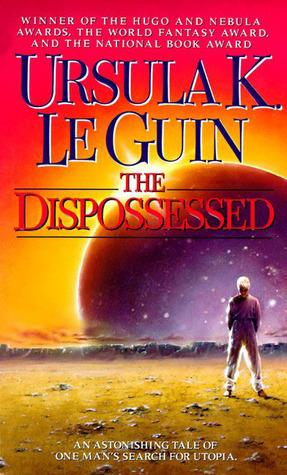
"The Dispossessed," written by Ursula K. Le Guin, follows the life of Shevek, a brilliant physicist from the anarchist moon of Anarres. The story unfolds in a universe of twin planets—Anarres, isolated and rooted in mutual aid, and Urras, lush and governed by wealth and power. Le Guin alternates between Shevek’s past on Anarres and his experiences on Urras, weaving a narrative about freedom, society, and the cost of innovation.
On Anarres, generations ago, revolutionaries chose exile over tyranny and forged a society without private property or central authority. They live under Odonian principles—self-reliance balanced by voluntary cooperation. Despite material scarcity, citizens share resources, attend communal workgroups, and solve conflicts through public discussion rather than policing. Life here values the common good over individual gain, though it fosters its own strict social norms.
Shevek grows up in this milieu, brimming with curiosity about physics and the nature of time. He studies at communal academies and absorbs Odonian ethics early on. His mentor peers praise his drive to develop a unified theory that might let people communicate instantaneously across space. Still, whenever he pushes too far, officials fear his ideas will threaten their cautious equilibrium.
When Shevek tries to publish his first findings, bureaucrats stall his work. They worry his theory of simultaneity and temporal connectivity will upset both Anarres’s fragile stability and Urras’s economic hierarchies. Each delay feels personal—like a betrayal of the society that taught him. Yet he keeps refining his equations, convinced knowledge must flow freely.
At home, Shevek shares a modest dwelling with Takver, his partner in both life and ideals. Their bond grows over gardening assignments and midnight conversations about justice. They welcome their daughter, Daphna, in a communal birth collective. Parenthood deepens his longing for a world where future generations can access ideas without gatekeepers.
Still restless, Shevek senses his homeland’s limits more keenly. He hears rumors of Urras’s universities and stellar libraries. He imagines collaborating with other scholars, sharing his theory without censorship. Every injustice on Anarres—bureaucratic bans, surreptitious surveillance—pushes him to seek a broader audience.
He finally decides to journey to Urras, but he must slip past border guards. Under the cover of night, he steals a ship bound for the sister planet. His departure triggers disbelief and anger among comrades who see travel as desertion. Yet Shevek believes openness outweighs loyalty to a stifling status quo.
On Urras, he lands in a world of abundance and stark inequality. Towering cities gleam with marble and steel. Wealthy elites dine on exotic fruits, while the poor swarm the streets below. Official welcomes come from academic elites. They lavish praise on his work but view him as political novelty.
Shevek meets Vea, a sociologist intrigued by his ethos. Holsten, a pacifist theorist, becomes his friend and guide. University halls overflow with luxury. Debates occur under crystal chandeliers. Every conversation bristles with hidden agendas: funding offers tied to military research, media spins aiming to paint his arrival as triumph of capitalism over anarchism.
Over time, Shevek grows disillusioned with Urrasti hypocrisy. They champion free inquiry but twist his theory into propaganda. They bar his letters from reaching Anarres. They want patents, not open collaboration. He feels complicit in their exploitation of knowledge.
Determined to reclaim his work’s freedom, Shevek finds allies in underground networks. They publish his papers online, breaking Urrasti censorship. Copies ripple back to Anarres and other worlds. Scholars everywhere can now build on his ideas without license fees.
Urras’s ruling class reacts with fury. They try to silence him again, threatening imprisonment. But he escapes in secret convoys organized by sympathetic students. The same barricades that once held him back on Anarres now protect his departure from Urras.
When he returns home, Anarresti welcome him as both prodigal and traitor. Some fear his Urrasti contacts will corrupt their simplicity. Others celebrate the flow of ideas. Shevek holds a public reading of his theory under an open sky, urging his people to embrace change and external exchange.
As communication channels open, Anarres experiences fresh tensions and opportunities. New debates spark on ethics, technology, and economics. Shevek’s daughter grows up reading messages from other planets. Slowly, the moon’s isolation ends without sacrificing its core values.
In the end, Shevek’s journey bridges two worlds that once saw each other as enemies. He learns that freedom demands constant vigilance against new hierarchies. By refusing to own his own discovery, he reshapes both societies. The novel closes on his quiet hope—that knowledge shared can keep societies alive, adaptable, and free.
DETAILED SUMMARY
Plot Summary
1. Origins of Two Worlds
The novel opens with a stark contrast between two planets: Urras, lush and hierarchical, and Anarres, arid and egalitarian. Anarres was settled centuries earlier by political exiles from Urras who sought to found a society free from private property and state power. On Anarres, people live under an unwritten social contract that prizes cooperation, mutual aid, and the abolition of personal wealth. Their communal ethos underpins daily life, from farming to intellectual pursuits, giving the society its unique, spartan character.
Gradually, Le Guin reveals how this anarchist society functions without formal government. Citizens coordinate through voluntary labor assignments and local councils called Syndicates. Personal initiative still matters—individual contributions shape collective well-being—but no one claims ownership. This tight balance between freedom and responsibility defines Anarres and sets the stage for the novel’s exploration of utopia and its limits.
Meanwhile, back on Urras, vast inequalities persist. Wealthy nations jostle for power while the poor remain oppressed. The story hints at simmering conflicts—territorial disputes and class struggles—that mirror real-world geopolitics. This broader context foreshadows the tensions that will arise when a brilliant scientist from Anarres crosses to Urras, challenging both worlds’ assumptions.
2. Shevek’s Childhood and Calling
Shevek, the novel’s protagonist, grows up in a remote valley commune on Anarres. From an early age, he displays extraordinary intellect and restlessness. While his peers accept communal norms unquestioningly, Shevek yearns to push the boundaries of theoretical physics. He senses that time and causality might be unlocked in new ways, and that his research could bridge alienated societies.
His upbringing is affectionate yet austere. His mother, Takver, nurtures his curiosity, teaching him the importance of solidarity while encouraging his independence. His father, Abben, disappeared during the first wave of colonists, a ghostly figure whose fate underscores the society’s sacrifices. Shevek’s quest for knowledge emerges against this backdrop of communal devotion and personal loss.
As he matures, Shevek feels both nurtured by and confined within Anarres. His peers and mentors admire his talent but worry that his singular drive might disrupt social harmony. These early tensions foreshadow the struggles he will face as he challenges dogma and seeks to share his discoveries freely with all humanity.
3. Academic Life and Ideological Friction
Shevek enters the Central School—Anarres’s hub for advanced learning. There, he meets fellow scientists and philosophers, exchanging ideas in long debates by lamplight. He collaborates on the General Temporal Theory, a breakthrough that promises instantaneous communication across vast distances. His work excites peers, yet his impatience with institutional delays sparks conflict.
The Syndicate of Science pressures Shevek to publish only after extensive peer review. He resists, believing that knowledge must circulate unhindered. This dispute highlights Anarres’s paradox: although it rejects hierarchy, subtle power structures can still stifle innovation. Shevek’s friends caution him against alienating the Syndicate, but his conviction grows: true freedom demands transparency.
Meanwhile, rumors of political factionalism ripple through the school. Some intellectuals cling to strict orthodoxies; others push for broader reforms. Shevek finds himself caught between Utopians who worship tradition and Regulators who urge pragmatic control. His struggle becomes emblematic of Anarres’s deeper crisis—can an anarchist society stay true to its ideals when confronted with human ambition?
4. Passage to Urras
At long last, Shevek secures permission to leave Anarres for Urras. His departure marks a radical act: he carries no homeland’s passport, only an agreement to share his theory openly. On Urras, the opulence and hierarchy hit him like a jolt. Palaces rise beside slums; academies flaunt luxury while laborers toil in fields. He arrives under the patronage of the nation A-Io, which hopes to weaponize his science for private gain.
Shevek’s first meetings with Urrasti elites underscore cultural clash. They greet him with lavish dinners and flattery, yet view him more as a curiosity than an equal. Some hope to exploit his fame to boost national prestige. Others fear his insistence on free transmission of ideas will undermine their economic advantage. Shevek realizes that scientific exchange here serves profit, not human solidarity.
Despite these obstacles, he finds allies among dissident intellectuals who also resent their society’s rigid class lines. They share forbidden manuscripts, discuss revolutionary pamphlets, and wonder if Anarres’s model could inspire Urras’s oppressed. Shevek senses that his real task is not only forging physics breakthroughs but sparking a dialogue between worlds that have grown blind to each other’s truths.
5. Revolution and Disillusionment
As Shevek negotiates his research contract, labor unrest erupts across Urras. Workers strike for fair wages and political representation. The ruling classes respond with violence, deploying private armies to crush dissent. Amid the chaos, Shevek witnesses brutality against protesters—images starkly at odds with his ideal of communal cooperation.
A group of Urrasti dissidents invites Shevek to join an underground network. They plan to publish his research without state censorship, hoping to trigger social upheaval through new communication technologies. Torn between academic caution and moral urgency, Shevek secretly transmits his incomplete theory to an open-access channel.
The fallout is swift. His Urrasti sponsors revoke funding and threaten legal action. Yet his act galvanizes strikers, who use new temporal communications to coordinate nonviolent resistance. Shevek realizes that the tool he created can serve both tyranny and liberation. His choice has set in motion events he cannot fully control.
6. Return and Renewal on Anarres
Disillusioned with Urras’s power struggles, Shevek decides to return. He carries no riches—only memory of suffering and hope for change. Back on Anarres, he faces suspicion: some view his Urrasti sojourn as betrayal. Others hail him as a bridge between worlds. He endures council hearings but makes no apologies, insisting that scientific truth belongs to everyone.
Quietly, Shevek resumes work on his temporal theory, now free from both political dogma and academic gatekeeping. He drafts a new framework that emphasizes reciprocity: every communicator also listens. His colleagues adopt this open-source approach, broadcasting their findings across both planets without delay.
In the final chapters, Le Guin offers a vision of utopia in motion rather than at rest. Shevek’s invention begins to link minds across space, hinting at possibilities of empathy and understanding. The novel closes not with resolved conflict but with questions: Can human societies learn from each other? Will knowledge, once freed, heal divisions or spark new ones? The ending leaves readers reflecting on the fragility and promise of freedom.
Characters
1. Shevek (Protagonist)
“No barricade can stop an idea whose time has come.”
Shevek stands at the heart of the narrative as a brilliant physicist and restless thinker. Raised in an egalitarian society, he feels the tension between communal harmony and individual innovation. From childhood, he questions received wisdom and seeks a deeper understanding of time itself. His work on the General Temporal Theory promises to bridge galaxies, yet his impatience with bureaucracy creates conflict with Anarres’s academic councils.
Throughout the novel, Shevek embodies the paradox of freedom. He desires communal solidarity but refuses to let collective norms stifle his creativity. His journeys between planets mirror an inner quest: to find a social model that honors both the individual and the community. His resolve, compassion, and moral integrity drive the story forward and invite readers to ponder the true meaning of liberation.
2. Takver (Key Supporting Character)
“You carry our hopes with you, but remember to come home.”
Takver, Shevek’s mother, nurtures him with warmth and practical wisdom. She works as a farmer in the communal fields and embodies Anarres’s cooperative spirit. Gentle yet firm, she teaches Shevek that freedom demands responsibility and that one must give as much as one takes. Her love shapes his moral compass and reminds him that ideas can’t flourish in isolation.
Her own life reflects Anarres’s sacrifices: she endures shortages and long labor hours without complaint. When Shevek leaves for Urras, her sorrow and pride mingle. She supports his quest even as she fears the world he enters. Through her, Le Guin highlights the quiet strength of those who sustain utopia’s foundations.
3. Bedap (Ally and Mentor)
“We built this world to be free, yet we fear the freedom we’ve given.”
Bedap holds a high position in the Syndicate of Science and initially mentors Shevek in academic protocol. He appreciates Shevek’s talent but warns him of the dangers in defying institutional norms. Over time, he becomes more sympathetic, sharing his own regrets about moments when he prioritized protocol over progress. Their relationship shifts from formal to fraternal as Bedap wrestles with his own loyalty to the collective.
Bedap’s arc underscores Anarres’s rigid structures. Though he believes in communal ideals, he admits they sometimes stifle innovation. His eventual support for Shevek’s breach of protocol illustrates the novel’s theme that freedom must be constantly renegotiated, even in utopia.
4. Ketho (Urrasti Ally)
“I built my life on comfort. Now I see its cost.”
Ketho arrives as Shevek’s guide on Urras—an academic from the wealthy nation A-Io. Charming and urbane, she introduces Shevek to luxury and political intrigue. Initially, she views him as an exotic novelty; gradually, she admires his honesty and moral clarity. Ketho’s own doubts about Urrasti inequality draw her closer to Shevek’s ideals.
Her transformation from insider to dissident reflects the potential for change within oppressive systems. She risks her status and safety to help Shevek transmit his theory freely. Ketho’s courage highlights that solidarity can cross borders—and that privilege need not equate to complacency.
5. Vea (Urrasti Dissident)
“Words breathe life into resistance.”
Vea, a journalist in Urras’s underclass, becomes Shevek’s voice among the oppressed. She gathers stories of working-class suffering and introduces him to clandestine networks. Sharp and resourceful, Vea navigates both slums and salons, using her press credentials to shield fellow activists.
Her tenacity and compassion inspire Shevek and underscore the novel’s belief that solidarity matters more than nationality. Vea’s pragmatic tactics—underground publications and coordinated strikes—demonstrate how ideas can fuel real-world change. She reminds readers that revolution often demands both vision and grit.
Themes Analysis
1. Freedom and Constraint
The Dispossessed examines freedom not as a static gift but as a constant struggle. On Anarres, citizens enjoy no government and share resources equally. Yet they still grapple with social expectations that can feel as binding as laws. Shevek’s battles with the Syndicate of Science reveal how collective norms can curb individual insight.
On Urras, freedom is an illusion for most. Wealthy elites enjoy personal liberties at the expense of the masses. When Shevek insists on open sharing of his theory, he confronts entrenched powers determined to monopolize knowledge. Le Guin suggests that true freedom arises only when all voices can speak—and listen—equally.
2. Utopia and Its Paradoxes
Anarres embodies a utopian experiment: no private property, no government, and no hierarchy. Yet the novel shows how even the best-intentioned systems develop their own rigidities. Citizens praise equality but sometimes enforce conformity. Shevek’s refusal to wait for permission spotlights the paradox of a society that champions freedom yet punishes dissent.
Le Guin doesn’t dismiss utopia; instead, she presents it as an ongoing work. Her narrative urges readers to recognize that every society must balance individual initiative with communal welfare. Utopia, she implies, only endures when people remain vigilant against complacency.
3. Isolation and Interdependence
Though Anarres’s settlers severed ties with Urras, they could never escape interdependence—on resources, ideas, and history. Similarly, Shevek’s journey demonstrates that no civilization thrives in isolation. His temporal theory only gains meaning when shared across space.
The novel suggests that human progress depends on dialogue across cultures. Isolation breeds stagnation; interdependence spurs innovation and empathy. By linking two planets, Shevek’s work becomes a metaphor for bridging divides on Earth.
Key Plot Devices
1. General Temporal Theory
Shevek’s General Temporal Theory promises instantaneous communication across vast distances. This concept drives the entire narrative, embodying the novel’s hope for genuine connection between isolated societies. The theory’s mathematical elegance mirrors Le Guin’s exploration of social structures: both demand clarity and coherence.
As a plot device, the theory sets off key conflicts. On Anarres, it clashes with bureaucratic caution; on Urras, it threatens power brokers. Ultimately, its free transmission sparks labor revolts and political awakening. The theory thus symbolizes knowledge’s transformative potential—and the risks in withholding it.
2. Syndicate of Science
The Syndicate of Science on Anarres serves as a decentralized regulatory body. It approves research, allocates resources, and ensures ethical standards. Yet its informal authority can stifle radical ideas. Shevek’s clashes with the Syndicate highlight the tension between collective oversight and individual creativity.
This device illustrates how even non-hierarchical institutions develop informal power dynamics. The Syndicate’s reluctance to share Shevek’s work shows that bureaucracy can arise anywhere. By challenging the Syndicate, Shevek reaffirms the novel’s theme that freedom must be defended continuously.
3. Cross-Planetary Passage
Shevek’s journey from Anarres to Urras marks a literal and symbolic crossing. It drives the plot into fresh terrain, exposing him to contrasting political, economic, and cultural systems. This device allows Le Guin to juxtapose utopia with dystopia, cooperation with competition.
The passage also functions as a point of no return. Once Shevek leaves Anarres, he catalyzes revolutionary change on Urras and irrevocably alters both societies’ trajectories. His return trip closes the narrative loop, underscoring that transformative ideas must travel to take root.