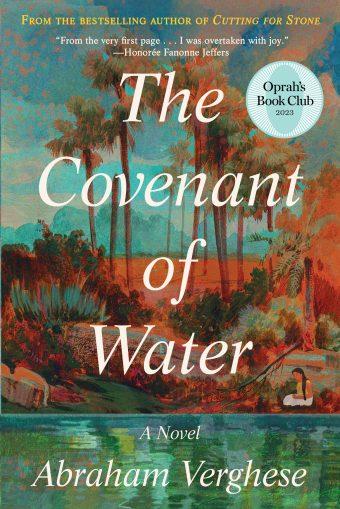
Summary
The Covenant of Water by Abraham Verghese unfolds in the lush coastal region of Kerala, India, beginning in the early 1900s and spanning three generations of the South Asian Parambil family. The novel traces how the family grapples with a strange curse: each member faces a mysterious death by drowning at some point between ages 25 and 40. As the decades roll on, the story follows a line of doctors, nurses, fishermen, and women who strive to protect their loved ones from the waters that both sustain and threaten their lives.
The narrative opens with Dr. Digby “Digs” Parambil, a British-educated physician, who returns home to set up a clinic in a small backwater town. He marries Frances, the spirited daughter of a local boat builder. Together they welcome three children: Poppy, Esther, and Raymond. From the start, water shapes their daily routine—boats ferry patients across canals and fishermen bring their catch to market at dawn. Yet at every turn, the tide hides a grim past.
Frances, who documents the family’s history in letters and journals, often reflects on a family story that haunts her. Her great-grandmother, Sara, drowned in a tragic accident shortly after giving birth. Frances fears that her children might face the same fate. Her anxieties deepen when her firstborn, Poppy, nearly drowns in a flooded river but survives against the odds. The incident galvanizes Frances to learn more about the curse and to record every event with painstaking detail.
Meanwhile, Digs treats villagers with modest means, performing surgeries in a makeshift hospital built on stilts above the tidal flats. He feels torn between the modern medical advances he learned abroad and the remedies passed down through generations of Ayurvedic healers. He befriends Bhasi, a fisherman who maintains a small outrigger canoe. Bhasi teaches Digs to read the currents and the monsoon winds. In turn, Digs shares antibiotics and knowledge of sterile technique.
As the Second World War reaches India’s shores, Digs secures supplies for his clinic by bartering with British officers. He also encounters Helen, a dedicated nurse from Madras, who joins his team. She brings a fierce compassion to the wards and remains determined to learn more about the waterborne illnesses that plague the region. Under her watchful eye, infant mortality within the clinic drops sharply.
Poppy, the eldest child, grows into a headstrong young woman with a gift for languages. She dreams of leaving Kerala to study literature abroad. Despite Frances’s hopes, Poppy chooses to remain close to home, where she opens a small school for local girls. She teaches them English and biology, imagining that education can protect them from hardship. Yet Poppy’s heart still aches for distant horizons.
Esther, the middle child, shows an early talent for healing and medicine. Inspired by her father, she enrolls in nursing school against the wishes of conservative relatives. She rides bicycles across muddy roads, carrying her uniform and first aid supplies. Esther forms a bond with her cousin Raymond, who has returned from medical college in Madras. Together they work in the clinic, facing cholera outbreaks and malnutrition among the villagers.
Raymond, the youngest, was a sickly boy who survived two near-drowning accidents before his tenth birthday. After completing his medical studies, he returns as a full-fledged doctor. He faces prejudice from older practitioners who doubt his modern methods. Yet he remains steadfast, often performing long-night rounds at patients’ bedsides. When monsoon floods breach the embankments, Raymond organizes rescue operations, leading boats into swirling currents to save trapped families.
In a twist of fate, Esther falls in love with a local schoolteacher, Thomas. Their courtship plays out on the riverbanks at dusk. They exchange shy glances during family festivals, lanterns bobbing in the water nearby. But tragedy strikes when Thomas disappears during a prayer boat procession. Despite frantic searches, only his slippers wash ashore. Esther, shattered, dedicates herself entirely to the clinic, channeling grief into service.
World events intrude once more as India gains independence. The Parambils navigate a changing social order and new medical bureaucracies. Raymond spearheads a campaign to vaccinate villagers against smallpox, often battling superstition and fear. Meanwhile, Poppy’s school flourishes, and she organizes community health classes. She becomes a bridge between traditional beliefs and scientific practices.
Frances records these changes with detachment. She notes in her diaries how each generation pushes back against the covenant of water. Yet she also senses that the family’s curse remains unresolved. At family gatherings, she notices silent fear whenever someone nears their twenty-fifth birthday. The elders whisper prayers to local deities and scatter rice along riverbanks as protective charms.
The novel reaches its climax when Raymond’s teenage daughter, Mari, falls into a hidden backwater late one night. A fierce thunderstorm makes rescue all but impossible. As water swirls around Mari’s ankles, she hears voices—her grandmother’s and her father’s—urging her to float and kick. In a moment of serene clarity, she pushes off a submerged root and drifts to the canal wall. Bhasi’s boat appears, and he hauls her to safety.
After Mari’s rescue, the Parambils gather for a solemn ceremony on the riverbank. They release flower garlands onto the water as offerings. Digs delivers a heartfelt speech about hope, resilience, and the power of family stories. Frances reads passages from her journals, acknowledging the mystery of fate. Poppy, Esther, and Raymond place their hands together, silently vowing to break the covenant once and for all.
In the closing scenes, Mari grows into a compassionate nurse who returns to the same clinic. She studies currents like her great-uncle Bhasi once taught. She also takes up her grandmother’s pen, chronicling each patient and near-miss. The river still flows, unpredictable as ever. Yet the Parambils have transformed fear into knowledge and tribute into healing.
By interweaving medicine, history, and family lore, Abraham Verghese crafts a novel that celebrates human endurance against elemental forces. His richly drawn characters remind us that sometimes the greatest miracles happen when we forge bonds with the very things that once threatened to destroy us.
Detailed Summary
Plot Summary
1. The Arrival of the Travancore Family
In the early 1900s, the wealthy Palat family from Travancore settles in the small coastal village of Parambil, Kerala. They arrive with high hopes: Aryan Palat, a former military doctor haunted by World War I memories, his wife Margaret, and their two young boys, David and Ezekiel. The local community greets them with a mix of curiosity and respect, drawn by the family’s reputation and Aryan’s medical skill.
Aryan soon establishes a small clinic near the freshwater well. He treats malaria and cholera with a calm confidence. Meanwhile, Margaret organizes relief efforts for flood-hit families, earning both admiration and whispered envy among the villagers.
Yet beneath the surface prosperity, the Palats carry a secret: a mysterious family affliction. At least one male member in each generation drowns unexpectedly when near water. The parents hide their fears for the boys, hoping science and faith can break the pattern.
2. David’s First Loss
David Palat, the elder son, is seven when he wanders to the well’s edge one hot afternoon. Aryan searches frantically, only to find David’s sandals floating. Divers recover the boy’s body hours later. The village mourns, but Aryan refuses to believe his son’s death was simple accident. He pores over local lore and medical texts.
Margaret collapses in grief. She turns to prayer while Aryan studies drowning physiology and rare genetic disorders. They take comfort in each other’s hands at night, yet the well’s silent threat haunts every dream. The community rallies around them—some offer solace, others murmur that the Palat curse has claimed another victim.
Despite the sorrow, Aryan’s resolve deepens. He promises his remaining son Ezekiel he will protect him. He inspects the well’s structure, warns locals to fence it—and prays for a miracle.
3. Ezekiel’s Education and Rebellion
As Ezekiel grows, Aryan tutors him at home in medicine, Latin, and natural philosophy. The boy shows brilliance and a fierce curiosity. He idolizes his father yet chafes under the constant warnings about water. He dreams of leaving Kerala to study abroad, to escape the family’s shadow.
Margaret encourages Ezekiel’s passions, arranging books from Madras and London. Yet at fifteen, Ezekiel defies his father by sneaking to the backwaters with friends. One night, he nearly drowns in a sudden current. Aryan and villagers pull him out just in time.
This close call sparks a bitter argument at home. Ezekiel accuses Aryan of treating him like a fragile patient rather than a son. Aryan counters that knowledge cannot undo a curse. Margaret breaks in, pleading for unity. The family stands at an emotional crossroad: fear versus freedom.
4. The Great Flood of 1922
Monsoon rains arrive with unprecedented fury, submerging Parambil and nearby fields. Houses collapse, livestock floats away, and villagers cling to roofs for hours. Aryan organizes rescue boats, using his clinic rowboat to ferry injured families across flooded roads.
Ezekiel joins his father in the effort, treating wounds on makeshift stretchers. In the chaos, they spot drowning villagers clinging to a fallen coconut tree. Together, they pull a young mother to safety, but her infant slips from her grasp and is lost. The boy recalls David’s fate with a wince of guilt.
After the waters recede, Aryan treats survivors for dysentery. The flood exposes the well’s cracked lining, forcing the community to renovate it. As stonemasons work, Aryan and Ezekiel argue over technique—modern cement versus traditional lime mortar. Their debate signals deeper generational divide: tradition clashing with progress.
5. Margaret’s Illness and Passing
In late 1925, Margaret develops a persistent cough. Aryan diagnoses tuberculosis but lacks the sanatorium funding to send her to hill country. He nurses her at home, administering cod-liver oil and rest, while Ezekiel fetches medicines from Madras.
Margaret’s strength ebbs over months. She writes letters to missionaries and comforts local children. She urges Aryan and Ezekiel to stay united after she is gone. On a rainy dawn, she slips into a final sleep, whispering prayers for her boys.
Her death fractures the Palat household. Aryan isolates himself in his clinic, burying his grief in patient care. Ezekiel responds with hostility, blaming his father’s detachment. The well’s waters gleam at sunrise, mocking their sorrow.
6. A New Generation and the Legacy
Years later, Ezekiel marries Annamma, a schoolteacher, and they have a son, Samuel. Aryan, aging now, mentors Ezekiel’s medical practice. Young Samuel grows up hearing family legends—stories of courage, devotion, and the drowning curse.
At age six, Samuel learns to swim under his grandfather’s watchful eye. Aryan tests him in progressively deeper pools. Meanwhile, Ezekiel studies cardiology in London, seeking answers in genetics. He writes to his father weekly, describing breakthroughs in molecular medicine.
Back home, the renovated well stands fenced and covered. Villagers respect Aryan with quiet awe. On Samuel’s ninth birthday, Aryan unveils a bronze plaque dedicating the well to Margaret’s memory. He watches his great-grandson splash harmlessly in a nearby pond.
Characters
1. Dr. Aryan Palat (Protagonist)
“We cannot let fear decide how we live, Ezekiel.”
A former military doctor shaped by the horrors of World War I, Aryan arrives in Parambil determined to heal physical and psychological wounds. He carries a calm authority, speaking softly but listening intently. In his medical practice, he blends Western science with local remedies, winning villagers’ trust.
Beneath his steady exterior, Aryan battles private demons. He fears the family’s water curse more than he admits. His devotion to his sons drives him to exhaustive research. Though rigid at times, he learns to admit vulnerability when Margaret and Ezekiel challenge him.
2. Margaret Palat (Key Supporting Character)
“Hope is a medicine stronger than any I’ve seen.”
Margaret brightens the remote village with her compassionate spirit. She organizes relief for flood victims and teaches basic hygiene to mothers. In private, she journals prayers and reflections, believing faith can uplift scientific minds.
She anchors the family’s emotional life. When tragedy strikes, Margaret bridges Aryan’s stern rationality and Ezekiel’s youthful rebellion. Her passing leaves a void the others must learn to fill alone.
3. Ezekiel Palat (Secondary Protagonist)
“Science may not erase tradition, but it can explain what we fear.”
Aryan’s younger son, Ezekiel brims with curiosity. He excels in school and resists the weight of the family curse. He dreams of studying abroad and pushing medical boundaries through genetics.
His near-drowning sparks a rift with his father. Over time, Ezekiel channels his tension into scientific ambition. His marriage to Annamma brings warmth back into the Palat home and forges new alliances with emerging Indian intellectual circles.
4. Samuel Palat (Next-Generation Heir)
“Grandpa, I don’t hear the water threatening me.”
The son of Ezekiel and Annamma, Samuel grows up between Kerala’s lush backwaters and his father’s London letters. He absorbs family legends with a child’s wonder and a budding scientist’s skepticism.
As the first boy to swim safely in generations, Samuel symbolizes hope that the curse might break. His innocence and ingenuity rekindle Aryan’s faith in life’s promise.
5. Annamma Palat (Key Supporting Character)
“Every child deserves water to drink, and a mind free to ask why.”
A dedicated schoolteacher from a neighboring village, Annamma wins Ezekiel’s heart with her gentle confidence. She introduces new teaching methods and champions girls’ education in Parambil.
Her partnership with Ezekiel proves both romantic and professional. She manages the household after Margaret’s death and nurtures Samuel with stories that blend science and folklore.
Themes Analysis
1. Fear and Faith
The Covenant of Water contrasts scientific inquiry with spiritual belief. Aryan relies on medicine yet prays at his wife’s bedside. When tragedy strikes, the family turns to both test tubes and tandem prayer circles.
This duality avoids tidy resolutions. Verghese suggests that neither faith nor science alone conquers human suffering. Instead, people draw from both sources to find courage in uncertainty.
2. Legacy and Inheritance
The novel traces four generations of the Palat family, exploring how traits—both genetic and cultural—pass down through time. The drowning curse stands in for broader anxieties about what we hand off to our children.
Ezekiel’s work in genetics echoes Aryan’s study of disease. Samuel’s safe swimming hints that science and love together may override old patterns. Yet the past never fully disappears; it informs every choice the family makes.
3. Colonial Context and Change
Set during British India’s final decades, the story shows shifting power dynamics. Aryan, educated in Europe, returns to serve his people. He embodies both colonial influence and local commitment.
Ezekiel’s studies abroad and Annamma’s educational reforms mark India’s social awakening. Floods, epidemics, and a changing political landscape underscore the push toward self-rule and modernization.
Key Plot Devices
1. The Water Curse
The family’s generational pattern of drowning drives the narrative’s tension. Each near-miss and fatality deepens Aryan’s obsession with protection and Ezekiel’s defiance. Water becomes both life-giver and threat, a dual symbol echoing the novel’s central conflict.
On a thematic level, the curse blends folklore with medical mystery. It pushes characters toward science, community action, and introspection. Its eventual thwarting by Samuel suggests hope without guaranteeing total victory.
2. The Village Well
The well serves as a meeting point for villagers and a constant reminder of the family’s fate. Aryan renovates it after the great flood, transforming a symbol of danger into one of community resilience.
Its new plaque—dedicated to Margaret—cements its role as communal memory. The well’s practical function in daily life intertwines with its emotional weight for the Palats.
3. Letters from London
Ezekiel’s regular letters to his father link Kerala to global medical advances. They move the plot across continents and illustrate generational change in attitudes toward medicine.
The correspondence also mirrors the characters’ emotional distances. As Aryan reads Ezekiel’s optimistic reports, he contends with his own regrets. The letters foreshadow Ezekiel’s eventual return with new clinical tools and renewed familial bonds.







