
Summary
Failed to generate raw summary.
Detailed Summary
Plot Summary
1. I. Carnival Prelude
The story opens during the carnival season in an unnamed Italian city. The festive bustle surrounds Montresor, yet his mood remains grim. He reminds readers that he has borne “thousand injuries” from Fortunato. In his mind, these offenses demand retribution. He vows to conceal his anger until the perfect moment arrives.
Meanwhile, protesters, jesters, and masked revellers swirl through piazzas. Montresor encounters Fortunato amid the revelry. Clad in a motley and jingling bells, Fortunato is already tipsy. He greets Montresor with boisterous laughter. Montresor’s voice, however, strikes a more private note: he pretends to worry about Fortunato’s health and hints at newly acquired Amontillado.
Fortunato’s vanity flares. He claims to be no amateur in wine, and Montresor exploits the boast. He insists on Fortunato’s help to verify the rare sherry’s authenticity. The jester, eager to prove his connoisseurship and drunk on both spirits and ego, agrees at once. Thus Montresor sows the seeds for his dark design.
2. II. Descent into the Catacombs
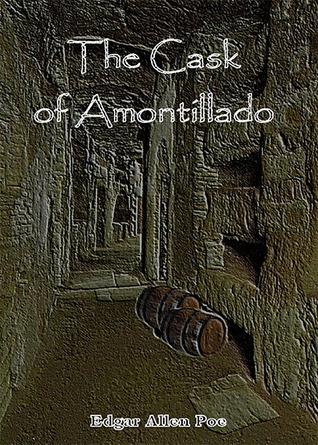
At dusk, the two men leave the carnival’s gaiety behind and enter Montresor’s palazzo. They descend a narrow staircase to the family vaults. Filth and dampness cling to the walls. An oppressive gloom deepens with each step. Fortunato coughs from the nitre—the white, chalky deposits coating the vault’s bricks.
Montresor feigns concern. He presses him to turn back, warning that the fumes could be deadly. Fortunato, however, flaunts bravado. He brandishes a trowel he’s brought “in jest” and continues onward. Montresor leads him past row upon row of silent human remains. The echoing drip of water marks their passage.
The guidebook Montresor claims to have on Amontillado’s provenance proves a fiction. He constantly delays Fortunato with sidelong remarks, drawing him deeper. Fortunato’s laughter fades, replaced by an uneasy curiosity as he realizes the cellar’s isolation. Yet he presses on, ambition and pride urging him forward.
3. III. The Feigned Retreat
When Fortunato grows faint from the nitre, Montresor again offers to turn back. He loudly worries for Fortunato’s health. Fortunato waves away the concern with a jingle of bells. He trusts Montresor’s hospitality—and his own instincts—more than the warning.
Now alone with his victim, Montresor’s tone stiffens. He mimics a concerned host twice over before pivoting to final action. Each feint convinces Fortunato that these vaults hold only wine and bones. Unknowingly, he walks into Montresor’s trap.
Montresor has prepared a small recess, measuring half a yard deep and wide. He pretends to show Fortunato where he stores precious vintages. Fortunato descends into the niche, amused by the seeming obscurity of the location. He never suspects what Montresor truly intends.
4. IV. The Brickwork
Once Fortunato stands in the niche, Montresor lays out a pile of loose bricks and mortar. He hands Fortunato the trowel under the pretense of helping with the vault’s repair. The drunk jests as he spreads mortar, oblivious to the finality of each brick.
With precise calm, Montresor stacks the first bricks. The wall grows, and Fortunato’s laughter falters. He calls out joking admonitions, but Montresor keeps working. Each brick muffles the carnival’s distant roar. Dust rises, mingling with stale air and Fortunato’s growing panic.
At last, Montresor places the final stone. He packs the mortar tight. Fortunato’s screams echo down the corridor, unanswered. Montresor steps back and gives a final jingle of Fortunato’s bells as a cruel epilogue.
5. V. Final Silence
Montresor stands alone in the dead vault. The only sound remains his own heartbeat and the drip from the vault’s ceiling. He drops the trowel on the cold floor. No further protest reaches him. He recounts these events fifty years later, confident that “no one has disturbed” the bones.
The carnival’s distant drums have long faded, but Montresor hears only the ringing of his triumph. He leaves the crypt with perfect poise, blending again with passing shadows. To him, justice proves complete and irreversible.
Characters
1. Montresor (Narrator and Protagonist)
“A wrong is unredressed when retribution overtakes its redresser.”
Montresor drives the narrative by seeking revenge against Fortunato. He claims he has borne “the thousand injuries” that Fortunato inflicted. He remains calm, courteous, and precise as he lures his victim into the catacombs. His careful planning and cold resolve reveal a mind skilled in deception.
He also betrays subtle pride—pride in his family’s coat of arms and motto, ‘Nemo me impune lacessit.’ Yet he withholds his true purpose until the end. Montresor never wavers in his objective. His reliability as a narrator is suspect, however, since he shows no guilt. He seems to revel in perfect vengeance.
Quote: “At length I would be avenged; this was a point definitively settled.”
2. Fortunato (Antagonist/Victim)
“Come, we will go back; your health is precious. You are rich, respected, admired, beloved; you are happy, as once I was.”
Fortunato appears at the carnival as a jester. He delights in wine, prides himself on connoisseurship, and often overestimates his own judgment. His vanity blinds him to Montresor’s thinly veiled warnings. He sneers at Luchresi—his supposed rival taster—eager to prove himself the superior expert.
Tipsy from wine, Fortunato follows Montresor willingly into the vaults. His humorous arrogance prevents him from recognizing the danger. Even as nitre scars the brick and threatens his lungs, he insists on pressing forward. His laughter gradually gives way to alarm, but by then Montresor has sealed his fate.
Quote: “The cough is a mere nothing; it will not kill me. I shall not die of a cough.”
3. The Catacombs (Setting as Character)
“We had passed through walls of piled bones, with casks and puncheons intermingling.”
Though not a person, the catacombs function as a silent accomplice. Their damp walls and narrow passages echo with the weight of death. The nitre spreads like a living fungus, coughing into Fortunato’s lungs.
They also mask Montresor’s crime. Each step deeper severs ties to the festive world above. The darkness encloses Fortunato physically and psychologically. Here, the catacombs transform from mere vaults into a tomb that men bury themselves within.
Quote: “I looked around and, satisfied, again faced Fortunato.”
Themes Analysis
1. Revenge and Justice
The story examines revenge as both personal and absolute. Montresor believes Fortunato’s insults deserve death. He waits patiently for “a year” before acting, demonstrating how revenge can fester. Once enacted, it offers Montresor a twisted sense of justice.
Yet Poe leaves readers uneasy. Montresor takes pleasure in his meticulous cruelty. The absence of remorse questions morality. Is personal vengeance ever just? By celebrating Montresor’s triumph without punishment, the tale probes the dark satisfaction and lasting emptiness revenge creates.
2. Pride and Foolhardiness
Pride propels both characters into the crypt. Montresor’s pride in his ancestral motto inspires meticulous planning. He expects to outwit Fortunato and relish his humiliation.
Fortunato’s pride proves his downfall. His eagerness to outshine Luchresi blinds him to danger. He ignores Montresor’s warnings, laughs off symptoms, and follows confidently into death’s embrace. Thus Poe warns that unchecked pride can become a ruinous flaw.
3. Deception and Irony
Montresor’s entire act hinges on deception. He masks hatred beneath feigned concern. Every warning to Fortunato lures him deeper. Montresor’s polite words—anything but polite—are laden with dark irony.
The carnival setting intensifies this. Masks and revelry heighten the theme of hidden selves. Just as the carnival hides Revellers’ faces, Montresor hides his true intentions. The final flourish—the bells on Fortunato’s motley—turns the symbol of joy into a funeral knell.
Key Plot Devices
1. The Nitre-Coated Walls
The thick nitre lining the catacombs adds tangible menace. It coughs and chokes Fortunato. Each breath tests his vanity and stamina. Montresor feigns worry for his health, masking malice within concern.
More than a hazard, the nitre embodies decay and death. It signals that Montresor leads Fortunato not to wine but toward ruin. This physical barrier underscores the psychological trap, forcing the victim onward to the final niche.
2. Montresor’s Trowel
The trowel serves as both tool and symbol. Montresor offers it under the guise of repairing the vaults. In Fortunato’s hands, it seems a jest. Yet it seals his tomb.
This device dramatizes the betrayal. The gift of a helpful tool becomes the instrument of death. Montresor’s casual distribution of the trowel highlights his cold cunning. He transforms a simple masonry implement into a weapon of finality.
3. Fortunato’s Jingles
Fortunato’s motley features small bells that jingle with each step. At first, they underscore his role as a carnival jester. Their lightness contrasts the grim vaults.
By story’s end, the jingling bells ring hollow. They signal that a festival jester has become a victim. Montresor’s echoing silence answers each jingle, turning festive music into a funeral chime. The bells become an ironic dirge for Fortunato’s fate.







