Summary
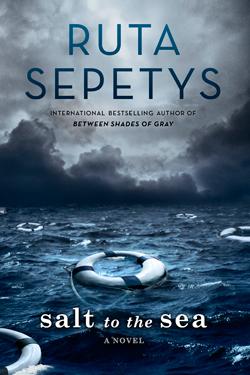
Salt to the Sea, by Ruta Sepetys, begins in January 1945 as World War II rages across Eastern Europe. Refugees flee the Soviet advance in East Prussia, carrying what little they can. The novel shifts among four narrators—Joana, Emilia, Florian, and Alfred—each with haunted pasts and fragile hopes. They make their way to the port of Gotenhafen, desperate to reach the safety promised by the German ship Wilhelm Gustloff. Under layers of snow and fear, their paths cross and intertwine.
Joana Müller, a Lithuanian nurse, treks through the frozen countryside with thousands of others. She tends wounds, dispenses medicine, and keeps moving to survive. Memories of her father’s death under Soviet guns push her onward. Along the way, Joana protects a small suitcase of supplies and a satchel filled with medical notes. She hides kindness behind a steely calm—but grief trails her like a shadow.
Emilia Stożek, a young Polish girl, carries a secret that has broken her heart. She protects her unborn child from the bitter cold and judgmental eyes. Rumors swirl that she lost her entire family in the chaos. Without a name on official lists, she fears capture by the SS. Each night she prays for a safe haven where shame won’t follow.
Florian Beck, a former Prussian art restorer, feels the weight of stolen treasure in his coat. He rescued a shard of ancient amber from a museum before the Nazis looted it. Many would kill for a piece of that glowing fossil. When he hears the Wilhelm Gustloff will sail for safety, he slips aboard, hoping to cross the Baltic. Florian counts on secrecy and skill to survive.
Alfred Frick, a proud member of the Nazi party, narrates in clipped, rigid language. He yearns for glory and recognition. He believes in Hitler’s vision without question. Driven by ambition, he commands one of the lifeboats aboard the Gustloff. Duty gives him purpose, but he lacks empathy.
The four refugees converge on the frigid docks of Gotenhafen. Snow falls in silent sheets, muffling the cries of wounded civilians. Soldiers bark orders as thousands scramble to board. Joana spots Emilia sitting alone on a crate, and she kneels beside her. They share a tentative trust as Florian slips through the crowd behind them.
Once aboard the Wilhelm Gustloff, refugees jostle for space amid crowded corridors. Children whimper, and the sick groan under coarse blankets. Joana transforms corridors into triage centers, offering water and words of comfort. Emilia clutches her bolero coat, eyes wide with fear. Florian sneaks into lower decks, hiding the amber where no one will find it.
At first, hope pulses through the ship’s narrow halls. Passengers whisper about warm beds and family reunions. Sailors deliver plates of lukewarm soup, and an orchestra plays patriotic tunes. Alfred inspects muster stations, convinced he’ll earn a medal for his efficiency. Meanwhile, Joana tends to frostbitten soldiers and broken families.
As gusts of wind push the Gustloff into the icy Baltic, tension swells. Men pace the deck, scanning for threats. Exeter and British submarines patrol waters below. Late one night, a distant rumble echoes through metal corridors. Florian peers out a porthole and spots torpedoes slicing through waves. Horror erupts instantly.
Explosions rip through the hull, tearing gaping holes where refugees once lined up. Darkness surges as power fails. Inflated lifeboats collide and tangle in freezing water. Joana rallies survivors, dragging them toward ladders and lifejackets. Emilia squeezes Joana’s hand, snow clinging to her lashes. Florian grabs Emilia, shielding her as the deck tilts violently.
Joana refuses to abandon the wounded. She smashes a window, unwinds a rope, and lowers makeshift stretchers into the water. Bullets of ice pierce her face but she moves with single-minded purpose. She secures a wounded mother and child onto a floating board. "Hold on," she whispers, even as hypothermia creeps in.
Florian cuts through tangled ropes, jamming a life raft under Emilia’s coat. He fights currents to push her toward safety. Miraculously, she clings to consciousness. Above them, Friedrich Frick commands his lifeboat cattle-starved survivors into the dark. But Alfred freezes and hesitates, haunted by his narrow loyalty.
Alfred never fires the signal flare. He watches the sea swallow victims without compassion. When the last boat shoves off, he remains behind, rigid as the ice that seals his fate. He watches the silhouettes of innocents vanish beneath the waves. For the first time, his rigid ideology falters.
Rescue arrives at dawn in shards of hope. Soviet minesweepers and fishermen pluck survivors from icy graves. Florian and Emilia emerge on a battered raft, shivering and tear-streaked. Joana doesn’t surface. They search for her among drifting debris. Only a single glove remains as proof of her sacrifice.
In the quiet years that follow, historians uncover letters and diaries from that fateful night. A curator in New York receives Florian’s amber, tarnished by saltwater and time. Emilia, now a mother, names her daughter Joana in honor of a hero. Memories of the Gustloff’s sinking echo through generations. They remind the world of lives claimed by war and the courage that rose from its depths.
Detailed Summary
Plot Summary
1. Flight from East Prussia
In early 1945, winter’s chill presses on East Prussia as thousands of civilians brace for the Soviet advance. Among them is Joana Brandt, a Lithuanian nurse haunted by a recent atrocity. She tends to injured soldiers and refugees, her face set in quiet determination. Snow crunches underfoot while the threat of bombs and bullets edges ever closer.
Meanwhile, Emilia Stożek, a pregnant Polish girl, flees her home with her grandmother, clutching a baby doll. Each jolting truck ride reminds her how fragile hope can be. They join long columns of families, soldiers, and loners. The sky is gray and weary, reflecting their collective fear.
Joana, Emilia, and others converge at a makeshift aid station. There, Joana meets Florian Kollmann, a German student-turned-soldier on a secret mission. He carries stolen documents and guilt in equal measure. Their uneasy alliance begins with silence and suspicion beneath barbed wire fences.
Finally, they hear whispers of the Wilhelm Gustloff, a passenger liner turned refugee ship. Rumor says it will carry them to safety in Germany. Joana and Emilia decide to risk the journey, each driven by hope and dread. The gathering of refugees swells in the icy docks, as the vessel’s outline emerges in the dim morning light.
2. The Bonds of Strangers
As refugees crowd the dock, Joana, Emilia, and Florian find themselves drawn to each other. Joana’s steady calm offers reassurance. Emilia, fragile yet determined, looks to Joana as a protector. Florian, restless, keeps his distance while debating the morality of his stolen papers.
They share food stolen from supply trucks and half-forgotten stories of home. Joana reveals her guilt over ending a life to save many. Emilia confesses fear for her unborn child’s future. Florian remains guarded, yet his eyes betray a longing for redemption.
Allies form among unlikely companions. Andrius, a shy Lithuanian boy, tags along with Florian. He idolizes the older man and sees in him a chance at purpose. Elsewhere, Alfred Frick, a proud German sailor, spots the unauthorized papers fluttering in Florian’s coat. He senses betrayal in every furtive glance.
That night, as they huddle beneath threadbare blankets, gunfire echoes inland. Each hears it differently—some as threat, others as soundtrack to survival. In darkness, bonds of empathy deepen. Day breaks with a promise of departure, and the refugees file onboard the Gustloff.
3. Secrets and Confessions
Once aboard, space grows tight. Passengers cram into corridors and cabins meant for far fewer. The ship’s corridors hum with whispered dreams of safety. Groans of fatigue echo against steel walls. Joana works through the chaos, calming panicked mothers and bandaging frostbitten toes.
Florian hides in the bowels of the ship with Andrius, clutching a briefcase filled with Top Secret documents. He knows Alfred Frick patrols these decks. Suspense coils around every step. Emilia, sensing unease, reaches for Florian’s hand but draws back. Her doll lies limply in her lap.
Amid frantic bustle, Alfred corners Florian in a narrow corridor. He demands to see the papers. Florian hesitates, his guilt pressing like iron bands. Joana intercedes, citing her Red Cross credentials. Alfred grudgingly backs off but warns of betrayal. The tension between them simmers.
That evening, attractions blossom. Florian admires Joana’s quiet courage. She, in turn, sees his vulnerability. Emilia, confused, watches this fragile dance. In their intimate confessions, each reveals scars no uniform can hide.
4. Midnight Exodus
Late one night, far from the glittering deck lamps, Joana discovers Emilia in tears. The girl worries childbirth may come before they reach safety. Joana promises to stand by her. Florian volunteers to fetch blankets and supplies. The trio slips through dark hallways, passing rows of sleeping refugees.
They stumble into a lower hold where wounded soldiers lie in makeshift bunks. One man moans, clutching a bloody bandage. Joana kneels by him without hesitation. Emilia winces but helps steady the dying man’s head. Florian watches, torn between admiration and helplessness.
Above them, the Gustloff’s engines throb a steady rhythm. The music of escape turns mechanical. In this womb of steel and sea, fear is almost tangible. Emilia’s water breaks. Panic flares, but Joana remains composed. Together, they find a secluded corner and brace for the birth under the ship’s motion.
As Florian paces nearby, he reflects on his mission. The stolen documents could alter the course of the war. He questions whether secrecy is worth this human cost. A single muffled cry from Emilia’s makeshift refuge shifts his priorities.
5. Torpedo Strike
At dawn, sonar pings echo through metal halls. Warships scout the waters. Below deck, the fatigue of days without sleep weakens the refugees. Joana senses unease and readies her medical bag. Emilia holds her newborn son, wrapped in a scrap of blanket.
Without warning, the ship shudders violently. The torpedo rips through steel plating. Screams rise from every deck. Flames and water rush in. Joana pushes Emilia and the baby toward wicker baskets that double as lifeboats. Florian, coated in oil and sweat, slams bulkheads to stop flooding.
In the chaos, Alfred Frick appears, rigid with duty. He orders passengers into lifeboats. He and Florian lock eyes—two men on opposite sides of morality, now forced to cooperate. Water floods the corridors while metal groans.
Above them, lifeboats launch into freezing waves. Joana grips Emilia and the baby. Florian helps steady the boat, his face pale. The Gustloff’s siren blares an eerie farewell. Smoke and steam swirl—a grim testament to hope and dread entwined.
6. Aftermath and Remembrance
Hours later, survivors cling to wreckage in the black sea. Joana and Emilia huddle in a lifeboat with a handful of others. Their breaths form clouds in the icy air. Horror lingers in each person’s eyes. They wait for dawn and rescue that may never come.
Florian spots wreckage drifting near a liferaft. He paddles toward it, discovering Alfred’s body trapped under twisted metal. He frees the sailor’s lifeless hand and bows his head. Alfred lost both pride and life in that moment.
Dawn breaks on an empty horizon. Rescue ships arrive and gather the frozen survivors. Joana cradles baby Andreas, now silent. Emilia stares at the sky, speechless. Florian slips away to the shadows, papers still hidden.
In the end, memory endures. They carry scars no winter can freeze. Each survivor vows to bear witness to what happened aboard the Wilhelm Gustloff. Their stories become a lantern against oblivion.
Characters
1. Joana Brandt (Protagonist, Lithuanian nurse)
“I’ve learned that hope is the strongest medicine.”
Joana carries the weight of her past wherever she goes. As a Red Cross nurse, she’s calm under pressure and fiercely protective. She saved lives at the front lines and lost sleep over those she couldn’t save. Each patient’s face lingers in her mind as both duty and burden.
On the Wilhelm Gustloff, Joana becomes a beacon of hope. She tends to wounded soldiers and frightened civilians alike, offering bandages and words of comfort. Behind her steady hands, grief simmers—but she channels it into action. Her compassion guides her decisions as war’s shadows close in.
2. Florian Kollmann (Key supporting character, German soldier-student)
“If these papers doom me, so be it, but they won’t doom the innocent.”
Florian joined the Wehrmacht reluctantly. He dreams of art and peace, not war. Stolen intelligence documents pin him between duty and conscience. He’s resourceful, quick-witted, and haunted by what he’s done to obtain those papers.
Aboard the Gustloff, he becomes Joana’s uneasy ally. His guilt over the stolen documents and his fear of Alfred Frick drive him to protect others at personal risk. In Joana’s presence, he glimpses redemption. His character arc revolves around a painful choice between loyalty and humanity.
3. Emilia Stożek (Supporting character, pregnant Polish refugee)
“I’m scared, but I’ll hold his hand until the end.”
At sixteen, Emilia’s strength surprises everyone, including herself. She fled her home with her grandmother and a worn doll. Her innocence clashes with the harsh reality of war. Pregnancy adds another layer of terror, yet she faces it with quiet resolve.
She clings to Joana as a surrogate sister and to Florian as a puzzle she longs to solve. When her labor begins, fear seizes her, but Joana’s steady presence brings courage. Emilia’s journey from helpless girl to new mother highlights survival’s fragility.
4. Alfred Frick (Antagonist, German naval officer)
“Rules exist for a reason—even here.”
Alfred personifies duty without mercy. A stern officer aboard the Gustloff, he enforces rules with rigid discipline. He senses betrayal in Florian’s furtive actions and views refugees with contempt. His loyalty to the Reich outweighs any sympathy.
Through the crisis, Alfred struggles with his own conscience. Faced with the torpedo strike and the drowning around him, he maintains order even as hope sinks. His tragic end reveals a crack in his iron resolve, showing war spares no one.
5. Andrius (Supporting character, Lithuanian teen)
“I’ll do anything to keep us alive.”
Andrius is Florian’s young companion, drawn to him as a mentor. He’s timid but eager to help. In the chaos, he fetches water and blankets with trembling determination. His loyalty stems from gratitude for past kindness.
Witness to both heroism and horror, Andrius matures overnight. He absorbs lessons from Joana’s compassion and Florian’s guilt. Though silent much of the time, his brave acts under fire speak volumes about youthful resilience.
Themes Analysis
1. Survival and Sacrifice
Salt to the Sea explores how survival demands sacrifice. Characters endure bitter cold, hunger, and the constant fear of death. Joana sacrifices rest and emotional solace to care for others. Emilia risks childbirth in a steel hull. Florian hides secrets that could cost him his life.
These choices highlight war’s brutal calculus. Each character must weigh personal safety against compassion. The sinking of the Wilhelm Gustloff serves as a grim reminder that survival often hinges on leaving others behind. Yet the novel insists that human connection and sacrifice can shine brightest in darkest times.
2. Guilt and Redemption
Guilt runs through every character’s heart. Joana blames herself for losing a patient. Florian wrestles with stolen documents and the harm they’ve caused. Alfred carries guilt masked by duty, and Emilia wonders if giving life amidst chaos is right.
Redemption offers a pathway out. Joana finds it in her steadfast care. Florian seeks redemption by protecting refugees. Even Alfred glimpses atonement in his final moments. Sepetys shows that redemption isn’t granted—it’s earned through action and empathy, even when the world falls apart.
3. Memory and Witness
The novel gives voice to those often overlooked by history. Refugees, nurses, and children become living testimonies to war’s human cost. Joana insists on writing names in ledgers. Emilia clings to her doll as memory’s symbol.
By framing the story through multiple perspectives, Sepetys insists we bear witness. The survivors vow to share their stories. Memory becomes a form of resistance against erasure. Their testimonies stand as monuments to vanished lives and suffering under the sea’s depths.
Key Plot Devices
1. The Wilhelm Gustloff
The ship itself embodies fragile hope crossing frozen seas. Once a luxury liner, it becomes overcrowded with refugees. Its steel corridors and cabins, designed for comfort, now feel like a coffin. Each creak under stress heightens suspense as passengers cling to dreams of Germany.
When the torpedo strikes, the Gustloff transforms from vessel of salvation to tomb. Its sinking illustrates how tools of war can betray their human cargo. The vessel’s fate cements the novel’s tragic message: war spares no refuge, and even salvation can drown beneath waves.
2. Florian’s Secret Documents
Florian hides Top Secret German intelligence in a battered briefcase. The papers drive his every decision, forcing him into alliances and conflicts. Alfred’s hunt for the documents injects tension into cramped corridors.
Beyond plot tension, the documents symbolize power’s corrupting lure. Florian’s guilt emerges from knowing these papers might extend the war, costing more lives. His final choice to protect refugees over secrets underscores the novel’s theme: moral courage outweighs blind loyalty.
3. Emilia’s Doll
The doll travels with Emilia from Poland to the Gustloff’s decks. It represents her lost childhood and the utter ordinariness of human lives upended by war. She cradles it when fear overwhelms her and offers it to her newborn as first gift.
In scenes of chaos, the doll becomes talisman and witness. When it floats on icy water after the torpedo strike, it reminds readers of innocence swept away. Its silent presence marks how personal artifacts carry profound emotional weight amid collective tragedy.