
Summary
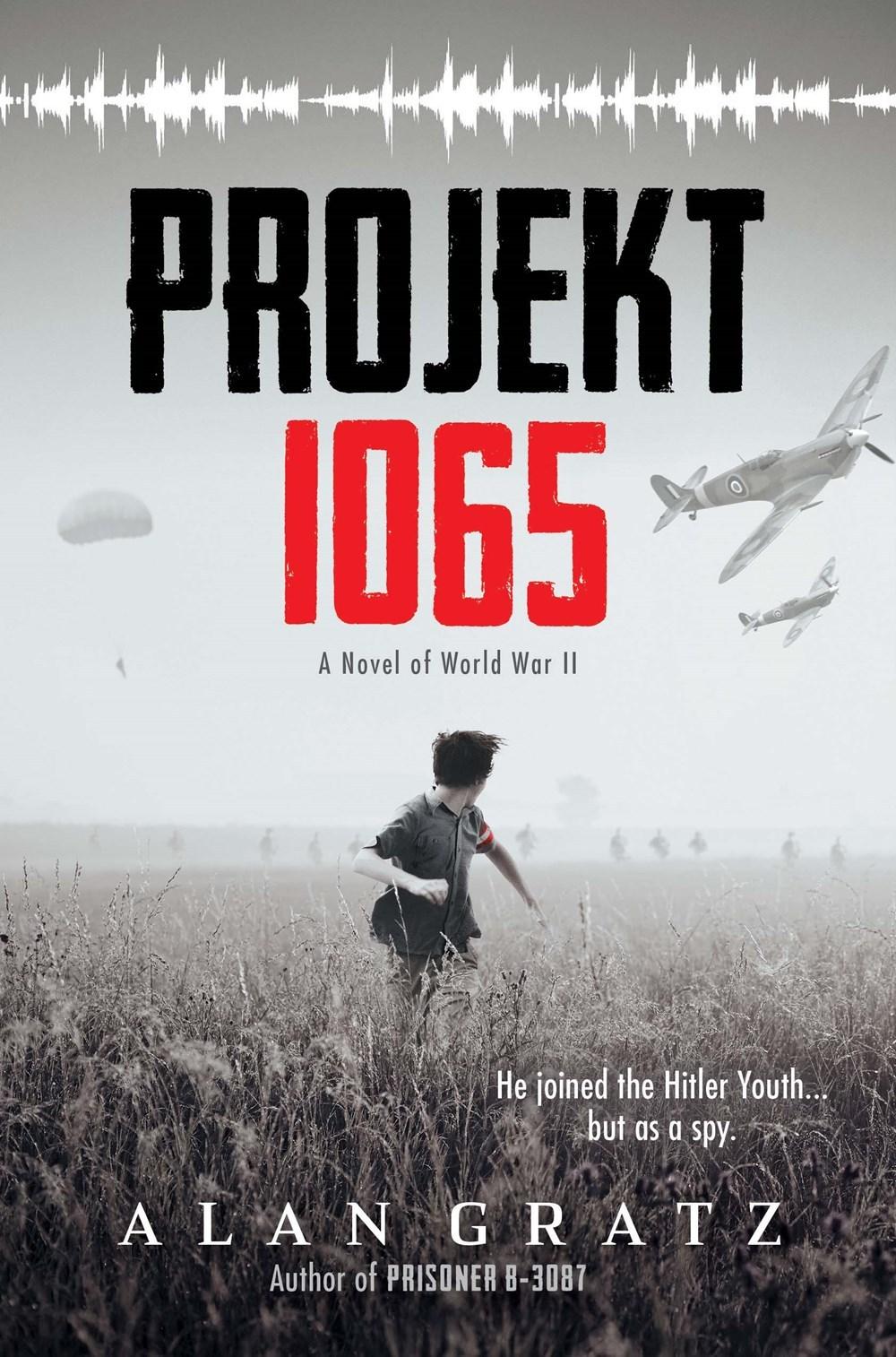
Projekt 1065 by Alan Gratz tells the story of Connor Fitzgerald, a thirteen-year-old Irish-American boy living in Germany just before World War II fully erupts. Connor’s father runs an Irish pub in Vienna and has made his home under the Nazi regime, but he also works secretly for British Intelligence. Connor and his sister Maya attend a Nazi training camp called the Winter School, where they learn to march, shoot, and pledge loyalty to Hitler. Connor feels conflicted at the camp, torn between his father’s orders to gather information and the adrenaline of fitting in.
Early in the story, Connor witnesses the brutal treatment of Jewish children arrested by SS officers. One friend, Johann, confides in him about his Jewish family’s fear. That moment shakes Connor’s faith in the Winter School and crystallizes his mission: to feed intel back to his father’s contacts at the pub. He realizes the camp is more than innocent drills; it grooms young boys into loyal soldiers.
Connor begins smuggling messages hidden in postcards from the classroom. He writes about troop movements, new unit assignments, and details of experimental weapons projects. Maya, who excels at cipher work and codes, helps him encrypt these notes so the British can read them. They risk harsh punishment if caught; for a betrayal, the SS rewards cruelty.
As months pass, Connor forms a bond with Gretel, a friendly classmate whose father works in the Nazi hierarchy. Gretel admires the Führer and believes in the cause, pressing Connor to recite Hitler’s speeches with enthusiasm. Connor plays the part so convincingly that the instructors single him out for a top-secret program called Projekt 1065. The invitation thrills him even as it terrifies him. Here lies his chance to learn more.
Projekt 1065 turns out to be a code name for a prototype fighter plane with remarkable speed and agility. Connor visits the laboratory at Kummersdorf, where he meets Dr. Vogel, the lead engineer. He’s awed by the sleek fuselage and the secretive test pilots pushing it to the limits. Viktor von Ziegler, a rising officer, shows Connor flight logs and invites him behind the controls of a simulator.
Connor knows he must resist the temptation to revel in Projekt 1065’s promise. His father’s spies need every detail. So he carefully sketches diagrams of engine parts and records the plane’s estimated range and ceiling. In the evenings, he smuggles these pages back to Vienna in his hollowed-out fountain pen. His heart pounds whenever he passes a guard or hears the swish of a Gestapo car.
Meanwhile, tensions at the Winter School rise. Older boys vanish overnight, shipped off to the front. Maya grows more anxious, fearing that if Connor’s spying is discovered, their whole family will suffer. One night she bursts into his room with tears in her eyes. "Promise me you won’t get us killed," she pleads. Connor hesitates, but he knows the war won’t wait for safety.
At a school assembly, Connor is publicly praised for writing an essay on racial purity. He forces out applause as the headmaster lauds him. The lies ride on his tongue like bitter pills. He glimpses Johann in the crowd. The friend’s sorrowful eyes break his façade.
Connor’s spying nearly unravels when Gretel invites him to her home for tea with her parents. There, he sees a prized model of Projekt 1065 displayed like a trophy. Gretel’s mother explains that her husband plans to present the prototype to Hitler himself. Connor’s pulse quickens—he must send that detail at once. But the Gestapo major who guards the house peers curiously at Connor’s sketchbook.
He escapes by pretending to admire the porcelain on the mantel and then slipping away when Gretel’s mother turns. Under a veil of courtesy, Connor steals a photograph of the model and palms it in his pocket. At night he races across the courtyard to whisper it to a fellow spy in the shadows.
As Germany invades Poland, war truly begins. The Winter School graduates are sent to real battlefronts. Many of Connor’s peers never return. Viktor von Ziegler congratulates Connor on completing Projekt 1065 training and recommends him for officer candidate school. Connor accepts, knowing it will bring more access.
In Vienna, Connor’s father receives the last encoded message: the test flights succeeded beyond expectations. The British plan to sabotage the prototype hangar. Connor agonizes over sending that final note, for it will facilitate destruction but also risk innocent lives. Maya begs him to stay silent. He wrestles with the cost of doing what’s right.
Fate intervenes when the Gestapo announce a random search of all parents’ homes. Connor’s father warns him to deliver one last report and then destroy the evidence. Connor slips into the hangar under cover of darkness and photographs hangar maps and guard schedules. His hands shake with fear and resolve.
That night, British commandos raid the hangar. Explosions rock the night sky. Connor watches from a building window as flames consume the prototype plane. Viktor falls to the ground, wounded. The camp erupts in chaos. In the melee, Connor races back to his room, tears streaming as he realizes how far he’s gone.
The story ends with Connor boarding a train bound for Ireland with Maya at his side and their father safe beside them. He feels the weight of loss for friends and a homeland gone mad. Yet he clutches a single drawing of Projekt 1065’s blueprints—the proof that one boy’s courage, mixed with fear, helped turn the tide of war.
Detailed Summary
Plot Summary
1. Discovery of Identity
In early 1939 Dublin, Michael O’Shaunessey lives a quiet life at his parents’ hotel. He cares deeply for his siblings and dreams of normal teenage adventures—soccer games, dances, family dinners. But his world shifts when a German exchange student arrives to stay at the hotel and departs suddenly. Rumors swirl of secret messages and coded notebooks.
One afternoon, Michael sneaks into the student’s room. There, he finds a small black notebook filled with cryptic German entries. His heart pounds as he deciphers a plan for sabotage against Britain. He realizes he holds evidence of a Nazi spy ring—Projekt 1065. Uncertain whom to trust, he tucks the notebook under his jacket.
That night, he shares his discovery with his closest friends—Robbie and Kevin. They form a pact: they will protect the notebook and uncover the truth about the spy ring. Their bond solidifies under the weight of danger. They know discovery could mean prison back home or worse.
2. Training in Germany
Shortly after his discovery, Michael receives a surprise letter. His uncle in Germany has arranged for him to join a youth camp as a reward for his schoolwork. Despite misgivings, Michael travels alone by train to Bavaria. He tries to ignore his family’s anxious farewells. Instead, he focuses on gathering clues.
The camp turns out to be a Hitler Youth training ground. Boys from across Europe drill in uniforms, pledge loyalty to Hitler, and learn military drills. Michael feels trapped amidst cheers of “Heil!” He practices gymnastic routines and recites speeches he barely understands. Yet he watches closely, noting who corresponds by coded signals or slips away at odd hours.
Michael befriends Klaus, a German boy who questions the regime quietly but fears speaking out. Through whispered conversations in the bunkhouse, Michael confirms that Klaus’s uncle runs a factory supplying weapons. Together, they map supply routes. Michael’s notebook grows with sketches and coded German phrases. Fear and excitement war within him.
3. Unmasking the Ring
Back at the camp’s weekly gala, Michael spots Major Schoen, the commanding officer, exchanging sealed envelopes with two foreign youths. Those envelopes match descriptions in his notebook. He sneaks closer. His pulse thunders as he overhears mention of bomb shipments to Britain.
Days later, Michael sneaks into a locked office in the camp’s administration block. Inside, he locates a second notebook—Project 1065’s detailed blueprint. Fragments match his first notebook. He photographs pages with a hidden camera he assembled. On the verge of capture, he hides under a desk until guards leave.
Now armed with proof, he confides in Klaus and two sisters at the camp who act discreetly. They plan to smuggle evidence out in outgoing mail. Each move risks exposure. Michael grapples with guilt for dragging friends into danger, but he steels himself: stopping the ring outweighs fear.
4. Flight and Betrayal
With evidence in hand, Michael arranges an escape. On a moonlit night, he and Klaus slip past guards toward the train station. Their hearts race in the dark woods. They board a freight car bound for Switzerland. Halfway there, Klaus spots a patrol. They hide under coal sacks, nearly suffocated by dust. Michael clutches the notebook to his chest.
In Switzerland, Michael believes he’s safe—but betrayal awaits. A stranger in Geneva lures Klaus away under the pretense of smuggling. Michael pursues them to a hotel room. He witnesses Klaus handing over the evidence to a man who turns, revealing a Nazi uniform. Klaus looks ashamed. Michael’s world shatters.
Furious and heartbroken, Michael snatches back the photos. He flees into the night through cobblestone alleys. He resolves that if friends can betray, he must rely on himself and the rightful authorities.
5. Allies in London
Michael reaches London by ferry disguised as a refugee. He hands his evidence to an MI6 officer named Thompson. The officer scans the photos, eyes widening. He promises to act. Michael stays in a safe house, where evacuee children share tales of bombings and loss. Their resilience inspires him.
Weeks pass. MI6 intercepts key shipments and thwarts planned sabotage at British rail hubs. Michael learns his intel saved countless lives. Yet terror remains. He writes to his family, hiding the camp’s true horrors to spare them worry. He adds a short note: “I’ll see you soon.”
At dawn, Thompson visits Michael with an official commendation. While proud, Michael feels hollow. He lost friends, innocence, and months of youth. But he understands courage isn’t fearless; it’s acting despite fear.
6. Return and Reflection
After the Blitz, Michael returns to Dublin. The O’Shauenssey Hotel is intact, though the city bears scars. His parents greet him with tears and relief. He reunites with Robbie and Kevin, whose loyalty never wavered. They celebrate quietly over a simple family meal.
Michael sleeps in his old room and dreams of that Bavarian camp. Sunlight breaks through the curtains, symbolizing renewal. He places a single red poppy on his desk—a tribute to friends who fought in darkness. He doesn’t speak of betrayal, only of hope that ordinary people can alter history.
Looking out at Dublin Bay, he vows to use his gift for languages and observation to build a peaceful future. The black notebook lies locked in his desk, a souvenir of courage and loss.
Characters
1. Michael O’Shaunessey (Protagonist)
“If I don’t stop them, people will die and no code will ever make sense again.”
Michael is a resourceful 12-year-old from Dublin. He loves history and puzzles. When he stumbles on a coded notebook, he uses his knack for languages to decode it. Secretive by nature, he learns to trust only a few. Yet his loyalty to friends drives him into danger. He matures quickly, seeing war’s stakes firsthand as he moves from curious teen to covert operative.
Emotionally, Michael grapples with guilt when friends betray him. But he channels pain into determination. He learns sacrifice and courage aren’t about grand speeches but small choices—risking all to save innocents. By the end, his youthful idealism is tempered by hard-won wisdom.
2. Klaus Berger (Key Supporting Character)
“I want to help you, Michael. But they have my mother. I have no choice.”
Klaus is Michael’s camp bunkmate and reluctant ally. A German youth with sharp eyes and quieter heart, he questions Nazi doctrine in secret. His uncle’s arms factory implicates him by blood, yet he seeks redemption. Walking a moral tightrope, he teaches Michael German slang and points out hidden messages among speeches.
Klaus embodies conflict—torn between family and conscience. When he hands over evidence to the enemy, he shatters Michael’s trust. Yet his remorse compels Michael to rescue the intel. Klaus’s arc shows that bravery sometimes falters, but redemption remains possible.
3. Major Wilhelm Schoen (Antagonist)
“Heroes are born in obedience, not in doubt.”
Major Schoen commands the Hitler Youth camp and leads Projekt 1065. He exudes calm menace—polished uniform, clipped voice, unwavering gaze. To boys, he promises honor; to Hitler, deliveries on sabotage plans. He reads Michael’s fear like an open file, suspecting spies among the campers.
Schoen represents fanaticism cloaked in courtesy. He truly believes he’s shaping Europe’s future. His ruthless efficiency nearly crushes Michael’s mission. Yet brief doubts flicker when he encounters genuine loyalty among boys under his command. Those flickers become Schoen’s undoing when MI6 disrupts his plans.
4. Robbie O’Shaunessey (Supporting Character)
“You’re not in Dublin anymore, Mick. Stay sharp and trust only who earns it.”
Robbie, Michael’s older brother, acts as both role model and protective sibling. He excels at soccer and schoolwork. When Michael confides about the notebook, Robbie’s skepticism melts into fierce support. He builds hidden compartments in Michael’s jacket and coaches him in self-defense.
Robbie balances youthful zeal with grounded pragmatism. He fears for Michael yet respects his courage. His presence reminds Michael of home and normal life, anchoring him against wartime chaos.
5. Agent Thompson (Allied Intelligence Officer)
“Courage isn’t the absence of fear—it’s doing what must be done anyway.”
Thompson works for MI6 in London. He’s calm under pressure and skilled at reading people. When Michael turns up at his office with grainy photos, Thompson shifts from polite interest to resolute action. He marshals resources to intercept the sabotage plan.
Though older and experienced, he admires Michael’s bravery. He mentors the boy, teaching him about spycraft and sacrifice. Thompson’s partnership gives Michael a glimpse of purpose: intelligence work as a force for good.
Themes Analysis
1. Courage Under Fire
Projekt 1065 examines how ordinary people find courage in extraordinary circumstances. Michael starts as a curious teen and transforms into a covert operative. He risks family, safety, and loyalty to stop a deadly plot. His evolution shows that bravery often grows in small moments—sneaking into rooms, whispering plans in bunkhouses, or crossing borders in darkness.
The novel suggests courage isn’t innate heroism but choices under duress. Even minor characters—Klaus, Robbie, Thompson—display forms of bravery. They remind us that standing up for what’s right matters, even if we tremble inside.
2. Betrayal and Trust
Trust weaves through the story. Michael bonds with friends, then endures Klaus’s betrayal when evidence changes hands. That fracture wounds deeply. It forces Michael to learn whom to confide in and when to act alone.
Yet betrayal’s sting also brings clarity. It teaches him to verify loyalties and deepen trust bonds with those who prove steadfast—Robbie, Kevin, and MI6. Through betrayal, the novel portrays that trust is fragile but can be rebuilt on firmer ground.
3. Loss of Innocence
At the outset, Michael dreams of soccer and school dances. War intrudes, shatters his childhood, and thrusts him into moral quandaries. Smuggling intel, facing guards with guns, and witnessing betrayal strip away his carefree years.
By the end, he carries scars—emotional and profound. Yet through that loss arises responsibility. The ending hints that while innocence fades, wisdom and purpose endure.
Key Plot Devices
1. The Black Notebook
The black notebook is the story’s catalyst. Discovered in Dublin, it contains coded Nazi plans. Michael’s decision to decode it drives the narrative forward. He risks punishment and death to protect its contents.
As Michael photographs its pages and sneaks them into MI6 hands, the notebook becomes a symbol of hidden truths. It binds characters together—friends who help decipher it, enemies who pursue it, and intelligence officers who act on it.
2. Hitler Youth Camp
The camp serves as both setting and antagonist. Under the guise of patriotism, it indoctrinates boys into Hitler’s ideology. Drill commands echo, uniforms shine, and youth pledge loyalty.
For Michael, the camp is a pressure cooker. It forces him into close contact with enemy officers and potential traitors. The camp’s routines and loyalty oaths heighten tension, making every clandestine move a gamble between discovery and survival.
3. MI6 Safe House
The MI6 safe house in London represents sanctuary and purpose. When Michael delivers his evidence there, he steps from lone spy to strategic asset. Within its walls, agents analyze photos, intercept shipments, and thwart sabotage.
The safe house scenes contrast the camp’s indoctrination. Here, intelligence serves defense. Instructors mentor Michael. Plans are debated over maps and radios. This device underscores the power of collaboration under secrecy and trust.







