Summary
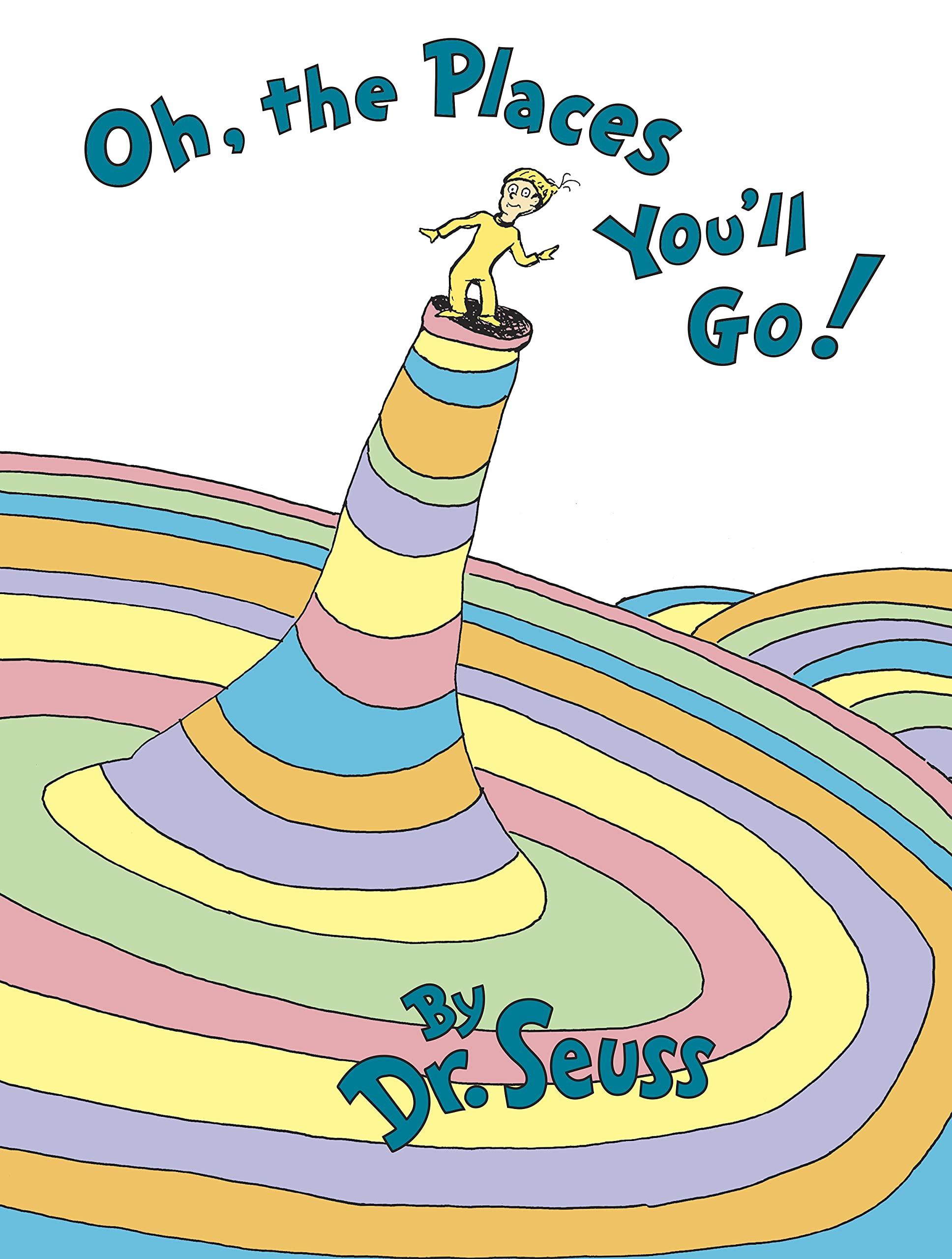
Oh, the Places You’ll Go! by Dr. Seuss follows a bright young hero who stands ready to embark on life’s grand adventure. At the start, he packs up his “things,” ready to face fresh skies and new roads. With a hat on his head and hope in his heart, he strides off with excitement bubbling inside.
The hero sails past “empty places,” where no one has journeyed before. He watches the wide-open world spread out in every direction. He feels his heart race as he stands on the edge of great possibilities.
Soon he encounters the bright light of a street called “Great Big Glowing Stars.” The signs glow and blink, urging him forward. But he notices other paths, too—ones that wind into thick forests or climb up steep hills.
As he advances, he meets a sky full of swirling winds. They spin and whirl, threatening to push him off course. He grips his hat and holds on tight, determined not to let fear blow him away.
Then he comes to the land of “Troublesome Times.” Here, the roads are steep and rocky. He trips and tumbles in deep slumps. His feet stumble, and his head droops with doubt.
In that low slump, he wonders if he made a mistake setting out. He sees gray skies overhead. He hears silence all around him. He wonders if he should turn back.
But a voice inside him whispers, “You’re off to Great Places! Today is your day! Your mountain is waiting. So… get on your way!” And so he does. He presses on despite the slump.
He climbs higher now, over hills that stretch beyond the clouds. The air feels thin and crisp. He gasps for breath but keeps walking. Each step feels new.
He reaches a fork in the road. One path leads to “Great Success.” The other dips back into the nasty slumps. He hesitates, toes tapping. Then he chooses the path that’s bright and clear.
On that bright path, he meets strange creatures called “Waiting Ones.” They hover and ponder, never moving. They ask him why he travels so fast. He pauses, then waves and goes on.
He crosses a bridge that squeaks and sways. Below, murky waters swirl and churn with doubt. He edges forward, breathing steadily. He feels his heart pound but refuses to stop.
At last he reaches a city of color and light. The streets roar with cheers. People wave banners and clap wildly. He feels a thrill run through him.
Yet he knows this isn’t the end. The city stretches into valleys and peaks beyond sight. More roads beckon him onward. He senses that life holds more wonders ahead.
He takes a deep breath and lifts his chin. He doesn’t know exactly where he will go next. But he knows he will find new sights, new friends, and new chances.
So off he goes once again. He sets foot on the unknown, with courage and curiosity. He stands tall beneath that bright sky, ready for the places he’ll go.
Detailed Summary
Plot Summary
1. Embarking on Your Journey
From the very first page, Dr. Seuss invites you to step into a world brimming with promise and possibility. You stand atop a high hill, gazing out at a vast landscape that stretches beyond the horizon. The text greets you with celebratory lines: "Congratulations! Today is your day. You’re off to Great Places! You’re off and away!" This moment marks the threshold of adventure, filled with optimism and energy.
As you set foot on the path, vibrant illustrations of swirling colors and undulating hills accompany your every move. The journey feels buoyant—almost levitating—thanks to the whimsical rhythms of Seuss’s rhymes. You sense that the world lies open before you, ripe for exploration, and that each step will bring fresh experiences.
Yet beneath the cheer, a hint of challenge lurks. The hills are high, and the valleys run deep. Still, you push forward, propelled by Seuss’s encouraging words. They remind you that while the road may twist and turn, you possess the courage to carry on.
Moving away from the hilltop, your balloon—an emblem of hope and ambition—rises behind you. It doesn’t carry you off; it stays close, a loyal companion. As the text suggests, “Your mountain is waiting. So… get on your way!” you understand that your climb has truly begun.
2. Confronting the Waiting Place
Soon you encounter The Waiting Place, a dreary spot where people stand around, stuck in routines of inaction. Faces appear listless, and time seems to drag. The land is gray, and no one moves with purpose. You witness individuals waiting for plain things: a train to arrive, the weather to change, their turn in line.
Seuss doesn’t name any one person here. Instead, The Waiting Place becomes a collective antagonist. It mocks inertia. You see children waiting to grow up, adults waiting to find work. The scene feels both familiar and foreboding. It warns you that pausing too long can steal your momentum.
Determined not to linger, you hurry onward. Your balloon tugs you forward, urging you to resist the lull of complacency. Dr. Seuss assures you that though the Waiting Place can trap souls, you need not become one of them. Your journey demands action, not patience alone.
3. Climbing Highs and Sliding Lows
Mountains rise before you, steep and daunting. You scramble upward with all your strength, hearts racing. At times, you crest a peak and feel triumphant—the world falls away at your feet. Colors dazzle, and the breeze lifts your spirits.
But gravity remains unkind. You tumble down slopes, skidding into valleys strewn with obstacles. Your balloon wobbles perilously, and you clutch the rope to steady yourself. Doubt seeps in as you wonder if you misread the map.
Still, each ascent and descent teaches you something vital. You learn to pace yourself on the climb. You find footholds in unexpected crevices. The falls hurt, yes, but they don’t stop you. Dr. Seuss’s refrain echoes in your mind: “Bang-ups and Hang-ups can happen to you.” You receive these as lessons rather than defeats.
By journey’s end, you face the mountains with new respect. You’ve discovered that perseverance on the steepest inclines pays off, and resilience softens the blow of a hard fall.
4. Weathering Setbacks and Doubts
Not all storms arrive as rain. Some blow through as doubts, uncertainties that chill your resolve. In this narrative arc, you stand under a darkening sky of worry. The wind howls questions: What if you can’t succeed? What if you lose your way?
Your balloon bulges then deflates slightly, reflecting your fragile confidence. You search for shelter but find none. The scene feels raw: you’re alone with your thoughts, and the horizon disappears in mist. Yet the story doesn’t dwell on despair.
Seuss offers a pivot. He reminds you that though setbacks sting, they don’t define your voyage. He assures, “Wherever you fly, you’ll be best of the best.” These words rekindle your spark. Even amid uncertainty, you find courage to rise, clutch the balloon, and march on.
Doubts remain, but you learn to treat them like passing clouds. They may shadow your path, but they cannot blot out the sun forever.
5. Exploring New Heights
The landscape transforms as you press forward. Hills give way to plateaus, and plateaus open onto rolling plains. You soar higher now—figuratively and literally—when you let your balloon lift you just enough to glance at distant horizons.
You meet new terrains: fields of flowers that sing when you pass, rivers that dance in spirals. The world feels alive under your feet. You try new things—skating along rainbow rails, conversing with curious creatures who offer you strange delights.
These moments of discovery fill you with wonder. You realize that exploration isn’t only about maps or destinations; it’s about the choices you make along the way. Each detour yields a fresh perspective.
By the end of this arc, you sense growth: your steps feel steadier, and your mind craves further marvels. The promise of future adventures glows on the horizon.
6. Claiming Your Victory
After trials and triumphs, you stand on a new crest, enveloped in golden light. Your balloon floats beside you—bright, untorn, triumphant. You survey the expanse, and it feels vast yet intimate.
Dr. Seuss offers final advice: “Kid, you’ll move mountains.” You understand that mountains symbolize goals you set and achieve. Your successes are genuine because you earned each one through effort and courage.
Now you hold the reins of your future. The road behind you brims with memories—steep climbs, dark valleys, glorious peaks. The road ahead promises fresh challenges. Yet you carry confidence in your pocket and lessons in your heart.
The book closes on a hopeful note. You’re ready for whatever comes next. Your journey doesn’t end; it evolves, fueled by the knowledge that you can go anywhere you choose.
Characters
1. The Traveler (You) (Protagonist)
Congratulations! Today is your day. You’re off to Great Places! You’re off and away!
In Dr. Seuss’s tale, “You” serves as both guide and hero. Though unnamed, you encapsulate every reader’s hopes and fears at the start of a journey. You stand on a hill, filled with excitement and a dash of nervousness, ready to step into the unknown. Your perspective shapes the narrative’s tone, making the adventure feel personal and universal.
As obstacles appear—steep slopes, dark clouds, the Waiting Place—you wrestle with self-doubt and elation in equal measure. Your reactions mirror real-world struggles: optimism, frustration, perseverance. By the end, you emerge wiser. You embrace challenges rather than fear them, showing that growth comes from action. Your growth arc inspires readers to face their own mountains head-on.
2. The Waiting Place (Antagonistic Force)
Waiting for a train to go or a bus to come, or a plane to go or the mail to come, or the rain to go or the phone to ring.
The Waiting Place isn’t a person but a place of stagnation. Gray and silent, it traps those who hesitate too long. Dr. Seuss uses it as a metaphor for complacency, fear, and indecision. Anyone who lingers there risks losing momentum and missing opportunities.
Despite its dull appearance, the Waiting Place exerts a powerful pull. It lulls wanderers into inaction, promising safety but delivering regret. Your narrow escape from this realm underscores the tale’s central message: don’t let fear keep you from moving forward. By personifying indecision, Seuss gives voice to a common human struggle and urges you to break free.
3. The Balloon (Ally and Symbol)
So… get on your way!
The balloon accompanies you throughout your journey, rising and falling as you embrace or doubt yourself. It symbolizes hope, ambition, and the power of positivity. When you feel confident, the balloon soars; when you falter, it wavers but never truly abandons you.
In key moments, the balloon nudges you onward. Its buoyancy reminds you that your dreams can lift you above obstacles. Yet it never does the work for you. You must grasp its rope and climb. This balance underlines a core lesson: ambition and effort go hand in hand. The balloon’s presence offers comfort without absolving personal responsibility.
4. Bang-ups and Hang-ups (Supporting Challenge)
Bang-ups and Hang-ups can happen to you— but on you’ll go…
Bang-ups and Hang-ups appear whenever you face setbacks. They are the slips, falls, and missteps that slow your progress. Seuss doesn’t draw them as monsters but as labels—subtle reminders that adversity is part of every path.
Their role deepens the narrative by showing that failure isn’t final. Each bang-up teaches you something new, and each hang-up tests your resolve. By acknowledging these moments, Seuss assures readers that setbacks belong in every success story. Overcoming them makes achievement meaningful.
5. Your Brain and Your Heart (Inner Guides)
And will you succeed? Yes! You will, indeed! (98 and ¾ percent guaranteed.)
Dr. Seuss invokes both "Your Brain" and "Your Heart" as inner advisors on your journey. Your Brain offers logic and caution, warning you of risks. Your Heart supplies passion and drive, encouraging you to dream big. Together, they form a vital duo.
When faced with a choice—play it safe or take a leap—your Brain and Heart debate. This internal dialogue reflects real decisions we all face. Their interaction teaches that balanced decisions often yield the richest rewards. You need both reason and emotion to navigate life’s twists and turns.
Themes Analysis
1. Self-Discovery and Growth
At its core, Oh, the Places You’ll Go! traces a journey of self-discovery. You begin eager but uncertain, and each event tests you. The hills, valleys, and Waiting Place all represent internal barriers—fear, doubt, complacency. As you proceed, you learn about your strengths and weaknesses.
By the end, you emerge more self-aware. You’ve climbed peaks that once seemed insurmountable, and you faced storms that rattled your confidence. These trials forge your identity. Seuss’s message resonates: real growth requires stepping beyond comfort zones and embracing challenges.
This theme speaks directly to readers of all ages. It reminds you that life’s greatest lessons come not from ease but from confronting what scares you. In the process, you become your truest self.
2. Choice and Agency
Dr. Seuss underscores that life is shaped by choices. Right from the start, you must decide whether to move forward or linger in safety. The Waiting Place tempts you to wait for perfect conditions. Yet perfect conditions rarely come.
Every path you take leads to new experiences. The mountains you climb, the storms you weather, and the heights you explore all stem from your decisions. Seuss doesn’t sugarcoat this responsibility. Instead, he celebrates it. By granting you agency, he affirms your power to shape your destiny.
This theme encourages readers to own their choices. It suggests that even missteps offer lessons. Your path may twist unexpectedly, but you’re always the one steering the course.
3. Resilience and Perseverance
Throughout the narrative, obstacles test your resolve: tumbles, doubts, and long waits. Yet each time you falter, you rise again. Seuss crafts a rhythm of setback and recovery, showing that perseverance transforms challenges into triumphs.
Resilience here isn’t blind optimism; it’s active persistence. You don’t simply wish obstacles away. You push past them, sometimes needing help from the balloon or from faith in yourself. This realistic portrayal of resilience reinforces that setbacks aren’t the end—they’re part of progress.
By weaving this theme through vivid images and playful rhyme, Seuss makes perseverance feel attainable. He assures readers that success often lies just beyond the next struggle.
Key Plot Devices
1. The Balloon
The balloon functions as a recurring emblem of aspiration and confidence. Each time you doubt yourself, the balloon appears to remind you of your goals. Its movements mirror your emotions: it dips when you hesitate, then rises as you regain faith.
Narratively, the balloon links disparate episodes. It travels with you from the hilltop to the Waiting Place, through mountains and storms. This continuity gives structure to an otherwise episodic tale. It underscores Seuss’s lesson that hope and ambition must accompany action.
2. The Waiting Place
As a plot device, the Waiting Place personifies inaction and fear. It confronts you early, threatening to derail your journey. By giving inertia a geography, Seuss dramatizes the peril of standing still.
In practical terms, the Waiting Place heightens tension. Readers recognize its trap all too well. Their desire to see you escape fuels engagement. Once you break free, the narrative momentum surges, propelling you into more dynamic scenes.
3. Rhyming Couplets and Rhythmic Cadence
While not a physical object, Seuss’s signature rhyme scheme drives the story’s pace. The rhythmic flow energizes readers and underscores key moments. Phrases like “You can steer yourself any direction you choose” linger in memory thanks to their meter.
This technique also softens heavier moments. When doubt casts a shadow, the bounce of rhyme lifts the mood. It offers reassurance even during low points. In effect, Seuss uses rhythm as an emotional guide, steering readers from anxiety back to confidence.