
Summary
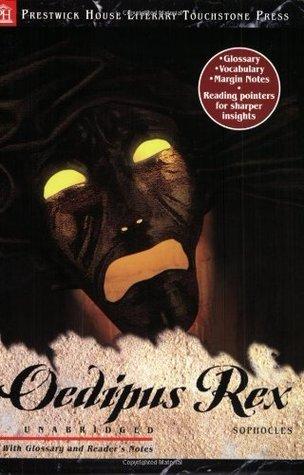
Oedipus Rex by Sophocles opens with the city of Thebes in crisis. A flock of citizens gathers before the palace of King Oedipus. The king stands among them, determined to save his people from a dreadful plague. He sends his brother–in–law, Creon, to the oracle at Delphi to learn how to lift the curse.
Creon returns bearing Apollo’s demand: thebes must drive out the man who slew the former king, Laius. Oedipus vows to find the murderer and punish him. He curses the unknown killer, not knowing he speaks of himself.
To unravel the crime, Oedipus summons the blind prophet, Tiresias. The seer hesitates but then tells Oedipus that he himself is the source of the city’s suffering. Oedipus explodes in anger and accuses Tiresias of falsehood.
Tiresias will not retract his words. He warns that Oedipus is both sinner and sufferer, doomed by fate. Oedipus is furious. He accuses Creon of plotting with the prophet to seize the throne.
Creon denies the charge. He points out that he already enjoys royal favor and respect. He challenges Oedipus to think: what gain would he find in destroying his own brother? Oedipus refuses to listen.
The queen, Jocasta, enters. She pleads for peace and scorns oracles. She reminds them that an oracle once predicted Laius’s son would kill his father. But Laius had been slain at a crossroads far from home, and his infant child was said to have died. Why trust prophecies, she asks.
Jocasta’s words soothe Oedipus at first. He, too, once fled Corinth to escape a prophecy that he would kill his father and wed his mother. He grew up believing King Polybus was his true parent. Now the plague plagues his mind.
A messenger arrives from Corinth. He brings news that Polybus has died of natural causes. Hearing this, Oedipus hopes the prophecy has failed. He laughs relief at being spared patricide.
But the messenger then reveals that Oedipus was not Polybus’s son. The infant had been found on Mount Cithaeron. Jocasta’s pale fear returns. She begs him to stop searching any further.
Oedipus turns to the shepherd who once tended the infant. The shepherd, old and trembling, confirms that the baby came from Laius’s household. He had been spared only by pity. Pieces fall into place.
Horror grips Jocasta. She flees to the palace, her mind shattered by the truth. Oedipus finds her body hanging within the bridal chamber. Grief and guilt wash over him.
He rips the brooches from her dress and stabs his eyes. Blood floods his face and he topplesto the ground. Oedipus curses himself for his crimes, both unknown and revealed.
Blind and broken, he emerges before the stunned citizens. He begs Creon to exile him from Thebes. He wants to suffer far from the people he loved and harmed.
Creon accepts the heavy burden of ruling Thebes. He leads Oedipus away, guided by his daughter, Antigone. The king steps into the darkness he created.
Thus ends the tragedy of Oedipus Rex, a tale of fate and self–discovery. The man who sought truth found ruin. The city mourns its lost king but prays for hope under new rule.
Detailed Summary
Plot Summary
1. The Plague in Thebes
A deadly plague ravages Thebes. Citizens collapse, fields lie barren, and despair settles over the city. In desperation, King Oedipus calls upon the seer Tiresias and the priest to find a cure.
Oedipus vows to find and punish the cause of the unrest. He sends Creon to the oracle at Delphi to learn Apollo’s will. Creon returns with a dire message: The plague will end only when the man who killed the former king, Laius, is driven out.
The people murmur. Oedipus swears an oath to root out Laius’s murderer. He summons Tiresias again. The blind prophet hesitates, then accuses Oedipus himself. Oedipus flies into a rage and rejects Tiresias’s words.
Tiresias persists, hinting that Oedipus is both guilty and unaware. A tense conflict erupts. Oedipus accuses Creon of conspiracy. Jocasta, Oedipus’s wife and queen, intervenes to calm him and dismiss the troubling prophecy.
For a moment, peace returns. Jocasta reminds Oedipus of Laius’s death at a roadside crossroad. Oedipus recounts how he once killed a band of men there, unaware one was King Laius. The chilling coincidence leaves them uneasy.
2. Seeking the Shepherd
Haunted by doubt, Oedipus searches for the only living witness: the shepherd who survived Laius’s murder. He hopes this man can confirm his theory that Laius’s killer fled, not Oedipus.
He commands Creon to fetch the aged shepherd. Creon hesitates but obeys. Meanwhile, Jocasta slinks away, convinced that prophecies fail and storms Oedipus to abandon his quest.
When the shepherd arrives, he trembles. Under Oedipus’s relentless questioning, he reveals that the child of Laius was not killed as ordered, but rescued. He shames Oedipus by hinting that the boy was handed over to a foreign messenger.
Suddenly, Oedipus’s memories fracture. He recalls being found as a baby and given a shepherd’s gift. The rider’s description matches the messenger who delivered him long ago. His world totters.
Jocasta, realizing the truth, begs him to stop. She prays the plague will end and curses fate. Oedipus persists, driven by a mix of horror and resolve to learn his origins.
3. Jocasta’s Despair
Jocasta rushes back to the palace distraught. She sends a servant after Oedipus, trying to forestall his confrontation with the messenger from Corinth. Her panic hints at a deeper secret—she fears that Oedipus may be her lost son.
Inside the royal hall, Oedipus writhes in anguish. Creon pleads for mercy on Jocasta and the city. Oedipus presses on, commanding the messenger to speak freely.
The messenger arrives and reluctantly confirms he brought Oedipus from King Polybus and Queen Merope of Corinth. He had received the baby from a Theban shepherd, spared from Laius’s murder order.
Oedipus erupts, begging for confirmation of his birth parents. Jocasta reappears, wild-eyed. She shouts that Polybus was adoptive, but she collapses before the full truth emerges.
Oedipus stands alone, piecing together that he married his mother and killed his father. Horror drains his strength. He struggles to breathe as the full weight of his acts crushes him.
4. The Messenger from Corinth
The messenger from Corinth steps forward reluctantly. He recounts how his master, the Corinthian king, received an abandoned baby. He had no wish to kill the child, so he delivered him to the shepherd at Thebes.
He admits he once joked to Oedipus that Polybus was no blood father, but Oedipus shrugged off the hint. Now he feels remorse for playing with a tragic fate.
Oedipus darts questions: Who gave the baby to you? The messenger falters. He refuses to speak until ordered by Oedipus, but when he whispers the shepherd’s name, Oedipus’s mind snaps.
Jocasta covers her face and flees. Oedipus stands trembling, sweat dripping. He staggers toward the door to chase her, but stops, paralyzed by dread.
The chorus murmurs. They sense catastrophe. Oedipus, blind to the truth, charges onward, drawn by a mix of hope and terror that his fate may yet be undone.
5. Revelation and Self-Punishment
Oedipus bursts into Jocasta’s chamber. He finds her dead by suicide, draped over the bed’s ornate rail. A golden brooch pierces her dress—she killed herself in shame.
Numb with grief, Oedipus scrambles for the brooch. He uses it to gouge out his own eyes. He cries out that sight has brought him nothing but misery.
Blood tracks his tears. He staggers out, guided only by his loyal attendants. The chorus gasps. He kneels before his father’s tomb and begs to be exiled.
He wails that his life must end in wandering. He curses the day he sought the truth. The city recoils at the bitter justice of Apollo’s oracle.
Creon arrives. He orders Oedipus removed from the public square. The chorus chants sorrowfully. Thebes mourns its fallen king as the plague lifts under divine decree.
6. Exile and Legacy
Creon assumes the throne. He arranges for Oedipus to live in exile. The city grants the former king a solemn funeral procession to mark his renouncement.
Oedipus, led by attendants, wanders toward the frontier. He carries his staff and wears rags. Once mighty, he now bears the scars of his guilt openly.
Along the road, he laments his lost family. He wonders whether sons or kings matter once fate claims its victims. He sees fellow travelers avert their eyes.
The chorus’s voice echoes in his mind: “Pride brings the lowly to the ground.” He trudges on, determined to respect his own curse and bring peace to Thebes.
Thus ends the reign of a king who sought truth and found ruin. His tragic journey frames the power of fate over human will.
Characters
1. Oedipus (Protagonist / King of Thebes)
“I, Oedipus, whom all men call the Great, seize my own eyes that saw too much.”
Oedipus displays fierce resolve and confidence. He solved the Sphinx’s riddle and rose to power. His energy drives him to end the plague. Yet his pride blinds him to warnings. He trusts his wit above all.
As revelations unfold, his confidence turns to horror. He recognizes that intelligence can breed destruction. In self-punishment, he blinds himself, showing remorse and acceptance of fate’s judgment.
2. Jocasta (Queen of Thebes / Oedipus’s wife and mother)
“Stop! For love of me do not pursue this journey you have begun.”
Jocasta offers calm counsel. She seeks peace by dismissing oracles as false. Her love for Oedipus drives her to protect him from prophecy. Yet she carries guilt for Laius’s death and the abandoned child.
When the truth surfaces, Jocasta cannot bear her shame. She chooses suicide rather than face public disgrace. Her death reveals the horror of unwitting incest.
3. Tiresias (Blind prophet of Apollo)
“You are the murderer you seek.”
Tiresias stands as fate’s mouthpiece. Blind in body yet clear in insight, he knows Oedipus’s guilt early on. He resists revealing the whole truth but speaks enough to unsettle the king.
His reluctance underscores the weight of prophecy and the pain it brings. Though treated with anger, Tiresias endures, embodying divine will over mortal pride.
4. Creon (Oedipus’s brother-in-law and adviser)
“I will follow every law and word that brings relief to Thebes.”
Creon acts as mediator. He brings Apollo’s message from Delphi and later moderates conflicts. He values rational order and cares for Thebes over personal power.
After Oedipus’s fall, Creon accepts leadership with a heavy heart. He arranges Oedipus’s exile, balancing mercy with duty. His steady hand contrasts Oedipus’s stormy passion.
5. Chorus (Voice of Theban elders)
“Call no man blessed till he has passed the final limit of his life secure from pain.”
The Chorus comments on events and moral order. They embody public sentiment, shifting from hope to despair as truths emerge. Their odes interpret fate and guide audience reflection.
They mourn with the city at Jocasta’s death and Oedipus’s ruin. By the end, they affirm the play’s moral: Pride invites downfall, and divine will surpasses human ambition.
Themes Analysis
1. Fate versus Free Will
The play wrestles with whether humans shape their destiny or merely dance to divine scripts. Oedipus exercises free will in hunting Laius’s murderer. Yet every choice leads him closer to the doom foretold at Delphi.
By uncovering his past, Oedipus fulfills rather than thwarts fate. His struggle underscores Greek belief in cosmic order. Mortals may act, but the gods’ designs prevail.
2. Sight and Blindness
Sight operates on two levels. Oedipus sees the world yet remains blind to his true identity. Tiresias lacks physical sight but perceives the truth.
When Oedipus blinds himself, he rejects false vision. His physical blindness becomes symbolic of insight and repentance. The play suggests inner awareness surpasses outward vision.
3. Pride and Nemesis
Oedipus’s confidence guides his reign but morphs into hubris. He defies prophetic warnings and arrogantly accuses Creon and Tiresias of treachery.
Divine law exacts a price for such pride. Nemesis—divine retribution—falls swiftly, dismantling Oedipus’s world. The tragedy warns against overstepping mortal bounds.
Key Plot Devices
1. Delphic Oracle
The oracle’s pronouncements set the tragedy in motion. Its message—that Laius’s killer remains in Thebes—drives Oedipus to action. Every step he takes to avoid fate only leads him closer to it.
The oracle embodies Apollo’s will. It reminds viewers that divine authority outstrips human understanding. The tension between prophecy and human choice fuels the drama.
2. Shepherd’s Testimony
The shepherd holds the crucial truth about Oedipus’s birth and Laius’s murder. His reluctant confession triggers the final revelation. Without his words, Oedipus might have escaped his past.
This device highlights how a single witness can reshape destiny. It also spotlights themes of mercy and cruelty, as the shepherd once spared the infant Oedipus yet later must testify against him.
3. Self-Blinding
Oedipus’s act of gouging out his eyes becomes both punishment and symbolic gesture. It expresses his shame and the knowledge that his insight caused suffering.
This device transforms him from king to outcast. By choosing physical darkness, he attains moral clarity. It underscores the interplay of sight, guilt, and catharsis in the tragedy.







