SUMMARY
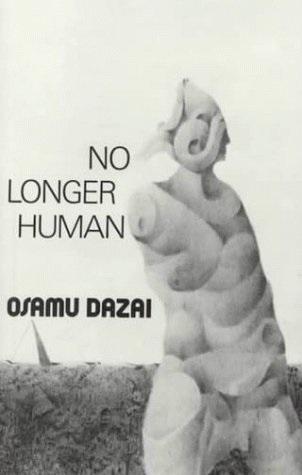
No Longer Human by Osamu Dazai traces the life of Ōba Ŷōzō, a young man who feels he can’t fit into society. From early childhood he hides behind a clownish mask, convinced that people will recoil if they see his true self. The novel unfolds in three notebooks that Ŷōzō leaves behind before his final disappearance, each chronicling a stage of his decline.
In the first notebook, Ŷōzō recalls his lonely boyhood. His mother dies when he is small, and he struggles to understand normal human emotions. He learns to laugh and joke to mask his fear and isolation. Even as a child, he sees himself as an outsider peering in.
At school, Ŷōzō tries to fit in but fails. He drifts through shallow friendships and resorts to copying others’ mannerisms. His sense of fraudulence grows. He collects small betrayals—lying, stealing, insulting—in hopes they will shield him from being seen.
Teenage years bring brief comfort in drawing cartoons and writing decadent poetry. Ŷōzō pours himself into art at the Tokyo boarding school his aunt sends him to. Still, he can’t connect. His art seems hollow. He begins to drink and sleep with women, trying to numb the ache of solitude.
In the second notebook, Ŷōzō flees Tokyo for his hometown. He takes a low‐paying job but soon sees only hypocrisy in everyday life. He falls into deeper drunkenness and drifts from job to job. His sense of self fractures further. He marries a dark woman named Tsuneko but feels only panic and revulsion when they are intimate.
Tsuneko becomes pregnant, and Ŷōzō recoils in terror. He abandons her and returns to Tokyo, empty‐handed. Once back, he meets Horiki, a stable older man who offers friendship and financial support. Horiki introduces him to Tokyo’s nightlife, where Ŷōzō drinks even more heavily. He finds refuge in Horiki’s voice, yet he also despises the calm Ŷōzō hears in it.
Horiki urges him to write, and for a short time Ŷōzō gains a small measure of success. He publishes short stories driven by his own sense of despair. Readers praise his raw honesty. Yet each compliment leaves him feeling more like a phony.
When Horiki moves out of town, Ŷōzō loses his anchor. He wanders aimlessly, sinking further into alcohol and opium. He drifts into a brothel and becomes The Butterfly, a courtesan who hides behind makeup and flamboyant clothes. Even here, masks never touch his real face.
In the third notebook, Ŷōzō attempts a second marriage, this time to a sweet artist named Yoshiko. She cares for him with gentle persistence. For a moment, Ŷōzō dares to hope. He stops drinking and tries to rebuild his life. But a single relapse into liquor shatters that fragile peace.
Yoshiko leaves him, and Ŷōzō’s despair deepens. He attempts suicide with drugs but survives, waking in a hospital filled with strangers who stare at his broken body. He feels more alien than ever. He can’t look at himself in the mirror without wanting to die again.
Forced into a sanatorium by his family, Ŷōzō drifts in and out of lucidity. He writes these notebooks under strict supervision. Each entry pulses with shame, a shame he cannot escape. He confesses to his self‐deceptions and asks, in vain, whether there is a human heart hidden beneath all the masks.
Toward the end, Ŷōzō records a fragment of hope: his fear of living has become his fear of dying. Yet that hope dissolves as quickly as it forms. The final pages grow disjointed. He notes wild dreams, voices, and the terror of relapse.
The novel ends abruptly. Ŷōzō disappears, leaving no word of his fate. His final date goes blank in the notebook. We are left with a man who never found a home in his own skin. He remains a testament to the ache of isolation.
Dazai writes with stark honesty, showing how fragile identity can be when built on fear. Ŷōzō’s story reads like a warning. Even small cruelties and lies can pile up until there is no solid ground left.
By stripping away civilized veneers, Dazai leaves us to face the raw, aching question of what it means to be human. Ŷōzō sought refuge in masks, yet he discovered they only deepened his loneliness. His journey haunts because it feels possible for any of us.
No Longer Human stands as a bleak, moving portrait of alienation. Through three notebooks of confessions, it questions whether belonging is ever more than a mask we let others believe. And perhaps that uncertainty is the novel’s truest truth.
DETAILED SUMMARY
Plot Summary
1. Childhood Alienation
Oba Yozo’s earliest memories unfold against the backdrop of rural Japan in the Taishō era. From a young age, he senses an insurmountable gap between himself and other children. He feels like a performer on a stage, obliged to don a mask of cheer and jest to avoid drawing scrutiny—even from his own family.
At elementary school, Yozo’s humor wins him superficial friends but deepens his loneliness. He craves genuine connection yet fears being exposed as a fraud. His antics—mocking classmates, crafting pranks—reflect a desperate bid for acceptance rather than true belonging.
This forced role of the clown scars Yozo’s sense of self. He anticipates betrayal if he ever drops the mask. As adolescence nears, that fear solidifies into a conviction: he cannot be human.
—all that earnest smiling felt like a trap. A trap I couldn’t escape.
2. Tokyo and the Artist’s Fall
After middle school, Yozo moves to Tokyo to study Western painting, hoping art will grant him identity. The city dazzles and overwhelms. He drifts from studio to studio, unable to muster true passion for any technique or teacher.
He indulges instead in debts, late-night drinking binges, and the company of women—seeking fleeting relief from inner torment. Each morning brings fresh shame: he has lied again, spending money he doesn’t have and abandoning work he should have done.
His classmates admire his apparent freedom. They don’t see the suffocating guilt that follows every drink and every neglect of his canvases. Yozo’s art remains unstarted, as if he fears that any real effort will expose him.
—so I painted nothing. Because to paint was to reveal the hole inside me.
3. Descent into Self-Destruction
Yozo’s financial recklessness deepens. Money vanishes as if through a sieve—spent on liquor, prostitutes, and temporary friendships. He borrows from one lender to pay another, weaving a web of lies that tightens around his throat.
As his debts mount, so does his self-hatred. He hides letters under floorboards and avoids the postman. Each refusal to answer feels like a retreat further from humanity.
Night after night, he staggers home inebriated, convinced that death might be kinder than continued farce. Yet each morning he wakes—still alive, still playing the clown.
—I survived by fooling everyone, but mostly I fooled myself.
4. Marriage and Illusion
In a brief moment of hope, Yozo marries Tsuneko. She embodies both gentleness and practicality—qualities he lacks. For a time, he imagines a path to redemption through domestic stability.
But he cannot sustain honesty. He deceives Tsuneko about his debts and drinking. Guilt becomes an ocean, and he drowns in its depths, convinced his lies will wash away any affection she holds for him.
Their home, once a potential refuge, becomes a stage for daily performances. Yozo plays the devoted husband, yet each act feels hollow. The very intimacy he craves intensifies his self-loathing.
—she looked at me the way a child looks at a broken toy.
5. Hospitalization and Insight
After a near-fatal drinking binge, Yozo collapses and ends up in a psychiatric ward. Confronted with the clinical gaze of doctors, he sees his illness laid bare. They diagnose him with neurosis—but Yozo feels no relief.
He watches other patients trapped in routines of medication and observation. In their quiet suffering, he glimpses his own silent pain. Perhaps humanity is a spectrum, not a binary judgment.
Yet even among the ill, Yozo remains an outsider. He cannot connect and fears being written off as incurable. His heartbreak crystallizes: self-annihilation seems the only honest act left.
—behind every therapy session, I felt more hollow.
6. Final Isolation
After discharge, Yozo drifts once more. He tries painting, journaling, even Christian fellowship—whatever might exorcise his emptiness. Nothing holds. He leaves Tsuneko, believing her mercy only prolongs his deception.
He wanders through bars, boarding houses, and temples—never staying long enough to matter. He meets other lost souls, but their stories only amplify his own despair.
By the end, Yozo concludes that he is no longer human. He embodies the void between mask and face. The novel closes on that stark confession, leaving readers to ponder the nature of shame, identity, and survival.
—I am no longer human. That is the truest truth I know.
Characters
1. Oba Yozo (Protagonist)
"“I am no longer human.”"
Yozo narrates his own downfall with unflinching honesty. He reveals how fear of rejection led him to perform a perpetual comedy for others. Under that mask, he conceals a void of self-hatred and despair. His reflections read like letters from the abyss—achingly honest yet often contradictory.
Despite his talent for observation, Yozo cannot observe himself without distortion. He tries art, marriage, religion, and therapy, only to find each an illusory cure. His constant search for meaning underscores the novel’s central question: can a person wear any mask without losing their face?
“I’ll smile for you—because every world demands an actor.”
2. Tsuneko (Wife and Compassionate Support)
"“I’ll stay if you let me help you.”"
Tsuneko appears late in Yozo’s life, offering love he scarcely believes he deserves. She marries him despite signs of his instability and stands by him through financial and psychological turmoil. Her kindness contrasts with Yozo’s self-destructive tendencies, exposing the gulf between his gratitude and his inability to accept care.
As Yozo’s deception deepens, Tsuneko becomes both his refuge and his mirror. She patiently urges therapy, gently rebukes his drinking, and offers forgiveness he can’t claim. In her steady presence, Yozo glimpses a different fate—one he tragically rejects.
“I married you because I saw a man lost, and I wanted to find him.”
3. Dr. Yamazaki (Psychiatrist and Observer)
"“You must face yourself before you can face the world.”"
Dr. Yamazaki treats Yozo during his hospitalization. He listens without judgment but grows frustrated by Yozo’s self-sabotage. He represents the era’s emerging psychiatric understanding, balancing clinical detachment with genuine concern.
Through his sessions, we see Yozo’s torment refracted through medical jargon. Dr. Yamazaki’s voice remains calm, even as Yozo rails against diagnosis. He warns that without honesty, no therapy can reach Yozo’s core. He becomes the final witness to Yozo’s unraveling mind.
“Insight alone does not cure the heart.”
4. Oba’s Father (Influential Parent)
"“We expect you to face life without complaint.”"
Yozo’s father embodies traditional expectations—stoic, achievement-oriented, emotionally distant. He wants Yozo to study well and join respectable professions. Yet he never perceives his son’s inner collapse, mistaking rebellion for youthful idleness.
His silence speaks volumes. He seldom offers comfort or inquiry when Yozo’s grades slip or rumors of drinking spread. That parental absence cements Yozo’s belief that authenticity brings only reproach. He learns early that his true self invites isolation.
“A son must stand tall, even when the ground gives way.”
5. Hiroshi Takeuchi (University Friend)
"“Your talent scares you more than failure.”"
Hiroshi befriends Yozo in art school, admiring his wit and apparent fearlessness. He drags Yozo into bohemian circles, late-night salons, and flirtations with modernist ideas. Hiroshi’s enthusiasm briefly inspires Yozo to pursue painting.
But when Hiroshi offers genuine friendship, Yozo retreats. His fear of intimacy overrides artistic collaboration. Their rifts illustrate the tragic cost of Yozo’s self-isolation: potential kindness becomes another stage to be performed upon, not enjoyed.
“We dreamed of art, but you fled from every dream.”
Themes Analysis
1. Alienation and Masking
The novel’s heart lies in alienation: Yozo feels profoundly disconnected from those around him. He learns early that sincerity invites rejection, so he crafts a mask of humor and frivolity. That mask evolves into his entire identity, leaving no room for genuine feeling.
This theme resonates beyond Yozo’s story. Dazai suggests that societal pressures compel us all to don roles—a student, a spouse, a worker—often at the cost of authenticity. Yozo’s extreme case asks us: what if the mask becomes inseparable from the face? When does performance kill the performer?
2. Self-Destruction and Guilt
Yozo’s compulsive drinking, gambling, and lying trace back to guilt—a sense that he is inherently unworthy of love or forgiveness. Each binge and betrayal feels like penance for crimes he can’t name. The more he punishes himself, the deeper he sinks.
Dazai portrays this spiral with unflinching clarity. Yozo’s voice never flinches from self-accusation, even as it questions how he came to deserve such hate from himself. The novel pushes readers to examine how guilt can become a self-fulfilling prophecy.
3. The Failure of Redemption
Throughout the narrative, offers of salvation appear: art, marriage, religion, psychiatry. Each seems plausible at first—Yozo glimpses hope when he wields the brush or vows marital fidelity. Yet every attempt fails due to his own reluctance to trust.
Dazai doesn’t judge Yozo for refusing help; he shows how a mind steeped in shame sabotages mercy. The novel’s tragic trajectory suggests that redemption must be partly self-initiated. Without that inner leap of faith, even the kindest offers remain hollow.
Key Plot Devices
1. Yozo’s Narration
By letting Yozo tell his own story, Dazai immerses readers in a firsthand account of despair. The confessional tone blurs the line between memory and present anguish. As Yozo revisits each failure, we feel both reader and therapist—forced to empathize, to ask why.
That device intensifies the novel’s emotional power. Instead of an omniscient observer, we get a man whose thoughts betray him. His gaps in memory echo his fragmented self, making the narrative as much a document of trauma as a story.
2. Recurring Masks and Costumes
Throughout, Yozo uses clothes and performances to hide his emptiness. A clown costume becomes more than stage garb—it symbolizes his lifelong shield. Whether at school, in bars, or at home, he chooses attire that deflects true scrutiny.
This motif deepens the theme of illusion versus reality. Each mask Yozo dons erects a barrier to intimacy. When he finally discards them—in psychiatric sessions and in his journal—he exposes the raw wound beneath.
3. Journal Entries
Interspersed in the text are Yozo’s dates and brief reflections—journal entries that mark his attempts at self-recording. These entries contrast with his long, rambling confessions, suggesting a desire for order amidst chaos.
They also foreshadow his final act of writing. Keeping a journal implies a hope for coherence, a belief that if he writes enough, he might understand himself. Tragically, his entries remain as fragmented as his life.