
Summary
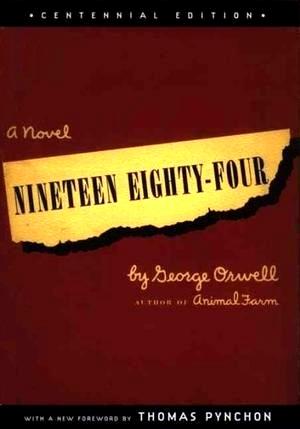
Nineteen Eighty-Four, by George Orwell, unfolds in a grim future where the world has split into three totalitarian superstates. The story takes place in Oceania, ruled by the Party under the ever-watchful gaze of Big Brother. Citizens endure constant surveillance, public mind control, and vicious propaganda. Every gesture, every whispered thought can lead to disappearance. In this bleak London, Winston Smith, a weary thirty-nine-year-old, works at the Ministry of Truth, rewriting history to suit the Party’s shifting narratives.
From his cubicle, Winston tampers with newspaper articles, erasing people and events that the Party has deemed inconvenient. He buys a secret diary and begins to record his doubts about the Party’s relentless grip. Each day, he risks discovery by writing even a single line. Yet he can’t stop. Holding the pen gives him a flicker of freedom, as if words alone might save his mind from decay.
At work Winston encounters Julia, a young woman from the Fiction Department. He knows she looks at him with hostile suspicion—until she slips him a folded note that reads “I love you.” Frozen for a moment, Winston’s heart pounds. He watches her at the Two Minutes Hate, sees her eyes in the crowd. Then hope ignites.
They arrange a secret meeting in a shabby prole district. There, among abandoned pubs and boarded-up storefronts, they steal a few hours away from telescreens. Julia is bold; she mocks the Party’s rules and vows to break every one of them. Winston marvels at her courage.
Soon they establish a hidden rendezvous above Mr. Charrington’s antique shop. The dusty room has no telescreens and seems a safe haven. They furnish it with stolen bread and victory gin. They talk about the past and about rebellion. Above all, they believe they can outwit the Party and taste liberty in stolen moments.
Their ruse reaches O’Brien, a charismatic Inner Party member. He signals them with a subtle gesture, then invites Winston to his luxurious flat. In that glittering apartment, O’Brien confirms their mutual hatred of the regime. He offers Winston a copy of Goldstein’s forbidden book. It feels like a secret handshake in a dark club—a promise of revolution.
But betrayal lurks beneath the surface.
Under O’Brien’s direction, Winston reads the banned text. It explains the Party’s methods: perpetual war, shifting alliances, and the manipulation of truth. Winston learns how power demands unending conflict to keep citizens in fear. Each page intensifies his resolve. He sees the pattern: if you control the past, you control the future.
Inevitably, the Thought Police close in. One night, they storm the room in the antique shop. Glass shatters. Winston and Julia are dragged into custody. Panic surges through Winston’s veins. Everything collapses in an instant.
In the Ministry of Love, torture becomes routine. O’Brien—his confessor turned torturer—leads Winston through a horrifying regimen. They subject him to electric shocks, threaten his loved ones, and force him to betray Julia. Each day, Winston’s body screams, but his mind screams louder: he wants to surrender rather than crack completely.
Finally they bring him to Room 101. There he confronts his worst fear—rats strapped to his face. In sheer horror, he begs for Julia to suffer in his place. That split-second choice shatters him utterly. They break his spirit.
After his ordeal, Winston sits alone in a canteen. His soul lies in fragments. He watches a telescreen announce a victory that never came. A smile crosses his face, genuine and hollow. He realizes he loves Big Brother.
Months later, he sees Julia in a drab park. They exchange a few words, confessing mutual betrayal and loss. Love has fled. They part forever.
The novel closes on Winston’s blank stare as he sips gin. He has become just another face in the crowd—obedient, broken, and triumphant at last under the Party’s unyielding rule.
Detailed Summary
Plot Summary
1. Life Under Big Brother’s Watchful Eye
Winston Smith lives in Airstrip One, a province of the superstate Oceania, where the Party rules with absolute control. Citizens endure constant surveillance through telescreens. The Party’s slogans—“War is Peace,” “Freedom is Slavery,” “Ignorance is Strength”—echo everywhere. Winston, a low‐ranking member of the Outer Party, resists inwardly. He secretly records his doubts in a diary he hides in his rented room, a small act of rebellion that could cost him his life.
Every morning, Winston endures the Two Minutes Hate, an orchestrated public ritual in which citizens vent fury at the Party’s enemies. Though he plays along, he despises the spectacle and wonders how long he can contain his hate for Big Brother. He visits the prole district hoping for glimpses of unmonitored life but finds only poverty and apathy. Still, he spots flickers of genuine humanity among the proles—an ember he clings to.
Meanwhile, Winston becomes increasingly aware of his own physical and emotional decay. He notices a varicose ulcer on his ankle that grows ever larger, a constant reminder of his vulnerability. He remembers his mother and sister, lost to him during the Party’s purges, and he aches for a connection that might anchor him against the Party’s tide. These memories strengthen his resolve to challenge the regime—even if only in secret.
2. A Spark of Rebellion
One day at the Ministry of Truth, Winston meets Julia, a dark‐haired woman from the Fiction Department. He suspects she spies on him. Then she passes him a note confessing her love. They arrange a secret tryst in a wooded area near the city, where the telescreens can’t see them. In that hidden space, they taste freedom for the first time. Their affair becomes an act of political defiance.
As weeks pass, Julia and Winston meet regularly in the room above Mr. Charrington’s shop. They speak openly, share memories, and build trust. Julia reveals she despises the Party but keeps her true self hidden by conforming outwardly. Winston admires her boldness and finds strength in her practical skill at rebellion. Their love intensifies his hope that the Party’s power might be broken.
Yet fear grows alongside passion. They know any slip could bring them to the Ministry of Love. They debate humanity’s fate and dream of joining a mysterious Brotherhood led by Emmanuel Goldstein, the Party’s proclaimed enemy. Winston obtains a copy of Goldstein’s book, believing it might guide them. Each day tightens the noose of surveillance as the Thought Police slip ever closer.
3. Into the Lion’s Den
O’Brien, an Inner Party member whom Winston secretly admires, approaches Winston and Julia. He pretends to share their dissent and invites them to his luxurious flat. There, O’Brien offers Winston a copy of the forbidden book and welcomes him into the Brotherhood. Winston feels vindicated. He believes the struggle for truth finally has a leader and a path.
As Winston and Julia pore over Goldstein’s text, the theory of perpetual war and shifting alliances comes into focus. The superstates manipulate history and public perception to maintain power. They realize the Party’s vision extends beyond mere politics—it corrupts reality itself. Yet, optimism nags at Winston: perhaps ideas and love can still topple tyranny.
They leave O’Brien’s flat convinced of their cause. Winston carries the book close to his chest. Julia holds his hand firmly. Both wonder if the Brotherhood truly exists or if they’re walking into a trap. Their courage and hope stand in stark contrast to the Party’s iron grip.
4. Betrayal and Torture
Winston and Julia’s world collapses when the Thought Police storm the room above Mr. Charrington’s shop. Charrington, revealed as a Thought Police agent, watches their arrest. The telescreen hidden behind a painting exposes their every moment. They’re separated and taken to the Ministry of Love, where the real work begins.
Ingested into the labyrinth of cells and interrogation chambers, Winston first undergoes isolation. Sleep and food become scarce. Fear threads through every moment. Guards taunt him. Then O’Brien appears—no longer a comrade but an agent of cruelty. He assures Winston that torture can cure him of “thoughtcrime.” Under this perverse logic, pain itself is medicine.
The torture intensifies in Room 101. O’Brien reveals that each prisoner’s worst fear resides there. For Winston, that fear is rats. Chained with his head enclosed in a cage, he hears the skittering. Desperation dissolves his resolve. He begs to have Julia tortured in his stead. In that instant, the last ember of rebellion dies. He betrays her to save himself.
5. Broken Spirit and Final Submission
After Room 101, Winston emerges a hollow shell. His body scars, his mind fractures, and his spirit submits completely. He spends months recovering in a government facility, where he accepts Party doctrine without question. His diary and the book vanish. He remembers nothing of resistance.
Back at his old workplace, Winston executes falsifications with cold compliance. He crosses out his former doubts. His love for Big Brother blossoms within him. He watches the telescreen and weeps with joy when news come of Oceania’s victory in an ambiguous battle. He feels an overwhelming pride that Simba himself would envy.
Occasionally, a faint ache stirs when he glimpses Julia, but the memory passes. He recalls her only as a shadow. Winston Smith now exists to worship Big Brother utterly. His mind lies quiet. His heart conforms. And in a final act, he glorifies the Party. “He had won the victory over himself. He loved Big Brother.”
6. Epilogue: The Power of Total Control
Though Winston’s story ends, the novel’s warning resonates. The Party reshapes truth, erases dissent, and crushes love that contradicts orthodoxy. Reality becomes whatever the Party decrees at any moment. Citizens lose even the memory of rebellion.
Orwell leaves readers with a chilling vision: when a government controls history, language, and fear itself, humanity’s spirit can perish in plain sight. Nineteen Eighty-Four remains a dire caution—one man’s broken soul stands for millions still watching.
Characters
1. Winston Smith (Protagonist)
“If you want a picture of the future, imagine a boot stamping on a human face—forever.”
Winston serves at the Ministry of Truth, altering historical records to fit Party doctrine. Beneath his quiet exterior, he harbors dangerous doubts about Big Brother. He clings to fragments of memory and dreams of truth. His longing for genuine humanity drives him to secret acts of rebellion, like keeping a diary and seeking a love affair with Julia.
Under interrogation, Winston fights until Room 101 breaks him completely. His betrayals and ultimate submission reveal how totalitarianism can crush even the deepest human emotions. Winston’s journey—from curious dissenter to loyal follower—embodies the novel’s central warning about absolute power.
2. Julia (Key Supporting Character and Love Interest)
“I hate purity. I hate goodness. I don’t want any virtue to exist anywhere. I want everyone to be corrupt to the bones.”
Julia works in the Fiction Department and outwardly appears to support the Party. Yet she secretly despises it and masters the art of camouflage. Her pragmatic rebellion—stealing goods, forging documents, and pursuing a sexual relationship with Winston—brings spark and hope. She mocks Winston’s idealism but shares his desire for moments of genuine freedom.
Though less philosophical, Julia’s fierce independence and quick wit inspire Winston. In love and terror, she reveals how personal passion can defy political control. Her fate alongside Winston underscores the Party’s ruthless suppression of human bonds.
3. O’Brien (Antagonist and Inner Party Agent)
“Power is in tearing human minds to pieces and putting them together again in new shapes of your own choosing.”
O’Brien poses as an ally to Winston and Julia, feigning dissent to draw them into a false sense of security. He wields intellect and calm persuasion to justify the Party’s cruelty. By day, he shares theories about the Brotherhood and heals Winston’s doubts. By night, he tortures Winston in the Ministry of Love.
O’Brien represents the Party’s cunning. His betrayal stings because Winston believed in him. O’Brien’s lectures on power and pain lay bare the regime’s philosophy: absolute control demands absolute loyalty, even if it means destroying the human soul.
4. Big Brother (Symbolic Leader)
“Big Brother is Watching You.”
Big Brother’s sparkling moustached face appears on posters, coins, and telescreens throughout Oceania. Though likely a fictional construct, he symbolizes the Party’s eternal watch. Never aged or absent, his image enforces awe and fear. Citizens love him, even as they tremble at his gaze.
Big Brother stands for the myth that sustains tyranny. He needs no biography or personal history—his cult of personality fills every corner of life. To worship him is to surrender truth itself, as Winston ultimately discovers.
5. Mr. Charrington (Supporting Character and Thought Police Agent)
“We are the dead.”
Mr. Charrington runs the antique shop where Winston and Julia rent a room. He appears gentle and nostalgic, surrounded by relics from a bygone era. Winston believes him an ally who preserves bits of unaltered history. Yet Charrington’s kindness masks his loyalty to the Party.
Charrington’s betrayal—revealing the hidden telescreen—is a turning point. It shows how the Party corrupts even innocent facades. His transformation from kindly shopkeeper to enforcer underscores the novel’s theme that no refuge exists beyond the Party’s reach.
Themes Analysis
1. The Dangers of Totalitarianism
Orwell envisions a state that controls every aspect of life—history, language, relationships, and thought. By erasing personal freedoms and rewriting the past, the Party ensures its perpetual rule. Citizens live in fear, unable to distinguish truth from fabrication.
The novel warns that unchecked power breeds cruelty. Public rituals like the Two Minutes Hate channel human emotion into state‐sanctioned violence. Even private rebellion collapses under relentless surveillance. Nineteen Eighty-Four urges vigilance: democracy can perish if we relinquish control over truth and rights.
2. Manipulation of Language and Reality
Newspeak, the Party’s invented language, shrinks vocabulary to limit thought. With fewer words, dissent becomes impossible. Winston’s job rewriting history isolates him further—facts vanish; only the Party’s lies remain.
Orwell shows that controlling language means controlling reality. When words lose meaning, so does the concept of truth. The populace becomes malleable clay. Through Newspeak and constant propaganda, the Party makes its own version of reality absolute and unchallengeable.
3. The Fragility of Human Spirit
Winston’s journey reveals how delicate individual resistance can be. He finds fleeting hope in his diary and Julia’s love. Small acts of rebellion—writing a line of truth, sharing a stolen kiss—become profound.
Yet the Party’s cruelty crushes his spirit. Room 101 exemplifies the worst torture: facing one’s deepest fear. Winston betrays Julia to save himself, showing how terror overrides loyalty and love. Orwell reminds us that preserving human dignity requires more than private defiance—it demands collective safeguards against oppression.
Key Plot Devices
1. Telescreens
Every home and workplace contains a telescreen that watches and listens without pause. These devices enforce obedience. They watch facial expressions and monitor voices. Even a slip of the eye or word can result in arrest.
Telescreens blur the line between public and private. Winston thought his rented room was safe—until a hidden telescreen ruins that illusion. Orwell uses telescreens as symbols of the surveillance state. They show how technology can become an instrument of terror, depriving citizens of any refuge.
2. Newspeak
Newspeak, the Party’s controlled language, eliminates words that invite rebellious thought. Its aim is to make ‘unorthodox’ thinking impossible by removing the vocabulary to express it.
Gradually, the populace accepts Newspeak. Winston secretly maintains an old dictionary, fearing the loss of language equals the end of freedom. Orwell demonstrates that when language decays, so does independent thought. Newspeak thus becomes a darkly clever weapon in the Party’s arsenal.
3. Room 101
Room 101 is the final torture chamber in the Ministry of Love. There, prisoners face their worst phobia. The Party uses personalized fear to obliterate any remaining resistance. For Winston, rats become his undoing.
By instrumenting ultimate terror, Room 101 breaks even the most steadfast minds. It underscores that totalitarian control requires psychological mastery as much as physical force. Once fear overcomes love or loyalty, the regime stands unchallenged.







