
Summary
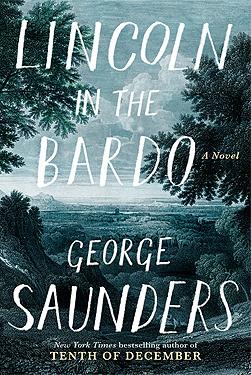
Lincoln in the Bardo by George Saunders explores grief and the afterlife through a blend of historical record and imaginative fiction.
Young Willie Lincoln lies dead in the temporary crypt at Oak Hill Cemetery just outside Washington, D.C. His sudden fever cut short a bright life, leaving President Abraham Lincoln in despair. Almost every night, the president slips into the graveyard to sit beside his son’s coffin. Families of the dead watch him in confusion, but none can intervene.
Within the crypt’s walls, a strange realm unfolds—a bardo, the Tibetan term for the space between life and death. Here, souls linger, unwilling or unable to cross over. They greet Willie with curiosity and comfort. Each spirit carries its own tale.
Hans Vollman, a rotund man embarrassed by his unfinished bride, recounts his botched wedding night. He tries to console Willie by offering carrying practice. Meanwhile, the yawning ghost Roger Bevins III obsesses over bricks, convinced they hide secrets to his murder. These souls chatter endlessly, seeking meaning in their afterlives.
A lantern-bearer, Willie’s former playmate, appears as Mary Todd Lincoln’s friend, conjuring uncomfortable memories. She recalls her own death and tries to comfort Willie. At times she misremembers his name. His confusion reflects his resistance to leaving his mournful father behind.
The scene shifts to Lincoln’s own memories. Newspaper clippings recount his speeches and his grief-stricken state. Photographs of mourning crowds accompany passages from his letters. This factual framing forces us to confront the president’s pain.
Factions arise among the spirits: some relish their new existence and wish to trap Willie here forever. Others long to move on. A former minister pleads with them to pray for release. Emotions surge and ghosts debate Willie’s fate in chaotic assemblies.
Meanwhile, Lincoln’s nightly vigils become more fevered. He leans against the cold limestone, talking softly to his son. He imagines the boy’s laughter echoing in the corridors of power. Spectral witnesses watch in awe, unsure whether to comfort or rebuke him.
Gradually, Willie begins to understand his predicament. He hears distant rhythms and the voices of those who died long ago. They tease him. They comfort him in turn. He clings to his father’s love as both anchor and shackle.
One ghost, an Englishwoman who drowned herself for love, weaves a story of regret and redemption. Her voice shakes Willie’s heart. He wonders whether he should return to his body or wander this limbo without end. The abyss before him yawns.
The spirits decide to enact a grand illusion: they will stage a great wagon procession, complete with drums, to frighten Willie into acceptance. They carve spectral banners from cemetery scraps. They train the winds to howl like lost souls. Everything falls into place with feverish energy.
On the appointed night, the earth trembles as the “wagon” appears, drawn by invisible horses. Drums pound, and the yells of tormented ghosts fill every nook. Willie, terrified, flees back to the coffin room. He clutches the pillow beneath his head.
Inside the sealed crypt, dark and cold, he feels a tug. A gentle hand touches his. Lincoln’s grief loosens its grip. Willie opens his eyes and sees pale hands lifting him. He senses a warmth spread through his chest. His spirit nudges back into his body.
The next morning, mourners find the boy’s body slightly warmed, as if he had breathed again. The president weeps openly, clasping his son’s hand. He arranges for a proper burial at Arlington. Willie’s small coffin is lowered into fresh earth under the watchful gaze of the family.
The other ghosts watch from the shadows as Willie’s soul finally crosses a threshold of light. They whisper among themselves, unsure what comes next but feeling a shift in their own chains. Even in the bardo, healing seems possible.
Saunders closes the tale with a reflection on love’s power to transcend death. He reminds us that grief binds the living and the dead alike. Yet he suggests that compassion and ritual can guide lost souls home. In this fragile in-between, hope remains.
Detailed Summary
Plot Summary
1. Willie’s Illness and Sudden Passing
In early February 1862, Willie Lincoln, President Lincoln’s cherished eleven-year-old son, falls gravely ill with a fever that baffles doctors. His cough worsens into pneumonia, and Mary Todd Lincoln’s panic spreads through the White House like wildfire. Servants whisper of the boy’s fading strength while Abraham sits by his bedside, reading scripture and holding his boy’s hand. Hope dwindles even as physicians insist on possible recovery.
Despite the family’s prayers and medical care, Willie’s condition collapses. He slips into unconsciousness late one night and passes away before dawn. Mary Todd shrieks with grief and retreats to her chambers, refusing to eat or speak. Abraham Lincoln, composed yet hollowed, holds his dead son’s small hand long after life has departed. News of Willie’s death spreads quickly, shocking the nation and casting a pall over the presidency.
Lincoln arranges for a public funeral in the East Room. Citizens line Pennsylvania Avenue to pay respects as the flag-draped coffin lies in state. Within hours, the nation mourns. This rapid funeral foreshadows the unusual events that will follow for both the living and the departed boy’s spirit.
Characters
1. Abraham Lincoln (Protagonist)
“I had put aside my profession, my country, my family, and when it all came, I couldn’t even call out for help.”
As President of the United States, Abraham Lincoln wrestles with the Civil War’s pressures while carrying the secret weight of his son’s death. He appears calm in public, but Saunders reveals the president’s private turmoil through moments of raw sorrow and whispered soliloquies in the crypt. Lincoln’s moral fortitude shines alongside his gentle grief, showing a man torn between national duty and parental love.
In the bardo, Lincoln confronts the immaterial world, talking to ghosts and seeking comfort. He kneels beside Willie’s coffin, questioning the boundaries between life and death. This journey deepens his empathy and cements his resolution to end slavery and heal the nation’s wounds. He emerges as a figure both larger and more vulnerable than history textbooks often portray.
2. Willie Lincoln (Key Supporting Character)
“What’s a bardo? Is it like this room? Because I feel stuck.”
Willie serves as the emotional heart of the novel despite his brief presence. George Saunders gives him a gentle, curious voice that shines through posthumously. In the bardo, Willie wanders among ghosts who both comfort and confuse him, seeking to understand why he cannot join the afterlife. His fear and wonder mirror anyone’s first encounter with death.
Though Willie rarely speaks in long monologues, his thoughts appear as poignant fragments—childlike observations tinged with sorrow. His bond with his father remains the story’s anchor. Through Willie’s eyes, the novel explores love’s persistence beyond death and the power of a parent’s presence even when life has ended.
3. Hans Vollman (Ghost Ally)
“I’ll go see the doctor tomorrow. He’ll fix me right up, I’m sure of it.”
Hans Vollman died of a fatal case of syphilis in life but remains blissfully ignorant of his condition in death, forever clinging to the hope that tomorrow will bring treatment. His wide-eyed optimism makes him both comic and tragic. He drifts through the crypt repeating the same hopeful lines, unaware that time no longer moves.
In the bardo, Hans befriends Willie and offers him comfort. His refusal to accept his own death parallels Willie’s confusion, and their bond underscores Saunders’s theme of denial in grief. Hans’s misreading of his scars for sexual conquests highlights how memories can distort reality.
4. Roger Bevins III (Ghost Skeptic)
“Don’t look for miracles here, boy. This place holds only regrets.”
Roger Bevins III hanged himself after brotherly taunts at West Point. Unlike Hans, he knows he’s dead but refuses to move on, clutching guilt and defiance. He prowls the crypt and resents the living, cursing death’s injustices. Roger offers Willie harsh truths about mortality, meant to toughen but often terrifying the boy.
Roger’s cynicism masks a deep need for companionship. Over the novel, he softens when protecting Willie from more malicious ghosts. His arc mirrors the suffering that traps spirits unwilling to forgive themselves.
5. Mary Todd Lincoln (Supporting Character)
“I told God I’d give anything, but He took him anyway.”
Mary Todd Lincoln’s grief bursts forth in frantic prayers and emotional breakdowns. Her love for Willie is fiercely protective; she cannot fathom life without him. In the novel’s living-world chapters, she collapses into despair, drawing private letters and journal entries that reveal her fragility.
Though Mary never enters the bardo, her anguish resonates among the ghosts. Saunders shows how her suffering shapes Abraham’s experience of death and underscores grief’s power to touch both mortal and spirit realms.
6. Mrs. B (Ghost Elder)
“Release is a journey, child. But you must walk it.”
Known only as Mrs. B, she leads a pacifist circle of female ghosts who comfort new arrivals. Dead of a cholera epidemic, she speaks in soothing tones, offering cryptic advice to Willie. She believes in guiding souls gently toward release.
Her calm presence counters the more rambunctious ghosts. She embodies compassion and acceptance, urging both Willie and Roger to move past fear. When Lincoln kneels beside the coffin, Mrs. B’s voice echoes in the silent crypt, bridging living and dead with her promise of peace.
Themes Analysis
1. Grief and the Struggle to Let Go
Lincoln in the Bardo revolves around grief’s raw edges. Each character—living or dead—grapples with loss, denial, or acceptance. Willie cannot fathom death, Hans believes tomorrow will bring a cure, and Roger clings to anger. These varied reactions mirror real stages of mourning.
Lincoln himself stands at the novel’s emotional center. His visit to the crypt becomes a pilgrimage through sorrow. Saunders suggests that only through compassionate confrontation—face to face with pain—can one release anguish. The bardo setting, a space of suspended transition, dramatizes the tension between holding on and letting go.
2. Life, Death, and Transition
The novel borrows from Tibetan beliefs of the bardo, an intermediate state after death. Saunders uses this framework to explore what it means to exist beyond life’s boundary. Ghosts linger, replaying memories or resisting change, until they embrace motion toward oblivion or rebirth.
By interweaving factual excerpts from archives with ghostly dialogue, Saunders dissolves the wall between reality and imagination. This mingling emphasizes transition itself as a key condition of human existence, whether in war, leadership, or afterlife. The novel insists that acknowledging impermanence can grant freedom rather than fear.
3. Isolation and Community
Every spirit trapped in the crypt feels alone yet craves companionship. Willie’s terror eases when Hans befriends him. Roger warms up to other ghosts despite his defiance. The living Lincoln, surrounded by staff, still experiences profound solitude in his grief.
Saunders proposes that community offers the only path out of isolation, even among the dead. Shared stories and mutual care unite disparate souls. In this way, human bonds transcend both life and death, becoming a force that heals wounds in the earthly and spirit worlds.
Key Plot Devices
1. The Bardo State
Borrowing from Tibetan tradition, the bardo becomes a liminal realm where souls hover between life and next existence. This device structures the novel’s narrative, allowing ghosts to interact, reflect, and reveal backstories. It suspends time, so characters can dwell in memory and projection without real-world constraints.
The bardo also mirrors Abraham Lincoln’s own liminality: President and grieving father. He stands between public duties and private despair. By placing him in the same space as ghosts, Saunders merges political history with intimate grief. The bardo thus becomes both setting and metaphor for transformative in-between states.
2. Mixed Narrative Citations
Saunders peppers fictional scenes with real archival material—newspaper clippings, diary entries, scholarly essays. These snippets ground the story in documented history while contrasting with the surreal bardo dialogues. The shifting voices give the novel a kaleidoscopic texture, challenging readers to navigate fact and fiction.
This technique amplifies the themes of memory and record-keeping. Just as ghosts replay old narratives, historians preserve and interpret Lincoln’s life. The device underscores how stories—official or personal—shape our grasp on truth and meaning.
3. Willie’s Coffin as a Focal Point
Willie’s open coffin in the Georgetown crypt functions as the novel’s emotional and physical center. Ghosts gather around it, and Lincoln kneels beside it, bridging the living and the dead. The coffin becomes a meeting place for divergent viewpoints on death.
Through this single object, Saunders dramatizes how memory freezes moments in amber. The coffin holds Willie’s body but also holds the characters’ hopes, denials, and reckonings. Its presence forces each spirit and Lincoln himself to face mortality directly, propelling shifts toward release or reconciliation.







