Summary
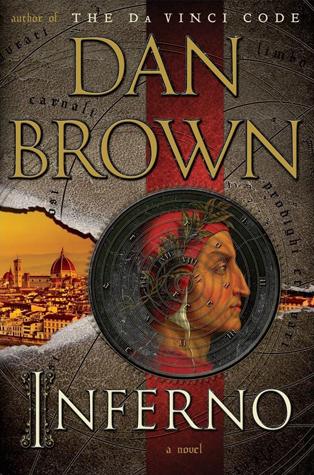
Robert Langdon wakes in a Florence hospital with a pounding headache and a woman’s face peering over him. Dr. Sienna Brooks, a brilliant young physician, risks her career to save him from a mysterious assailant. Together they flee the hospital through dark streets, startled by a violent break-in that throws their world into chaos.
Langdon soon learns that he wears a magnetic bracelet containing a flash drive. It holds a trail of symbols, art, and literature pointing to Dante’s Inferno. Their pursuers—government agents, masked mercenaries, and a secretive foundation—close in relentlessly. One clue leads them to the Palazzo Vecchio, where frescoes conceal a hidden riddle.
At the Palazzo Vecchio, Langdon deciphers a message carved into an ancient frieze. It hints at an encoded map inside Botticelli’s illustrations of Dante’s circles of hell. Meanwhile, Sienna reveals her own motives: she once loved Bertrand Zobrist, a rogue geneticist obsessed with overpopulation. He vanished after she refused to help him.
In a hidden Florentine chamber, they find Botticelli’s sketchbook. Langdon realizes it points to a masked ball at the Palazzo Vecchi. They dash through crowded halls to retrieve a key fragment. Unexpectedly, government agents led by Dr. Elizabeth Sinskey corner them in the Giotto Hall.
Sinskey reveals the World Health Organization’s involvement. Zobrist engineered a bioweapon named the "Inferno Virus," designed to reduce humanity by half. The virus lies dormant until triggered by a specific poem. Langdon’s flash drive points to Zobrist’s final location—the mysterious "Shepherd’s Palace" in Venice.
Venice greets them with labyrinthine canals and masked revelers. A tip from a blind art expert leads them to the Church of San Marco. There they uncover a centuries-old letter from Dante himself, outlining the path to the Palazzo Ducale’s secret archives. The letter warns of Zobrist’s modern twist on divine justice.
At the Palazzo Ducale, midnight strikes as they slip past guard patrols. In a hidden corridor, they find an ornate chest. Langdon unlocks it with a cipher drawn from Dante’s stanza. Inside rests a vial containing the activated virus. Sienna nearly collapses—Zobrist used her blood to engineer an antidote.
Alarm bells ring. Black-clad soldiers swarm through marble halls. Langdon and Sienna scramble to escape across the Bridge of Sighs. A speeding motorboat awaits them beneath the gondolas. They race into the lagoon, sirens echoing behind.
Sinskey contacts Langdon by phone, urging him to deliver the vial to the WHO headquarters in Istanbul. She believes in the organization’s ability to neutralize the virus. Hesitant but desperate, Langdon boards a private jet. Sienna remains behind, torn between trust and betrayal.
Arriving in Istanbul, Langdon finds the WHO facility surrounded by soldiers. He meets Dr. Sinskey face to face, who admits she ordered the theft of the virus hours earlier. She plans to study its potential for salvation rather than destruction. Langdon panics as he realizes the real antidote lies in Zobrist’s hidden messages.
Meanwhile, Sienna deciphers Zobrist’s video manifesto. He claimed his actions would awaken humanity to its own extinction. She confronts the masked agents who pursued her, uncovering a private foundation funding Zobrist’s plot from the start. Betrayed, she races to Istanbul.
Sienna bursts into the WHO lab just as Langdon turns on Sinskey. In a tense standoff, Sinskey confesses she wanted to weaponize the antidote for power. A scuffle leaves the vial shattered on the floor. Both watch the solution seep into the tile, knowing it will self-neutralize in minutes.
Langdon and Sienna escape onto the Bosphorus deck of the facility. The city’s lights shimmer below as dawn breaks. Both understand they prevented a catastrophe, yet they mourn the lives lost to Zobrist’s madness. Langdon reflects on Dante’s warning: humanity must face its own sins or be damned.
In the final scene, Langdon and Sienna part ways at the Galata Bridge. She thanks him for restoring her faith in humankind’s resilience. He disappears into the crowd, clutching a battered copy of the Divine Comedy. The bridge’s lamps glow softly, a symbol of hope amid darkness.
As Langdon walks away, he senses that Zobrist’s spirit lingers in the shadows. The world may have avoided one hell, but eternity still holds many. In his hand, he carries Dante’s final verse—a reminder that vigilance and compassion can guide humanity through its own infernos.
Detailed Summary
Plot Summary
1. The Awakening in Florence
Robert Langdon wakes in a mysterious hospital room in Florence, disoriented and suffering from amnesia. He finds Dr. Sienna Brooks standing over him, explaining that an assassin shot him in the head. While Langdon struggles to recall the past day, Sienna warns him of urgent danger.
The hospital corridors feel strangely empty. Langdon and Sienna slip away from pursuing guards as they piece together a series of clues tied to Dante’s Inferno. A hidden flash drive holds a video from billionaire bioengineer Bertrand Zobrist. He claims his invention could curb overpopulation through a designer virus.
Langdon watches Zobrist’s manifesto, in which the genius argues that humankind has only a century left unless population growth slows. The video ends with a countdown and a map to Florence landmarks. As they plot their next move, Langdon senses a race has begun—one against time and an unseen enemy.
2. Chasing Clues through Florence
Langdon and Sienna scour Florence’s art and architecture for answers. They decrypt Zobrist’s hidden messages in Botticelli’s Map of Hell replica. The painting’s layers suggest a location under the Uffizi Gallery.
They descend into dark tunnels beneath the museum, racing off-duty police. Sienna reveals she aided Zobrist before turning against his plan. Langdon wrestles with moral questions, unsure if Zobrist’s warnings hold merit or mask mass murder.
At the tunnel’s end, a hidden door leads to a chamber of ancient manuscripts. They find a vial labeled “Inferno.” Before Langdon can inspect it, armed agents burst in. The pair escapes with the vial but lose their only copy of the map.
3. Venice’s Labyrinthine Pursuit
Langdon and Sienna board a high-speed train to Venice, hoping to outwit their pursuers. They reassemble the map using Dante’s terza rima structure. Each marked location in Venice corresponds to one of the nine circles of Hell.
Amid winding canals and crowded piazzas, they chase a tip pointing to the Palazzo Ducale. In a hidden vault, they uncover a second vial and a journal detailing Zobrist’s final act: releasing the virus at a global cultural event.
Their progress alerts the World Health Organization and U.S. officials. Langdon sends an encrypted message to Elizabeth Sinskey, head of the WHO, pleading for global cooperation. Meanwhile, Harry Sims, an agent for a private biotech firm, closes in on their location.
4. Istanbul’s Ancient Secrets
Sienna decodes clues that lead them to Istanbul, Zobrist’s childhood city. They race to the Hagia Sophia, where Zobrist stashed his master server controlling the virus. Ancient mosaics hide the server’s access key within a Latin inscription.
Langdon recalls a Dante passage that hints at the inscription’s translation: “Abandon hope all ye who enter here.” They face a moral crossroad—use the server to stop the virus or destroy it and risk losing the antidote. Sienna and Langdon clash over trust and responsibility.
At the Bosporus waterfront, they confront Harry Sims. In the resulting chaos, Sinskey arrives with armed guards. She orders Sims to stand down and secures the server. Langdon extracts the release codes and transmits them to WHO labs worldwide.
5. Biotech Revelation
In a WHO command center, Elizabeth Sinskey briefs global leaders. The virus has already spread to major cities via travelers at mass gatherings. Labs scramble to produce the antidote based on Zobrist’s design.
Sims admits he worked for Zobrist in a misguided attempt to save humanity, but values of profit eclipsed ethics. Sinskey condemns him and commissions a fair distribution of the cure. Langdon and Sienna watch as researchers race against the virus’s fatal timeline.
A final video message from Zobrist appears. He defends his plan as a brutal necessity and begs survivors to learn from his error. His ghostly presence haunts the lab, reminding them of the thin line between salvation and destruction.
6. The Final Confrontation
Authorities track Zobrist’s body to a hidden crypt beneath San Marco Cathedral in Venice. Langdon and Sienna join a small team to retrieve any remaining data. They descend into damp darkness, torches flickering on carved depictions of Hell.
Inside the crypt, they find Zobrist’s skeletal remains clasping an encrypted hard drive. As they recover it, masked operatives attack, hoping to steal the last vial. Sienna fights them off while Langdon secures both drives.
Back in Florence, WHO scientists merge the information. They reveal the virus’s spread halted at patient zero. The cure neutralizes the pathogen within hours. Langdon and Sienna stand in Dante’s Piazza della Signoria, watching sunrise. They reflect on human limits and the moral weight of radical acts.
Characters
1. Robert Langdon (Protagonist)
“Have you ever considered that the Inferno we create for others might be the one we inhabit ourselves?”
Robert Langdon is a Harvard professor of symbology and religious iconology. He relies on his deep knowledge of Dante’s Inferno to decode Zobrist’s hidden messages. Langdon quickly adapts to dangerous situations, using logic and art history to navigate uncertainty.
Throughout the crisis, Langdon wrestles with ethics. He respects life yet understands the desperation behind Zobrist’s extreme measures. His determination to prevent mass death pushes him to trust unlikely allies and question his own assumptions.
2. Sienna Brooks (Ally turned guide)
“I helped build this weapon. Now I’ll help stop it.”
Sienna Brooks is a young doctor from the WHO who treated Langdon after his shooting. She initially appears as a rescuer but reveals ties to Zobrist. Torn between loyalty to science and guilt for aiding Zobrist, she joins Langdon to stop the outbreak.
Sienna’s medical expertise proves vital. She deciphers genetic codes and virus mechanics under pressure. Her journey mirrors Langdon’s intellectual path but intersects with life-or-death stakes that test her convictions.
3. Bertrand Zobrist (Antagonist)
“Only through suffering will mankind find its redemption.”
Bertrand Zobrist is a brilliant yet unhinged bioengineer. He sees human overpopulation as a terminal threat and designs a virus to reduce numbers dramatically. His vision combines scientific genius with messianic zeal.
Zobrist’s Dante fixation shapes every move. He compares his plan to the journey through Hell, envisioning humanity’s rebirth after suffering. Though dead, his digital footprints drive the global crisis and force characters to confront moral ambiguities.
4. Elizabeth Sinskey (Supporting ally)
“Science without conscience is the deadliest weapon of all.”
Elizabeth Sinskey leads the World Health Organization crisis team. She balances scientific urgency with political realities, coordinating labs worldwide to manufacture an antidote. Sinskey’s calm decisiveness wins trust from diverse stakeholders.
Despite bureaucratic pressures, she prioritizes ethics and fair distribution. Her interactions with Langdon and Sienna reveal warmth beneath her professional exterior. She embodies hope amid panic, guiding the world toward a solution.
5. Harry Sims (Antagonist turned witness)
“I thought saving lives meant making a profit.”
Harry Sims works for a private biotech firm with secret ties to Zobrist’s research. He chases Langdon and Sienna to seize the virus and profit from its cure. Sims is ruthless but pragmatic, believing markets can drive innovation.
When the outbreak’s scale becomes clear, Sims breaks with corporate orders. He confesses his role to Sinskey, aiding in the cure’s distribution. His moral shift underscores the story’s theme of redemption through choice.
6. Christina Mendoza (Supporting character)
“Every sample is more than data—it’s someone’s hope.”
Christina Mendoza is a WHO lab technician analyzing the virus’s genetic code. She works long hours under pressure to refine the antidote. Her meticulous approach and quick thinking accelerate the global response.
Mendoza’s personal stakes emerge when her brother falls ill. She battles exhaustion and fear but perseveres. Her story adds human depth to the crisis, reminding us that behind every statistic lies individual lives.
Themes Analysis
1. Ethics of Population Control
Inferno probes the moral boundaries of population control. Zobrist’s extremist solution forces characters to weigh utilitarian gains against individual rights. His virus promises global renewal but demands massive sacrifice.
Langdon and Sienna embody different responses: he leans toward preserving life at all costs, she recognizes science’s double edge. The narrative leaves readers questioning when, if ever, ends justify means. It suggests that imposing suffering undermines the very humanity one hopes to save.
2. Art as a Cipher
Dan Brown weaves art and history into a code that drives the plot. Dante’s Inferno, Botticelli’s map, and Hagia Sophia’s mosaics become cryptic signposts. Art transforms from decoration to a key for survival.
The story highlights human creativity as both a tool for enlightenment and manipulation. Zobrist uses Dante to cloak his plan, while Langdon decodes the message to thwart disaster. The tension between art’s beauty and its hidden power underlines the narrative’s depth.
3. Science versus Morality
Inferno dramatizes the clash between scientific ambition and ethical constraints. Zobrist imagines himself as a savior, yet his means breach moral codes. Sinskey and Mendoza represent science with compassion, aiming to heal rather than harm.
The novel suggests that unchecked innovation risks catastrophic outcomes. It advocates vigilance, transparency, and the fusion of empathy with expertise. Ultimately, it asserts that responsible science must serve humanity instead of sidelining conscience.
Key Plot Devices
1. Dante’s Map of Hell
A rare Botticelli sketch of Dante’s nine circles serves as the primary cipher. Each ring corresponds to a real-world clue hidden across European landmarks. The map’s layered symbolism fuels Langdon’s quest, pushing him from Florence to Venice.
It symbolizes humanity’s collective sins and the path to redemption. As Langdon deciphers each circle, he inches closer to preventing catastrophe. The map’s dual role—artistic treasure and lethal key—drives both tension and thematic resonance.
2. Designer Virus “Inferno”
Zobrist’s engineered virus stands at the story’s core. It spreads through everyday interactions, awaiting activation at a global event. Its stealth and lethality escalate the time pressure, compelling characters to race against a hidden clock.
The virus embodies the dark side of biotechnology. It transforms scientific promise into existential threat. Characters must harness the same science to create an antidote, illustrating technology’s ambivalent nature and the necessity of ethical oversight.
3. Encrypted Flash Drives
Zobrist scatters encrypted drives containing his manifesto, genetic blueprints, and release codes. They function as both MacGuffins and moral test: who accesses them, and why? Langdon’s pursuit hinges on retrieving and interpreting these drives.
The drives drive the narrative leaps—from museum tunnels to hidden vaults. They symbolize knowledge’s double edge: it grants salvation if guided by conscience, but destroys if wielded without humanity’s interests at heart.